
 Wound Care
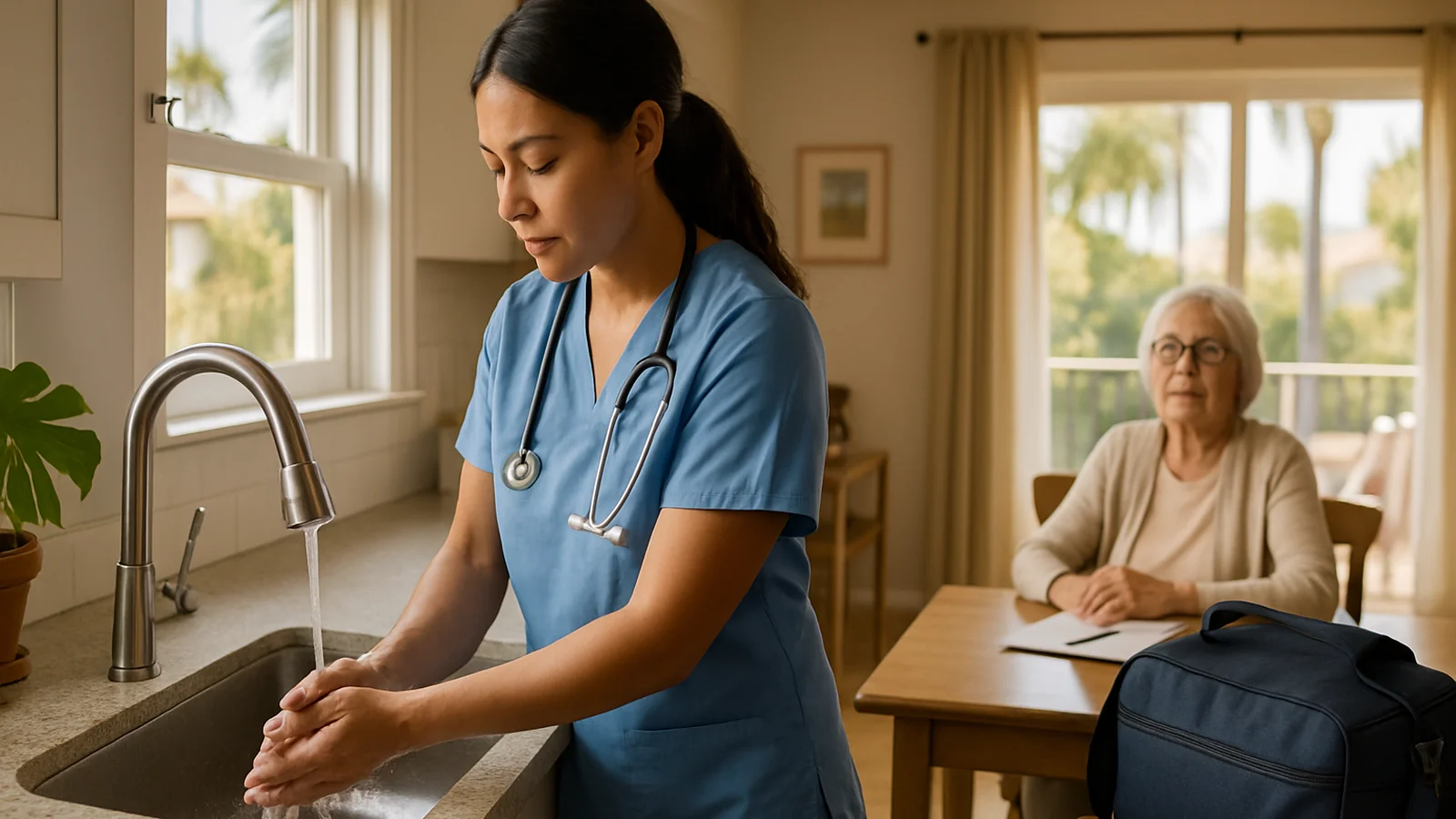

If a doctor has ordered home health for a wound, you may be wondering what will actually happen when the nurse arrives. This guide walks you through a typical home health wound care visit from start to finish: how visits are scheduled, what to have ready, what the nurse checks, how the ordered dressing change is done, what you will be taught, and what happens after the nurse leaves.
Every patient’s visit is a little different, because the plan of care is written for that patient by the ordering provider. Still, most visits follow a similar pattern. Knowing that pattern can make the first visit less stressful for the patient and for the family members who will be helping between visits.
Before the home health wound care visit
Once a referral is accepted and the patient is admitted to home health, the agency schedules a start of care visit. A registered nurse or therapist usually completes this first visit. It tends to be longer than later visits because the clinician reviews the patient’s health history, medications, home safety, and the wound itself, and confirms the plan of care with the ordering provider.
After that, a nurse schedules follow-up visits based on the frequency in the physician-ordered plan of care. Visit frequency depends on the wound, the dressing type, and how the wound is responding, and it may change over time. Our article on how often a home health nurse should visit explains what affects the schedule.
How scheduling usually works
The agency typically calls ahead to set a visit day and a time window. Home health nurses see several patients in a day and travel between homes, so the time is often a range rather than an exact hour. If something comes up and the patient cannot be home, call the agency as early as possible so the visit can be moved.
What to have ready
A little preparation helps the visit go smoothly. Before the nurse arrives, try to have the following in one place:
- The patient’s current medication list, including over-the-counter products and supplements.
- Any wound supplies that were delivered or sent home from the hospital or clinic.
- Discharge papers, wound clinic instructions, or recent orders from the provider.
- A clean, well-lit area where the patient can sit or lie comfortably, such as a bed or recliner, with a nearby surface for supplies.
- Access to a sink with soap for handwashing.
- A short list of questions or changes you have noticed since the last visit.
If a family member or caregiver will be doing dressing changes between visits, it helps if that person can be present, at least for the first few visits.
If you have not yet contacted an agency, our checklist on what to have ready before you call a home health agency can help you prepare.
Arrival and first checks
When the nurse arrives, they will introduce themselves, confirm the patient’s identity, and wash their hands. They will usually ask how the patient has been feeling since the last visit, including pain, sleep, appetite, and any new symptoms.
Next, the nurse typically checks vital signs such as temperature, blood pressure, pulse, breathing rate, and oxygen level when appropriate. A fever or a fast heart rate can be an early clue that something needs the provider’s attention, so these checks are an important part of every visit, not just a formality.
The nurse may also ask about or check other things that affect healing:
- Blood sugar. For patients with diabetes, the nurse may review recent readings and how the patient has been managing.
- Nutrition and fluids. Wounds need protein, calories, and hydration to heal. The nurse may ask what the patient has been eating and drinking.
- Medications. The nurse reviews the medication list for changes, missed doses, or side effects.
- Mobility and pressure. For pressure injuries, the nurse may ask how often the patient changes position and look at the bed or chair cushion.
- Pain. The nurse asks about pain at the wound and how it is being managed, and may plan the dressing change around the timing of pain medication when the provider has ordered it.
Wound assessment and measurement
The core of the visit is the wound assessment. After removing the old dressing as ordered, the nurse looks closely at the wound and the skin around it. This is often called wound monitoring, and it helps the care team see whether the wound is moving in the right direction.
During the assessment, the nurse may:
- Measure the length, width, and sometimes depth of the wound using a disposable measuring guide.
- Note the type and amount of drainage on the old dressing.
- Look at the color and appearance of the wound bed.
- Check the surrounding skin for redness, warmth, swelling, dryness, or softening from moisture.
- Ask about odor, pain, and any changes the patient or family noticed.
- Take a photograph for the record when the agency’s policy and the patient’s consent allow it.
Measuring the wound the same way at each visit allows the nurse and provider to compare over time. A single measurement does not say much on its own. A trend across several visits shows whether the current treatment is working. If you want to understand what different kinds of drainage may mean, our article on wound drainage colors explains the basics.
The ordered dressing change
After the assessment, the nurse carries out the treatment the provider ordered. The exact steps depend on the order, but a typical wound dressing change at home may include:
- Setting up a clean work area and opening supplies in a way that keeps them clean.
- Putting on gloves and following infection control steps.
- Cleansing the wound with the solution the provider ordered.
- Protecting the skin around the wound, if that is part of the order.
- Applying the ordered dressing layers, such as a primary dressing in contact with the wound and a cover dressing on top.
- Securing the dressing so it stays in place and is comfortable.
- Disposing of used materials safely and washing hands again.
Some wounds need specialized treatment, such as negative pressure wound therapy, compression wraps, or packing. When those are ordered, the nurse follows the specific instructions for that therapy. The nurse does not change the type of dressing or treatment on their own. If they think a different approach may help, they contact the provider to discuss it.
Teaching the patient and family
Teaching is one of the most valuable parts of a home health wound care visit. Most patients do not have a nurse in the home every day, so the patient and family often handle part of the care between visits. The nurse may teach:
- How to keep the dressing clean and dry, and what to do if it becomes loose or soaked.
- How to do the dressing change, if the provider’s orders include family-performed changes between visits.
- How to wash hands and handle supplies to lower infection risk.
- How to position the patient and protect pressure points, if pressure is a factor.
- What signs to watch for and who to call.
- How nutrition, fluids, blood sugar control, and not smoking can support healing.
Good teaching is hands-on. The nurse may show the steps first, then watch the caregiver try them at a later visit, and give feedback. If you feel unsure, say so. It is normal to need more than one session. Our page on caregiver training at home explains how this teaching is built into home health.
Documentation and coordination with the provider
Before the nurse leaves, or shortly after, they document the visit in the patient’s medical record. The note usually includes vital signs, the wound assessment and measurements, the treatment performed, how the patient tolerated it, what was taught, and the plan for the next visit.
The nurse also coordinates with the ordering provider. If the wound is improving, the regular reports keep the provider informed. If the nurse sees signs of infection, a wound that is getting larger, or a problem with the dressing plan, they contact the provider to report the change and ask for updated orders when needed. When a wound clinic is involved, the nurse may also communicate with the clinic so everyone is working from the same plan.
This coordination is one reason home health can help a homebound patient. The provider gets a regular, skilled look at the wound without the patient having to travel for every check.
Between-visit instructions
At the end of the visit, the nurse should leave you with clear instructions for the days until the next visit. Ask for these in writing if that helps. They often include:
- When the next visit is expected and how the agency will confirm it.
- Whether anyone needs to change or reinforce the dressing before then, and how.
- Bathing or showering instructions to protect the wound.
- Activity and positioning instructions from the provider’s orders.
- Which symptoms mean you should call the agency, and the phone number to use.
- Which symptoms mean you should call 911.
Call the agency or the treating provider if you notice increasing redness, warmth, or swelling, new or worsening drainage or odor, more pain, a wound that opens wider, a fever, or a dressing that will not stay in place. Call 911 or go to an emergency department for trouble breathing, chest pain, confusion, heavy bleeding that will not stop with pressure, or signs of a serious infection with rapid worsening. Home health is not an emergency service.
When leg swelling is part of the picture, our guide to edema-related wound care at home covers elevation, compression when ordered, and warning signs.
What the home health nurse cannot do
Knowing the limits of a home health visit helps set realistic expectations. A home health nurse generally does not:
- Change the treatment plan or prescribe dressings or medications without the provider’s order.
- Perform surgical debridement or other procedures that belong in a clinic or hospital.
- Stay for long shifts or provide round-the-clock care. Home health visits are intermittent.
- Respond to emergencies in place of 911.
- Promise a healing timeline. Healing depends on the wound, the patient’s overall health, and many other factors.
If you want a broader overview of the nurse’s role beyond a single visit, see our article on what a wound care nurse does and when you need one, and our page on the wound care nurse at home service.
Who qualifies for home health wound care visits
Home health wound care visits are for patients who meet home health requirements. Under Medicare, that generally means:
- The patient is homebound. Under CMS criteria, the patient needs a device, special transportation, or another person’s help to leave home because of illness or injury, or leaving home is medically not advised. In addition, the patient is normally unable to leave home, and leaving requires a considerable and taxing effort.
- A physician or other allowed provider has ordered home health and signs the plan of care.
- The patient had a face-to-face encounter with a provider related to the reason for home health, within 90 days before or 30 days after the start of care.
- The patient needs intermittent skilled nursing, physical therapy, speech therapy, or continuing occupational therapy.
Being homebound does not mean never leaving the house. Trips for medical care, adult day care, religious services, and infrequent short outings such as a haircut or a family event do not by themselves disqualify someone. Medicare may cover home health services when the patient is eligible and the care is medically necessary and ordered. Coverage under other plans depends on the plan’s rules. You can learn more on our insurance page or on Medicare’s page about home health services.
If you are deciding between home visits and clinic visits, see our comparison of home health wound care vs a wound clinic.
Making home visits work in Los Angeles County
Home visits in Los Angeles County come with some practical details that are worth planning for.
Access to the home. If the patient lives in an apartment building with a locked lobby or gate, let the agency know how the nurse should get in, which unit number to use, and whether there is a buzzer code. If the building has no elevator and the patient is on an upper floor, mention that too. For homes on hillside streets with limited parking, a tip about where to park can save time.
Travel and timing. Nurses drive between patients across busy parts of the county, and traffic can shift a visit window. Keeping your phone on during the expected window helps the nurse reach you if they are running early or late.
Working caregivers. If the main caregiver works during the day, tell the agency when that person is usually home. It is not always possible to schedule around every work shift, but the agency can try to plan teaching visits when the caregiver can be there.
Language. Many Los Angeles families speak more than one language at home. Tell the agency which language the patient and caregiver prefer for teaching and instructions, so they can plan for it.
HarvardCare Home Health provides home visits for eligible patients across the county, including communities such as Koreatown, Burbank, and Torrance. Whether a specific address is in our service area is confirmed during intake.
This article is general education, not medical advice. Always follow the orders and instructions of the treating provider.
Frequently asked questions about a home health wound care visit
How long does a home health wound care visit take?
It depends on the wound, the dressing, and what else the nurse needs to check or teach. The first visit is usually longer because it includes a full health review and the start of the plan of care. Later visits are often shorter, but the length can vary.
Do I need to buy wound supplies myself?
Supply arrangements depend on the patient’s coverage and the provider’s orders. During home health, the agency may provide wound supplies related to the plan of care. Ask the agency at intake how supplies will be handled so you are not caught without what you need.
Does a family member have to be there during the visit?
It is not always required, but it is very helpful when a family member or caregiver will be doing any wound care between visits. Being present lets that person learn the steps directly from the nurse and ask questions.
Will the nurse take photos of the wound?
Some agencies photograph wounds to track changes over time, following their policies and with the patient’s consent. If you have concerns about photos, ask the nurse how they are used and stored.
What if the wound looks worse after a visit?
Call the agency and describe what you are seeing. The nurse can advise on next steps and contact the provider if needed. If there are emergency symptoms such as trouble breathing, chest pain, confusion, or heavy bleeding, call 911.
Can the nurse change my dressing type if it is not working?
The nurse cannot change the treatment on their own, but they can report what they see to the provider and ask whether the orders should be updated. The provider decides whether to change the dressing or treatment plan.
How will I know when home health wound visits will end?
Discharge from home health is based on the plan of care and the patient’s progress, such as the wound healing, the caregiver being able to manage the care safely, or the patient no longer meeting eligibility requirements. The nurse should talk with you about discharge planning ahead of time.
Ask HarvardCare Home Health about wound care visits
If a homebound patient in Los Angeles County needs skilled wound care at home, HarvardCare Home Health can review eligibility and coordinate with the ordering provider. Call (323) 484-4440, or reach us through the contact form if you are a patient or family member. Doctors, discharge planners, and case managers can use our referral form.
Contacting HarvardCare Home Health does not guarantee admission, coverage, visit frequency or a start date. Eligibility depends on homebound status, a provider order, a face-to-face encounter, and a skilled need under a home health plan of care.
