
 Wound Care
It is occupational therapy focused on memory, attention, sequencing, routines, and safety during daily home activities.
OCCUPATIONAL THERAPY
Cognitive Rehab at Home (OT)
Home occupational therapy for cognitive rehab, memory supports, attention, sequencing, safety routines, reminders, and caregiver education.
EXCELLENT 


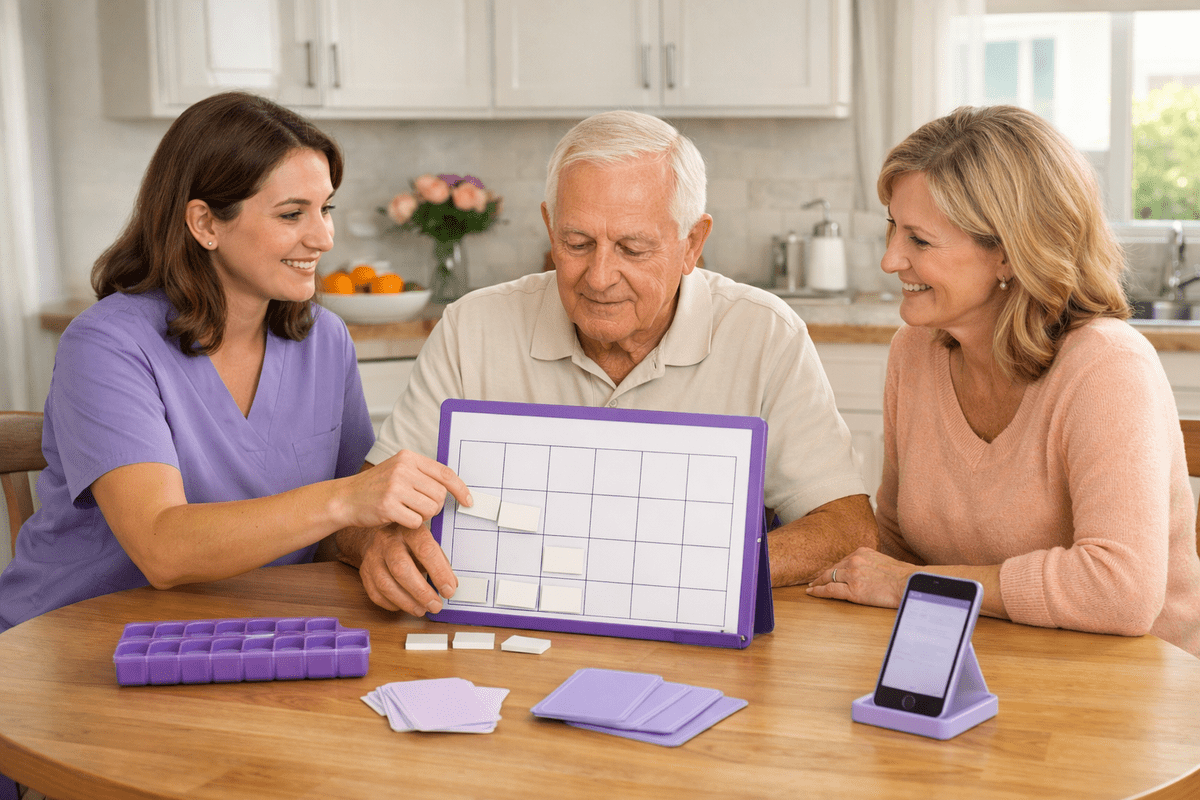
Cognitive changes can make home life feel unpredictable. A patient may forget steps in a routine, leave tasks unfinished, lose track of medications, become distracted while walking, repeat questions, skip meals, or become unsafe in the bathroom or kitchen. Families may notice that the person can still do some tasks physically but needs more structure, reminders, or supervision to do them safely.
Cognitive rehab at home with occupational therapy focuses on daily function, not only memory drills. The therapist can assess how attention, sequencing, judgment, memory, problem-solving, and awareness affect real routines such as bathing, dressing, meals, medication setup, phone use, transfers, and fall prevention. The goal is to help the patient function more safely at home with practical supports.
HarvardCare Home Health helps patients and caregivers create routines that are realistic and respectful. Cognitive changes may happen after stroke, hospitalization, illness, brain injury, medication changes, dementia-related decline, or general weakness. Skilled OT can help families understand what support is needed and how to set up the home for safer participation.
How Cognitive Changes Affect Daily Safety
Cognition affects the order, timing, and safety of daily tasks. A patient may know how to shower but forget to gather towels, turn off water, sit before fatigue, or call for help before standing. They may be able to walk but forget the walker. They may be able to take medication but mix up timing or containers. These are functional safety issues, not character flaws.
Attention and sequencing problems can increase fall risk. A patient may start walking while distracted, turn too quickly, skip a step in a transfer, or forget to use grab bars. Poor judgment may show up in the kitchen, bathroom, stairs, or medication routines. Memory problems may cause missed appointments, repeated tasks, or unsafe duplication of medication unless a safer system is in place.
Occupational therapy helps identify which routines are most affected and what level of support is realistic. Some patients need visual reminders. Others need environmental changes, caregiver cueing, simplified routines, or supervision for higher-risk tasks.
What OT May Assess in the Home
The occupational therapist may assess daily routines, home safety, attention, sequencing, problem solving, awareness of limitations, caregiver support, and how the patient responds to cues. The therapist may observe tasks such as dressing, meal preparation, medication routine setup, bathroom mobility, walker use, phone use, or moving from one room to another.
Assessment may include questions such as: Does the patient remember to use equipment? Can they follow a routine in order? Do they recognize hazards? Can they stop when tired or dizzy? Do they know how to call for help? Can they manage simple household tasks without unsafe distractions?
The therapist can also review the home environment. Too many objects, unclear storage, poor lighting, missing labels, complicated medication routines, or unsafe bathroom setup can make cognitive challenges worse. A calmer, more predictable setup can support safer function.
Routines, Reminders, Sequencing, and Medication Safety
Cognitive rehab may include building consistent routines for bathing, dressing, meals, toileting, medication reminders, phone use, hydration, and rest. The therapist may recommend calendars, checklists, labeled storage, visual cues, phone reminders, caregiver check-ins, or simplified task sequences. The best tools are the ones the patient and caregiver can actually use.
Medication safety may require coordination with nursing or the prescribing provider. Occupational therapy can support routines, organization, and safe setup, but medication decisions and clinical instructions belong to the medical team. The therapist may help families recognize when the current routine is too complex or when caregiver oversight is needed.
Sequencing support may include breaking tasks into fewer steps, placing supplies in order, using consistent cues, and reducing distractions. For example, the bathing routine may begin with towels and clothing set out before entering the bathroom. A meal routine may involve one clear surface, safe seating, and supplies within reach.
Fall Prevention, Kitchen, and Bathroom Safety
Cognitive changes can increase risk in high-demand areas of the home. In the bathroom, the patient may forget to sit, skip grab bars, rush toileting, or leave water on the floor. In the kitchen, the patient may forget stove safety, reach unsafely, leave items out, or become distracted while handling hot items. During walking, the patient may forget the walker or move too quickly when the phone rings.
The therapist may recommend environmental setup such as clear pathways, better lighting, reduced clutter, simple storage, safe seating, visible reminders, and equipment placed where it is easy to use. They may also help caregivers decide which tasks require supervision and which can remain independent with supports.
When fall risk is a major concern, cognitive rehab may connect with Fall Risk Assessment at Home, Home Safety Evaluation, and In-Home Physical Therapy Services if balance, gait, or strength also need skilled attention.
Caregiver Education and Environmental Setup
Caregivers are central to cognitive rehab at home. The therapist may teach caregivers how to give one-step cues, reduce distractions, create predictable routines, avoid arguing during confusion, and set up tasks so the patient can participate safely. Caregiver education also includes knowing when independence is safe and when supervision is needed.
Environmental setup may include placing supplies in consistent locations, using simple visual reminders without clutter, organizing medications with appropriate oversight, keeping emergency numbers accessible, simplifying clothing choices, and making the bathroom path easier to follow. The goal is to reduce avoidable confusion while preserving dignity.
When Skilled OT May Be Appropriate
Skilled occupational therapy may be appropriate when cognitive changes affect safety, daily routines, caregiver burden, or the ability to follow through with care recommendations. This is especially relevant after stroke, hospitalization, neurological change, falls, medication changes, or noticeable decline in daily function.
OT does not promise to reverse every cognitive change. Instead, therapy focuses on strategies, routines, task adaptation, caregiver education, and safer participation. For many families, that practical support is what makes home care more manageable.
Why Choose HarvardCare Home Health
HarvardCare Home Health provides cognitive rehab in the home, where memory, attention, and safety challenges actually appear. The therapist can see the bathroom, kitchen, bedroom, medications, walking paths, and caregiver routine. That makes recommendations more realistic than advice given away from the home.
Cognitive rehab may connect with In-Home Occupational Therapy, ADL Training at Home, Caregiver Education at Home, Caregiver Training at Home, Home Safety Evaluation, and Stroke Rehab at Home.
Medicare and Home Health Eligibility
Cognitive rehab with OT may be part of a skilled home health plan when eligibility requirements are met. This can include physician order, skilled need, homebound status, and payer review. Coverage is not guaranteed without eligibility review.
If memory, attention, sequencing, or judgment changes are affecting daily safety and independence, HarvardCare Home Health can review the request and help determine whether home occupational therapy is appropriate.
Request Cognitive Rehab at Home
If cognitive changes are making routines, medication safety, bathroom safety, meals, or fall prevention harder to manage at home, complete the form on this page or call HarvardCare Home Health. The team can review the situation, discuss eligibility, and help determine next steps.
FAQs
Do you have questions?
Got questions about Cognitive Rehab at Home (OT)? Here are answers to what patients and families ask most.
Patients with cognitive changes after stroke, illness, hospitalization, brain injury, medication changes, or functional decline may benefit.
No. OT focuses on practical strategies, routines, reminders, caregiver education, and safer participation. It does not guarantee reversal of cognitive changes.
OT may help with organization and routines, but medication decisions and clinical instructions belong to the medical provider or nursing team.
Yes. Caregiver education is often central to cognitive rehab because routines and cues need to continue between visits.
The therapist may review bathroom safety, kitchen routines, walker use, fall risk, phone access, medication setup, and daily schedules.
Yes. OT may address attention, sequencing, awareness, daily routines, and caregiver strategies after stroke when appropriate.
Calendars, checklists, labels, phone reminders, organized storage, simplified routines, and caregiver cueing may be used.
It may be covered when home health requirements are met, including physician order, skilled need, and homebound status when applicable. Eligibility must be reviewed.
Complete the form on this page or call HarvardCare Home Health so the team can review the request and next steps.
TESTIMONIALS
What Our Patients & Families Say
AREAS WE SERVE
Cognitive Rehab at Home (OT) Near You
Our licensed healthcare professionals provide expert care in the comfort of your home. We proudly serve patients and families throughout Los Angeles County.
Serving 279 cities across LA County
- A
- Acton
- Adams-Normandie
- Agoura Hills
- Agua Dulce
- Alhambra
- Alondra Park
- Altadena
- Angelino Heights
- Arcadia
- Arleta
- Arlington Heights
- Artesia
- Arts District
- Atwater Village
- Avocado Heights
- Azusa
- B
- Baldwin Hills
- Baldwin Park
- Bassett
- Beachwood Canyon
- Bel Air
- Bell
- Bell Gardens
- Bellflower
- Beverly Crest
- Beverly Grove
- Beverly Hills
- Beverlywood
- Boyle Heights
- Bradbury
- Brentwood
- Broadway-Manchester
- Burbank
- C
- Calabasas
- Canoga Park
- Canyon Country
- Carson
- Carthay
- Castaic
- Castle Heights
- Central-Alameda
- Century City
- Cerritos
- Charter Oak
- Chatsworth
- Chesterfield Square
- Cheviot Hills
- Chinatown
- Citrus
- City Terrace
- Claremont
- Commerce
- Compton
- Country Club Park
- Covina
- Crenshaw
- Cudahy
- Culver City
- Cypress Park
- D
- Del Aire
- Del Rey
- Desert View Highlands
- Diamond Bar
- Downey
- Downtown Los Angeles
- Duarte
- E
- Eagle Rock
- East Hollywood
- East Los Angeles
- East Pasadena
- East Rancho Dominguez
- East San Gabriel
- East Whittier
- Echo Park
- El Camino Village
- El Monte
- El Segundo
- El Sereno
- Elysian Valley
- Encino
- Exposition Park
- F
- Fairfax
- Florence
- Florence-Firestone
- G
- Gardena
- Garvanza
- Glassell Park
- Glendale
- Glendora
- Gramercy Park
- Granada Hills
- Green Meadows
- H
- Hacienda Heights
- Hancock Park
- Harbor City
- Harbor Gateway
- Harvard Heights
- Harvard Park
- Hasley Canyon
- Hawaiian Gardens
- Hawthorne
- Hermon
- Hermosa Beach
- Hidden Hills
- Highland Park
- Historic Filipinotown
- Hollywood
- Hollywood Hills
- Holmby Hills
- Huntington Park
- Hyde Park
- I
- Inglewood
- J
- Jefferson Park
- K
- Kinneloa Mesa
- Koreatown
- L
- La Cañada Flintridge
- La Crescenta-Montrose
- La Habra Heights
- La Mirada
- La Puente
- La Verne
- Ladera Heights
- Lake Balboa
- Lake Hughes
- Lake Los Angeles
- Lake View Terrace
- Lakewood
- Lancaster
- Larchmont
- Lawndale
- Leimert Park
- Lennox
- Leona Valley
- Lincoln Heights
- Little Armenia
- Little Tokyo
- Littlerock
- Lomita
- Long Beach
- Los Angeles
- Los Feliz
- Lynwood
- M
- Malibu
- Manchester Square
- Manhattan Beach
- Mar Vista
- Marina del Rey
- Mayflower Village
- Maywood
- Mid-City
- Mid-Wilshire
- Miracle Mile
- Mission Hills
- Monrovia
- Montebello
- Montecito Heights
- Monterey Park
- Mt Washington
- N
- Newhall
- NoHo Arts District
- North El Monte
- North Hills
- North Hollywood
- North Long Beach
- Northridge
- Norwalk
- P
- Pacific Palisades
- Pacoima
- Palmdale
- Palms
- Palos Verdes Estates
- Palos Verdes Peninsula
- Panorama City
- Paramount
- Park La Brea
- Pasadena
- Pearblossom
- Pico Rivera
- Pico-Robertson
- Pico-Union
- Playa del Rey
- Playa Vista
- Pomona
- Porter Ranch
- Q
- Quartz Hill
- R
- Rancho Dominguez
- Rancho Palos Verdes
- Rancho Park
- Redondo Beach
- Reseda
- Rolling Hills
- Rolling Hills Estates
- Rosemead
- Rowland Heights
- S
- San Dimas
- San Fernando
- San Gabriel
- San Marino
- San Pasqual
- San Pedro
- Santa Clarita
- Santa Fe Springs
- Santa Monica
- Saugus
- Sawtelle
- Sepulveda
- Shadow Hills
- Sherman Oaks
- Sherman Village
- Sherwood Forest
- Sierra Madre
- Signal Hill
- Silver Lake
- South Central
- South El Monte
- South Gate
- South Park
- South Pasadena
- South San Gabriel
- South San Jose Hills
- South Whittier
- Stevenson Ranch
- Stonehurst
- Studio City
- Sun Valley
- Sun Village
- Sunland
- Sunset Park
- Sylmar
- T
- Tarzana
- Temple City
- Thai Town
- Toluca Lake
- Topanga
- Torrance
- Tujunga
- U
- University Hills
- University Park
- V
- Val Verde
- Valencia
- Valinda
- Valley Glen
- Valley Village
- Van Nuys
- Venice
- Vermont Knolls
- Vermont Square
- Vermont Vista
- Vermont-Slauson
- Victor Heights
- View Park-Windsor Hills
- Vincent
- W
- Walnut
- Walnut Park
- Watts
- West Adams
- West Athens
- West Carson
- West Covina
- West Hills
- West Hollywood
- West Los Angeles
- West Puente Valley
- West Rancho Dominguez
- West Whittier-Los Nietos
- Westchester
- Westlake
- Westlake Village
- Westmont
- Westwood
- Westwood Village
- Whitley Heights
- Whittier
- Willowbrook
- Wilmington
- Wilshire Center
- Windsor Square
- Winnetka
- Woodland Hills
More Services

In-Home Wound Care Services
- Board-certified wound care nurses
- Personalized treatment plans
- All wound types treated
Diabetic Wound Care at Home
- Diabetes wound specialists
- Blood sugar optimization support
- Advanced offloading techniques
Skilled Nursing Care at Home
- Registered nurses available 7 days a week
- Comprehensive care coordination
- IV therapy and infusion services