
 Wound Care
Foley catheters typically require changing every four weeks, though the exact schedule depends on catheter type, material, and individual factors. Some patients need more frequent changes due to encrustation, blockage, or infection history. Your nurse and physician will establish the appropriate schedule for your situation. Between routine changes, the catheter may need replacement if problems like blockage or leakage develop.
Catheter Care at Home
Urinary catheter care at home throughout Los Angeles County. Our skilled nurses provide Foley catheter changes, suprapubic catheter care, infection prevention, and patient education. Medicare accepted.
EXCELLENT 


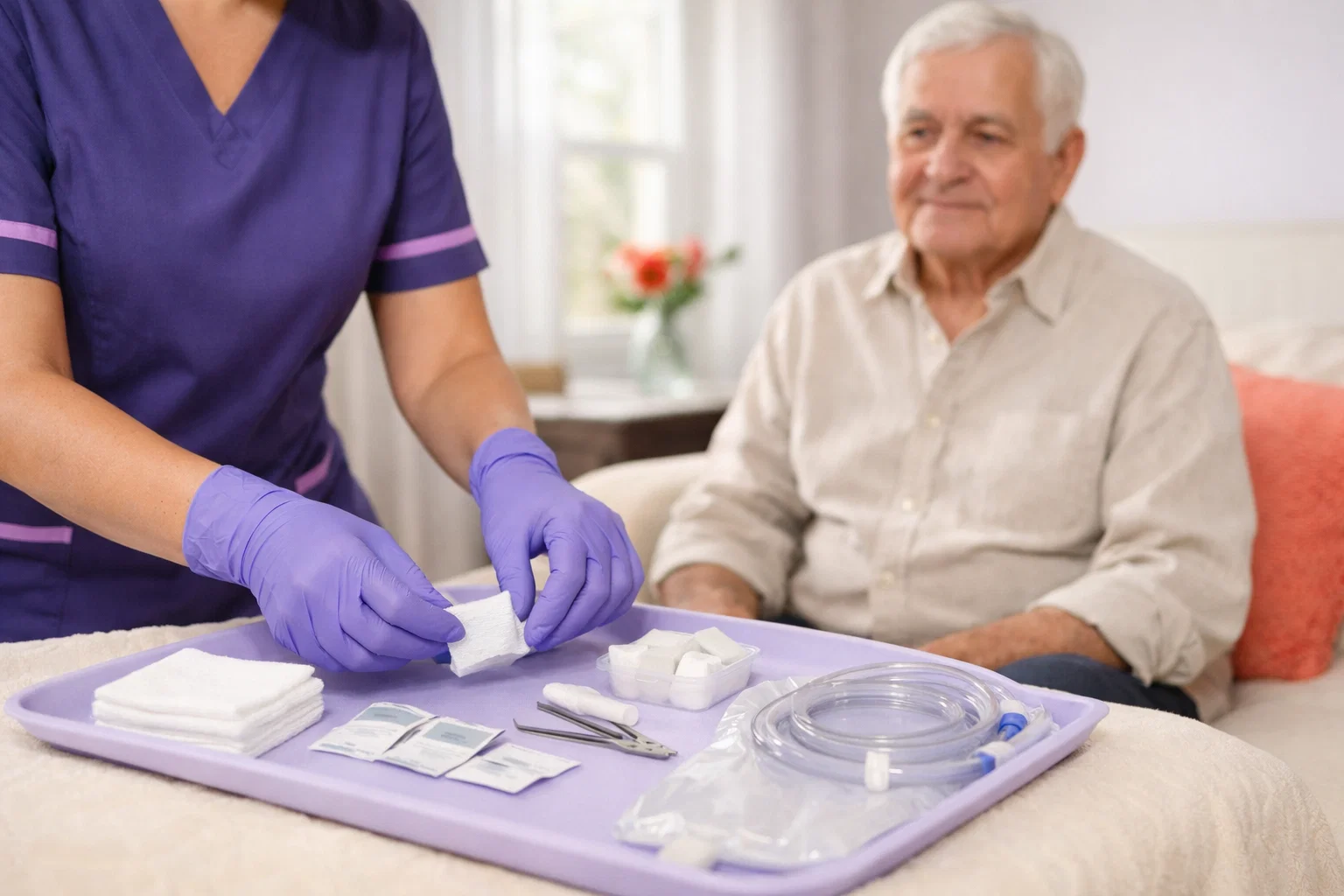
Professional Urinary Catheter Management in Your Home
Living with a urinary catheter presents daily challenges that many patients find overwhelming. Whether you have a Foley catheter, suprapubic catheter, or intermittent catheterization needs, proper care is essential to prevent infections, maintain comfort, and preserve quality of life. At HarvardCare Home Health, our skilled nurses provide comprehensive catheter care services throughout Los Angeles County, helping patients manage their urinary catheters safely and confidently at home.
Urinary tract infections are among the most common complications of catheter use, but with proper care techniques, most can be prevented. Our nurses bring the expertise and meticulous attention needed to keep you healthy while living with a catheter, and we teach you and your family the skills to manage between nursing visits.
Understanding Urinary Catheters
Urinary catheters are tubes that drain urine from the bladder when normal urination is not possible or practical. Different types serve different patient needs.
Indwelling Foley Catheters
The most common type, a Foley catheter is inserted through the urethra into the bladder and held in place by a small inflated balloon. Urine drains continuously into a collection bag. Foley catheters are used for patients who cannot empty their bladder due to obstruction, nerve damage, or surgery, those recovering from urological or pelvic procedures, patients requiring accurate urine output monitoring, and individuals with urinary retention that cannot be managed otherwise. While Foley catheters provide continuous drainage, they also carry the highest infection risk and require careful management.
Suprapubic Catheters
A suprapubic catheter is surgically placed through the abdominal wall directly into the bladder, bypassing the urethra entirely. This approach may be preferred when urethral catheterization is not possible due to obstruction or injury, for long-term catheterization where urethral catheters cause problems, for patients who find suprapubic placement more comfortable or manageable, and when urethral integrity needs to be preserved. Suprapubic catheters require care of both the catheter itself and the abdominal insertion site.
Intermittent Catheterization
Some patients do not need continuous drainage but cannot fully empty their bladder on their own. Intermittent catheterization involves inserting a catheter several times daily to drain the bladder, then removing it. This approach is common for patients with neurogenic bladder from spinal cord injury, multiple sclerosis, or other neurological conditions. It requires learning proper technique but offers advantages including lower infection rates compared to indwelling catheters.
External Catheters
For male patients with incontinence but without retention, external condom catheters provide an alternative to indwelling catheters. These devices fit over the penis and connect to a drainage bag, managing incontinence without a tube inside the body.
Our Catheter Care Services
Our comprehensive catheter care program addresses every aspect of urinary catheter management.
Catheter Insertion and Replacement
Indwelling catheters require periodic replacement, typically every four weeks, though timing varies based on catheter type and individual factors. Our nurses perform catheter changes using sterile technique to minimize infection risk. We also insert new catheters when needed and can establish intermittent catheterization programs for appropriate patients.
Site Care and Assessment
For patients with indwelling catheters, we provide meticulous care of the catheter insertion site. For urethral catheters, this includes cleaning around the urethral meatus and monitoring for irritation or discharge. For suprapubic catheters, we care for the abdominal stoma site with appropriate dressing changes and assessment for skin breakdown or infection. Regular site care prevents complications and maintains patient comfort.
Drainage System Management
Proper management of the urine collection system is essential for infection prevention. Our nurses ensure drainage bags are positioned correctly below bladder level, tubing is free of kinks or dependent loops, collection bags are emptied before becoming too full, connections remain secure and uncontaminated, and leg bags and overnight bags are used appropriately. We also assess urine characteristics—color, clarity, odor, and volume—as indicators of urinary health.
Infection Monitoring and Prevention
Catheter-associated urinary tract infections are a constant concern. Our nurses monitor vigilantly for signs of infection including fever, chills, or malaise, cloudy or foul-smelling urine, blood in urine, increased sediment, pain or discomfort in the bladder area or back, and new or worsening confusion in elderly patients. When infection is suspected, we coordinate promptly with your physician for evaluation and treatment. More importantly, our meticulous care technique helps prevent infections from occurring in the first place.
Troubleshooting Catheter Problems
Catheters can develop various problems that our nurses are skilled in addressing. Blockages from sediment, mucus, or blood clots may require irrigation or catheter replacement. Leakage around the catheter may indicate blockage, bladder spasms, or sizing issues. Catheter dislodgement or balloon deflation requires prompt replacement. We assess problems systematically, implement appropriate solutions, and coordinate with physicians when medical intervention is needed.
Bladder Irrigation
Some patients require periodic bladder irrigation to clear mucus, blood clots, or debris. Our nurses perform irrigation using proper technique and prescribed solutions, monitoring patient response and adjusting approach as needed.
Catheter Removal and Voiding Trials
When your physician determines it is time to try removing your catheter, we manage the process carefully. We remove the catheter, monitor your ability to urinate independently, and assess for urinary retention. If the voiding trial is unsuccessful, we can replace the catheter and coordinate with your physician about next steps.
Patient and Family Education
Living successfully with a catheter requires understanding and active participation. We provide comprehensive education to patients and caregivers.
Daily Care Routines
We teach proper daily catheter care including hand hygiene before and after catheter handling, cleaning around the catheter insertion site, emptying drainage bags using clean technique, securing the catheter to prevent pulling and trauma, and maintaining adequate fluid intake to flush the urinary system. These daily practices significantly reduce complication risk.
Intermittent Catheterization Training
For patients using intermittent catheterization, we provide thorough training in the procedure. We teach proper technique step by step, observe return demonstrations until proficiency is achieved, troubleshoot problems that arise, and provide ongoing support and retraining as needed. Many patients become fully independent with intermittent catheterization after proper instruction.
Recognizing Problems
We educate patients and families about warning signs requiring prompt attention including signs of urinary tract infection, catheter blockage symptoms, leakage issues, skin problems around insertion sites, and any unusual symptoms or concerns. Knowing when to call for help ensures problems are addressed before they become serious.
Lifestyle Adaptation
Living with a catheter requires some adjustments, but most patients maintain active, fulfilling lives. We discuss managing catheters during daily activities, clothing choices that accommodate drainage bags, traveling with a catheter, intimacy considerations, and activity modifications if needed. Our goal is helping you live as normally as possible while managing your catheter safely.
Preventing Catheter Complications
Prevention is always preferable to treatment. Our care approach emphasizes practices that minimize complication risk.
Infection Prevention
We follow evidence-based practices to prevent catheter-associated UTIs including strict hand hygiene and aseptic technique during catheter procedures, maintaining a closed drainage system, keeping the drainage bag below bladder level at all times, proper perineal hygiene, adequate hydration to maintain urine flow, and avoiding unnecessary catheter manipulation. These practices significantly reduce infection rates.
Trauma Prevention
Catheters can cause tissue damage if not properly secured or handled. We ensure catheters are secured to prevent pulling on the bladder neck, use appropriate catheter sizes, avoid tension on the catheter during position changes, and monitor for signs of urethral or bladder trauma. Proper securement is particularly important for active patients.
Skin Integrity
For suprapubic catheters, maintaining healthy skin around the stoma is essential. We provide appropriate site care, use skin barriers when needed, and address any irritation promptly. For patients with leg bags, we monitor for skin irritation from straps and adhesives.
Coordination with Your Healthcare Team
Catheter care involves collaboration with your broader medical team.
Physician Communication
We maintain regular communication with your physician about your catheter status, reporting any concerns, infection signs, or functional problems. When catheter changes or interventions are needed beyond routine care, we coordinate with your urologist or primary care provider.
Supply Coordination
Catheter care requires ongoing supplies—catheters, drainage bags, cleansing supplies, and securing devices. We help coordinate supply ordering through medical supply companies and ensure you have what you need for care between nursing visits.
Specialty Referrals
When catheter problems suggest underlying issues requiring specialist evaluation, we facilitate appropriate referrals. Complex urological conditions may benefit from urologist involvement, which we help coordinate.
Living Well with a Catheter
While no one chooses to have a urinary catheter, many patients live full, active lives while managing their catheters successfully. The keys are proper care technique, vigilant monitoring, prompt attention to problems, and the right support system.
Our nurses provide that support—expert care during visits and education that empowers you between visits. We help you adapt to life with a catheter while minimizing the impact on your daily activities and overall wellbeing.
Insurance Coverage
Catheter care provided by skilled nurses is covered by Medicare Part A for homebound patients requiring skilled nursing services. Medicare covers nursing visits for catheter insertion, changes, and management, as well as supplies needed for catheter care. Medi-Cal and most private insurance plans also cover home catheter care services.
Our team verifies your coverage and manages authorization so you can focus on your health rather than paperwork.
Getting Started
If you or a loved one has a urinary catheter and needs professional care at home, contact HarvardCare Home Health today. Our skilled nurses provide expert catheter care throughout Los Angeles County, helping you manage your catheter safely and live as fully as possible.
Do not struggle with catheter care alone or risk complications from improper technique. Our nurses bring the expertise and support you need. Call today for a free consultation and take control of your catheter care.
FAQs
Do you have questions?
Got questions about Catheter Care at Home? Here are answers to what patients and families ask most.
Signs of catheter-associated UTI include fever or chills, cloudy or foul-smelling urine, blood in urine, pain or burning sensation in the bladder area or lower back, increased sediment in urine, and new confusion or agitation in elderly patients. If you notice these symptoms, contact us immediately. UTIs can become serious if not treated promptly, so early recognition is important.
Yes, you can shower with most urinary catheters. For Foley catheters, you may shower normally but should not submerge in bath water as this increases infection risk. After showering, ensure the area around the catheter is dried thoroughly. For suprapubic catheters, your nurse will provide specific instructions about protecting the site. Leg bags can usually remain in place during showers.
Staying well-hydrated is the most important prevention measure—aim for at least eight glasses of fluid daily unless your physician has restricted fluids. Keep the drainage bag below bladder level and ensure tubing has no kinks. Empty the bag regularly before it becomes too full. Watch for decreased urine output, which may indicate developing blockage. Some patients benefit from periodic irrigation, which your nurse can provide.
For many patients, intermittent catheterization has advantages over indwelling catheters, including lower infection rates and less interference with daily activities. However, it requires the ability to perform the procedure multiple times daily, which is not feasible for everyone. Your physician will recommend the best approach based on your specific condition, abilities, and preferences. Our nurses can train patients in intermittent catheterization when appropriate.
Catheter Care at Home may help patients who have a skilled home health need related to safety, recovery, daily function, condition monitoring, or caregiver teaching. HarvardCare Home Health can review the request and explain whether the service may fit the plan of care.
The home health nurse may assess the home routine, review current concerns, provide patient and caregiver education, and coordinate with the physician or care team when clinically appropriate.
Home health services generally require a provider order and a plan of care. The agency can help review the referral, skilled need, homebound status, and eligibility considerations.
Yes. Caregiver education is often an important part of skilled nursing care. The care team may teach safer routines, warning signs, and ways to support the patient between visits.
Prepare recent discharge papers, medication lists, physician instructions, supply or equipment information, current symptoms, fall history, and questions about what has become difficult at home.
TESTIMONIALS
What Our Patients & Families Say
EXCELLENT
AREAS WE SERVE
Catheter Care at Home Near You
Our licensed healthcare professionals provide expert care in the comfort of your home. We proudly serve patients and families throughout Los Angeles County.
Serving 97 cities across LA County
- A
- Agoura Hills
- Alhambra
- Altadena
- Arcadia
- B
- Bel Air
- Bellflower
- Beverly Hills
- Boyle Heights
- Brentwood
- Burbank
- C
- Calabasas
- Carson
- Century City
- Cerritos
- Claremont
- Compton
- Covina
- Culver City
- D
- Diamond Bar
- Downey
- E
- Eagle Rock
- East Los Angeles
- Echo Park
- Encino
- G
- Gardena
- Glendale
- Glendora
- Granada Hills
- H
- Hacienda Heights
- Hancock Park
- Harbor City
- Hawthorne
- Highland Park
- Hollywood
- Hollywood Hills
- I
- Inglewood
- K
- Koreatown
- L
- La Crescenta-Montrose
- La Mirada
- Lakewood
- Lincoln Heights
- Long Beach
- Los Angeles
- Los Feliz
- M
- Malibu
- Manhattan Beach
- Mar Vista
- Marina del Rey
- Mid-City
- Mid-Wilshire
- Miracle Mile
- Monrovia
- Montebello
- Monterey Park
- N
- North Hollywood
- Northridge
- Norwalk
- P
- Pacific Palisades
- Palms
- Palos Verdes Estates
- Palos Verdes Peninsula
- Panorama City
- Pasadena
- Pico Rivera
- Playa Vista
- Pomona
- Porter Ranch
- R
- Rancho Palos Verdes
- Redondo Beach
- Reseda
- Rolling Hills Estates
- Rowland Heights
- S
- San Dimas
- San Gabriel
- San Marino
- San Pedro
- Santa Clarita
- Santa Monica
- Sawtelle
- Sherman Oaks
- Silver Lake
- South Gate
- South Pasadena
- Studio City
- T
- Tarzana
- Torrance
- V
- Van Nuys
- Venice
- W
- West Covina
- West Hollywood
- West Los Angeles
- Westchester
- Westlake Village
- Westwood
- Whittier
- Wilmington
- Woodland Hills
More Services

In-Home Wound Care Services
- Board-certified wound care nurses
- Personalized treatment plans
- All wound types treated
Diabetic Wound Care at Home
- Diabetes wound specialists
- Blood sugar optimization support
- Advanced offloading techniques
Skilled Nursing Care at Home
- Registered nurses available 7 days a week
- Comprehensive care coordination
- IV therapy and infusion services