
 Wound Care
Venous leg ulcers result from chronic venous insufficiency—damaged or weakened valves in leg veins that allow blood to pool in the lower legs. This blood pooling increases pressure in the veins, damages small blood vessels, impairs oxygen delivery to tissues, and eventually causes skin breakdown. Risk factors include history of blood clots, varicose veins, leg injury, obesity, prolonged standing occupations, and family history of venous disease.
WOUND CARE
Venous Leg Ulcer Treatment at Home
Venous leg ulcer treatment at home throughout Los Angeles County. Our wound care nurses provide compression therapy, advanced dressings, and comprehensive care for leg ulcers caused by venous insufficiency. Medicare accepted.
EXCELLENT 


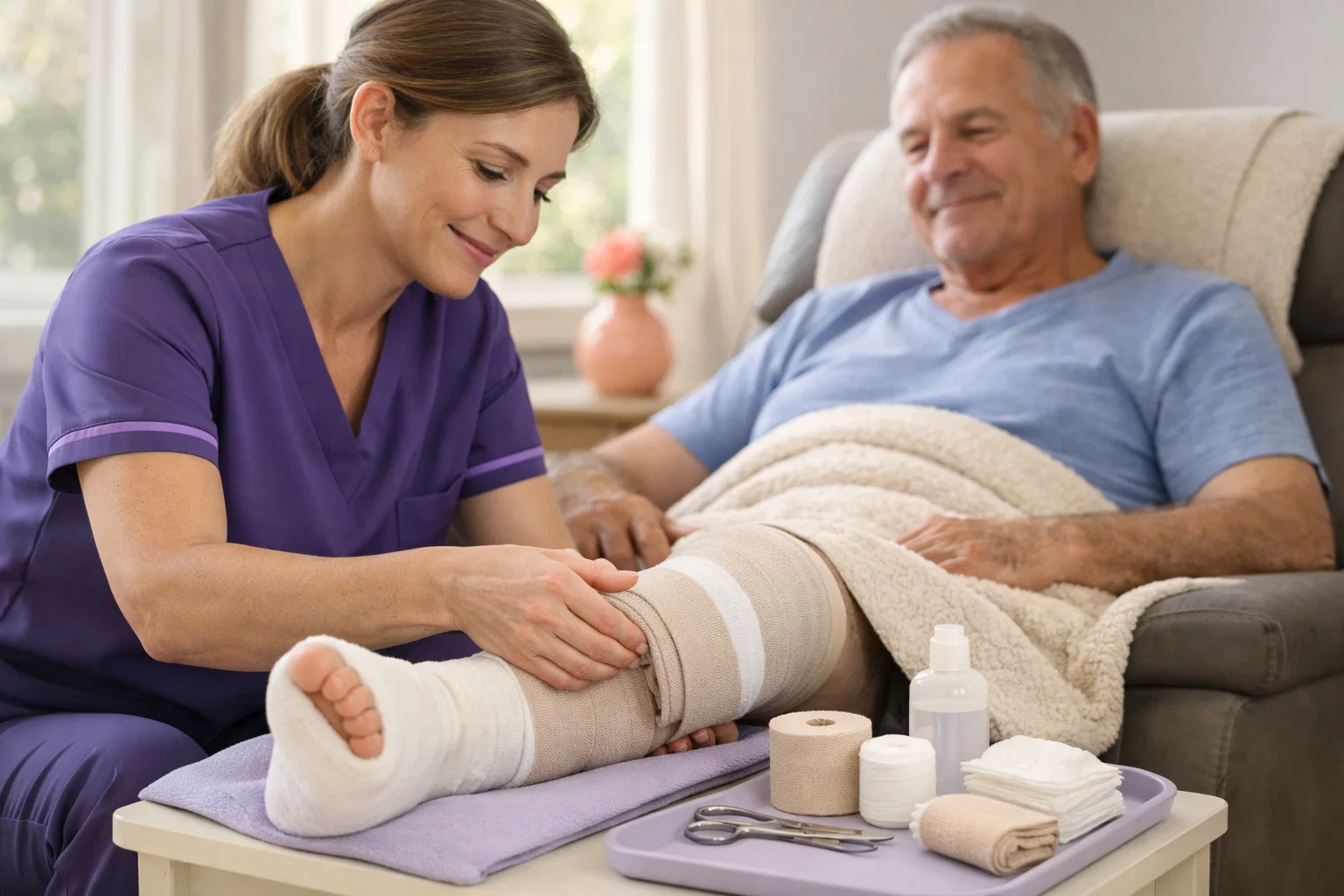
Specialized Care for Venous Leg Ulcers in the Comfort of Home
Venous leg ulcers are among the most common chronic wounds, affecting millions of people and causing significant pain, disability, and reduced quality of life. These stubborn wounds often persist for months or even years when not treated properly, yet they respond remarkably well to appropriate evidence-based care. At HarvardCare Home Health, our wound care specialists provide expert venous leg ulcer treatment throughout Los Angeles County, bringing proven healing protocols directly to your home where you can receive consistent, professional care without the burden of frequent clinic visits.
The key to healing venous leg ulcers lies in addressing not just the wound itself but the underlying venous insufficiency that caused it. Our comprehensive approach combines advanced wound care with compression therapy and lifestyle modifications—the evidence-based triad that produces the best outcomes. By delivering this specialized care at home, we make it possible for patients to receive and maintain the consistent treatment these challenging wounds require.
Understanding Venous Leg Ulcers
Effective treatment begins with understanding why venous ulcers develop and what makes them different from other chronic wounds.
How Venous Ulcers Form
Venous leg ulcers result from chronic venous insufficiency—a condition where the veins in the legs cannot efficiently return blood to the heart. Normally, one-way valves in leg veins prevent blood from flowing backward. When these valves become damaged or weakened, blood pools in the lower legs, increasing pressure in the veins. This elevated venous pressure damages the smallest blood vessels, impairs oxygen delivery to tissues, triggers inflammation, and eventually causes skin breakdown.
The process typically develops over years. Early signs include leg swelling that worsens throughout the day, skin discoloration particularly around the ankles, thickened or hardened skin, and eczema-like changes. Eventually, minor trauma or sometimes no apparent trigger causes the skin to break down, forming an ulcer that fails to heal through normal processes because the underlying venous problem persists.
Characteristics of Venous Ulcers
Venous ulcers have distinctive features that distinguish them from other wound types. They typically appear on the lower leg, most commonly in the gaiter area between the ankle and mid-calf, particularly on the inner aspect of the leg. The wound bed is usually shallow with irregular borders and often contains yellow fibrous tissue. Surrounding skin typically shows venous changes including brown discoloration from hemosiderin deposits, hardened texture called lipodermatosclerosis, and sometimes eczematous changes. The legs are usually swollen, and patients often report that symptoms improve with leg elevation and worsen with prolonged standing.
Why Venous Ulcers Are Difficult to Heal
Without addressing venous hypertension, the forces that created the ulcer continue working against healing. The elevated pressure impairs blood flow needed for tissue repair. Chronic inflammation creates a hostile wound environment. Fluid accumulation prevents healthy tissue formation. And repeated trauma from swelling and skin fragility causes ongoing damage. This is why venous ulcers can persist indefinitely with wound care alone—compression therapy to address the underlying venous problem is essential for healing.
Our Venous Leg Ulcer Treatment Approach
Successful venous ulcer treatment requires a comprehensive approach addressing all factors affecting healing.
Thorough Initial Assessment
Before treatment begins, we conduct comprehensive assessment to confirm diagnosis and guide treatment. We evaluate the wound itself—location, size, depth, wound bed characteristics, and surrounding skin condition. We assess for signs confirming venous etiology and screen for arterial disease, which affects treatment approach. We measure ankle-brachial index when indicated to ensure adequate arterial circulation for compression therapy. We review your medical history, medications, and factors affecting healing. And we evaluate your home environment, mobility, and ability to participate in treatment. This thorough assessment ensures appropriate treatment selection.
Compression Therapy
Compression is the cornerstone of venous ulcer treatment. By applying graduated external pressure—greatest at the ankle and decreasing up the leg—compression counteracts venous hypertension, reduces swelling, improves blood flow, and creates conditions that allow healing to occur.
We utilize various compression modalities based on your needs and tolerance. Multi-layer compression bandaging provides sustained therapeutic compression and is changed at each nursing visit—this is often the primary approach during active ulcer treatment. Compression wraps offer an alternative for patients who cannot tolerate traditional bandaging. Once ulcers heal, compression stockings maintain therapy and prevent recurrence. The specific compression approach and pressure level are selected based on your arterial status, wound characteristics, leg shape, and tolerance.
Proper compression application requires skill. Bandages applied incorrectly can be ineffective or even harmful. Our nurses are trained in proper technique, ensuring you receive therapeutic compression that promotes healing safely.
Advanced Wound Care
While compression addresses the underlying cause, appropriate wound care optimizes the healing environment.
Wound bed preparation ensures the ulcer is ready to heal. We debride devitalized tissue that impedes healing, manage bacterial burden that can stall progress, and address wound edges that have become non-advancing. This preparation transforms a chronic wound into one capable of healing.
Dressing selection matches wound characteristics. We utilize foam dressings that absorb exudate while maintaining moisture balance, alginate dressings for highly draining wounds, hydrocolloid dressings that support autolytic debridement, antimicrobial dressings when bacterial burden is a concern, and low-adherent dressings that protect fragile wound beds. Dressings are selected and adjusted based on wound response, changing as the ulcer progresses through healing phases.
Skin Care
The skin surrounding venous ulcers is often damaged and vulnerable. We implement skin care protocols including gentle cleansing that does not traumatize fragile tissue, emollients that maintain skin integrity, barrier protection from wound drainage, and treatment of any eczematous changes. Healthy surrounding skin supports wound healing and prevents ulcer expansion.
Edema Management
Beyond compression, we address edema through multiple approaches. We educate on leg elevation—how often, how high, and for how long. We assess factors contributing to swelling including diet, medications, and activity patterns. We coordinate with physicians regarding any medical management of fluid retention. Controlling edema is essential for healing and preventing recurrence.
Pain Management
Venous ulcers can be painful, affecting quality of life and sometimes limiting tolerance for compression therapy. We assess pain characteristics and patterns, optimize dressing selection to minimize pain, ensure compression is applied comfortably, coordinate with physicians regarding pain medication when needed, and address any infection or other factors increasing pain. Effective pain management improves both quality of life and treatment compliance.
Preventing Recurrence
Venous ulcers have high recurrence rates—up to 70 percent within five years without proper prevention. Our treatment includes robust recurrence prevention.
Ongoing Compression
After healing, continued compression is essential. We ensure you have appropriate compression stockings, teach proper application technique, and emphasize the importance of daily wear. Patients who maintain compression have dramatically lower recurrence rates than those who discontinue after healing.
Lifestyle Modifications
We educate on lifestyle factors that support venous health including regular walking and calf muscle exercise, avoiding prolonged standing or sitting, leg elevation during rest, weight management, and skin care to prevent breakdown. These modifications support long-term leg health.
Early Intervention
We teach recognition of early warning signs—skin changes, increased swelling, or any break in skin integrity—so you can seek prompt treatment before small problems become large ulcers.
The Home Treatment Advantage
Treating venous leg ulcers at home offers significant benefits.
Consistent Treatment Access
Venous ulcer treatment requires regular, consistent care—often two to three visits weekly for compression changes and wound assessment. Traveling to clinics this frequently is burdensome and sometimes impossible for patients with painful, swollen legs. Home treatment ensures you receive the consistent care these wounds require.
Real-World Assessment
We see your actual living situation—where you elevate your legs, what shoes you wear, how you manage daily activities. This allows practical recommendations tailored to your real circumstances.
Reduced Infection Risk
Healthcare facilities harbor bacteria. Receiving wound care at home reduces exposure to healthcare-associated pathogens, protecting your vulnerable wound.
Comfort and Compliance
Treatment in familiar surroundings is more comfortable and supports better compliance with care recommendations. Patients who receive home care often achieve better outcomes than those struggling to attend clinic appointments.
Who We Treat
Our venous leg ulcer program serves patients across the spectrum of disease.
Active Venous Ulcers
Whether you have a new ulcer or one that has persisted for years, we provide the comprehensive treatment needed for healing.
Recurrent Ulcers
If you have experienced repeated ulcer recurrence, we focus on breaking the cycle through intensive treatment and robust prevention strategies.
Complex Cases
Patients with multiple ulcers, mixed arterial-venous disease, or complicating conditions like diabetes receive specialized care addressing their unique challenges.
Post-Procedure Care
Following vein procedures like ablation or surgery, we provide wound care and compression therapy during recovery.
Insurance Coverage
Skilled nursing care for venous leg ulcers is covered by Medicare Part A for homebound patients with physician orders. Treatment of venous ulcers is recognized as skilled care requiring professional nursing intervention. Compression supplies and wound care materials are typically covered. Blue Shield of California PPO and Anthem Blue Cross PPO provide similar coverage.
Our team handles verification and authorization so you can focus on healing.
Getting Started
If you have a venous leg ulcer or leg wound that is not healing, contact HarvardCare Home Health today. Our wound care specialists provide expert venous ulcer treatment throughout Los Angeles County.
Venous leg ulcers can heal with proper treatment. Do not accept a wound that has been open for months or years as inevitable. Evidence-based care combining compression therapy and advanced wound management produces healing for most patients. Call today for a free consultation and take the first step toward healing your leg ulcer.
FAQs
Do you have questions?
Got questions about Venous Leg Ulcer Treatment at Home? Here are answers to what patients and families ask most.
Compression therapy is essential because it directly addresses the underlying cause of venous ulcers—venous hypertension. By applying graduated pressure to the leg, compression counteracts the elevated venous pressure, reduces swelling, improves blood flow, and creates conditions that allow healing. Without compression, wound care alone rarely succeeds because the forces that created the ulcer continue working against healing.
Healing time varies based on ulcer size, duration, and your overall health. With proper treatment including compression therapy, many venous ulcers heal within 12 to 24 weeks. Larger ulcers or those present for many years may take longer. Some factors like poor nutrition, arterial disease, or infection can slow healing. We monitor progress closely and adjust treatment to optimize healing time.
Venous ulcers have high recurrence rates without proper prevention—up to 70 percent recur within five years. However, patients who maintain compression therapy with daily stocking wear have much lower recurrence rates. Our treatment includes comprehensive prevention education including ongoing compression, lifestyle modifications, and early warning sign recognition to minimize your recurrence risk.
Compression should feel snug but not painful. Some patients experience initial discomfort as they adjust to compression, but properly applied bandaging should become comfortable. If compression causes significant pain, it may indicate arterial disease requiring evaluation before continuing compression. We assess your arterial circulation before starting compression and adjust therapy to your tolerance while maintaining therapeutic effectiveness.
Visit frequency depends on your wound's needs and treatment phase. During active treatment, visits typically occur two to three times weekly for compression bandage changes and wound assessment. As the ulcer improves and you transition to self-applied compression wraps or stockings, visit frequency may decrease. We continue monitoring until the ulcer has healed and you are established in a maintenance program.
Compression bandages should be kept dry, so traditional showering or bathing is not possible while wearing them. Many patients sponge bathe between nursing visits. On the day of your dressing change, you can bathe after we remove the old bandage and before we apply new dressings. Once you transition to compression stockings after healing, normal bathing resumes—you simply remove stockings before bathing and reapply afterward.
Support healing by wearing compression as prescribed without removing it between visits, elevating your legs above heart level several times daily, walking regularly to activate calf muscle pumping, avoiding prolonged standing or sitting, maintaining good nutrition with adequate protein, keeping surrounding skin moisturized, and reporting any changes or concerns promptly. Your active participation significantly affects healing outcomes.
Venous Leg Ulcer Treatment at Home may help patients who have a skilled home health need related to safety, recovery, daily function, condition monitoring, or caregiver teaching. HarvardCare Home Health can review the request and explain whether the service may fit the plan of care.
The home health nurse may assess the home routine, review current concerns, provide patient and caregiver education, and coordinate with the physician or care team when clinically appropriate.
TESTIMONIALS
What Our Patients & Families Say
AREAS WE SERVE
Venous Leg Ulcer Treatment at Home Near You
Our licensed healthcare professionals provide expert care in the comfort of your home. We proudly serve patients and families throughout Los Angeles County.
Serving 279 cities across LA County
- A
- Acton
- Adams-Normandie
- Agoura Hills
- Agua Dulce
- Alhambra
- Alondra Park
- Altadena
- Angelino Heights
- Arcadia
- Arleta
- Arlington Heights
- Artesia
- Arts District
- Atwater Village
- Avocado Heights
- Azusa
- B
- Baldwin Hills
- Baldwin Park
- Bassett
- Beachwood Canyon
- Bel Air
- Bell
- Bell Gardens
- Bellflower
- Beverly Crest
- Beverly Grove
- Beverly Hills
- Beverlywood
- Boyle Heights
- Bradbury
- Brentwood
- Broadway-Manchester
- Burbank
- C
- Calabasas
- Canoga Park
- Canyon Country
- Carson
- Carthay
- Castaic
- Castle Heights
- Central-Alameda
- Century City
- Cerritos
- Charter Oak
- Chatsworth
- Chesterfield Square
- Cheviot Hills
- Chinatown
- Citrus
- City Terrace
- Claremont
- Commerce
- Compton
- Country Club Park
- Covina
- Crenshaw
- Cudahy
- Culver City
- Cypress Park
- D
- Del Aire
- Del Rey
- Desert View Highlands
- Diamond Bar
- Downey
- Downtown Los Angeles
- Duarte
- E
- Eagle Rock
- East Hollywood
- East Los Angeles
- East Pasadena
- East Rancho Dominguez
- East San Gabriel
- East Whittier
- Echo Park
- El Camino Village
- El Monte
- El Segundo
- El Sereno
- Elysian Valley
- Encino
- Exposition Park
- F
- Fairfax
- Florence
- Florence-Firestone
- G
- Gardena
- Garvanza
- Glassell Park
- Glendale
- Glendora
- Gramercy Park
- Granada Hills
- Green Meadows
- H
- Hacienda Heights
- Hancock Park
- Harbor City
- Harbor Gateway
- Harvard Heights
- Harvard Park
- Hasley Canyon
- Hawaiian Gardens
- Hawthorne
- Hermon
- Hermosa Beach
- Hidden Hills
- Highland Park
- Historic Filipinotown
- Hollywood
- Hollywood Hills
- Holmby Hills
- Huntington Park
- Hyde Park
- I
- Inglewood
- J
- Jefferson Park
- K
- Kinneloa Mesa
- Koreatown
- L
- La Cañada Flintridge
- La Crescenta-Montrose
- La Habra Heights
- La Mirada
- La Puente
- La Verne
- Ladera Heights
- Lake Balboa
- Lake Hughes
- Lake Los Angeles
- Lake View Terrace
- Lakewood
- Lancaster
- Larchmont
- Lawndale
- Leimert Park
- Lennox
- Leona Valley
- Lincoln Heights
- Little Armenia
- Little Tokyo
- Littlerock
- Lomita
- Long Beach
- Los Angeles
- Los Feliz
- Lynwood
- M
- Malibu
- Manchester Square
- Manhattan Beach
- Mar Vista
- Marina del Rey
- Mayflower Village
- Maywood
- Mid-City
- Mid-Wilshire
- Miracle Mile
- Mission Hills
- Monrovia
- Montebello
- Montecito Heights
- Monterey Park
- Mt Washington
- N
- Newhall
- NoHo Arts District
- North El Monte
- North Hills
- North Hollywood
- North Long Beach
- Northridge
- Norwalk
- P
- Pacific Palisades
- Pacoima
- Palmdale
- Palms
- Palos Verdes Estates
- Palos Verdes Peninsula
- Panorama City
- Paramount
- Park La Brea
- Pasadena
- Pearblossom
- Pico Rivera
- Pico-Robertson
- Pico-Union
- Playa del Rey
- Playa Vista
- Pomona
- Porter Ranch
- Q
- Quartz Hill
- R
- Rancho Dominguez
- Rancho Palos Verdes
- Rancho Park
- Redondo Beach
- Reseda
- Rolling Hills
- Rolling Hills Estates
- Rosemead
- Rowland Heights
- S
- San Dimas
- San Fernando
- San Gabriel
- San Marino
- San Pasqual
- San Pedro
- Santa Clarita
- Santa Fe Springs
- Santa Monica
- Saugus
- Sawtelle
- Sepulveda
- Shadow Hills
- Sherman Oaks
- Sherman Village
- Sherwood Forest
- Sierra Madre
- Signal Hill
- Silver Lake
- South Central
- South El Monte
- South Gate
- South Park
- South Pasadena
- South San Gabriel
- South San Jose Hills
- South Whittier
- Stevenson Ranch
- Stonehurst
- Studio City
- Sun Valley
- Sun Village
- Sunland
- Sunset Park
- Sylmar
- T
- Tarzana
- Temple City
- Thai Town
- Toluca Lake
- Topanga
- Torrance
- Tujunga
- U
- University Hills
- University Park
- V
- Val Verde
- Valencia
- Valinda
- Valley Glen
- Valley Village
- Van Nuys
- Venice
- Vermont Knolls
- Vermont Square
- Vermont Vista
- Vermont-Slauson
- Victor Heights
- View Park-Windsor Hills
- Vincent
- W
- Walnut
- Walnut Park
- Watts
- West Adams
- West Athens
- West Carson
- West Covina
- West Hills
- West Hollywood
- West Los Angeles
- West Puente Valley
- West Rancho Dominguez
- West Whittier-Los Nietos
- Westchester
- Westlake
- Westlake Village
- Westmont
- Westwood
- Westwood Village
- Whitley Heights
- Whittier
- Willowbrook
- Wilmington
- Wilshire Center
- Windsor Square
- Winnetka
- Woodland Hills
More Services

In-Home Wound Care Services
- Board-certified wound care nurses
- Personalized treatment plans
- All wound types treated
Diabetic Wound Care at Home
- Diabetes wound specialists
- Blood sugar optimization support
- Advanced offloading techniques
Skilled Nursing Care at Home
- Registered nurses available 7 days a week
- Comprehensive care coordination
- IV therapy and infusion services