
 Wound Care
Home physical therapy provides the same professional rehabilitation services as outpatient clinics but delivered in your own environment. The key difference is context—your therapist works with your actual stairs, bathroom, and living spaces rather than clinic equipment. This real-world focus often produces better functional outcomes. Home PT also eliminates transportation challenges and allows family involvement in your care.
PHYSICAL THERAPY
In-Home Physical Therapy Services
In-home physical therapy services throughout Los Angeles County. Our licensed physical therapists help patients recover from surgery, stroke, injury, and illness with personalized rehabilitation in your home. Medicare accepted.
EXCELLENT 


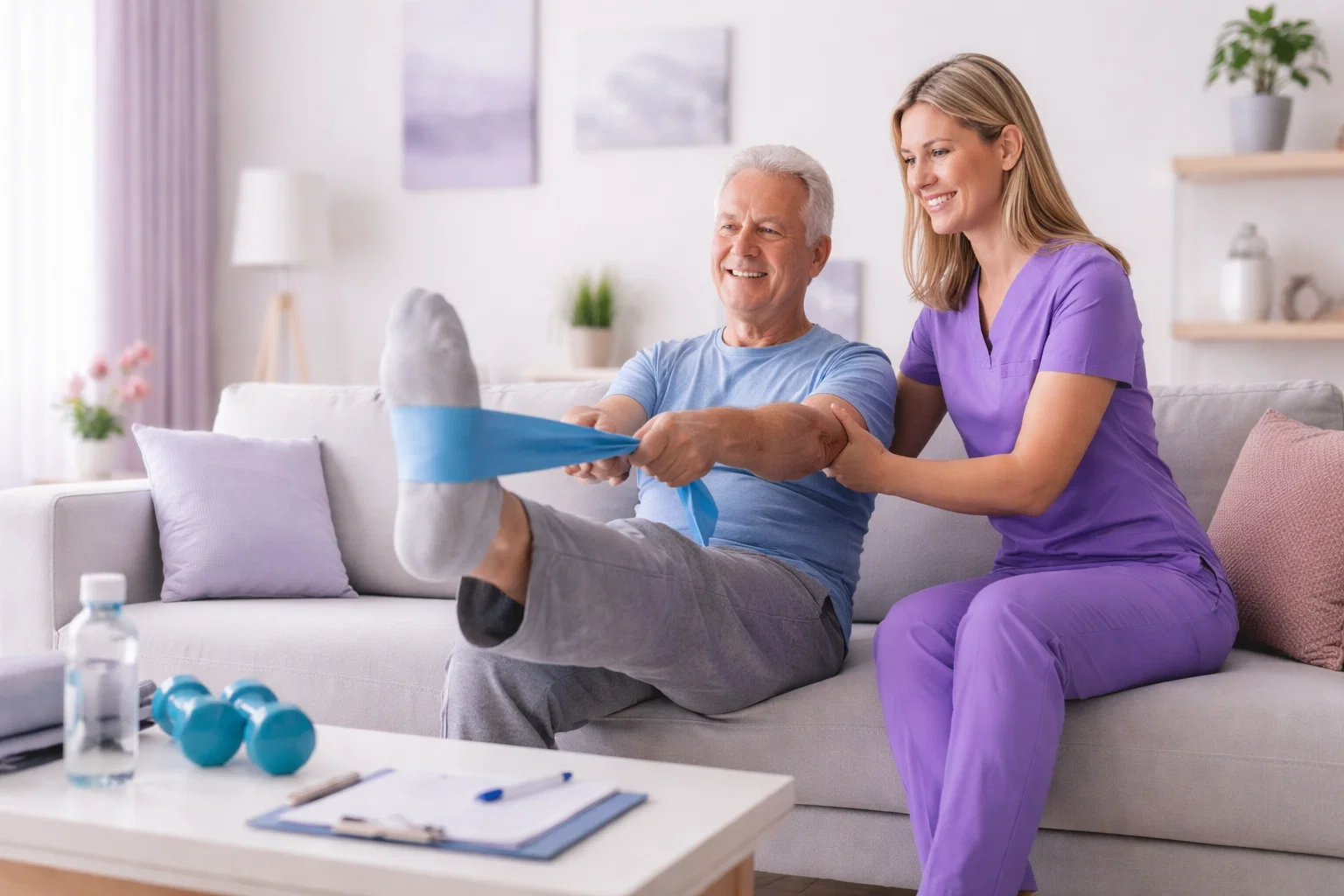
Restore Mobility and Independence with Physical Therapy at Home
Physical therapy is essential for recovering from injuries, surgeries, and illnesses that affect your ability to move. But getting to outpatient therapy appointments can be challenging—especially when mobility limitations are the very reason you need therapy in the first place. In-home physical therapy eliminates this barrier by bringing licensed physical therapists directly to your door. At HarvardCare Home Health, our physical therapy program serves patients throughout Los Angeles County, helping them regain strength, mobility, and independence in the comfort and convenience of their own homes.
Home-based physical therapy isn’t just convenient—it’s often more effective than clinic-based care. When therapy happens in your actual living environment, therapists can address the specific challenges you face daily: navigating your stairs, getting in and out of your bathtub, moving safely through your kitchen. This real-world focus translates to better functional outcomes and faster return to the activities that matter most to you.
Understanding In-Home Physical Therapy
In-home physical therapy provides the same professional rehabilitation services available at outpatient clinics, delivered in your home by licensed physical therapists. These aren’t simplified or watered-down treatments—our therapists bring portable equipment and use evidence-based techniques to deliver comprehensive rehabilitation services wherever you live.
Who Qualifies for Home Physical Therapy?
Home physical therapy is appropriate for patients who are homebound, meaning leaving home requires considerable and taxing effort. This includes people recovering from surgery who cannot yet drive or navigate clinic settings safely, seniors with mobility limitations that make travel difficult, patients with medical conditions that make outpatient visits risky or exhausting, and individuals whose cognitive or physical status makes managing clinic appointments impractical.
You don’t need to be completely bedbound to qualify. If getting to appointments requires significant assistance, causes excessive fatigue, or poses safety risks, home-based therapy may be the right choice for you.
Conditions We Treat
Our physical therapists treat a wide range of conditions affecting movement, strength, and function.
Post-Surgical Rehabilitation
Recovery after surgery—particularly orthopedic procedures like joint replacements, fracture repairs, and spinal surgeries—requires structured rehabilitation to restore function. Our therapists guide patients through each phase of surgical recovery, from early mobilization through return to full activity. We work closely with surgeons to ensure therapy aligns with surgical protocols and progresses appropriately.
Stroke and Neurological Recovery
Stroke, traumatic brain injury, Parkinson’s disease, multiple sclerosis, and other neurological conditions often cause movement impairments that respond to skilled physical therapy. Our therapists use specialized neurological rehabilitation techniques to help patients regain motor control, improve balance, and maximize functional recovery.
Orthopedic Conditions
Arthritis, back pain, joint problems, and musculoskeletal injuries all benefit from physical therapy. We provide hands-on treatment, therapeutic exercise, and patient education to reduce pain, improve mobility, and help patients return to active lives.
Balance and Fall Prevention
Falls are a leading cause of injury and loss of independence among older adults. Our balance and fall prevention program addresses the underlying causes of instability—weakness, sensory changes, medication effects, and environmental hazards—to reduce fall risk and build confidence in mobility.
Cardiac and Pulmonary Rehabilitation
Heart attacks, heart surgery, COPD, and other cardiopulmonary conditions often leave patients deconditioned and limited in their activity tolerance. Our therapists provide graduated exercise programs that safely rebuild endurance and help patients return to meaningful activities.
General Deconditioning
Extended illness, hospitalization, or reduced activity for any reason leads to loss of strength, flexibility, and endurance. Physical therapy reverses this deconditioning, helping patients regain the physical capacity needed for independent daily living.
Our Physical Therapy Approach
Every patient receives individualized care based on thorough evaluation and evidence-based treatment principles.
Comprehensive Initial Evaluation
Your first visit includes a detailed assessment of your condition, functional abilities, home environment, and goals. Your therapist examines strength, range of motion, balance, coordination, gait, and any specific impairments related to your diagnosis. We also assess your home for safety hazards and identify modifications that could support your recovery.
Personalized Treatment Plan
Based on your evaluation, we develop a treatment plan targeting your specific needs and goals. This plan outlines the interventions we’ll use, the frequency and duration of therapy, measurable objectives we’re working toward, and a timeline for expected progress. Your plan is dynamic—we adjust it continuously based on how you respond to treatment.
Hands-On Treatment Techniques
Our therapists employ a variety of manual therapy and treatment techniques:
- Joint mobilization to improve range of motion
- Soft tissue mobilization to address muscle tightness and scar tissue
- Neuromuscular re-education to improve movement patterns
- Therapeutic exercise for strength, flexibility, and endurance
- Gait training to improve walking safety and efficiency
- Balance training using progressive challenge activities
- Functional training specific to your daily activities
Home Exercise Programs
What happens between therapy visits matters as much as the visits themselves. Your therapist designs a customized home exercise program that reinforces treatment gains and accelerates progress. We provide clear written and verbal instructions, demonstrate each exercise, watch you perform them to ensure correct technique, and modify the program as you progress.
Home Safety Assessment and Modifications
A significant advantage of home-based therapy is the opportunity to address environmental factors affecting safety and function. Your therapist identifies hazards like loose rugs, poor lighting, or cluttered pathways, and recommends modifications. We also help you learn to navigate your specific environment safely—your particular stairs, bathroom, and living spaces.
Caregiver Training
Family members and caregivers play crucial roles in recovery. We teach caregivers safe transfer techniques, how to assist with exercises, proper use of mobility equipment, and when to seek help. This training extends the benefits of therapy beyond our visits and keeps everyone safe.
Equipment and Technology
Our therapists bring portable equipment to support comprehensive treatment in your home. This includes resistance bands and weights, balance training equipment, gait training devices, portable modalities for pain management, and assessment tools for objective measurement. We also recommend and train patients on durable medical equipment such as walkers, canes, wheelchairs, and other mobility aids, coordinating with suppliers to ensure you have what you need.
Benefits of Home-Based Physical Therapy
Choosing physical therapy at home offers distinct advantages over clinic-based care.
Elimination of Transportation Barriers
For patients with mobility limitations, transportation to outpatient therapy is often the biggest obstacle to getting care. Home therapy removes this barrier entirely. No arranging rides, no exhausting trips, no missing sessions because you couldn’t get there.
Real-World Functional Training
Practicing mobility skills in a clinic is valuable, but practicing them in your actual home is better. When your therapist helps you master your own stairs, your own bathroom, your own bedroom, those skills transfer directly to daily life. There’s no gap between what you learn in therapy and what you need to do at home.
Personalized Environment Assessment
No two homes are alike. Your therapist sees your actual living situation—the specific challenges and opportunities your environment presents—and tailors treatment accordingly. They identify hazards you might not notice and suggest modifications specific to your home.
Family Involvement
When therapy happens at home, family members can observe, learn, and participate. They understand what you’re working on, how to help safely, and what progress looks like. This involvement enhances support for your recovery.
Comfort and Reduced Fatigue
Traveling to appointments consumes energy that could go toward healing. Home-based therapy eliminates travel fatigue, allowing you to devote your full energy to rehabilitation. Patients are also typically more relaxed and perform better in familiar surroundings.
Reduced Infection Exposure
Clinic waiting rooms expose patients to illnesses that can derail recovery. This concern is particularly relevant for post-surgical patients and those with compromised immune systems. Home therapy minimizes this exposure.
What to Expect During Treatment
Physical therapy visits typically last 45-60 minutes. Your therapist arrives at your scheduled time with necessary equipment. Each session includes reassessment of your current status, hands-on treatment techniques, therapeutic exercises, and functional activity practice. Your therapist tracks your progress at every visit and adjusts treatment based on your response.
Visit frequency depends on your needs—typically two to three times per week initially, tapering as you improve. The overall duration of therapy varies by diagnosis and progress. Throughout your care, we communicate with your physician and other healthcare providers to ensure coordinated care.
Medicare and Insurance Coverage
Home physical therapy is covered by Medicare Part A for patients who meet eligibility criteria: you must be homebound, require skilled therapy services, and be under a physician’s care with orders for physical therapy. Medicare covers therapy visits at 100% with no copay for qualifying patients.
Blue Shield of California PPO and Anthem Blue Cross PPO also cover home physical therapy with similar requirements. Our team verifies your benefits and handles authorization paperwork so you can focus on recovery.
Getting Started
Beginning home physical therapy is straightforward. Your physician provides orders for therapy, specifying your diagnosis and treatment needs. We schedule an initial evaluation at your convenience and develop your personalized treatment plan. From there, therapy proceeds on a regular schedule until you achieve your goals.
If you or a loved one needs physical therapy but struggles with clinic visits, contact HarvardCare Home Health today. Our licensed physical therapists are ready to bring expert rehabilitation services to your home, helping you restore mobility and reclaim your independence—right where you live.
FAQs
Do you have questions?
Got questions about In-Home Physical Therapy Services? Here are answers to what patients and families ask most.
Visit frequency is based on your specific needs and physician's orders. Most patients begin with two to three visits per week, which may decrease as you improve and become more independent with your exercise program. Some conditions require more intensive initial therapy. Your therapist reassesses regularly and adjusts frequency based on your progress toward goals.
Wear comfortable, loose-fitting clothing that allows movement—athletic wear or casual clothes work well. Have supportive shoes available. Clear a space in your home where you can move safely, ideally near a sturdy chair or bed for support during exercises. Have any mobility equipment you use readily available. No other special preparation is needed.
Absolutely. Fall prevention is one of our specialties. Your therapist evaluates the underlying causes of fall risk—weakness, balance deficits, sensory changes, medication effects—and develops a targeted program to address them. We also assess your home for hazards and recommend modifications. Research shows physical therapy significantly reduces fall risk in older adults.
Our therapists evaluate your need for mobility equipment during the initial assessment. We recommend appropriate devices based on your abilities and goals, coordinate with suppliers for equipment delivery, and train you thoroughly on safe use. We also reassess equipment needs as you progress—many patients transition to less supportive devices as they improve.
In-Home Physical Therapy Services may help patients who have a skilled home health need related to safety, recovery, daily function, condition monitoring, or caregiver teaching. HarvardCare Home Health can review the request and explain whether the service may fit the plan of care.
The physical therapist may assess the home routine, review current concerns, provide patient and caregiver education, and coordinate with the physician or care team when clinically appropriate.
Home health services generally require a provider order and a plan of care. The agency can help review the referral, skilled need, homebound status, and eligibility considerations.
Yes. Caregiver education is often an important part of home physical therapy. The care team may teach safer routines, warning signs, and ways to support the patient between visits.
Prepare recent discharge papers, medication lists, physician instructions, supply or equipment information, current symptoms, fall history, and questions about what has become difficult at home.
TESTIMONIALS
What Our Patients & Families Say
AREAS WE SERVE
In-Home Physical Therapy Near You
Our licensed physical therapists bring personalized rehabilitation directly to your home, helping you recover from surgery, injury, or illness. We proudly serve patients and families throughout Los Angeles County.
Serving 279 cities across LA County
- A
- Acton
- Adams-Normandie
- Agoura Hills
- Agua Dulce
- Alhambra
- Alondra Park
- Altadena
- Angelino Heights
- Arcadia
- Arleta
- Arlington Heights
- Artesia
- Arts District
- Atwater Village
- Avocado Heights
- Azusa
- B
- Baldwin Hills
- Baldwin Park
- Bassett
- Beachwood Canyon
- Bel Air
- Bell
- Bell Gardens
- Bellflower
- Beverly Crest
- Beverly Grove
- Beverly Hills
- Beverlywood
- Boyle Heights
- Bradbury
- Brentwood
- Broadway-Manchester
- Burbank
- C
- Calabasas
- Canoga Park
- Canyon Country
- Carson
- Carthay
- Castaic
- Castle Heights
- Central-Alameda
- Century City
- Cerritos
- Charter Oak
- Chatsworth
- Chesterfield Square
- Cheviot Hills
- Chinatown
- Citrus
- City Terrace
- Claremont
- Commerce
- Compton
- Country Club Park
- Covina
- Crenshaw
- Cudahy
- Culver City
- Cypress Park
- D
- Del Aire
- Del Rey
- Desert View Highlands
- Diamond Bar
- Downey
- Downtown Los Angeles
- Duarte
- E
- Eagle Rock
- East Hollywood
- East Los Angeles
- East Pasadena
- East Rancho Dominguez
- East San Gabriel
- East Whittier
- Echo Park
- El Camino Village
- El Monte
- El Segundo
- El Sereno
- Elysian Valley
- Encino
- Exposition Park
- F
- Fairfax
- Florence
- Florence-Firestone
- G
- Gardena
- Garvanza
- Glassell Park
- Glendale
- Glendora
- Gramercy Park
- Granada Hills
- Green Meadows
- H
- Hacienda Heights
- Hancock Park
- Harbor City
- Harbor Gateway
- Harvard Heights
- Harvard Park
- Hasley Canyon
- Hawaiian Gardens
- Hawthorne
- Hermon
- Hermosa Beach
- Hidden Hills
- Highland Park
- Historic Filipinotown
- Hollywood
- Hollywood Hills
- Holmby Hills
- Huntington Park
- Hyde Park
- I
- Inglewood
- J
- Jefferson Park
- K
- Kinneloa Mesa
- Koreatown
- L
- La Cañada Flintridge
- La Crescenta-Montrose
- La Habra Heights
- La Mirada
- La Puente
- La Verne
- Ladera Heights
- Lake Balboa
- Lake Hughes
- Lake Los Angeles
- Lake View Terrace
- Lakewood
- Lancaster
- Larchmont
- Lawndale
- Leimert Park
- Lennox
- Leona Valley
- Lincoln Heights
- Little Armenia
- Little Tokyo
- Littlerock
- Lomita
- Long Beach
- Los Angeles
- Los Feliz
- Lynwood
- M
- Malibu
- Manchester Square
- Manhattan Beach
- Mar Vista
- Marina del Rey
- Mayflower Village
- Maywood
- Mid-City
- Mid-Wilshire
- Miracle Mile
- Mission Hills
- Monrovia
- Montebello
- Montecito Heights
- Monterey Park
- Mt Washington
- N
- Newhall
- NoHo Arts District
- North El Monte
- North Hills
- North Hollywood
- North Long Beach
- Northridge
- Norwalk
- P
- Pacific Palisades
- Pacoima
- Palmdale
- Palms
- Palos Verdes Estates
- Palos Verdes Peninsula
- Panorama City
- Paramount
- Park La Brea
- Pasadena
- Pearblossom
- Pico Rivera
- Pico-Robertson
- Pico-Union
- Playa del Rey
- Playa Vista
- Pomona
- Porter Ranch
- Q
- Quartz Hill
- R
- Rancho Dominguez
- Rancho Palos Verdes
- Rancho Park
- Redondo Beach
- Reseda
- Rolling Hills
- Rolling Hills Estates
- Rosemead
- Rowland Heights
- S
- San Dimas
- San Fernando
- San Gabriel
- San Marino
- San Pasqual
- San Pedro
- Santa Clarita
- Santa Fe Springs
- Santa Monica
- Saugus
- Sawtelle
- Sepulveda
- Shadow Hills
- Sherman Oaks
- Sherman Village
- Sherwood Forest
- Sierra Madre
- Signal Hill
- Silver Lake
- South Central
- South El Monte
- South Gate
- South Park
- South Pasadena
- South San Gabriel
- South San Jose Hills
- South Whittier
- Stevenson Ranch
- Stonehurst
- Studio City
- Sun Valley
- Sun Village
- Sunland
- Sunset Park
- Sylmar
- T
- Tarzana
- Temple City
- Thai Town
- Toluca Lake
- Topanga
- Torrance
- Tujunga
- U
- University Hills
- University Park
- V
- Val Verde
- Valencia
- Valinda
- Valley Glen
- Valley Village
- Van Nuys
- Venice
- Vermont Knolls
- Vermont Square
- Vermont Vista
- Vermont-Slauson
- Victor Heights
- View Park-Windsor Hills
- Vincent
- W
- Walnut
- Walnut Park
- Watts
- West Adams
- West Athens
- West Carson
- West Covina
- West Hills
- West Hollywood
- West Los Angeles
- West Puente Valley
- West Rancho Dominguez
- West Whittier-Los Nietos
- Westchester
- Westlake
- Westlake Village
- Westmont
- Westwood
- Westwood Village
- Whitley Heights
- Whittier
- Willowbrook
- Wilmington
- Wilshire Center
- Windsor Square
- Winnetka
- Woodland Hills
More Services

In-Home Wound Care Services
- Board-certified wound care nurses
- Personalized treatment plans
- All wound types treated
Diabetic Wound Care at Home
- Diabetes wound specialists
- Blood sugar optimization support
- Advanced offloading techniques
Skilled Nursing Care at Home
- Registered nurses available 7 days a week
- Comprehensive care coordination
- IV therapy and infusion services