
 Wound Care
Transparent PICC dressings typically require changing every seven days under normal circumstances. However, dressing changes may be needed sooner if the dressing becomes wet, loose, visibly soiled, or if there is blood or drainage under the dressing. Our nurses assess your dressing at every visit and change it whenever necessary to maintain sterility and site protection.
PICC Line Care at Home
PICC line care at home throughout Los Angeles County. Our skilled nurses provide sterile dressing changes, catheter flushing, site monitoring, and complication prevention for patients with PICC lines. Medicare accepted.
EXCELLENT 


Expert PICC Line Management in the Comfort of Your Home
A peripherally inserted central catheter, commonly known as a PICC line, provides reliable venous access for patients requiring weeks or months of intravenous therapy. While PICC lines offer tremendous benefits for delivering medications, nutrition, and fluids, they also require meticulous care to function properly and prevent serious complications. At HarvardCare Home Health, our skilled nurses provide comprehensive PICC line care throughout Los Angeles County, ensuring your catheter remains safe, functional, and complication-free while you receive treatment at home.
Proper PICC line maintenance is not optional—it is essential. Infections, blood clots, and catheter malfunctions can all result from inadequate care. Our nurses bring the expertise and attention to detail needed to keep your PICC line working safely throughout your treatment course.
Understanding PICC Lines
A PICC line is a long, thin, flexible tube inserted into a vein in the upper arm and threaded through larger veins until the tip rests in a large vein near the heart. This central positioning allows delivery of medications and solutions that would irritate smaller peripheral veins.
Why PICC Lines Are Used
PICC lines serve patients who need intravenous access for extended periods. Common reasons for PICC placement include long-term antibiotic therapy for serious infections, chemotherapy administration, total parenteral nutrition for patients who cannot eat, frequent blood draws avoiding repeated needle sticks, and administration of medications that irritate peripheral veins. Unlike standard IV catheters that last only days, PICC lines can remain in place for weeks to months when properly maintained.
PICC Line Components
Understanding your PICC line helps you participate in its care. The catheter itself is a soft, flexible tube about the width of a spaghetti strand. The external portion exits your arm and includes a hub where medications are administered. Single-lumen PICCs have one channel while multi-lumen PICCs have two or three separate channels for simultaneous infusions. A securement device holds the catheter in place, and a sterile dressing covers the insertion site.
Comprehensive PICC Line Care Services
Our PICC line care program addresses every aspect of catheter maintenance and monitoring.
Sterile Dressing Changes
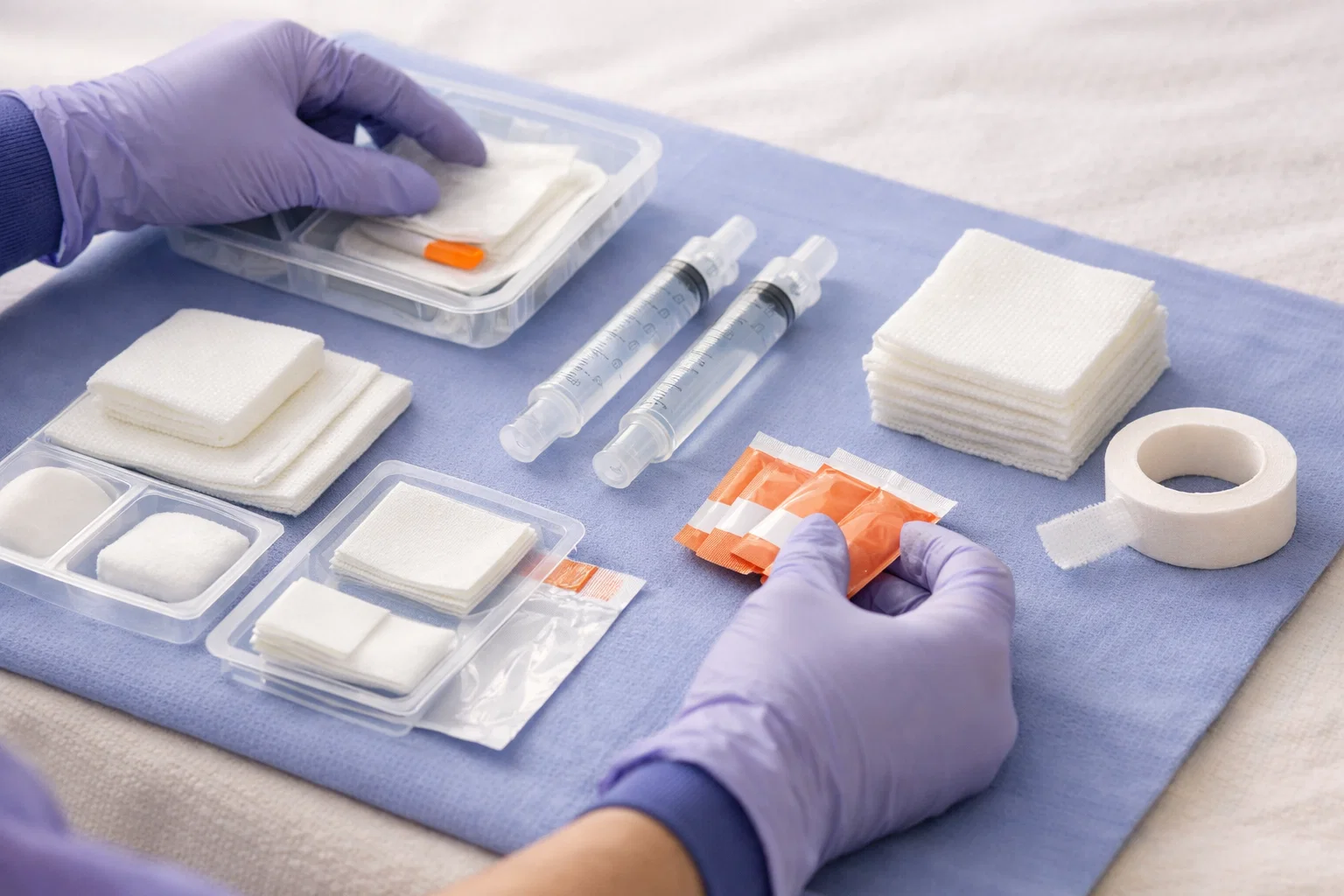
The dressing covering your PICC insertion site must be changed regularly to prevent infection. Our nurses perform dressing changes using strict sterile technique, minimizing the risk of introducing bacteria to the catheter site. Standard dressing changes occur weekly for transparent dressings, though more frequent changes may be needed if the dressing becomes wet, loose, or soiled. Each dressing change includes thorough inspection of the insertion site for signs of complications.
Catheter Flushing
PICC lines must be flushed regularly to maintain patency and prevent blood clots from forming inside the catheter. Our nurses flush your PICC line using proper technique and appropriate solutions—typically saline and heparin according to your specific protocol. Flushing frequency depends on how often your line is used for infusions. Lines not in daily use require routine flushing to prevent occlusion.
Cap Changes
The caps on your PICC line hubs require regular replacement to maintain sterility and proper function. Our nurses change caps according to established protocols, using aseptic technique to prevent contamination. Cap changes typically occur weekly or with each dressing change, though protocols may vary based on your specific situation.
Site Assessment and Monitoring
Every visit includes careful assessment of your PICC line and insertion site. We examine the site for redness, swelling, drainage, or tenderness that might indicate infection. We check the catheter for proper positioning and securement. We assess the arm for swelling that could suggest blood clot formation. We verify catheter patency by assessing flow and flush ease. This vigilant monitoring catches problems early when they are most treatable.
Blood Draws
PICC lines can be used for blood draws, eliminating the need for separate needle sticks. Our nurses can draw blood through your PICC line when ordered by your physician, using proper technique to prevent catheter damage and ensure accurate lab results. This capability is particularly valuable for patients requiring frequent laboratory monitoring.
Troubleshooting and Problem Resolution
PICC lines occasionally develop problems such as sluggish flow, resistance to flushing, or difficulty drawing blood. Our nurses are skilled in troubleshooting these issues, using appropriate interventions to restore function. When problems cannot be resolved through standard measures, we coordinate with your physician for further evaluation and intervention.
Preventing PICC Line Complications
Complications from PICC lines can be serious, but most are preventable with proper care. Understanding these risks helps explain why meticulous maintenance matters.
Infection Prevention
Catheter-related bloodstream infections are among the most serious PICC complications. Bacteria can enter through the insertion site or through the catheter hub during medication administration. Our strict adherence to sterile technique during dressing changes, cap changes, and all catheter access significantly reduces infection risk. We also educate patients and families about practices that help prevent infection between nursing visits.
Blood Clot Prevention
Blood clots can form inside the catheter causing occlusion, or around the catheter in the vein causing deep vein thrombosis. Proper flushing technique and frequency helps prevent intraluminal clots. We monitor for signs of DVT including arm swelling, pain, and skin color changes, alerting your physician immediately if concerning symptoms develop.
Catheter Damage Prevention
PICC lines can be damaged by improper handling, use of wrong syringe sizes, or excessive pressure during flushing. Our nurses use appropriate technique to protect catheter integrity. We also teach patients and caregivers proper handling to prevent accidental damage between visits.
Dislodgement Prevention
PICC lines can migrate or be accidentally pulled out if not properly secured. We ensure your securement device is intact and functioning at every visit, replacing it when needed. We educate you about activities and movements that could dislodge the catheter and how to protect your line during daily activities.
Patient and Family Education
Successful PICC line management extends beyond nursing visits. We provide thorough education to help you care for your line between our visits.
Daily Monitoring
We teach you to inspect your PICC site daily, looking for warning signs that require immediate attention. You learn what normal looks like so you can recognize abnormal changes promptly.
Keeping the Site Dry
Water exposure risks infection. We provide guidance on protecting your PICC during bathing, including waterproof covering options. We explain why swimming and submerging the arm are not permitted while your PICC is in place.
Activity Modifications
Certain activities can damage or dislodge your PICC line. We discuss which activities to avoid and how to modify others to protect your catheter. Most daily activities can continue with minor adjustments.
Recognizing Problems
We teach you the warning signs requiring immediate nursing attention including fever or chills which may indicate infection, redness, swelling, or drainage at the insertion site, pain or tenderness in the arm, swelling of the hand, arm, or neck, catheter leaking or damage, and difficulty flushing or infusing through the line. Knowing when to call ensures problems are addressed promptly before they become serious.
Emergency Situations
Certain situations require immediate action. We explain what to do if your PICC line is accidentally pulled out, breaks, or leaks. Having clear instructions for emergencies provides peace of mind and prevents panic if problems occur.
Coordination with Your Healthcare Team
PICC line care does not happen in isolation. We coordinate closely with all members of your healthcare team.
Physician Communication
We report regularly to your physician on your PICC line status, including any concerns or complications. When problems arise, we coordinate promptly for appropriate medical intervention. If your line needs replacement or repositioning, we facilitate that process.
Infusion Pharmacy Coordination
If you receive IV medications or nutrition through your PICC, we coordinate with your infusion pharmacy regarding delivery schedules, supply needs, and any medication-related concerns.
Hospital and Clinic Coordination
If you require procedures or appointments at hospitals or clinics, we communicate your PICC line status and care requirements to ensure continuity. When your treatment ends and the PICC line is ready for removal, we coordinate the removal process.
PICC Line Removal
When your treatment course is complete, your PICC line will be removed. This is typically a simple bedside procedure performed by a trained nurse. We ensure the catheter is removed safely and completely, inspect the tip to verify integrity, apply appropriate dressing to the site, and provide instructions for site care after removal. Most patients experience minimal discomfort during removal, and the site heals quickly.
The Home Care Advantage
Receiving PICC line care at home offers important benefits over clinic-based maintenance.
Consistency of Care
The same nurse caring for your PICC line visit after visit knows your catheter intimately—its normal characteristics, any quirks, and subtle changes that might indicate developing problems. This consistency enhances safety and problem detection.
Reduced Infection Exposure
Healthcare facilities harbor bacteria that can cause catheter infections. Receiving care at home minimizes this exposure, which is particularly important given your direct vascular access.
Convenience
Rather than traveling to clinics for routine PICC care while potentially feeling unwell from your underlying condition or treatment, you receive care in your own home at scheduled times that work for your life.
Comprehensive Assessment
Home visits allow assessment of factors affecting your PICC care—your home environment, your understanding of self-care, your support system. This comprehensive view helps us tailor care to your actual situation.
Insurance Coverage
PICC line care provided by skilled nurses is covered by Medicare Part A for homebound patients requiring skilled nursing services. Medicare recognizes the importance of proper catheter maintenance in preventing costly complications. Medi-Cal and most private insurance plans also cover home PICC care with similar requirements.
Our team verifies your coverage and manages authorization requirements. We ensure your PICC line care continues without interruption throughout your treatment course.
Getting Started
If you have a PICC line and need home care services, contact HarvardCare Home Health today. Whether your PICC was placed during hospitalization or at an outpatient facility, our skilled nurses are ready to provide the meticulous care your catheter requires. We serve patients throughout Los Angeles County, bringing expert PICC line management to your home.
Do not risk complications from inadequate PICC care. Our nurses have the training, experience, and attention to detail needed to keep your catheter functioning safely. Call today for a free consultation and ensure your PICC line receives the expert care it demands.
FAQs
Do you have questions?
Got questions about PICC Line Care at Home? Here are answers to what patients and families ask most.
Warning signs of PICC line infection include fever or chills, redness spreading from the insertion site, swelling or hardness at the site, drainage or pus from the insertion site, and tenderness or pain at or near the catheter. If you experience any of these symptoms, contact us immediately. Catheter infections can become serious quickly, so prompt attention is essential.
You can shower with a PICC line, but you must keep the site completely dry. We recommend covering the dressing and catheter with waterproof protection such as plastic wrap secured with tape or a commercial PICC line cover. Never submerge your arm in water—no baths, swimming, or hot tubs while your PICC is in place. Our nurses provide detailed instructions on protecting your line during bathing.
If you notice resistance when your PICC line is being flushed or if blood cannot be drawn back, the catheter may be partially occluded. Contact us promptly so we can assess the situation. Often, repositioning or specific flushing techniques can resolve the issue. Sometimes medication to dissolve clots may be needed. Do not force a flush against resistance as this could damage the catheter.
PICC lines can remain in place for weeks to months when properly maintained—some patients have PICC lines for six months or longer. The duration depends on your treatment needs and how well the catheter functions. Regular maintenance including dressing changes, flushing, and cap changes keeps the line functional throughout your treatment. When treatment ends, the PICC is removed in a simple procedure.
PICC Line Care at Home may help patients who have a skilled home health need related to safety, recovery, daily function, condition monitoring, or caregiver teaching. HarvardCare Home Health can review the request and explain whether the service may fit the plan of care.
The home health nurse may assess the home routine, review current concerns, provide patient and caregiver education, and coordinate with the physician or care team when clinically appropriate.
Home health services generally require a provider order and a plan of care. The agency can help review the referral, skilled need, homebound status, and eligibility considerations.
Yes. Caregiver education is often an important part of skilled nursing care. The care team may teach safer routines, warning signs, and ways to support the patient between visits.
Prepare recent discharge papers, medication lists, physician instructions, supply or equipment information, current symptoms, fall history, and questions about what has become difficult at home.
TESTIMONIALS
What Our Patients & Families Say
EXCELLENT
AREAS WE SERVE
PICC Line Care at Home Near You
Our licensed healthcare professionals provide expert care in the comfort of your home. We proudly serve patients and families throughout Los Angeles County.
Serving 279 cities across LA County
- A
- Acton
- Adams-Normandie
- Agoura Hills
- Agua Dulce
- Alhambra
- Alondra Park
- Altadena
- Angelino Heights
- Arcadia
- Arleta
- Arlington Heights
- Artesia
- Arts District
- Atwater Village
- Avocado Heights
- Azusa
- B
- Baldwin Hills
- Baldwin Park
- Bassett
- Beachwood Canyon
- Bel Air
- Bell
- Bell Gardens
- Bellflower
- Beverly Crest
- Beverly Grove
- Beverly Hills
- Beverlywood
- Boyle Heights
- Bradbury
- Brentwood
- Broadway-Manchester
- Burbank
- C
- Calabasas
- Canoga Park
- Canyon Country
- Carson
- Carthay
- Castaic
- Castle Heights
- Central-Alameda
- Century City
- Cerritos
- Charter Oak
- Chatsworth
- Chesterfield Square
- Cheviot Hills
- Chinatown
- Citrus
- City Terrace
- Claremont
- Commerce
- Compton
- Country Club Park
- Covina
- Crenshaw
- Cudahy
- Culver City
- Cypress Park
- D
- Del Aire
- Del Rey
- Desert View Highlands
- Diamond Bar
- Downey
- Downtown Los Angeles
- Duarte
- E
- Eagle Rock
- East Hollywood
- East Los Angeles
- East Pasadena
- East Rancho Dominguez
- East San Gabriel
- East Whittier
- Echo Park
- El Camino Village
- El Monte
- El Segundo
- El Sereno
- Elysian Valley
- Encino
- Exposition Park
- F
- Fairfax
- Florence
- Florence-Firestone
- G
- Gardena
- Garvanza
- Glassell Park
- Glendale
- Glendora
- Gramercy Park
- Granada Hills
- Green Meadows
- H
- Hacienda Heights
- Hancock Park
- Harbor City
- Harbor Gateway
- Harvard Heights
- Harvard Park
- Hasley Canyon
- Hawaiian Gardens
- Hawthorne
- Hermon
- Hermosa Beach
- Hidden Hills
- Highland Park
- Historic Filipinotown
- Hollywood
- Hollywood Hills
- Holmby Hills
- Huntington Park
- Hyde Park
- I
- Inglewood
- J
- Jefferson Park
- K
- Kinneloa Mesa
- Koreatown
- L
- La Cañada Flintridge
- La Crescenta-Montrose
- La Habra Heights
- La Mirada
- La Puente
- La Verne
- Ladera Heights
- Lake Balboa
- Lake Hughes
- Lake Los Angeles
- Lake View Terrace
- Lakewood
- Lancaster
- Larchmont
- Lawndale
- Leimert Park
- Lennox
- Leona Valley
- Lincoln Heights
- Little Armenia
- Little Tokyo
- Littlerock
- Lomita
- Long Beach
- Los Angeles
- Los Feliz
- Lynwood
- M
- Malibu
- Manchester Square
- Manhattan Beach
- Mar Vista
- Marina del Rey
- Mayflower Village
- Maywood
- Mid-City
- Mid-Wilshire
- Miracle Mile
- Mission Hills
- Monrovia
- Montebello
- Montecito Heights
- Monterey Park
- Mt Washington
- N
- Newhall
- NoHo Arts District
- North El Monte
- North Hills
- North Hollywood
- North Long Beach
- Northridge
- Norwalk
- P
- Pacific Palisades
- Pacoima
- Palmdale
- Palms
- Palos Verdes Estates
- Palos Verdes Peninsula
- Panorama City
- Paramount
- Park La Brea
- Pasadena
- Pearblossom
- Pico Rivera
- Pico-Robertson
- Pico-Union
- Playa del Rey
- Playa Vista
- Pomona
- Porter Ranch
- Q
- Quartz Hill
- R
- Rancho Dominguez
- Rancho Palos Verdes
- Rancho Park
- Redondo Beach
- Reseda
- Rolling Hills
- Rolling Hills Estates
- Rosemead
- Rowland Heights
- S
- San Dimas
- San Fernando
- San Gabriel
- San Marino
- San Pasqual
- San Pedro
- Santa Clarita
- Santa Fe Springs
- Santa Monica
- Saugus
- Sawtelle
- Sepulveda
- Shadow Hills
- Sherman Oaks
- Sherman Village
- Sherwood Forest
- Sierra Madre
- Signal Hill
- Silver Lake
- South Central
- South El Monte
- South Gate
- South Park
- South Pasadena
- South San Gabriel
- South San Jose Hills
- South Whittier
- Stevenson Ranch
- Stonehurst
- Studio City
- Sun Valley
- Sun Village
- Sunland
- Sunset Park
- Sylmar
- T
- Tarzana
- Temple City
- Thai Town
- Toluca Lake
- Topanga
- Torrance
- Tujunga
- U
- University Hills
- University Park
- V
- Val Verde
- Valencia
- Valinda
- Valley Glen
- Valley Village
- Van Nuys
- Venice
- Vermont Knolls
- Vermont Square
- Vermont Vista
- Vermont-Slauson
- Victor Heights
- View Park-Windsor Hills
- Vincent
- W
- Walnut
- Walnut Park
- Watts
- West Adams
- West Athens
- West Carson
- West Covina
- West Hills
- West Hollywood
- West Los Angeles
- West Puente Valley
- West Rancho Dominguez
- West Whittier-Los Nietos
- Westchester
- Westlake
- Westlake Village
- Westmont
- Westwood
- Westwood Village
- Whitley Heights
- Whittier
- Willowbrook
- Wilmington
- Wilshire Center
- Windsor Square
- Winnetka
- Woodland Hills
More Services

In-Home Wound Care Services
- Board-certified wound care nurses
- Personalized treatment plans
- All wound types treated
Diabetic Wound Care at Home
- Diabetes wound specialists
- Blood sugar optimization support
- Advanced offloading techniques
Skilled Nursing Care at Home
- Registered nurses available 7 days a week
- Comprehensive care coordination
- IV therapy and infusion services