
 Wound Care
 Skilled Nursing Care
 Physical Therapy
 Occupational Therapy
We treat diabetic foot ulcers, pressure injuries, venous and arterial leg ulcers, surgical incisions that have reopened or become infected, skin tears in fragile skin, and chronic wounds that have not closed with standard care. Our nurses are certified wound specialists who handle complex cases at home.
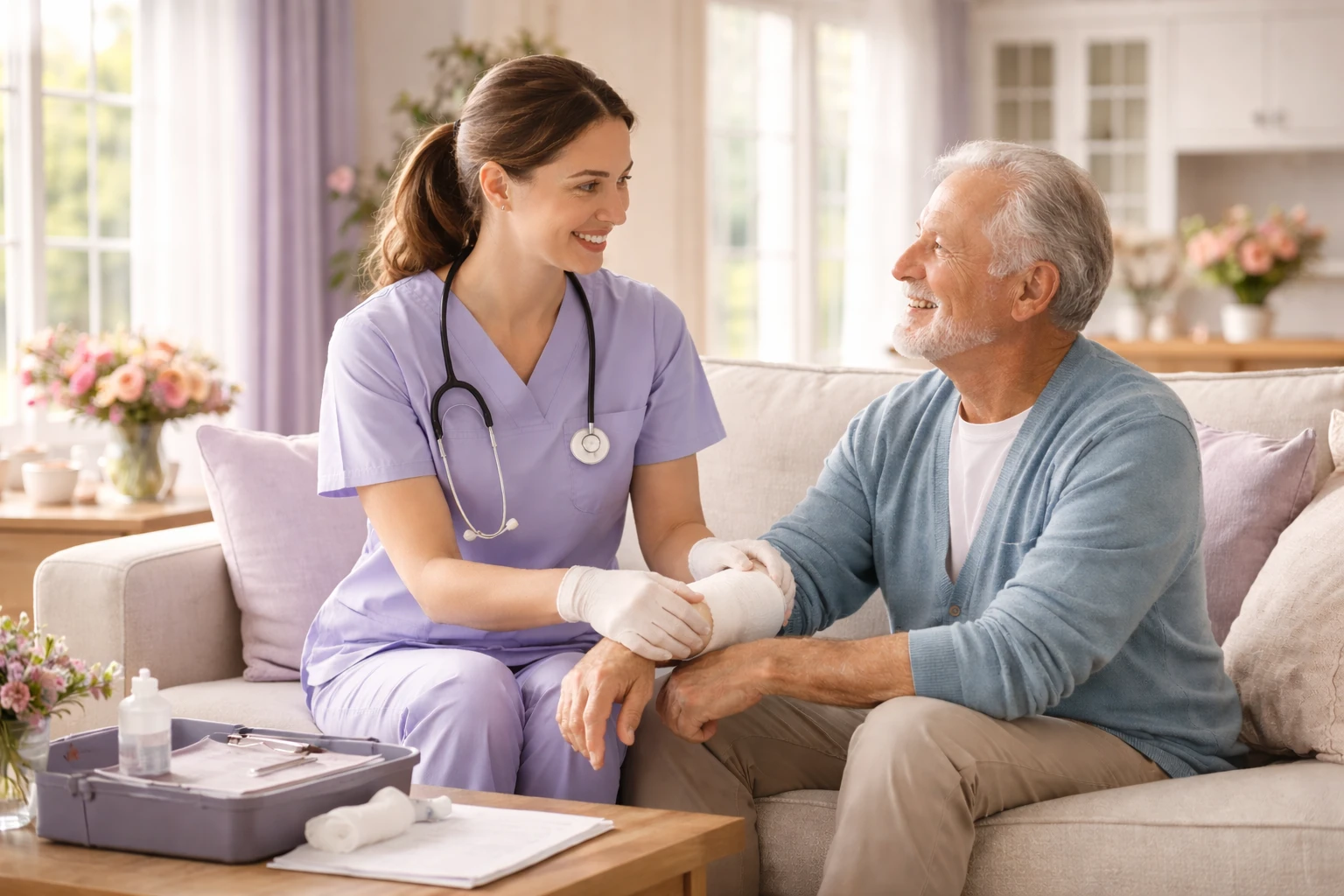
Wound Care at Home in Sherman Village, CA
- Serving all Sherman Village areas
- Flexible scheduling options
- Near Sherman Oaks Hospital
- Medicare & PPO plans accepted
Skilled Wound Care Where the Tujunga Wash Meets the LA River
Sherman Village is a compact residential pocket at the eastern edge of Sherman Oaks, laid out between Burbank Boulevard and Riverside Drive on the ground where the Tujunga Wash empties into the Los Angeles River. The scale here is smaller than the hillside neighborhoods to the south: postwar single-story houses, stucco apartment courts, and duplexes on tree-lined blocks between Woodman Avenue and Coldwater Canyon Avenue. Many of these households have stayed put for decades, and a good share of residents are older adults who would rather not cross the Valley for a fifteen-minute dressing change. Our Medicare-certified wound care specialists bring specialist-level treatment to these streets, delivered at a kitchen table or a bedside, on a schedule built around the rest of your week.
Our wound care nurses serve patients throughout Sherman Village, from the houses on Otsego Street and Hatteras Street to the apartment buildings along Fulton Avenue, from the blocks just under Burbank Boulevard down to Camarillo Street, Weddington Street, and the homes facing Riverside Drive near Notre Dame High School. We cross Coldwater Canyon Avenue and Woodman Avenue several times a day, and we also treat patients in neighboring Valley Village, Studio City, and Sherman Oaks.
Why the Skin Is the Last Thing to Get Repaired
Healing is expensive work. Closing a wound requires protein, oxygen, controlled inflammation, and a steady blood supply arriving at the injury site, and the body distributes those resources by priority. Vital organs are served first. Skin is served last. When circulation is limited, blood sugar runs high, or nutrition is thin, the wound becomes the project the body sets aside, which is why an injury that should have closed in a month can sit open through an entire summer without ever looking dramatic enough to alarm anyone.
What Slows the Repair Cycle
Diabetes is the most frequent culprit. Elevated blood sugar stiffens small vessel walls, blunts the immune cells that clear bacteria, and dulls sensation in the feet so an injury goes unnoticed for days. Peripheral arterial disease narrows the vessels carrying oxygen to the tissue. Venous insufficiency does the opposite, letting blood pool in the lower legs until the pressure damages skin from underneath. Add medications that suppress inflammation, appetite loss that leaves protein intake short, and the kidney or heart conditions that hold fluid in the tissue, and a single wound can face four obstacles at once.
Wounds We Treat
- Diabetic foot ulcers that form under calluses or between toes without any pain to warn you
- Pressure injuries over the heels, sacrum, and hips after weeks of limited mobility
- Venous leg ulcers on the lower calf where swelling breaks the skin down repeatedly
- Arterial wounds on the feet and toes where narrowed vessels starve the tissue of oxygen
- Surgical incisions that have separated, drained, or become infected after discharge
- Skin tears and traumatic wounds in thin, fragile, or steroid-affected skin
- Chronic wounds that have stayed open for months without measurable improvement
Every Treatment Decision Traces Back to a Finding
Guesswork is what leaves a wound open. Our nurses work from a documented set of findings, and every dressing, wrap, and referral in your plan traces back to something we observed and wrote down.
A Full Wound Investigation
The first visit is long by design. We measure the wound in three dimensions, map undermining or tunneling at the edges, describe the wound bed as granulation, slough, or necrosis, and record drainage volume, color, and odor. We check the surrounding skin for maceration, callus, induration, and warmth. Then we look past the wound itself: pulses and capillary refill in the limb, sensation testing where neuropathy is suspected, blood sugar logs, a frank conversation about meals, and a line-by-line read of every prescription and supplement in the house.
Treatment Chosen From the Evidence
Findings drive the plan. Devitalized tissue is debrided by the method your wound and your tolerance allow. Your treatment plan specifies dressings matched to moisture balance, absorptive where drainage is heavy, moisture-donating where the bed is dry, antimicrobial where bacterial burden is holding progress back. Venous wounds receive compression at a level your arterial circulation can safely tolerate. Wounds over the heel or sacrum get offloading and repositioning schedules the household can realistically follow.
Physician Coordination
Your wound care stays attached to the rest of your medical care. We maintain close communication with physicians at Sherman Oaks Hospital, Valley Presbyterian Hospital, and Encino Hospital Medical Center, sending measurements, photographs, and visit notes so your doctor sees the trajectory rather than a summary months later. When a wound needs a vascular consult, an antibiotic, or a change in orders, we call.
The Chart Tells You Before Your Eyes Do
A wound that is healing steadily often looks identical from one day to the next. The chart is what shows the difference. Our nurses visit Sherman Village homes on a set schedule, usually two or three times a week during active treatment, and each visit follows the same sequence of cleansing, assessment, treatment, and a fresh sterile dressing.
Every visit produces numbers alongside a photograph taken at consistent distance and angle. Six millimeters of edge advance is invisible to the eye and obvious in the record. If four weeks of measurements show no meaningful change, that is a signal to revise the plan rather than repeat it.
Between visits, the household carries the work. We teach families how to keep a dressing dry and intact, how to reposition safely, which changes in color, odor, or pain warrant a phone call, and which small daily habits quietly work against healing.
The Blocks We Cover Between Woodman and Coldwater Canyon
Our wound care nurses cover every block of Sherman Village and the streets immediately around it:
- Homes between Woodman Avenue and Coldwater Canyon Avenue
- The Fulton Avenue corridor south of Burbank Boulevard
- Otsego Street, Hatteras Street, and Camarillo Street
- Weddington Street and the homes facing Riverside Drive
- Apartment courts and duplexes near Notre Dame High School
- Eastern Sherman Oaks blocks along the Tujunga Wash
Patients a few blocks away in Valley Village, Studio City, and the rest of Sherman Oaks are on the same daily route.
Referral on Monday, Nurse on Wednesday
Home wound care requires a physician order documenting medical necessity. Medicare covers qualifying patients without copays when skilled wound care is needed and homebound criteria are met. HarvardCare accepts Original Medicare (Part A & B), including dual-eligible patients whose Medicare is primary, Blue Shield of California PPO and Anthem Blue Cross PPO. We do not accept HMO plans, Medicare Advantage plans, or Medi-Cal-only coverage.
Our intake team verifies your insurance coverage and explains your benefits clearly before services begin. We coordinate with physicians at Sherman Oaks Hospital, Valley Presbyterian Hospital, Encino Hospital Medical Center, and Kaiser Permanente Panorama City Medical Center, along with practices across the east Valley. For patients coming home with an open wound, we work with discharge planners so there is no gap in care.
Most patients begin receiving wound care within one to two days of a completed referral. An order that reaches our intake desk early in the week usually becomes a first nursing visit before that week is out. Contact us to talk through your situation, or have your physician send the referral directly.
Our Services in Sherman Village
Have questions or need support? Reach out to our team anytime — we're here to help you with compassionate, professional care at home in Sherman Village.
In-Home Physical Therapy
- In-home hip and knee rehabilitation
- Personalized functional goal-setting
- Safe movement and fall-risk strategies
- Progressive, evidence-informed strengthening


WHY CHOOSE HarvardCare Home Health IN SHERMAN VILLAGE
The right care for your loved ones
Your family deserves trusted, professional care at home. Our dedicated team of certified nurses and therapists provides personalized treatment with the attention and respect your loved ones deserve.
Comprehensive home health care with wound care specialty
Medicare-certified specialists (RN, PT, OT, CWON)
Same-day start available throughout LA County
Personalized one-on-one care in your home
Reduced hospital readmissions and infections
Family involvement in all care decisions
Areas We Serve Near Sherman Village
FAQs
Do you have questions?
Have questions about Wound Care at Home in Sherman Village? Find answers below or reach out to our team anytime — we're here to help.
Our nurses begin with a full wound assessment that records size, depth, tissue type, drainage, and the condition of the surrounding skin. We then review blood sugar logs, circulation, nutrition, and every medication you take. That combined picture usually explains the delay.
Yes, we maintain close communication with Sherman Oaks Hospital, Valley Presbyterian Hospital, and Encino Hospital Medical Center. After every visit your physician receives wound measurements, photographs, and clinical notes, so treatment changes are approved without delay.
Absolutely. Many homes here are small apartment buildings and duplexes with shared entries and street parking, and our nurses work in them every week. We confirm gate codes, unit numbers, and parking details when we schedule, so visits start on time.
Yes, Medicare covers home wound care in Sherman Village without copays when you have a physician order, require skilled wound care services, and meet homebound criteria. Our intake team verifies your coverage and explains your benefits before services begin.
TESTIMONIALS
What Sherman Village Patients & Families Say
NEARBY HEALTHCARE RESOURCES
Sherman Village Healthcare Resources
Listed for patient convenience. No formal affiliation implied.