

 Wound Care
We serve all San Gabriel neighborhoods including the Mission District, Las Tunas Drive area, Vincent Lugo Park neighborhood, and San Gabriel Square vicinity. Our coverage extends to Rosemead, Temple City, Alhambra, Monterey Park, and surrounding communities.
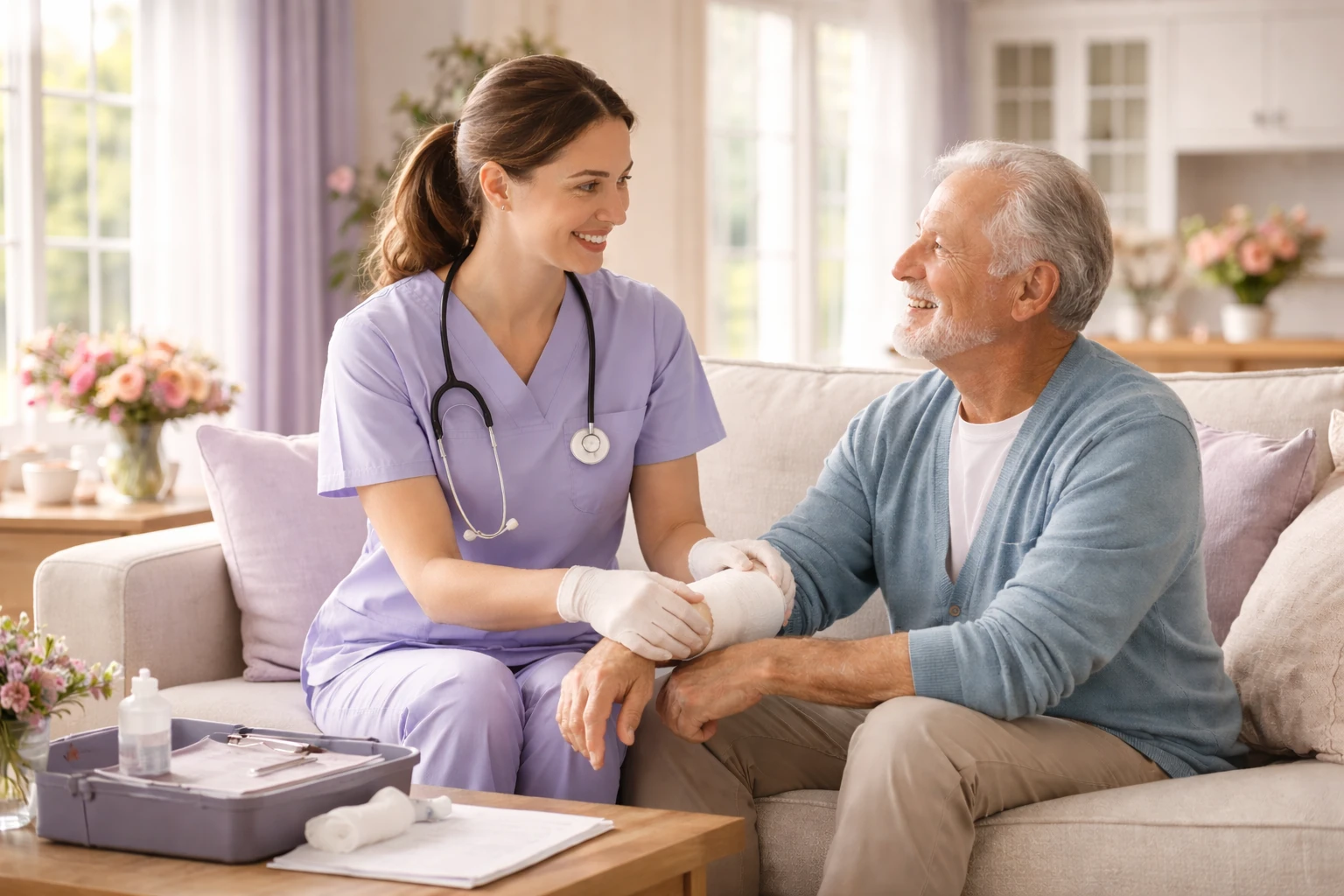
Wound Care at Home in San Gabriel, CA
- All San Gabriel neighborhoods covered
- Mandarin & Cantonese speaking nurses
- Flexible visit scheduling
- Medicare & PPO plans accepted
Wound Care Rooted in San Gabriel
San Gabriel blends rich history with vibrant modern life, creating a distinctive community in the heart of the San Gabriel Valley. From the landmark Mission San Gabriel Arcángel to the lively San Gabriel Square, this city offers residents a unique sense of place and belonging. When a wound will not heal — outlasting treatments, outlasting patience, becoming a daily weight on a family already managing enough — our Medicare-certified wound care specialists deliver expert treatment directly to your San Gabriel home. Clinical care that speaks your language, understands your household, and gets the wound closed.
Our wound care nurses serve patients throughout San Gabriel, from the neighborhoods near Vincent Lugo Park to the residential streets along Las Tunas Drive, from the Mission District to the areas bordering Rosemead and Temple City. Our clinicians communicate fluently in Mandarin, Cantonese, and Spanish. We also provide wound care in neighboring Alhambra, Monterey Park, and San Marino.
The Barriers No One Has Named
Every wound that refuses to heal has barriers — specific, identifiable conditions inside the body that are actively preventing the repair process from completing. The frustrating part is that nobody has named them. Clinic visits change the dressing, maybe try a new product, and send you home. But the barrier stays in place because nobody took the time to find it. In San Gabriel, where many families manage diabetes and other chronic conditions, those barriers are especially common. Blood glucose that stays above target poisons the cellular environment at the wound site — the single most frequent barrier we encounter in this community. A circulation deficit restricts oxygen delivery below what rebuilding tissue requires. A medication taken for a different condition — a steroid, a blood thinner, an immune suppressant — quietly suppresses the healing response. A diet that is culturally rich but low in protein means the body lacks the substrate it needs to manufacture new tissue. These are not rare complications. They are everyday conditions that become wound-healing barriers when nobody identifies and addresses them. Our certified wound care nurses name each barrier and build the treatment plan around removing it.
Wounds San Gabriel Families Bring to Our Door
- Diabetic foot and leg ulcers — among the most common wounds we treat in the Valley, forming on neuropathic extremities where nerve damage has eliminated the pain warning, often reaching concerning depth before anyone detects them
- Pressure injuries at any stage — from persistent redness that signals early tissue damage to deep wounds that have broken through the skin into subcutaneous tissue
- Venous stasis ulcers from circulation problems — heavy, swollen legs, discolored skin around the ankles, and a wound that drains and cycles open despite repeated treatment
- Arterial wounds requiring specialized management — tissue downstream from narrowed vessels that cannot receive enough blood to sustain normal function, let alone repair
- Surgical incisions needing professional oversight — wounds that opened after discharge, developed infection, or stopped progressing when steady closure should have continued
- Skin tears common in older adults, made more frequent and harder to heal by blood-thinning medications and age-related tissue fragility
- Wounds unresponsive to previous treatments — cases that have been through clinics and products and referrals without anyone producing measurable closure
San Gabriel has deep traditions of family caregiving and respect for elders. In many households, adult children manage medical appointments while grandparents speak primarily Mandarin or Cantonese at home. Our nurses communicate directly with the patient — not through a family member’s improvised translation — while keeping English-speaking family members fully informed. Everyone in the household understands the wound, the plan, and what to watch for between visits.
The Assessment That Finally Identifies What Is in the Way
Our wound care nurses do not repeat the surface-level check the clinic already performed. The first visit is a comprehensive clinical assessment designed to identify every barrier standing between your wound and closure.
From the Wound Bed to the Daily Routine
Our nurse examines the wound carefully — measuring length, width, and depth, identifying tissue types on the wound bed, quantifying drainage and characterizing its composition, evaluating the skin around the wound for maceration or early breakdown, and screening for bacterial biofilm that may have been invisibly sustaining chronic inflammation through every prior treatment attempt. Then the assessment moves outward from the wound bed to the daily routine: hemoglobin A1c and blood glucose patterns — assessed in conversation, in your language, with the specificity that accurate clinical history requires, vascular function through pulse quality, capillary refill, and ankle-brachial index when clinically appropriate, nutritional intake evaluated with real detail — not a checkbox but an actual understanding of what you eat, how much protein your meals provide, and whether the traditional dishes your household prepares deliver the building blocks wound repair demands, every medication on your list reviewed for documented healing interference — pharmaceuticals, supplements, and traditional remedies alike, and daily positioning and activity patterns that determine whether the wound gets adequate relief from mechanical stress or absorbs constant pressure. We explain every finding clearly, in Mandarin, Cantonese, Spanish, or English, and make sure you understand the plan before treatment begins.
A Plan That Removes Barriers One by One
Your treatment plan is organized around barrier removal — each intervention targeting a specific obstacle our assessment identified. Based on our findings, care may involve debridement to clear dead tissue and prepare a wound bed capable of active granulation, dressings selected for your wound’s exact moisture level, drainage characteristics, and current healing phase, compression therapy for venous leg ulcers where chronic edema is the primary barrier to wound closure, offloading devices for diabetic foot wounds and pressure injuries so tissue attempting to rebuild gets relief from body weight and friction, antimicrobial dressings with silver or iodine agents when bacterial colonization is the barrier keeping the wound locked in inflammation, and biologic products for the most challenging wounds — cases where prolonged inflammation has exhausted the wound’s intrinsic repair capacity and external biological support is needed to restart the process.
Your Physicians Receive Clear, Actionable Updates
We maintain regular communication with your doctors at San Gabriel Valley Medical Center, Methodist Hospital of Southern California, or wherever you receive care. After every visit, we send wound measurements, photographs, and detailed clinical notes so your medical team always has an accurate, current picture. When a wound requires attention beyond our scope — a medication adjustment, a vascular study, a specialist referral — we raise it directly with clinical rationale and help coordinate next steps.
San Gabriel and the Heart of the Valley
Our wound care nurses serve patients throughout San Gabriel and neighboring communities:
- Mission District, historic downtown, and San Gabriel Square area
- Las Tunas Drive, San Gabriel Boulevard, and Valley Boulevard corridors
- Vincent Lugo Park, Smith Park, and Marshall Park neighborhoods
- Del Mar Avenue, Ramona Street, and Mission Drive residential blocks
- Broadway, Junipero Serra Drive, and Santa Anita Street areas
We also provide wound care in Alhambra, Monterey Park, San Marino, Rosemead, Temple City, and Pasadena.
Clear on Coverage, Quick to Start
Home wound care requires a physician order documenting medical necessity. Medicare covers eligible patients without copays when skilled wound care criteria and homebound requirements are met. HarvardCare accepts Original Medicare (Part A & B), including dual-eligible patients whose Medicare is primary, Blue Shield of California PPO and Anthem Blue Cross PPO. We do not accept HMO plans, Medicare Advantage plans, or Medi-Cal-only coverage.
Our intake team — multilingual and thorough — handles insurance verification and explains your benefits before services commence. We coordinate with San Gabriel Valley Medical Center, Methodist Hospital of Southern California, and physicians throughout the Valley. For patients leaving hospitals with wound care needs, we work with case managers to ensure timely transitions home.
Services typically begin within one to two days of completed referral. Contact us to discuss your situation or have your doctor send a referral.
Our Services in San Gabriel
Have questions or need support? Reach out to our team anytime — we're here to help you with compassionate, professional care at home in San Gabriel.
Wound Dressing Change at Home
- Multilingual nursing available
- Family-centered care
- Local hospital coordination
- Medicare & PPO plans accepted
Skilled Nursing at Home
- Multilingual nursing staff
- San Gabriel Valley Medical coordination
- Historic community coverage
- Medicare & PPO plans accepted
In-Home Physical Therapy
- Mandarin & Cantonese-speaking therapists
- Multigenerational family care
- SGV Medical Center coordination
- Medicare & PPO plans accepted
Discharge Planning Support at Home
- Multigenerational family planning
- SGV Medical Center coordination
- Multilingual social workers
- Medicare & PPO plans accepted
Alzheimer’s Care at Home
- Whole-household approach
- Multilingual clinicians
- Multigenerational coordination
- Medicare & PPO plans accepted
Diabetic Foot Ulcer Care at Home
- Every instruction in your language
- SGV multilingual nurses
- Huntington Memorial coordination
- Medicare & PPO plans accepted
Post-Surgery Rehab at Home
- SGV multilingual therapists
- Language-matched exercises
- Huntington Memorial coordination
- Medicare & PPO plans accepted
Back Pain Physical Therapy at Home
- SGV multilingual therapists
- Correct-technique instruction
- Huntington Memorial coordination
- Medicare & PPO plans accepted
Home Health Nurse Visit
- Multilingual SGV nurses
- Medication error prevention
- Huntington Memorial coordination
- Medicare & PPO plans accepted
Home Health Aide Services
- Multilingual SGV aides
- Trust through language match
- RN-supervised
- Medicare & PPO plans accepted
IV Therapy at Home
- Multilingual SGV IV nurses
- Language-matched infusion
- Sterile technique
- Medicare & PPO plans accepted
In-Home Occupational Therapy
- Multilingual SGV OTs
- Language-matched training
- Real-home independence
- Medicare & PPO plans accepted
Catheter Care at Home
- Multilingual SGV catheter RNs
- Language-matched prevention
- Sterile technique
- Medicare & PPO plans accepted
COPD Home Health Nurse
- Multilingual SGV COPD RNs
- Language-matched prevention
- SpO2 trending
- Medicare & PPO plans accepted


WHY CHOOSE HarvardCare Home Health IN SAN GABRIEL
The right care for your loved ones
Your family deserves trusted, professional care at home. Our dedicated team of certified nurses and therapists provides personalized treatment with the attention and respect your loved ones deserve.
Comprehensive home health care with wound care specialty
Medicare-certified specialists (RN, PT, OT, CWON)
Same-day start available throughout LA County
Personalized one-on-one care in your home
Reduced hospital readmissions and infections
Family involvement in all care decisions
Areas We Serve Near San Gabriel
FAQs
Do you have questions?
Have questions about Wound Care at Home in San Gabriel? Find answers below or reach out to our team anytime — we're here to help.
Yes, we have nurses and therapists fluent in Mandarin and Cantonese, as well as Spanish speakers. Clear communication in your preferred language is essential for quality care, and we work to match patients with clinicians who can communicate effectively with them.
Home health provides skilled medical services like nursing, wound care, and licensed therapy ordered by a physician and covered by Medicare. Home care or caregivers provide non-medical assistance with daily activities. We focus on the medical side, though we can help coordinate with caregiving services.
Absolutely, and we encourage it. Having family present allows us to teach caregiving techniques, answer questions everyone may have, and ensure the whole family understands the care plan. Family involvement typically improves patient outcomes.
Before discharge, we ensure you and your family have the knowledge and resources to continue recovery independently. We provide education, coordinate follow-up appointments with your doctors, and can recommend ongoing resources if needed. Our goal is confident independence.
TESTIMONIALS
What San Gabriel Patients & Families Say
NEARBY HEALTHCARE RESOURCES
San Gabriel Healthcare Resources
Listed for patient convenience. No formal affiliation implied.