
 Wound Care
A comprehensive fall risk assessment includes evaluation of personal factors like balance, strength, vision, medications, and medical conditions, plus thorough home safety evaluation of every room where you spend time. We assess how you perform daily activities and identify specific hazards in your environment. The result is a detailed understanding of why you are at risk and a personalized plan to reduce that risk.
OCCUPATIONAL THERAPY
Fall Risk Assessment at Home
Fall risk assessment at home throughout Los Angeles County. Our occupational therapists evaluate personal fall risk factors, conduct comprehensive home safety assessments, and develop customized prevention plans. Medicare accepted.
EXCELLENT 

Comprehensive Home Fall Risk Evaluation by Occupational Therapy Experts
Falls happen in an instant but change lives forever. A broken hip, a head injury, or even the fear that follows a fall can rob older adults of their independence and confidence. Yet most falls are preventable when risks are identified and addressed before disaster strikes. At HarvardCare Home Health, our occupational therapists provide thorough fall risk assessments throughout Los Angeles County, evaluating both your personal risk factors and your home environment to create a comprehensive prevention plan tailored to your specific situation.
What makes our assessment uniquely valuable is that it happens where falls actually occur—in your home. We do not evaluate you in a clinical setting and then make assumptions about your living space. We see exactly how you move through your actual environment, identify the specific hazards present in your home, and develop solutions that work in your real-world context.
Understanding Fall Risk
Falls result from the interaction between personal factors and environmental conditions. Effective prevention requires addressing both.
Personal Risk Factors
Many individual characteristics contribute to fall risk. Muscle weakness, particularly in the legs and core, reduces stability and the ability to recover from a stumble. Balance impairments from inner ear problems, neurological conditions, or general deconditioning make steady movement difficult. Vision changes affect depth perception, hazard recognition, and navigation in low light. Medication effects including dizziness, drowsiness, and blood pressure changes increase vulnerability. Chronic conditions like diabetes, Parkinson disease, and arthritis affect mobility and sensation. Cognitive changes impact judgment, attention, and reaction time. Previous falls strongly predict future falls. And fear of falling itself can create overly cautious movement patterns that paradoxically increase risk.
Environmental Risk Factors
Home environments often contain hazards that become dangerous when combined with personal risk factors. Loose rugs and cluttered pathways create tripping hazards. Poor lighting makes obstacles hard to see. Slippery floors in bathrooms and kitchens reduce traction. Lack of grab bars leaves no support when balance wavers. Inappropriate furniture heights make sitting and standing challenging. Stairs without handrails or with worn treading pose particular danger. Outdoor areas with uneven surfaces, steps, and weather exposure add additional risks. These environmental factors interact with personal limitations to create fall situations.
Activity-Related Risks
How you perform daily activities affects fall risk. Rushing increases mistakes. Reaching overhead or bending low shifts your center of gravity. Carrying items while walking limits your ability to catch yourself. Getting up too quickly after sitting or lying causes blood pressure drops. Wearing inappropriate footwear reduces stability. Understanding which activities pose the greatest risk for you personally allows targeted intervention.
Our Comprehensive Fall Risk Assessment
Our occupational therapy fall risk assessment examines all factors contributing to your personal fall risk.
Health and Medical Review
We begin by understanding your health status and how it affects fall risk. We review your medical conditions, particularly those affecting balance, mobility, vision, and cognition. We examine your medication list for drugs known to increase fall risk. We discuss any previous falls—when they occurred, what caused them, and what resulted. We assess pain that might affect movement and chronic symptoms like dizziness or unsteadiness. This medical context frames everything that follows.
Functional Mobility Assessment
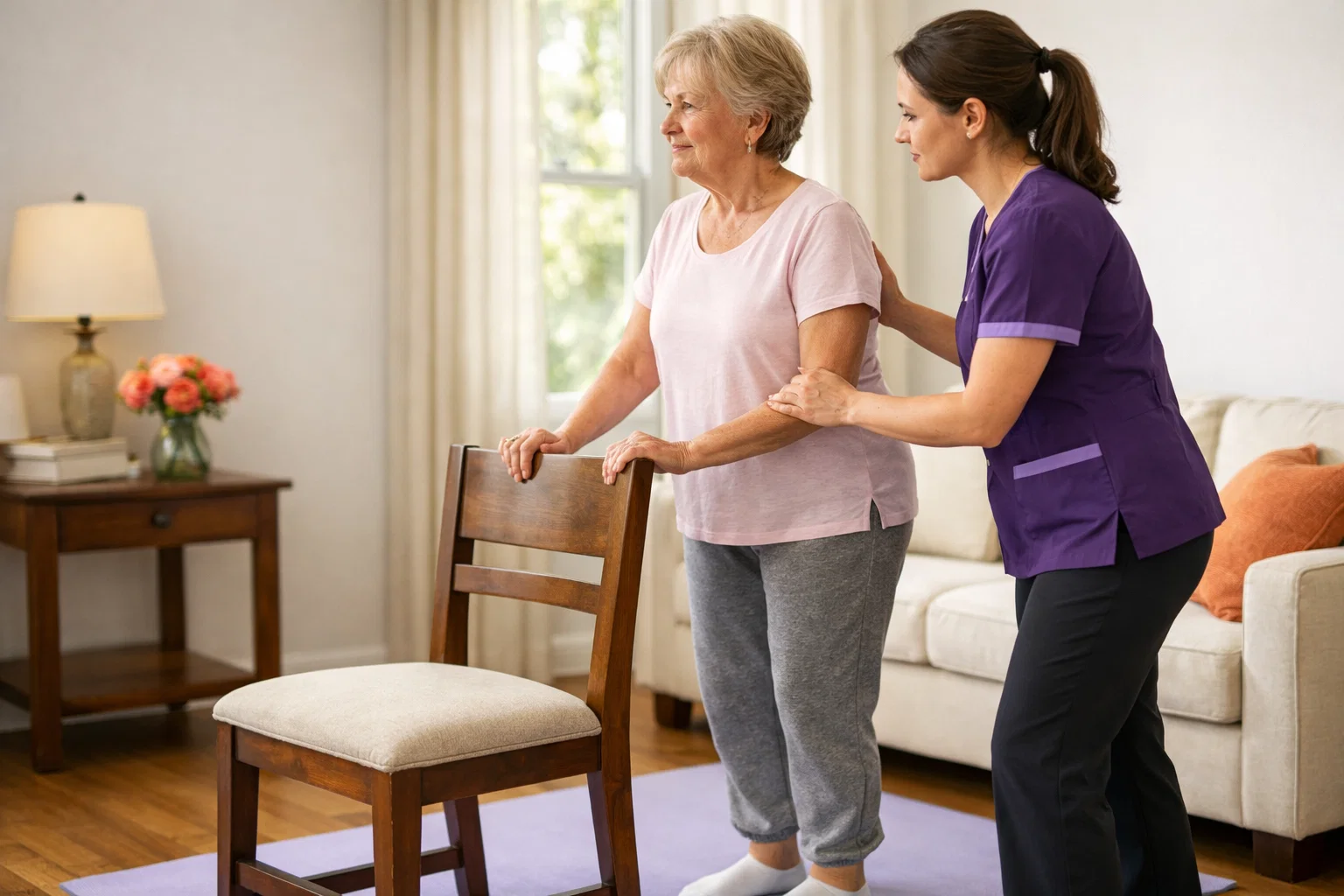
We evaluate how you actually move in your daily life. We observe transfers between surfaces—getting in and out of bed, rising from chairs, moving to and from the toilet. We assess your walking pattern, speed, and steadiness. We watch you navigate stairs if present in your home. We evaluate reaching, bending, and other movements required for your daily activities. This functional assessment reveals how your physical abilities interact with your environment.
Balance and Strength Screening
Using standardized assessments, we objectively measure balance and strength components. We test static balance in various positions and dynamic balance during movement. We assess leg strength that supports standing and walking. We evaluate the ability to recover from balance challenges. These objective measures identify specific deficits and provide baselines for measuring improvement.
Vision Screening
Vision significantly affects fall risk. We screen for visual acuity problems, assess depth perception, and evaluate contrast sensitivity. We note whether you wear glasses appropriately and whether your current prescription seems adequate. Significant findings prompt referral for comprehensive eye examination.
Cognitive Screening
Cognitive function affects judgment, attention, and safety awareness. We screen for cognitive changes that might increase fall risk, including memory problems, attention difficulties, and impaired judgment. This screening helps determine appropriate safety strategies.
Comprehensive Home Safety Evaluation
We systematically assess every area of your home where you spend time.
In the bathroom, we evaluate tub and shower access, toilet height and accessibility, grab bar presence and placement, flooring slip resistance, lighting adequacy, and organization of frequently used items.
In the bedroom, we assess bed height and ease of transfers, pathway clearance for nighttime trips to bathroom, lighting including nightlights, flooring and rug hazards, and accessibility of frequently needed items.
In the kitchen, we evaluate floor surfaces and spill risks, storage accessibility to minimize reaching and climbing, lighting adequacy, organization and clutter, and safe food preparation setups.
In living areas, we assess furniture arrangement and pathway clearance, chair and sofa heights for easy transfers, electrical cord and clutter hazards, lighting including switches accessible from doorways, and flooring transitions and rug hazards.
For stairs and transitions, we evaluate handrail presence and stability, step visibility and condition, lighting adequacy, and landing safety.
For entrances and outdoor areas, we assess step and threshold conditions, walkway surfaces and hazards, lighting, and weather-related concerns.
Daily Activity Analysis
We discuss how you perform daily activities and identify tasks that increase your fall risk. We observe you performing activities when possible, noting techniques that create vulnerability and opportunities for safer approaches.
Your Personalized Fall Prevention Plan
Assessment findings guide a comprehensive, individualized prevention plan.
Home Modification Recommendations
Based on environmental hazards identified, we provide specific recommendations for modifications. These might include grab bar installation in bathrooms and other locations, improved lighting in key areas, removal or securing of loose rugs, furniture rearrangement for safer pathways, raised toilet seats or other bathroom equipment, stair modifications including handrails and visibility improvements, and outdoor safety improvements. We prioritize recommendations based on risk level and feasibility, helping you address the most critical hazards first.
Equipment Recommendations
Certain equipment can significantly reduce fall risk. We may recommend mobility aids such as canes or walkers if appropriate, bathroom safety equipment like shower chairs and grab bars, bedroom equipment including bed rails or transfer aids, reaching devices to avoid dangerous stretching, and proper footwear recommendations. We explain why each item helps and ensure you know how to use equipment correctly.
Activity Modifications
We teach safer ways to perform activities that put you at risk. This includes techniques for safe reaching, bending, and lifting, strategies for carrying items while maintaining balance, proper rising techniques to prevent blood pressure drops, safe approaches to challenging tasks like bathing and stair climbing, and when to ask for help rather than risking a fall.
Referrals and Coordination
When assessment reveals needs beyond environmental modification, we coordinate appropriate referrals. This may include physical therapy for balance and strength training, physician evaluation for medication review or medical concerns, vision specialist for comprehensive eye examination, and other specialists as indicated. Fall prevention often requires a team approach.
Who Benefits from Fall Risk Assessment
Fall risk assessment provides value for various populations.
Older Adults Living Independently
Seniors who want to remain safely in their homes benefit from proactive assessment before falls occur. Identifying and addressing risks supports continued independence.
Recent Fallers
If you have fallen recently, assessment identifies what caused the fall and prevents recurrence. One fall significantly increases the risk of another—intervention is essential.
Those with Chronic Conditions
Conditions like diabetes, Parkinson disease, stroke, and arthritis increase fall risk. Assessment addresses how your specific condition affects your safety at home.
Post-Hospitalization Patients
Hospital stays cause rapid deconditioning. Returning home with reduced strength and balance requires environmental adaptation. Assessment ensures your home remains safe despite changed abilities.
Caregivers and Families
Families concerned about a loved one’s safety benefit from professional assessment. We identify risks you may not have recognized and provide concrete solutions.
The Home Assessment Advantage
Fall risk assessment must happen at home to be truly effective.
Real Environment Evaluation
Your actual home—not a simulated environment—is where falls happen. We see your real bathroom, your actual stairs, your specific furniture. Recommendations are based on what exists, not assumptions.
Personalized Problem-Solving
Every home is different. We develop solutions that work in your specific space, considering layout constraints, existing features, and practical feasibility.
Immediate Implementation
Some hazards can be addressed during the assessment visit—removing a dangerous rug, improving furniture arrangement, adjusting lighting. You leave the visit safer than when it began.
Family Participation
Family members can participate in home assessment, seeing what we see and understanding recommendations. This shared understanding facilitates implementation and ongoing vigilance.
After the Assessment
Following your assessment, you receive a written summary of findings and recommendations prioritized by importance. We can help coordinate equipment acquisition and installation. We provide education on implementing recommended changes. And we are available for follow-up questions as you work through recommendations.
Insurance Coverage
Fall risk assessment by occupational therapists is covered by Medicare Part A when part of a home health plan of care ordered by a physician. Given the significant costs of fall-related injuries—both human and financial—Medicare recognizes fall prevention as essential skilled care. Blue Shield of California PPO and Anthem Blue Cross PPO provide similar coverage.
Our team verifies your coverage and ensures fall risk assessment is appropriately included in your care plan.
Getting Started
Do not wait for a fall to address fall risk. Contact HarvardCare Home Health today for a comprehensive fall risk assessment. Our occupational therapists are ready to evaluate your home and personal factors throughout Los Angeles County, providing the insights and recommendations you need to stay safe and independent.
Falls are preventable. Professional assessment identifies your specific risks and shows you exactly how to address them. Call today for a free consultation and take control of your safety.
FAQs
Do you have questions?
Got questions about Fall Risk Assessment at Home? Here are answers to what patients and families ask most.
A thorough fall risk assessment typically takes 60 to 90 minutes. This allows time for health history review, functional and balance testing, comprehensive home evaluation, activity observation, and discussion of findings and recommendations. The investment of time produces a complete picture of your fall risk and actionable recommendations for prevention.
Fall risk assessment identifies your specific risk factors and hazards—it answers the question of why you might fall. Fall prevention therapy, typically provided by physical therapists, addresses those risks through balance training, strengthening exercises, and gait improvement. Assessment comes first to identify problems, then therapy addresses them. Many patients benefit from both services.
Yes, home modification recommendations are a key outcome of fall risk assessment. Based on hazards identified, we may recommend grab bar installation, lighting improvements, rug removal or securing, furniture rearrangement, bathroom equipment, stair modifications, and other changes. We prioritize recommendations so you can address the most critical hazards first and work through others over time.
We provide specific recommendations for equipment including where to obtain it. For items covered by insurance like certain bathroom equipment, we can help coordinate with medical supply companies. For other items, we provide purchasing guidance. We also ensure you know how to use any equipment correctly—improper use of assistive devices can actually increase fall risk.
Absolutely. Prevention is far better than reaction. If you are over 65, have chronic conditions affecting balance or mobility, take medications that cause dizziness, or have noticed any unsteadiness, assessment identifies risks before they cause harm. Many fall hazards are not obvious until a professional evaluation reveals them. Proactive assessment supports continued safe independence.
If we identify serious immediate hazards, we address them during the visit when possible—removing a dangerous rug, for example. For concerns requiring immediate attention like unsafe stair conditions or serious balance impairment, we communicate urgency clearly and help prioritize solutions. We also coordinate with your physician if medical issues need prompt attention. Your safety is our priority.
Reassessment is appropriate when circumstances change significantly—after a fall, following hospitalization, when new medical conditions develop, after starting new medications, or when you notice increased unsteadiness. For stable situations, annual reassessment helps identify gradual changes that accumulate over time. We can advise on appropriate reassessment timing for your situation.
Yes, and we encourage it when possible. Family members who participate in the assessment understand findings and recommendations firsthand. They can help implement changes, maintain vigilance for hazards, and support safer activity patterns. Shared understanding makes the whole family partners in fall prevention.
Fall Risk Assessment at Home may help patients who have a skilled home health need related to safety, recovery, daily function, condition monitoring, or caregiver teaching. HarvardCare Home Health can review the request and explain whether the service may fit the plan of care.
TESTIMONIALS
What Our Patients & Families Say
AREAS WE SERVE
Fall Risk Assessment at Home Near You
Our licensed healthcare professionals provide expert care in the comfort of your home. We proudly serve patients and families throughout Los Angeles County.
Serving 279 cities across LA County
- A
- Acton
- Adams-Normandie
- Agoura Hills
- Agua Dulce
- Alhambra
- Alondra Park
- Altadena
- Angelino Heights
- Arcadia
- Arleta
- Arlington Heights
- Artesia
- Arts District
- Atwater Village
- Avocado Heights
- Azusa
- B
- Baldwin Hills
- Baldwin Park
- Bassett
- Beachwood Canyon
- Bel Air
- Bell
- Bell Gardens
- Bellflower
- Beverly Crest
- Beverly Grove
- Beverly Hills
- Beverlywood
- Boyle Heights
- Bradbury
- Brentwood
- Broadway-Manchester
- Burbank
- C
- Calabasas
- Canoga Park
- Canyon Country
- Carson
- Carthay
- Castaic
- Castle Heights
- Central-Alameda
- Century City
- Cerritos
- Charter Oak
- Chatsworth
- Chesterfield Square
- Cheviot Hills
- Chinatown
- Citrus
- City Terrace
- Claremont
- Commerce
- Compton
- Country Club Park
- Covina
- Crenshaw
- Cudahy
- Culver City
- Cypress Park
- D
- Del Aire
- Del Rey
- Desert View Highlands
- Diamond Bar
- Downey
- Downtown Los Angeles
- Duarte
- E
- Eagle Rock
- East Hollywood
- East Los Angeles
- East Pasadena
- East Rancho Dominguez
- East San Gabriel
- East Whittier
- Echo Park
- El Camino Village
- El Monte
- El Segundo
- El Sereno
- Elysian Valley
- Encino
- Exposition Park
- F
- Fairfax
- Florence
- Florence-Firestone
- G
- Gardena
- Garvanza
- Glassell Park
- Glendale
- Glendora
- Gramercy Park
- Granada Hills
- Green Meadows
- H
- Hacienda Heights
- Hancock Park
- Harbor City
- Harbor Gateway
- Harvard Heights
- Harvard Park
- Hasley Canyon
- Hawaiian Gardens
- Hawthorne
- Hermon
- Hermosa Beach
- Hidden Hills
- Highland Park
- Historic Filipinotown
- Hollywood
- Hollywood Hills
- Holmby Hills
- Huntington Park
- Hyde Park
- I
- Inglewood
- J
- Jefferson Park
- K
- Kinneloa Mesa
- Koreatown
- L
- La Cañada Flintridge
- La Crescenta-Montrose
- La Habra Heights
- La Mirada
- La Puente
- La Verne
- Ladera Heights
- Lake Balboa
- Lake Hughes
- Lake Los Angeles
- Lake View Terrace
- Lakewood
- Lancaster
- Larchmont
- Lawndale
- Leimert Park
- Lennox
- Leona Valley
- Lincoln Heights
- Little Armenia
- Little Tokyo
- Littlerock
- Lomita
- Long Beach
- Los Angeles
- Los Feliz
- Lynwood
- M
- Malibu
- Manchester Square
- Manhattan Beach
- Mar Vista
- Marina del Rey
- Mayflower Village
- Maywood
- Mid-City
- Mid-Wilshire
- Miracle Mile
- Mission Hills
- Monrovia
- Montebello
- Montecito Heights
- Monterey Park
- Mt Washington
- N
- Newhall
- NoHo Arts District
- North El Monte
- North Hills
- North Hollywood
- North Long Beach
- Northridge
- Norwalk
- P
- Pacific Palisades
- Pacoima
- Palmdale
- Palms
- Palos Verdes Estates
- Palos Verdes Peninsula
- Panorama City
- Paramount
- Park La Brea
- Pasadena
- Pearblossom
- Pico Rivera
- Pico-Robertson
- Pico-Union
- Playa del Rey
- Playa Vista
- Pomona
- Porter Ranch
- Q
- Quartz Hill
- R
- Rancho Dominguez
- Rancho Palos Verdes
- Rancho Park
- Redondo Beach
- Reseda
- Rolling Hills
- Rolling Hills Estates
- Rosemead
- Rowland Heights
- S
- San Dimas
- San Fernando
- San Gabriel
- San Marino
- San Pasqual
- San Pedro
- Santa Clarita
- Santa Fe Springs
- Santa Monica
- Saugus
- Sawtelle
- Sepulveda
- Shadow Hills
- Sherman Oaks
- Sherman Village
- Sherwood Forest
- Sierra Madre
- Signal Hill
- Silver Lake
- South Central
- South El Monte
- South Gate
- South Park
- South Pasadena
- South San Gabriel
- South San Jose Hills
- South Whittier
- Stevenson Ranch
- Stonehurst
- Studio City
- Sun Valley
- Sun Village
- Sunland
- Sunset Park
- Sylmar
- T
- Tarzana
- Temple City
- Thai Town
- Toluca Lake
- Topanga
- Torrance
- Tujunga
- U
- University Hills
- University Park
- V
- Val Verde
- Valencia
- Valinda
- Valley Glen
- Valley Village
- Van Nuys
- Venice
- Vermont Knolls
- Vermont Square
- Vermont Vista
- Vermont-Slauson
- Victor Heights
- View Park-Windsor Hills
- Vincent
- W
- Walnut
- Walnut Park
- Watts
- West Adams
- West Athens
- West Carson
- West Covina
- West Hills
- West Hollywood
- West Los Angeles
- West Puente Valley
- West Rancho Dominguez
- West Whittier-Los Nietos
- Westchester
- Westlake
- Westlake Village
- Westmont
- Westwood
- Westwood Village
- Whitley Heights
- Whittier
- Willowbrook
- Wilmington
- Wilshire Center
- Windsor Square
- Winnetka
- Woodland Hills
More Services

In-Home Wound Care Services
- Board-certified wound care nurses
- Personalized treatment plans
- All wound types treated
Diabetic Wound Care at Home
- Diabetes wound specialists
- Blood sugar optimization support
- Advanced offloading techniques
Skilled Nursing Care at Home
- Registered nurses available 7 days a week
- Comprehensive care coordination
- IV therapy and infusion services