
 Wound Care
Rehabilitation should begin as soon as medically stable, ideally within 24-48 hours of stroke. Most patients receive inpatient rehabilitation before discharge. Home-based therapy should start immediately after discharge to maintain momentum and capitalize on the critical early recovery window when the brain is most adaptable. Gaps in therapy can slow recovery, so we work to begin home services within days of your return home.
Stroke Rehab at Home
Stroke rehabilitation at home throughout Los Angeles County. Our licensed physical therapists provide intensive post-stroke therapy including mobility training, gait retraining, balance exercises, and functional recovery in your home. Medicare accepted.
EXCELLENT 

Comprehensive Stroke Rehabilitation in the Comfort of Your Home
Surviving a stroke is just the beginning of a challenging journey. The road to recovery requires intensive rehabilitation to regain lost abilities, relearn essential skills, and adapt to changes that may be permanent. At HarvardCare Home Health, our specialized stroke rehabilitation program brings expert physical therapy directly to patients throughout Los Angeles County, providing the intensive, personalized care that maximizes recovery in the familiar environment where you will ultimately need to function.
Research consistently shows that early, intensive rehabilitation produces the best outcomes after stroke. Our home-based program begins as soon as you are discharged from the hospital or inpatient rehabilitation, ensuring no gap in your recovery process. We continue the work started in acute settings while adapting treatment to the realities of your home and daily life.
Understanding Stroke Recovery
Recovery after stroke depends on many factors, and understanding the process helps set realistic expectations while maintaining hope for improvement.
How Stroke Affects the Brain and Body
A stroke occurs when blood flow to part of the brain is interrupted, either by a clot blocking an artery or by bleeding from a ruptured vessel. Brain cells deprived of oxygen die, and the functions controlled by that area of the brain become impaired. Depending on stroke location and severity, effects may include weakness or paralysis on one side of the body, difficulty with balance and coordination, problems with speech and language, cognitive changes affecting memory and thinking, visual disturbances, and sensory changes.
Neuroplasticity and Recovery
The brain has remarkable ability to reorganize itself after injury—a property called neuroplasticity. Surviving brain cells can form new connections and take over functions previously handled by damaged areas. This reorganization does not happen automatically; it requires intensive, repetitive practice of lost skills. Physical therapy provides the structured, progressive practice that drives neuroplastic change and functional recovery.
Recovery Timeline
Recovery is most rapid in the first three to six months after stroke when the brain is most adaptable. However, improvement can continue for years with ongoing effort. Early intensive rehabilitation capitalizes on this critical window while building habits and skills that support continued long-term progress. The first weeks and months after discharge are crucial—this is not the time for gaps in therapy.
Our Stroke Rehabilitation Approach
Effective stroke rehabilitation requires comprehensive assessment and individualized treatment targeting your specific deficits and goals.
Thorough Initial Evaluation
Your first visit includes detailed assessment of all areas potentially affected by stroke. We evaluate strength and motor control on both sides of your body, muscle tone including spasticity if present, balance in sitting and standing positions, walking ability and gait quality, coordination and fine motor skills, sensation and proprioception, functional abilities for daily activities, and your home environment and available support. This comprehensive evaluation reveals your current abilities, identifies deficits requiring intervention, and establishes baselines for measuring progress.
Goal-Oriented Treatment Planning
We develop your treatment plan collaboratively, focusing on goals meaningful to you. Whether you want to walk independently, return to driving, care for yourself without help, or return to hobbies and activities you enjoyed before stroke, your priorities shape our focus. We set short-term objectives building toward long-term goals, adjusting the plan as you progress.
Intensive Repetitive Practice
Neuroplasticity requires repetition—thousands of repetitions of movements to rewire the brain. Our therapy sessions emphasize high-repetition practice of functional movements. We use task-specific training where you practice actual activities rather than isolated exercises when possible. This intensive approach drives the neural changes underlying true recovery.
Progressive Challenge
As you improve, therapy must progress to continue driving gains. We systematically advance difficulty, ensuring you are always working at the edge of your current abilities. Treatment that becomes too easy stops producing improvement. Our therapists are skilled at finding the right level of challenge—demanding enough to drive progress but achievable enough to maintain motivation.
Physical Therapy Interventions for Stroke
Our stroke rehabilitation program employs evidence-based interventions addressing the full range of physical impairments.
Mobility Training
Restoring the ability to move safely and independently is often the primary goal after stroke. We work on bed mobility including rolling and moving in bed, transfer training for moving between surfaces like bed to chair, sitting balance progressing from supported to unsupported to dynamic, standing balance with decreasing support levels, pre-gait activities preparing for walking, and ambulation training progressing toward independent walking. We advance through these stages systematically, ensuring safety while pushing toward greater independence.
Gait Training
Walking after stroke often requires relearning this complex skill. We address weight shifting and single-leg stance on the affected side, step initiation and foot clearance, stride length and walking speed, arm swing and reciprocal movement patterns, navigation of real-world obstacles and surfaces, and stair climbing when appropriate. Our goal is functional, safe walking that allows you to move through your home and community.
Strength Training
Weakness on the affected side is among the most common stroke effects. We prescribe progressive strengthening exercises targeting weakened muscles, using resistance appropriate to your current ability and advancing as strength improves. Strengthening addresses both gross motor function and the fine motor control needed for skilled activities.
Spasticity Management
Many stroke survivors develop spasticity—increased muscle tone that can interfere with movement and cause discomfort. Our therapists use positioning techniques to minimize spasticity, stretching programs to maintain range of motion, movement strategies that work with rather than against tone, and activity approaches that reduce spastic patterns. When appropriate, we coordinate with physicians regarding medication or injection options for spasticity management.
Balance Training
Impaired balance after stroke increases fall risk and limits independence. Our balance training progressively challenges your stability in sitting and standing, weight shifting in all directions, responses to balance perturbations, balance during functional tasks, and balance on varied surfaces and conditions. Improved balance increases safety and allows greater independence in daily activities.
Coordination Exercises
Stroke often affects coordination even when strength is relatively preserved. We use specific exercises to improve timing and sequencing of movements, accuracy of reaching and manipulation, smoothness and efficiency of motion, and coordination between affected and unaffected sides.
Constraint-Induced Movement Therapy
For appropriate patients, we incorporate principles of constraint-induced movement therapy, which encourages use of the affected arm by limiting reliance on the unaffected side. This approach can produce significant gains in arm function when applied correctly.
Functional Task Practice
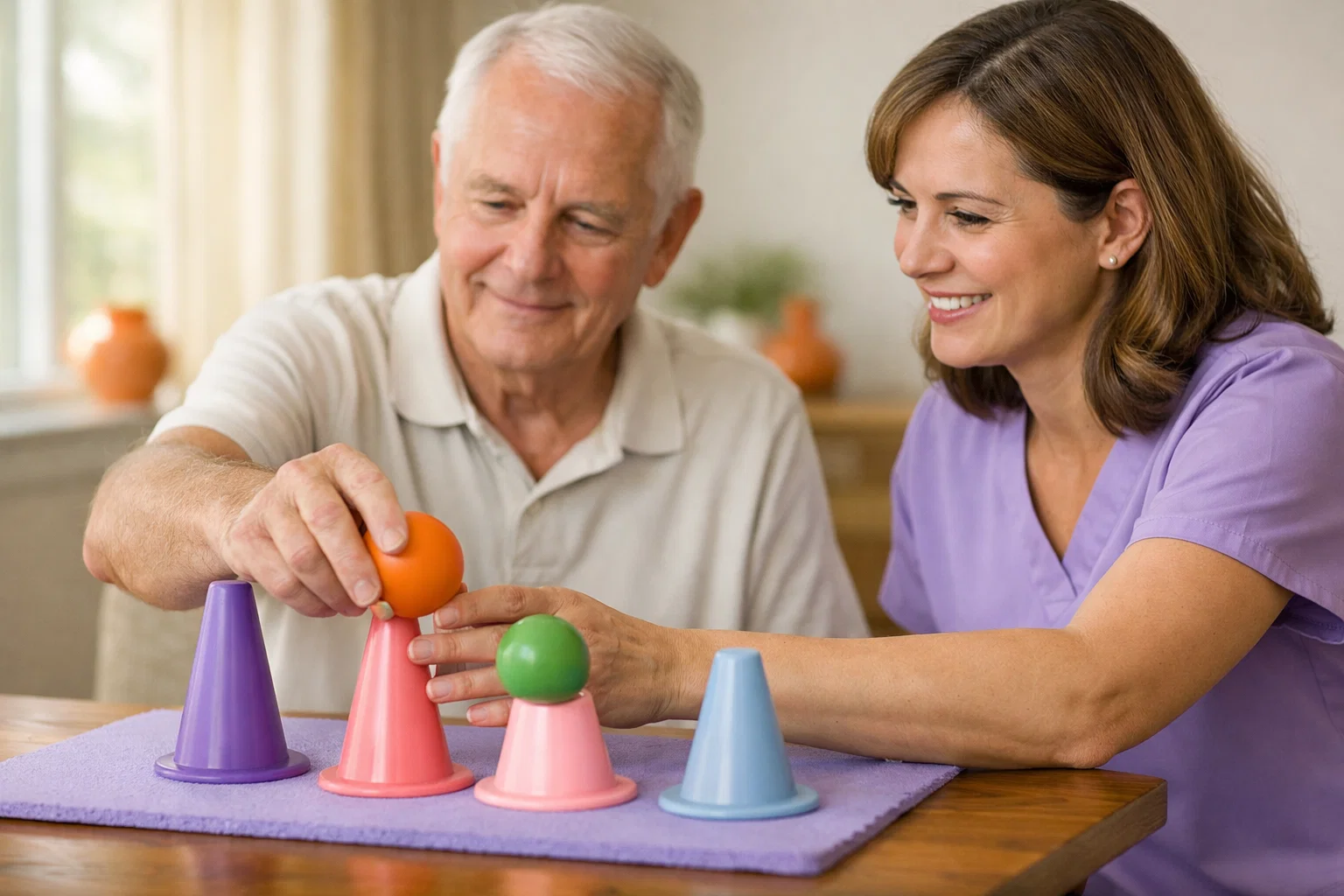
The ultimate goal is performing real activities. We incorporate practice of actual daily tasks—dressing, bathing, household activities, and whatever matters to you. This task-specific practice transfers directly to your daily life.
The Home Advantage for Stroke Rehabilitation
Home-based stroke rehabilitation offers unique benefits that can enhance recovery.
Real-World Environment
You will ultimately function at home, so training there makes sense. When you practice walking in your hallway, transferring in your bathroom, and navigating your kitchen, you are building skills that apply immediately. There is no translation needed from clinic to home.
Customized to Your Space
Every home is different. We adapt rehabilitation to your specific environment—your furniture heights, your doorway widths, your bathroom layout, your stair configuration. Solutions developed at home work at home.
Family Training
Stroke recovery involves your whole family. When therapy happens at home, family members and caregivers can observe, learn, and practice alongside you. They understand what you can do, how to help appropriately, and when to step back. This shared knowledge improves daily function between therapy visits.
Reduced Transportation Burden
Getting to outpatient therapy after stroke is often exhausting and logistically challenging. Home therapy eliminates this burden, preserving energy for productive rehabilitation rather than transportation.
Continuity of Care
Working with the same therapist visit after visit builds a therapeutic relationship. Your therapist knows your stroke, your personality, your goals, and your progress intimately. This continuity allows truly personalized care.
Coordinated Care
Stroke rehabilitation typically involves multiple disciplines. We coordinate with occupational therapists addressing self-care and upper extremity function, speech therapists working on communication and swallowing, your physicians managing medical aspects of recovery, neurologists following your stroke recovery, and any other providers involved in your care. This coordinated approach ensures all team members work toward aligned goals.
What to Expect
Stroke rehabilitation visits typically last 45-60 minutes. Early in recovery, you may benefit from visits three to five times weekly. As you progress and develop independence with your home exercise program, frequency typically decreases. Duration of therapy depends on your stroke severity, rate of recovery, and goals—some patients require months of intensive therapy while others achieve their objectives more quickly.
Every visit combines hands-on treatment, therapeutic exercise, functional practice, and education. You will have exercises to perform between visits, and your consistency with this home program significantly affects your outcomes.
Measuring Progress
We track your progress using standardized assessments and functional measures. You will see measurable improvement in strength scores, balance tests, walking speed and distance, and ability to perform daily activities. We share progress reports with your physicians and adjust treatment based on your response. Celebrating milestones along the way maintains motivation during the long recovery process.
Insurance Coverage
Home physical therapy for stroke rehabilitation is covered by Medicare Part A for homebound patients with physician orders. Following stroke, most patients meet homebound criteria due to mobility limitations and safety concerns. Medicare covers intensive rehabilitation without copay for qualifying patients. Medi-Cal and most private insurance plans provide similar coverage.
Our team manages verification and authorization so you can focus entirely on recovery.
Getting Started
If you or a loved one has experienced a stroke, do not delay rehabilitation. Contact HarvardCare Home Health today to begin home-based physical therapy. Our experienced stroke rehabilitation therapists are ready to help you recover maximum function and independence throughout Los Angeles County.
Every day matters after stroke. Early, intensive rehabilitation produces the best outcomes. Call today for a free consultation and take the next step on your recovery journey.
FAQs
Do you have questions?
Got questions about Stroke Rehab at Home? Here are answers to what patients and families ask most.
Recovery timelines vary greatly depending on stroke severity, location, your overall health, and rehabilitation intensity. The most rapid improvement typically occurs in the first three to six months, but meaningful gains can continue for years. Some patients recover most function within months while others make gradual progress over extended periods. We set realistic expectations while maintaining focus on continued improvement throughout your recovery journey.
Recovery varies widely. Some stroke survivors regain nearly complete function while others have permanent deficits. Factors affecting recovery include stroke size and location, how quickly treatment was received, pre-stroke health, rehabilitation intensity, and individual factors we do not fully understand. Our goal is maximizing your recovery—helping you regain as much function as possible and adapt successfully to any lasting changes.
Neuroplasticity is the brain's ability to reorganize itself by forming new neural connections. After stroke, surviving brain areas can take over functions previously controlled by damaged regions. This reorganization requires intensive, repetitive practice of lost skills. Physical therapy provides the structured repetition that drives neuroplastic change. Understanding neuroplasticity explains why rehabilitation works and why intensive practice is so important.
Many stroke survivors regain walking ability, though the extent varies. Factors include stroke severity, which areas of the brain were affected, and rehabilitation intensity. Some patients walk independently, others walk with assistive devices, and some require wheelchair mobility. Our gait training program is designed to maximize your walking potential, whatever that may be. We focus on safe, functional mobility regardless of whether you use equipment.
Spasticity is increased muscle tone that commonly develops after stroke, causing stiffness and sometimes involuntary movements. It can interfere with function and cause discomfort. Physical therapy manages spasticity through positioning, stretching, movement techniques, and functional activities. For significant spasticity, medications or injections may help. We coordinate with your physician when medical management is needed alongside therapy approaches.
Family involvement significantly improves stroke outcomes. Family members can encourage and support home exercise completion, provide appropriate assistance with activities without doing too much, help implement strategies learned in therapy, monitor for safety and report concerns, offer emotional support during the challenging recovery process, and participate in therapy sessions to learn techniques. We train family members in how to help effectively.
Plateaus are common in stroke recovery but do not necessarily mean improvement has stopped permanently. We address plateaus by reassessing your condition for new approaches, increasing exercise intensity or trying different techniques, focusing on compensatory strategies if direct recovery has limits, and sometimes taking brief breaks before resuming with fresh perspective. Continued effort often produces resumed progress after apparent plateaus.
Inpatient rehabilitation provides intensive daily therapy in a controlled medical environment, appropriate immediately after stroke. Home rehabilitation continues this work in your actual living environment. Advantages of home rehab include training in your real space with your own obstacles and equipment, family involvement in your natural setting, and elimination of transportation challenges. Both settings play important roles at different recovery stages.
Stroke Rehab at Home may help patients who have a skilled home health need related to safety, recovery, daily function, condition monitoring, or caregiver teaching. HarvardCare Home Health can review the request and explain whether the service may fit the plan of care.
TESTIMONIALS
What Our Patients & Families Say
EXCELLENT
AREAS WE SERVE
Stroke Rehab at Home Near You
Our licensed healthcare professionals provide expert care in the comfort of your home. We proudly serve patients and families throughout Los Angeles County.
Serving 279 cities across LA County
- A
- Acton
- Adams-Normandie
- Agoura Hills
- Agua Dulce
- Alhambra
- Alondra Park
- Altadena
- Angelino Heights
- Arcadia
- Arleta
- Arlington Heights
- Artesia
- Arts District
- Atwater Village
- Avocado Heights
- Azusa
- B
- Baldwin Hills
- Baldwin Park
- Bassett
- Beachwood Canyon
- Bel Air
- Bell
- Bell Gardens
- Bellflower
- Beverly Crest
- Beverly Grove
- Beverly Hills
- Beverlywood
- Boyle Heights
- Bradbury
- Brentwood
- Broadway-Manchester
- Burbank
- C
- Calabasas
- Canoga Park
- Canyon Country
- Carson
- Carthay
- Castaic
- Castle Heights
- Central-Alameda
- Century City
- Cerritos
- Charter Oak
- Chatsworth
- Chesterfield Square
- Cheviot Hills
- Chinatown
- Citrus
- City Terrace
- Claremont
- Commerce
- Compton
- Country Club Park
- Covina
- Crenshaw
- Cudahy
- Culver City
- Cypress Park
- D
- Del Aire
- Del Rey
- Desert View Highlands
- Diamond Bar
- Downey
- Downtown Los Angeles
- Duarte
- E
- Eagle Rock
- East Hollywood
- East Los Angeles
- East Pasadena
- East Rancho Dominguez
- East San Gabriel
- East Whittier
- Echo Park
- El Camino Village
- El Monte
- El Segundo
- El Sereno
- Elysian Valley
- Encino
- Exposition Park
- F
- Fairfax
- Florence
- Florence-Firestone
- G
- Gardena
- Garvanza
- Glassell Park
- Glendale
- Glendora
- Gramercy Park
- Granada Hills
- Green Meadows
- H
- Hacienda Heights
- Hancock Park
- Harbor City
- Harbor Gateway
- Harvard Heights
- Harvard Park
- Hasley Canyon
- Hawaiian Gardens
- Hawthorne
- Hermon
- Hermosa Beach
- Hidden Hills
- Highland Park
- Historic Filipinotown
- Hollywood
- Hollywood Hills
- Holmby Hills
- Huntington Park
- Hyde Park
- I
- Inglewood
- J
- Jefferson Park
- K
- Kinneloa Mesa
- Koreatown
- L
- La Cañada Flintridge
- La Crescenta-Montrose
- La Habra Heights
- La Mirada
- La Puente
- La Verne
- Ladera Heights
- Lake Balboa
- Lake Hughes
- Lake Los Angeles
- Lake View Terrace
- Lakewood
- Lancaster
- Larchmont
- Lawndale
- Leimert Park
- Lennox
- Leona Valley
- Lincoln Heights
- Little Armenia
- Little Tokyo
- Littlerock
- Lomita
- Long Beach
- Los Angeles
- Los Feliz
- Lynwood
- M
- Malibu
- Manchester Square
- Manhattan Beach
- Mar Vista
- Marina del Rey
- Mayflower Village
- Maywood
- Mid-City
- Mid-Wilshire
- Miracle Mile
- Mission Hills
- Monrovia
- Montebello
- Montecito Heights
- Monterey Park
- Mt Washington
- N
- Newhall
- NoHo Arts District
- North El Monte
- North Hills
- North Hollywood
- North Long Beach
- Northridge
- Norwalk
- P
- Pacific Palisades
- Pacoima
- Palmdale
- Palms
- Palos Verdes Estates
- Palos Verdes Peninsula
- Panorama City
- Paramount
- Park La Brea
- Pasadena
- Pearblossom
- Pico Rivera
- Pico-Robertson
- Pico-Union
- Playa del Rey
- Playa Vista
- Pomona
- Porter Ranch
- Q
- Quartz Hill
- R
- Rancho Dominguez
- Rancho Palos Verdes
- Rancho Park
- Redondo Beach
- Reseda
- Rolling Hills
- Rolling Hills Estates
- Rosemead
- Rowland Heights
- S
- San Dimas
- San Fernando
- San Gabriel
- San Marino
- San Pasqual
- San Pedro
- Santa Clarita
- Santa Fe Springs
- Santa Monica
- Saugus
- Sawtelle
- Sepulveda
- Shadow Hills
- Sherman Oaks
- Sherman Village
- Sherwood Forest
- Sierra Madre
- Signal Hill
- Silver Lake
- South Central
- South El Monte
- South Gate
- South Park
- South Pasadena
- South San Gabriel
- South San Jose Hills
- South Whittier
- Stevenson Ranch
- Stonehurst
- Studio City
- Sun Valley
- Sun Village
- Sunland
- Sunset Park
- Sylmar
- T
- Tarzana
- Temple City
- Thai Town
- Toluca Lake
- Topanga
- Torrance
- Tujunga
- U
- University Hills
- University Park
- V
- Val Verde
- Valencia
- Valinda
- Valley Glen
- Valley Village
- Van Nuys
- Venice
- Vermont Knolls
- Vermont Square
- Vermont Vista
- Vermont-Slauson
- Victor Heights
- View Park-Windsor Hills
- Vincent
- W
- Walnut
- Walnut Park
- Watts
- West Adams
- West Athens
- West Carson
- West Covina
- West Hills
- West Hollywood
- West Los Angeles
- West Puente Valley
- West Rancho Dominguez
- West Whittier-Los Nietos
- Westchester
- Westlake
- Westlake Village
- Westmont
- Westwood
- Westwood Village
- Whitley Heights
- Whittier
- Willowbrook
- Wilmington
- Wilshire Center
- Windsor Square
- Winnetka
- Woodland Hills
More Services

In-Home Wound Care Services
- Board-certified wound care nurses
- Personalized treatment plans
- All wound types treated
Diabetic Wound Care at Home
- Diabetes wound specialists
- Blood sugar optimization support
- Advanced offloading techniques
Skilled Nursing Care at Home
- Registered nurses available 7 days a week
- Comprehensive care coordination
- IV therapy and infusion services