
 Wound Care
Comprehensive caregiver training covers safe transfer techniques for moving your loved one between surfaces, proper body mechanics to protect your back, assistance with bathing and personal care, dressing and grooming help, mobility assistance and fall prevention, positioning to prevent pressure injuries, medication management support, and communication strategies. Training is customized to your specific situation and your loved one's particular needs.
Caregiver Training at Home
Caregiver training at home throughout Los Angeles County. Our occupational therapists teach family caregivers safe transfer techniques, personal care assistance, body mechanics, and condition-specific care strategies. Medicare accepted.
EXCELLENT 


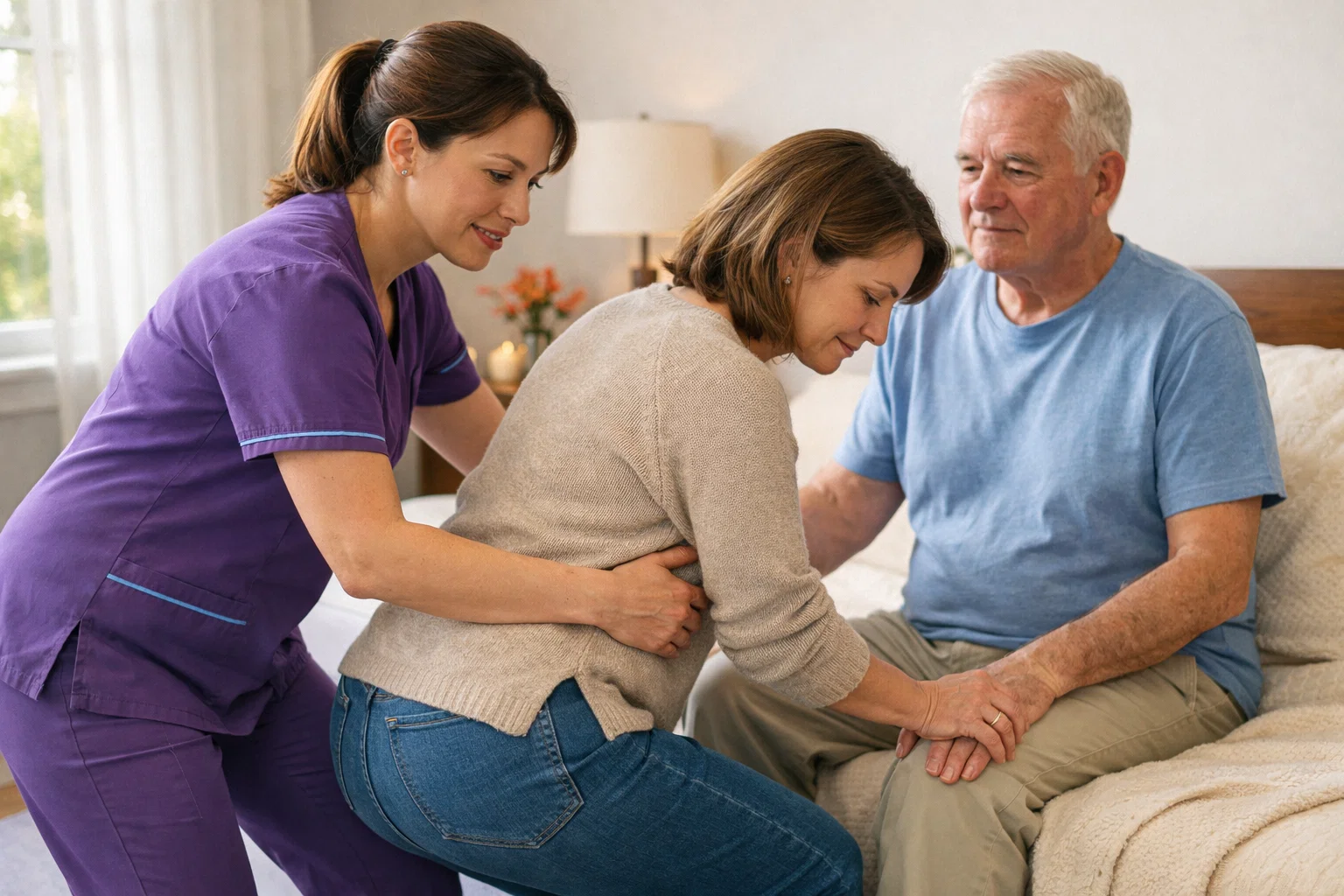
Empowering Family Caregivers with Professional Skills and Confidence
When a loved one needs ongoing care due to illness, injury, surgery, or aging, family members often step into the caregiver role with little preparation. Suddenly you are responsible for tasks you have never performed—helping someone bathe, assisting with transfers, managing medications, preventing falls, and navigating complex care needs. The learning curve is steep, the stakes are high, and the emotional weight is heavy. At HarvardCare Home Health, our occupational therapists provide comprehensive caregiver training throughout Los Angeles County, teaching family members the skills and techniques needed to provide safe, effective care while protecting their own health and wellbeing.
Professional caregiver training transforms anxious, uncertain family members into confident, competent care partners. When you know the right techniques, understand what to watch for, and have strategies for challenging situations, caregiving becomes manageable rather than overwhelming. Our training happens in your home, using your actual equipment and space, ensuring skills transfer directly to your daily caregiving reality.
Why Caregiver Training Matters
Untrained caregivers face risks that proper education can prevent.
Safety for Your Loved One
Improper transfer techniques can cause falls. Incorrect positioning leads to pressure injuries. Inadequate assistance with bathing risks slips and injuries. Medication errors cause serious complications. Professional training teaches you to perform caregiving tasks safely, protecting the person you care for from preventable harm.
Safety for You
Caregivers frequently injure themselves, particularly their backs, from lifting and transferring without proper technique. Caregiver back injuries are among the most common reasons family caregivers can no longer continue in their role. Learning proper body mechanics and transfer techniques protects your physical health so you can sustain caregiving long-term.
Confidence and Reduced Stress
Uncertainty breeds anxiety. When you do not know if you are doing things correctly, every caregiving task becomes stressful. Training replaces uncertainty with competence. You know you are providing good care because you have learned the right way to do things from professionals.
Better Outcomes
Trained caregivers provide better care. They recognize problems earlier, respond more appropriately, and support recovery more effectively. Professional training elevates the quality of care your loved one receives.
What Our Caregiver Training Covers
Our comprehensive training program addresses all aspects of home caregiving.
Safe Transfer Techniques
Moving someone from bed to chair, wheelchair to toilet, or car to standing requires specific techniques that protect both parties. We teach bed mobility assistance including repositioning and turning, sit-to-stand transfers with appropriate support, pivot transfers for moving between surfaces, sliding board transfers when appropriate, wheelchair transfers including to and from toilet and car, and use of mechanical lift equipment when needed. You practice each technique hands-on with coaching until you can perform it safely and confidently.
Body Mechanics for Caregivers
Protecting your back and joints is essential for sustainable caregiving. We teach proper lifting mechanics that use legs rather than back, positioning yourself correctly before assisting with any task, when and how to use assistive devices to reduce strain, recognizing your limits and when to get additional help, and exercises to maintain your own strength and flexibility. These principles apply to every physical caregiving task and prevent the injuries that sideline caregivers.
Bathing and Personal Care Assistance
Helping with bathing and personal hygiene requires both technical skill and sensitivity. We train you in safe bathroom transfers and positioning, techniques for washing while maintaining dignity and privacy, use of shower chairs, benches, and handheld showerheads, skin inspection and hygiene for incontinence care, hair care, oral care, and grooming assistance, and managing personal care for someone with cognitive impairment. This training covers both the how and the how-to-approach—the technical skills and the interpersonal approach that makes personal care comfortable for everyone.
Dressing Assistance
Helping someone dress involves more than just putting on clothes. We teach techniques for dressing someone with one-sided weakness, adaptive clothing options that simplify dressing, proper sequence and positioning for efficient dressing, encouraging independence while providing needed assistance, and managing fasteners, shoes, and compression garments. The goal is appropriate help that maintains dignity and supports whatever independence is possible.
Feeding and Meal Assistance
For loved ones who need help eating, we provide training in proper positioning for safe swallowing, appropriate food textures and modifications, pacing and cueing techniques, recognizing signs of swallowing difficulty, and maintaining nutrition and hydration. This training is particularly important for those caring for someone with stroke, dementia, or other conditions affecting eating.
Mobility Assistance
Helping someone walk safely requires understanding their abilities and limitations. We train you in proper use of walkers, canes, and other assistive devices, how much support to provide during walking, navigating stairs, curbs, and uneven surfaces, fall prevention strategies, and what to do if a fall occurs. Safe mobility assistance keeps your loved one active while preventing falls.
Positioning and Pressure Injury Prevention
For loved ones with limited mobility, proper positioning prevents pain and pressure injuries. We teach positioning in bed for comfort and skin protection, repositioning schedules and techniques, use of pillows and positioning devices, wheelchair positioning for comfort and function, and skin inspection and early problem recognition. Preventing pressure injuries is far easier than treating them.
Medication Management Support
While nurses handle complex medication management, caregivers often assist with daily medication routines. We train you in organizing medications for safe administration, medication reminder systems and strategies, recognizing common side effects and problems, when to contact healthcare providers about medication concerns, and proper storage and handling. This training supports safe medication compliance between nursing visits.
Communication Strategies
Caring for someone with communication difficulties—from stroke, dementia, or other conditions—requires adapted approaches. We teach techniques for communicating with aphasia patients, strategies for dementia-related communication challenges, using communication aids and devices, maintaining meaningful connection despite communication barriers, and managing frustration for both parties. Effective communication improves care quality and relationship preservation.
Cognitive Support Strategies
Caring for someone with memory loss or cognitive impairment presents unique challenges. We provide training in creating supportive, orienting environments, establishing helpful routines and structures, managing behavioral symptoms compassionately, safety strategies for cognitive impairment, and maintaining engagement and quality of life. These strategies make dementia caregiving more manageable and more effective.
Condition-Specific Caregiver Training
Different conditions require different caregiving approaches. We provide specialized training for specific situations.
Stroke Caregiver Training
Caring for a stroke survivor involves managing one-sided weakness, possible communication difficulties, and complex rehabilitation needs. We train caregivers in assisting with affected side during transfers and mobility, supporting rehabilitation exercises between therapy visits, communication strategies for aphasia, recognizing signs of complications, and balancing assistance with encouraging independence.
Dementia Caregiver Training
Dementia caregiving evolves as the disease progresses. We prepare caregivers for managing daily care despite cognitive decline, responding to confusion, agitation, and behavioral symptoms, safety modifications for the home, meaningful activities and engagement, and planning for changing care needs over time.
Post-Surgical Caregiver Training
Helping someone recover from surgery requires understanding restrictions and supporting healing. We train caregivers in specific precautions for different surgeries, wound care observation and when to report concerns, assisting with mobility within surgical restrictions, medication and pain management support, and recognizing signs of complications.
Parkinson Disease Caregiver Training
Parkinson disease creates specific challenges related to movement, balance, and sometimes cognition. We train caregivers in cueing strategies to help initiate movement, fall prevention for Parkinson patients, managing freezing episodes, timing care with medication effectiveness, and communication strategies as the disease progresses.
The Home Training Advantage
Caregiver training is most effective when it happens where caregiving occurs.
Your Actual Environment
Training in your home means learning with your bed, your bathroom, your wheelchair, your furniture. Techniques practiced in your actual space transfer immediately to daily care. There is no gap between learning and application.
Customized to Your Situation
Every caregiving situation is unique. Your home layout, your loved one’s specific needs, your physical abilities, and your available help all shape what training you need. Home-based training is customized to your actual circumstances rather than generic scenarios.
Problem-Solving in Real Time
When training happens at home, we can identify and solve problems as we encounter them. If your bathroom is too small for standard techniques, we adapt. If your bed height creates challenges, we address it. Real-time problem-solving produces practical solutions.
Family Inclusion
Multiple family members often share caregiving responsibilities. Home training allows everyone involved to learn together, ensuring consistent approaches and shared understanding.
Ongoing Support
Caregiver needs evolve as conditions change. We provide initial comprehensive training when caregiving begins, additional training as new needs arise, refresher sessions to reinforce techniques, adaptation of strategies as your loved one’s condition changes, and resources and referrals for additional support. Caregiving is a journey, and our support continues throughout.
Caregiver Wellness
Effective caregiving requires taking care of yourself. Our training includes recognizing and preventing caregiver burnout, strategies for managing stress, importance of respite and how to arrange it, maintaining your own health while caregiving, and building a support network. Sustainable caregiving means caring for yourself as well as your loved one.
Insurance Coverage
Caregiver training provided by occupational therapists is covered by Medicare Part A when part of a patient’s home health plan of care. Training family members to provide safe care is a recognized skilled service because it directly benefits patient outcomes. Medi-Cal and most private insurance plans provide similar coverage.
Our team verifies coverage and ensures caregiver training is included in your loved one’s care plan when appropriate.
Getting Started
If you are caring for a loved one at home and want professional training to improve your skills and confidence, contact HarvardCare Home Health today. Our occupational therapists are ready to provide comprehensive caregiver training throughout Los Angeles County.
You do not have to figure out caregiving on your own. Professional training transforms uncertainty into competence, making caregiving safer for your loved one and sustainable for you. Call today for a free consultation and take the first step toward confident, capable caregiving.
FAQs
Do you have questions?
Got questions about Caregiver Training at Home? Here are answers to what patients and families ask most.
Training duration depends on your loved one's care needs and your starting skill level. Basic training covering essential transfers and personal care might require two to three sessions. More complex situations involving multiple care needs, cognitive impairment, or medical complexity may require more extensive training over several sessions. We continue until you feel confident, and we provide additional training whenever new needs arise.
Yes, preventing caregiver injury is a primary goal of our training. We teach proper body mechanics for every caregiving task, emphasizing techniques that protect your back and joints. You learn to use your legs rather than your back, position yourself correctly, and use assistive devices when appropriate. Caregivers who learn and consistently use proper techniques dramatically reduce their injury risk.
Absolutely, and we encourage it. When multiple people share caregiving responsibilities, training together ensures everyone uses consistent techniques. This consistency is better for your loved one and reduces confusion. Joint training also allows family members to practice together and support each other in learning new skills.
No, caregiver training benefits caregivers at any stage. New caregivers need foundational skills training. Experienced caregivers benefit from technique refinement, learning new approaches, and addressing problems that have developed. As your loved one's condition changes, training helps you adapt your caregiving to evolving needs. We also provide refresher training when techniques have become inconsistent over time.
Dementia caregiving requires specialized approaches, and our training addresses these specific challenges. We teach communication strategies for cognitive impairment, techniques for managing resistance to care, ways to reduce agitation and behavioral symptoms, safety modifications for the home, and meaningful engagement activities. Dementia caregiver training makes daily care easier and improves quality of life for both of you.
During training, your occupational therapist observes your technique closely and provides specific feedback. You know you are transferring safely when you can complete the transfer smoothly without strain or pain to yourself, your loved one is secure and comfortable throughout, you are using proper body mechanics, and you feel confident rather than anxious. We continue practicing until you achieve this level of competence.
Caregiver Training at Home may help patients who have a skilled home health need related to safety, recovery, daily function, condition monitoring, or caregiver teaching. HarvardCare Home Health can review the request and explain whether the service may fit the plan of care.
The occupational therapist may assess the home routine, review current concerns, provide patient and caregiver education, and coordinate with the physician or care team when clinically appropriate.
Home health services generally require a provider order and a plan of care. The agency can help review the referral, skilled need, homebound status, and eligibility considerations.
TESTIMONIALS
What Our Patients & Families Say
EXCELLENT
AREAS WE SERVE
Caregiver Training at Home Near You
Our licensed healthcare professionals provide expert care in the comfort of your home. We proudly serve patients and families throughout Los Angeles County.
Serving 97 cities across LA County
- A
- Agoura Hills
- Alhambra
- Altadena
- Arcadia
- B
- Bel Air
- Bellflower
- Beverly Hills
- Boyle Heights
- Brentwood
- Burbank
- C
- Calabasas
- Carson
- Century City
- Cerritos
- Claremont
- Compton
- Covina
- Culver City
- D
- Diamond Bar
- Downey
- E
- Eagle Rock
- East Los Angeles
- Echo Park
- Encino
- G
- Gardena
- Glendale
- Glendora
- Granada Hills
- H
- Hacienda Heights
- Hancock Park
- Harbor City
- Hawthorne
- Highland Park
- Hollywood
- Hollywood Hills
- I
- Inglewood
- K
- Koreatown
- L
- La Crescenta-Montrose
- La Mirada
- Lakewood
- Lincoln Heights
- Long Beach
- Los Angeles
- Los Feliz
- M
- Malibu
- Manhattan Beach
- Mar Vista
- Marina del Rey
- Mid-City
- Mid-Wilshire
- Miracle Mile
- Monrovia
- Montebello
- Monterey Park
- N
- North Hollywood
- Northridge
- Norwalk
- P
- Pacific Palisades
- Palms
- Palos Verdes Estates
- Palos Verdes Peninsula
- Panorama City
- Pasadena
- Pico Rivera
- Playa Vista
- Pomona
- Porter Ranch
- R
- Rancho Palos Verdes
- Redondo Beach
- Reseda
- Rolling Hills Estates
- Rowland Heights
- S
- San Dimas
- San Gabriel
- San Marino
- San Pedro
- Santa Clarita
- Santa Monica
- Sawtelle
- Sherman Oaks
- Silver Lake
- South Gate
- South Pasadena
- Studio City
- T
- Tarzana
- Torrance
- V
- Van Nuys
- Venice
- W
- West Covina
- West Hollywood
- West Los Angeles
- Westchester
- Westlake Village
- Westwood
- Whittier
- Wilmington
- Woodland Hills
More Services

In-Home Wound Care Services
- Board-certified wound care nurses
- Personalized treatment plans
- All wound types treated
Diabetic Wound Care at Home
- Diabetes wound specialists
- Blood sugar optimization support
- Advanced offloading techniques
Skilled Nursing Care at Home
- Registered nurses available 7 days a week
- Comprehensive care coordination
- IV therapy and infusion services