
 Wound Care
Transfer training at home is occupational therapy focused on helping a patient move more safely between surfaces such as bed, chair, toilet, shower, or wheelchair.
Transfer Training at Home
Home occupational therapy for safer transfers between bed, chair, toilet, shower, wheelchair, and other daily surfaces.
EXCELLENT 


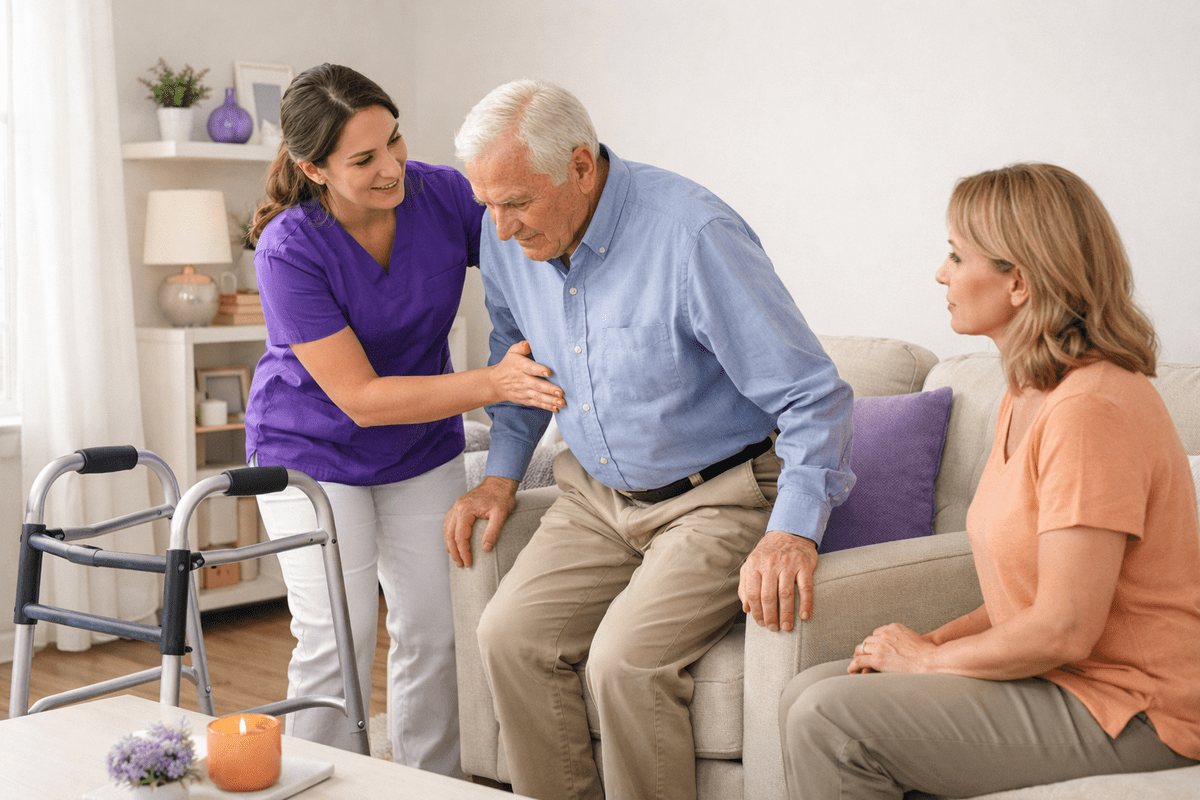
Transfers happen all day at home. A patient moves from bed to standing, chair to walker, toilet to sink, wheelchair to recliner, shower seat to standing, or car seat to a mobility device. When strength, balance, pain, endurance, or judgment changes, these short movements can become some of the highest-risk moments in the day.
Transfer training at home uses occupational therapy to help patients move more safely from one surface to another. The therapist can assess the exact surfaces the patient uses, including bed height, chair firmness, armrests, toilet height, shower setup, wheelchair position, walker placement, and caregiver assistance. Instead of practicing in a clinic with different equipment, the training happens where the risk actually occurs.
HarvardCare Home Health helps patients and caregivers build safer transfer routines that support independence and reduce preventable falls. Transfer training may be especially useful after hospitalization, surgery, stroke, weakness, falls, arthritis flare-ups, pain, neurological changes, or a decline in confidence.
Why Transfers Are a Major Fall Risk
A transfer may seem simple because it happens quickly, but it requires strength, timing, coordination, balance, and safe decision-making. The patient must shift weight forward, push from the right surface, stand or pivot, control the body, reach safely, and sit without dropping or twisting. A small mistake can lead to a fall, skin injury, caregiver strain, or fear of moving again.
Transfer risk increases when chairs are too low, beds are too soft, walkers are pulled instead of used correctly, brakes are not locked, rugs slide, lighting is poor, or caregivers lift from the wrong position. A patient may also become unsafe when tired, in pain, dizzy, confused, or rushing to the bathroom.
Occupational therapy breaks the movement down so the patient and family can understand what is happening. The therapist may adjust the setup, teach cues, practice hand placement, and help the patient repeat the transfer until the movement is safer and more consistent.
What Transfer Training May Include
The therapist may begin by reviewing recent falls, near-falls, caregiver concerns, and which transfers are most difficult. They may observe how the patient currently moves and identify whether the main issue is strength, balance, pain, sequencing, equipment position, fear, or caregiver technique. Training is then tailored to the surfaces and goals that matter most.
Transfer training may include:
- Sit-to-stand practice from chairs, beds, toilets, or wheelchairs.
- Stand-to-sit control to reduce dropping into the chair.
- Pivot transfers when turning is difficult or unsafe.
- Use of walkers, wheelchairs, transfer belts, armrests, grab bars, or raised surfaces.
- Safe positioning before reaching, turning, or sitting.
- Caregiver cueing, guarding, and body mechanics.
The therapist may also recommend changes such as adding a firm chair with arms, adjusting bed height, repositioning frequently used furniture, removing clutter, changing where a walker is stored, or using equipment that better matches the patient’s abilities.
Examples: Bed, Chair, Toilet, Shower, and Wheelchair Transfers
Different transfers require different strategies. A bed transfer may require rolling, sitting at the edge, pausing for dizziness, and standing with the walker in the right place. A chair transfer may require pushing from armrests instead of pulling on a walker. A toilet transfer may require grab bars, raised seat height, and clothing management planning. A shower transfer may require a tub bench, shower chair, or safer approach to wet surfaces.
Wheelchair transfers can involve brakes, footrests, armrests, surface angle, and caregiver positioning. If any of these are overlooked, the transfer can become unstable. The therapist can teach a repeatable sequence so the patient and caregiver are not guessing each time.
For patients who are fearful after a fall, training may start with the most controlled transfer and gradually build confidence. For patients who are impulsive or forgetful, the plan may include simple cues, environmental setup, and caregiver supervision. For patients with pain or weakness, training may include pacing and positioning to reduce strain.
Caregiver Body Mechanics and Safety
Caregivers often hurt themselves when trying to prevent a fall or lift a patient from the wrong angle. Transfer training can teach caregivers how to stand, how to guard, how to use a gait belt when appropriate, and how to give clear cues. The therapist can also explain what not to do, such as pulling on the patient’s arms, lifting from the shoulders, rushing the movement, or standing too far away to help.
Caregiver training is also about knowing when a transfer is not safe. Warning signs may include sudden weakness, dizziness, confusion, new pain, shortness of breath, unsafe impulsivity, or inability to follow simple instructions. In those cases, the caregiver may need to pause, call for help, or contact the healthcare provider depending on the situation.
Families can prepare for therapy by identifying the transfers that feel most stressful during a normal day. A patient may do well from one chair but struggle from the toilet, bed, car, or shower seat. Knowing the hardest moments helps the therapist prioritize the training that will make daily care safer right away.
Why Patients Choose HarvardCare Home Health
Patients choose HarvardCare Home Health because transfer training is treated as a daily-life problem, not an abstract exercise. The therapist can see the exact recliner, bed, toilet, walker, wheelchair, and family assistance pattern. That makes the recommendations more realistic and easier to repeat after the visit.
The plan can also connect with related services. A patient may need Caregiver Training at Home for safe assistance, Home Safety Evaluation for setup changes, Fall Risk Assessment at Home for broader risk review, or In-Home Physical Therapy Services when leg strength, balance, or walking are limiting transfers.
Medicare and Home Health Eligibility
Transfer training may be part of home health occupational therapy when eligibility requirements are met. Medicare and payer review may consider a physician order, skilled need, homebound status, and whether the therapy is medically necessary. Coverage is not guaranteed and should be reviewed for the individual patient.
If unsafe transfers are affecting toileting, bathing, dressing, bed mobility, wheelchair use, or caregiver safety, a skilled therapy evaluation may be appropriate. HarvardCare Home Health can help review the request and coordinate next steps when provider orders are needed.
Related Services for Safer Movement
Transfer training often pairs with ADL Training at Home, Bathing Training at Home, Toileting Training at Home, and Bed to Chair Transfer Training at Home. Patients recovering from surgery, hospitalization, or weakness may also benefit from physical therapy services that address gait, balance, and strength.
Request Transfer Training at Home
If transfers have become unsafe, exhausting, painful, or too dependent on caregiver lifting, complete the form on this page or call HarvardCare Home Health. The team can review the concern, discuss eligibility, and help determine whether home occupational therapy should be started.
FAQs
Do you have questions?
Got questions about Transfer Training at Home? Here are answers to what patients and families ask most.
Patients with weakness, balance problems, pain, falls, surgery recovery, stroke effects, arthritis, wheelchair use, or caregiver assistance needs may benefit.
Yes. Caregivers can learn safe cueing, guarding, body mechanics, equipment setup, and warning signs that a transfer is not safe.
Yes. The therapist may practice bathroom transfers and recommend safer setup, grab bars, raised seats, shower chairs, or tub benches when appropriate.
The therapist may recommend equipment if it supports safety and independence, but the recommendation depends on the patient and home setup.
It may reduce risk by improving technique, setup, hand placement, pacing, and caregiver support. It cannot eliminate every fall risk.
OT often focuses on transfers needed for daily activities such as toileting, bathing, dressing, and wheelchair use. PT may focus more on strength, balance, walking, and gait.
Yes. Patients often need practice returning to their own bed, chair, toilet, and shower setup after a hospitalization or rehab stay.
It may be covered when home health requirements are met, including physician order, skilled need, and homebound status when applicable. Eligibility must be reviewed.
Complete the form on this page or call HarvardCare Home Health so the team can review the request and next steps.
TESTIMONIALS
What Our Patients & Families Say
EXCELLENT 
AREAS WE SERVE
Transfer Training at Home Near You
Our licensed healthcare professionals provide expert care in the comfort of your home. We proudly serve patients and families throughout Los Angeles County.
Serving 97 cities across LA County
- A
- Agoura Hills
- Alhambra
- Altadena
- Arcadia
- B
- Bel Air
- Bellflower
- Beverly Hills
- Boyle Heights
- Brentwood
- Burbank
- C
- Calabasas
- Carson
- Century City
- Cerritos
- Claremont
- Compton
- Covina
- Culver City
- D
- Diamond Bar
- Downey
- E
- Eagle Rock
- East Los Angeles
- Echo Park
- Encino
- G
- Gardena
- Glendale
- Glendora
- Granada Hills
- H
- Hacienda Heights
- Hancock Park
- Harbor City
- Hawthorne
- Highland Park
- Hollywood
- Hollywood Hills
- I
- Inglewood
- K
- Koreatown
- L
- La Crescenta-Montrose
- La Mirada
- Lakewood
- Lincoln Heights
- Long Beach
- Los Angeles
- Los Feliz
- M
- Malibu
- Manhattan Beach
- Mar Vista
- Marina del Rey
- Mid-City
- Mid-Wilshire
- Miracle Mile
- Monrovia
- Montebello
- Monterey Park
- N
- North Hollywood
- Northridge
- Norwalk
- P
- Pacific Palisades
- Palms
- Palos Verdes Estates
- Palos Verdes Peninsula
- Panorama City
- Pasadena
- Pico Rivera
- Playa Vista
- Pomona
- Porter Ranch
- R
- Rancho Palos Verdes
- Redondo Beach
- Reseda
- Rolling Hills Estates
- Rowland Heights
- S
- San Dimas
- San Gabriel
- San Marino
- San Pedro
- Santa Clarita
- Santa Monica
- Sawtelle
- Sherman Oaks
- Silver Lake
- South Gate
- South Pasadena
- Studio City
- T
- Tarzana
- Torrance
- V
- Van Nuys
- Venice
- W
- West Covina
- West Hollywood
- West Los Angeles
- Westchester
- Westlake Village
- Westwood
- Whittier
- Wilmington
- Woodland Hills
More Services

In-Home Wound Care Services
- Board-certified wound care nurses
- Personalized treatment plans
- All wound types treated
Diabetic Wound Care at Home
- Diabetes wound specialists
- Blood sugar optimization support
- Advanced offloading techniques
Skilled Nursing Care at Home
- Registered nurses available 7 days a week
- Comprehensive care coordination
- IV therapy and infusion services