
 Wound Care
It is occupational therapy focused on helping a patient complete toileting routines more safely, including bathroom transfers, clothing management, hygiene setup, and caregiver assistance.
Toileting Training at Home
Home occupational therapy for toileting safety, bathroom transfers, hygiene routines, fall prevention, and caregiver support.
EXCELLENT 


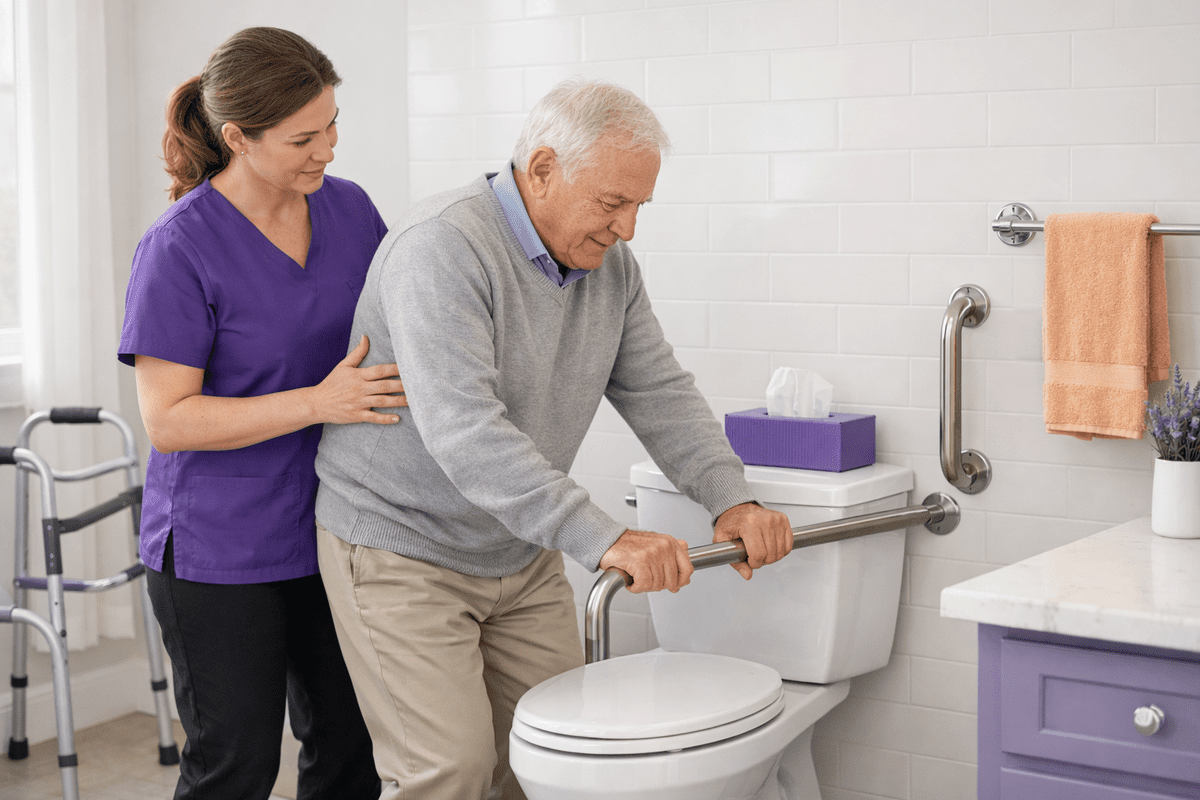
Toileting is a daily routine that affects safety, dignity, comfort, and confidence. When a patient starts struggling to reach the bathroom, manage clothing, transfer on and off the toilet, clean safely, or ask for help in time, families can feel worried and unsure what to do. The patient may feel embarrassed, rushed, or afraid of losing independence. These concerns deserve careful, respectful support.
Toileting training at home uses occupational therapy to improve the way the routine happens in the real bathroom. The therapist can assess the pathway, toilet height, grab bar placement, clothing management, hand placement, balance, hygiene setup, and caregiver assistance. The goal is to reduce risk while protecting dignity and privacy as much as possible.
HarvardCare Home Health helps patients and families address toileting challenges with practical strategies that fit the home. This may be especially helpful after hospitalization, surgery, stroke, falls, weakness, arthritis, neurological changes, pain, or changes in endurance. The service is not about judgment. It is about making a sensitive routine safer and more manageable.
Common Toileting Challenges at Home
Toileting difficulty may show up in several ways. A patient may wait too long because walking to the bathroom feels hard. They may rush and become unsteady. They may have trouble lowering clothing, turning, sitting, standing, wiping, reaching supplies, or washing hands. A caregiver may need to help but may not know where to stand, how much assistance to provide, or how to avoid making the patient feel exposed.
The bathroom itself may add risk. Toilets may be too low. The space may be narrow. A walker may not fit well. Grab bars may be missing or poorly placed. Rugs, wet floors, clutter, or dim lighting can make nighttime trips more dangerous. Some patients also need a bedside commode, raised toilet seat, toilet safety frame, or a different transfer approach, but equipment should be selected and trained carefully.
Toileting is also connected to timing. A patient with urgency, weakness, medication side effects, confusion, or slow movement may need a planned routine instead of waiting until the last moment. Occupational therapy can help families think through the sequence from first urge to safe return from the bathroom.
Bathroom Transfer Safety and Routine Planning
The therapist may assess how the patient approaches the toilet, turns, backs up, reaches for support, lowers to sit, manages clothing, and stands again. These movements involve balance, leg strength, hand placement, judgment, and confidence. A small error, such as pulling on a walker instead of pushing from a stable surface, can increase fall risk.
Training may include safer use of grab bars, raised toilet seats, toilet frames, walkers, wheelchairs, bedside commodes, or transfer surfaces. The therapist may practice with the patient while fully clothed, focusing on body position and movement sequence. They may also help arrange supplies so the patient does not twist, reach too far, or leave the toilet before feeling steady.
A toileting routine may include:
- Keeping the path to the bathroom clear and well lit.
- Using footwear or non-slip socks that support safe walking.
- Planning bathroom trips before urgency becomes severe.
- Practicing slow turns and stable hand placement.
- Keeping hygiene supplies within easy reach.
- Using caregiver cues that protect privacy and reduce rushing.
Fall Prevention, Hygiene, and Caregiver Support
Falls in the bathroom can happen quickly because the patient may be distracted by urgency, clothing, or hygiene needs. Occupational therapy helps reduce avoidable hazards and teaches safer movement patterns. This may include nighttime bathroom planning, commode placement, transfer practice, lighting changes, and review of whether the patient should walk alone or call for assistance.
Hygiene can also become difficult when reaching, bending, or standing balance changes. The therapist may recommend setup changes, adaptive tools, positioning strategies, or caregiver assistance methods that preserve dignity. If the patient has wounds, catheter needs, skin concerns, or symptoms that require nursing judgment, toileting training may need to coordinate with skilled nursing instead of standing alone.
Caregivers can learn how to help with clothing management, provide steady cues, prepare the bathroom, and recognize when the patient is unsafe to go alone. They may also learn how to avoid pulling on the patient’s arms, crowding the bathroom, or using equipment incorrectly. The right support can reduce stress for both the patient and the family.
When Occupational Therapy and Nursing May Work Together
Toileting challenges may involve more than movement. Some patients have urinary urgency, bowel changes, catheter care needs, skin breakdown risk, infection concerns, medication side effects, or wound-related issues. Occupational therapy focuses on function, safety, equipment, routines, and caregiver training. Skilled nursing may address clinical monitoring, medication education, catheter care, skin concerns, or provider communication when appropriate.
HarvardCare Home Health can help families understand which services may be relevant. A patient may benefit from In-Home Occupational Therapy for toileting function, Caregiver Training at Home for safe support, and skilled nursing services when clinical needs are present.
Families can help by noting when toileting problems happen most often. Morning routines, nighttime urgency, medication timing, constipation, fear of falling, and fatigue after meals can all change the plan. This information helps the therapist build a routine that fits the patient’s day instead of offering advice that only works in theory.
Why Patients Choose HarvardCare Home Health
Toileting concerns require sensitivity. Patients choose HarvardCare Home Health because our approach is practical, respectful, and focused on dignity. The therapist does not treat toileting as a generic checklist. They look at the actual bathroom, the patient’s movement, the caregiver’s role, and the daily routine that needs to work after the visit ends.
Our team understands that families may feel uncomfortable asking for help with toileting safety. The goal is to make the conversation easier, reduce preventable risk, and give the patient a safer plan that can be repeated consistently.
Medicare and Home Health Eligibility
Toileting training may be part of home health occupational therapy when requirements are met. Eligibility may depend on physician order, skilled need, homebound status, and payer review. Coverage is not guaranteed, and each request should be reviewed based on the patient’s situation and care plan.
If toileting difficulty is related to a recent fall, hospitalization, surgery, illness, stroke, weakness, balance problem, or functional decline, skilled occupational therapy may be appropriate. HarvardCare Home Health can review the request and coordinate next steps when a provider order is needed.
Related Services for Bathroom Safety
Toileting safety often overlaps with ADL Training at Home, Home Safety Evaluation, Fall Risk Assessment at Home, Bathing Training at Home, and Transfer Training at Home. If walking to the bathroom is unsafe, In-Home Physical Therapy Services may also be relevant.
Request Toileting Training at Home
If toileting has become unsafe, rushed, embarrassing, or too difficult to manage alone, complete the form on this page or call HarvardCare Home Health. The team can review the concern, discuss eligibility, and help determine whether home occupational therapy is appropriate.
FAQs
Do you have questions?
Got questions about Toileting Training at Home? Here are answers to what patients and families ask most.
Yes. The therapist can assess movement, setup, and routine while preserving dignity and often using fully clothed simulation or discussion.
Yes. The therapist may practice safe approach, turning, hand placement, sitting, standing, and equipment use such as grab bars or raised seats.
Recommendations may include grab bars, raised toilet seats, toilet safety frames, bedside commodes, lighting changes, or walker pathway adjustments.
Yes. Caregivers can learn where to stand, how to cue, how to help with setup, and how to reduce rushing while protecting dignity.
It may reduce risk by improving bathroom setup, transfer technique, lighting, timing, and caregiver assistance. It cannot remove every risk.
Nursing may be relevant when there are catheter needs, skin concerns, infection symptoms, wounds, medication issues, or other clinical concerns.
No. The therapist can help determine whether the bathroom, toilet equipment, or bedside setup is safest for the patient.
It may be covered when home health requirements are met, including physician order, skilled need, and homebound status when applicable. Eligibility must be reviewed.
Complete the form on this page or call HarvardCare Home Health so the team can review the request and next steps.
TESTIMONIALS
What Our Patients & Families Say
EXCELLENT
AREAS WE SERVE
Toileting Training at Home Near You
Our licensed healthcare professionals provide expert care in the comfort of your home. We proudly serve patients and families throughout Los Angeles County.
Serving 97 cities across LA County
- A
- Agoura Hills
- Alhambra
- Altadena
- Arcadia
- B
- Bel Air
- Bellflower
- Beverly Hills
- Boyle Heights
- Brentwood
- Burbank
- C
- Calabasas
- Carson
- Century City
- Cerritos
- Claremont
- Compton
- Covina
- Culver City
- D
- Diamond Bar
- Downey
- E
- Eagle Rock
- East Los Angeles
- Echo Park
- Encino
- G
- Gardena
- Glendale
- Glendora
- Granada Hills
- H
- Hacienda Heights
- Hancock Park
- Harbor City
- Hawthorne
- Highland Park
- Hollywood
- Hollywood Hills
- I
- Inglewood
- K
- Koreatown
- L
- La Crescenta-Montrose
- La Mirada
- Lakewood
- Lincoln Heights
- Long Beach
- Los Angeles
- Los Feliz
- M
- Malibu
- Manhattan Beach
- Mar Vista
- Marina del Rey
- Mid-City
- Mid-Wilshire
- Miracle Mile
- Monrovia
- Montebello
- Monterey Park
- N
- North Hollywood
- Northridge
- Norwalk
- P
- Pacific Palisades
- Palms
- Palos Verdes Estates
- Palos Verdes Peninsula
- Panorama City
- Pasadena
- Pico Rivera
- Playa Vista
- Pomona
- Porter Ranch
- R
- Rancho Palos Verdes
- Redondo Beach
- Reseda
- Rolling Hills Estates
- Rowland Heights
- S
- San Dimas
- San Gabriel
- San Marino
- San Pedro
- Santa Clarita
- Santa Monica
- Sawtelle
- Sherman Oaks
- Silver Lake
- South Gate
- South Pasadena
- Studio City
- T
- Tarzana
- Torrance
- V
- Van Nuys
- Venice
- W
- West Covina
- West Hollywood
- West Los Angeles
- Westchester
- Westlake Village
- Westwood
- Whittier
- Wilmington
- Woodland Hills
More Services

In-Home Wound Care Services
- Board-certified wound care nurses
- Personalized treatment plans
- All wound types treated
Diabetic Wound Care at Home
- Diabetes wound specialists
- Blood sugar optimization support
- Advanced offloading techniques
Skilled Nursing Care at Home
- Registered nurses available 7 days a week
- Comprehensive care coordination
- IV therapy and infusion services