
 Wound Care
It is occupational therapy focused on improving hand use during daily activities such as dressing, eating, grooming, phone use, and medication containers.
OCCUPATIONAL THERAPY
Hand Function Therapy at Home
Home occupational therapy for grip, pinch, coordination, object handling, utensils, buttons, phone use, and medication containers.
EXCELLENT 


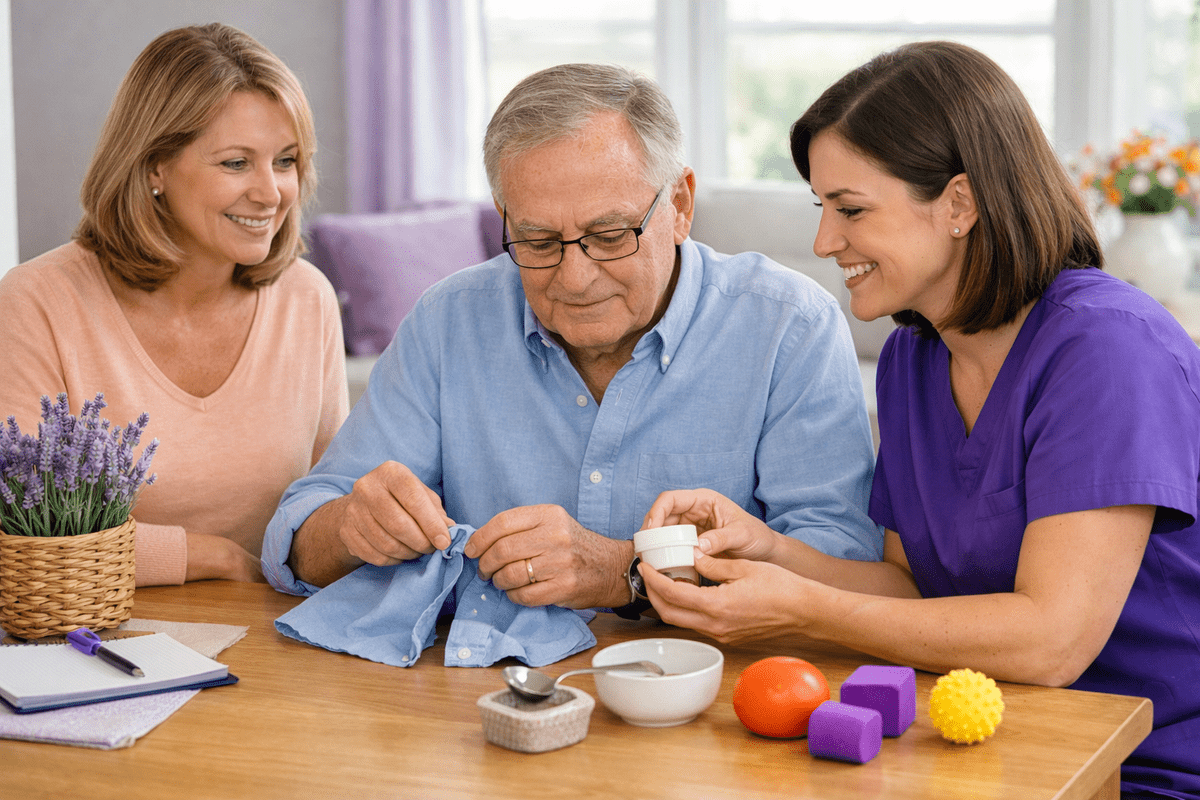
Hands are involved in almost every part of daily life. When grip, pinch, coordination, sensation, or finger movement changes, simple routines can become frustrating. A patient may struggle with buttons, utensils, medication bottles, phone use, grooming items, keys, cups, writing, or opening containers. Family members may notice that the patient drops objects, avoids certain tasks, or asks for help more often.
Hand function therapy at home uses occupational therapy to help patients practice the hand skills needed for real daily activities. The therapist can work at the kitchen table, bathroom sink, bedroom dresser, or wherever the task normally happens. The focus is practical: helping the patient use the hands more safely and effectively during the routines that matter.
HarvardCare Home Health provides patient-friendly occupational therapy for hand function problems related to stroke, arthritis, injury, illness, weakness, nerve changes, hospitalization, or general decline. Therapy can include exercises, task practice, adaptive tools, and caregiver education when support is needed.
Common Hand Function Problems
Hand function can change in several ways. Some patients lose grip strength and cannot hold items securely. Others have difficulty pinching small objects, coordinating fingers, feeling objects clearly, or moving the wrist into a useful position. Pain and stiffness can also limit hand use, especially with arthritis or after injury.
After stroke or neurological changes, a patient may have weakness, poor control, increased tone, neglect, or difficulty using both hands together. After hospitalization or illness, general weakness may make daily hand tasks feel tiring. For some patients, the hands work but not quickly enough for tasks like buttons, utensils, or medication containers.
Occupational therapy looks at the exact task, not only the hand. A person may need a different grip, a larger handle, a safer seated position, more time, or a routine that reduces frustration. The therapist can help determine whether the barrier is strength, coordination, sensation, pain, equipment, or setup.
Grip, Pinch, Coordination, and Object Handling
The therapist may assess grip strength, pinch control, finger movement, thumb use, wrist position, coordination, and how the patient handles everyday objects. Therapy may include squeezing, pinching, sorting, reaching, picking up objects, turning items, opening containers, or using both hands together. The activities should be matched to the patient and should not cause unsafe pain or overuse.
Functional object handling may include cups, utensils, toothbrushes, combs, keys, coins, clothing fasteners, remote controls, phones, pill organizers, and kitchen items. The therapist may choose household objects because practice is more meaningful when it looks like the tasks the patient needs to complete.
Some patients need to improve endurance as much as strength. A hand may work for one or two attempts but fatigue quickly. The therapist can teach pacing, rest breaks, and ways to arrange the task so the patient can complete it without rushing.
Daily Activities That Depend on Hand Function
Hand therapy at home often focuses on activities of daily living. The therapist may practice buttoning shirts, using zippers, tying or adapting shoes, holding utensils, opening toothpaste, brushing hair, shaving, holding a phone, turning pages, writing, managing keys, or opening medication containers safely.
Examples may include:
- Using built-up handles for utensils or grooming tools.
- Practicing buttons and fasteners with clothing the patient actually wears.
- Opening containers with safer hand positioning or adaptive tools.
- Improving two-handed use for folding towels or preparing simple meals.
- Reducing dropped items by changing grip, posture, or surface setup.
- Training caregivers to help only with the hardest part of the task.
Practical Home Activity Training
Home activity training helps the patient practice in the place where the task will continue after therapy. A therapist may use a dining table for fine motor work, the bedroom for clothing fasteners, the bathroom for grooming items, or the kitchen for light meal tasks. This helps identify barriers that would not be obvious in a clinic.
For example, a patient may be able to hold a spoon but not reach the drawer safely. They may be able to button a practice board but struggle with their own shirt. They may open a container at the table but not while standing at the counter. Occupational therapy helps connect hand function to the full routine.
The therapist can adjust each task so it is challenging without being discouraging. Larger objects, slower timing, supported arm position, better lighting, or seated practice may make early success possible. As control improves, the activity can become more realistic, such as using the patient’s own utensils, grooming tools, clothing, or containers.
Families can help by identifying the hand tasks that cause the most stress during a normal day. Those details help the therapist choose practice that matters, instead of spending time on activities that do not carry over to home life.
Home training may also reveal that the task itself is too complex. The therapist may simplify the setup, reduce clutter, change the container, or teach the patient to complete one part independently while a caregiver helps with the rest.
Adaptive Tools and Compensatory Strategies
Adaptive tools may include built-up handles, button hooks, jar openers, key turners, dycem, electric toothbrushes, easy-grip pens, long-handled tools, or medication container strategies. The therapist can help decide what is worth trying and can train the patient to use tools safely.
Compensatory strategies are not a failure. They can help a patient remain independent while hand function improves or while a long-term limitation is managed. The therapist may teach the patient to stabilize an item with one hand, use a non-slip surface, choose easier fasteners, or arrange items within reach.
Why Choose HarvardCare Home Health
HarvardCare Home Health focuses hand function therapy on daily life. The therapist can see which utensils, clothing, containers, phones, keys, and grooming items the patient actually uses. That makes therapy more relevant than generic hand exercises alone.
Hand function therapy may connect with ADL Training at Home, Adaptive Equipment Training at Home, Dressing Training at Home, Stroke Rehab at Home, and In-Home Occupational Therapy.
Medicare and Home Health Eligibility
Hand function therapy may be included in a skilled home health occupational therapy plan when eligibility requirements are met. This may involve physician order, skilled need, homebound status, and payer review. Coverage is not guaranteed without eligibility review.
If hand weakness, pain, coordination loss, or reduced dexterity is affecting safety and daily function, HarvardCare Home Health can review the request and help determine whether home occupational therapy is appropriate.
Request Hand Function Therapy at Home
If hand problems are making buttons, utensils, grooming, phone use, medication containers, or household tasks harder, complete the form on this page or call HarvardCare Home Health. The team can review the concern, discuss eligibility, and help determine next steps.
FAQs
Do you have questions?
Got questions about Hand Function Therapy at Home? Here are answers to what patients and families ask most.
Patients with stroke effects, arthritis, injury, weakness, pain, nerve changes, poor coordination, or reduced dexterity may benefit.
It may include grip and pinch work when appropriate, along with task practice and adaptive strategies.
Yes. The therapist may practice clothing fasteners and recommend adaptive tools or easier routines when needed.
Yes. OT may address safe opening strategies, grip support, organization, and caregiver setup when appropriate.
Not always. Tools are recommended only when they support safety, independence, and realistic daily use.
Yes. Caregivers can learn how to set up tasks, cue practice, and avoid taking over too quickly.
Yes. OT may address hand use, coordination, affected-side awareness, and practical daily tasks after stroke.
It may be covered when home health requirements are met, including physician order, skilled need, and homebound status when applicable. Eligibility must be reviewed.
Complete the form on this page or call HarvardCare Home Health so the team can review the request and next steps.
TESTIMONIALS
What Our Patients & Families Say
AREAS WE SERVE
Hand Function Therapy at Home Near You
Our licensed healthcare professionals provide expert care in the comfort of your home. We proudly serve patients and families throughout Los Angeles County.
Serving 279 cities across LA County
- A
- Acton
- Adams-Normandie
- Agoura Hills
- Agua Dulce
- Alhambra
- Alondra Park
- Altadena
- Angelino Heights
- Arcadia
- Arleta
- Arlington Heights
- Artesia
- Arts District
- Atwater Village
- Avocado Heights
- Azusa
- B
- Baldwin Hills
- Baldwin Park
- Bassett
- Beachwood Canyon
- Bel Air
- Bell
- Bell Gardens
- Bellflower
- Beverly Crest
- Beverly Grove
- Beverly Hills
- Beverlywood
- Boyle Heights
- Bradbury
- Brentwood
- Broadway-Manchester
- Burbank
- C
- Calabasas
- Canoga Park
- Canyon Country
- Carson
- Carthay
- Castaic
- Castle Heights
- Central-Alameda
- Century City
- Cerritos
- Charter Oak
- Chatsworth
- Chesterfield Square
- Cheviot Hills
- Chinatown
- Citrus
- City Terrace
- Claremont
- Commerce
- Compton
- Country Club Park
- Covina
- Crenshaw
- Cudahy
- Culver City
- Cypress Park
- D
- Del Aire
- Del Rey
- Desert View Highlands
- Diamond Bar
- Downey
- Downtown Los Angeles
- Duarte
- E
- Eagle Rock
- East Hollywood
- East Los Angeles
- East Pasadena
- East Rancho Dominguez
- East San Gabriel
- East Whittier
- Echo Park
- El Camino Village
- El Monte
- El Segundo
- El Sereno
- Elysian Valley
- Encino
- Exposition Park
- F
- Fairfax
- Florence
- Florence-Firestone
- G
- Gardena
- Garvanza
- Glassell Park
- Glendale
- Glendora
- Gramercy Park
- Granada Hills
- Green Meadows
- H
- Hacienda Heights
- Hancock Park
- Harbor City
- Harbor Gateway
- Harvard Heights
- Harvard Park
- Hasley Canyon
- Hawaiian Gardens
- Hawthorne
- Hermon
- Hermosa Beach
- Hidden Hills
- Highland Park
- Historic Filipinotown
- Hollywood
- Hollywood Hills
- Holmby Hills
- Huntington Park
- Hyde Park
- I
- Inglewood
- J
- Jefferson Park
- K
- Kinneloa Mesa
- Koreatown
- L
- La Cañada Flintridge
- La Crescenta-Montrose
- La Habra Heights
- La Mirada
- La Puente
- La Verne
- Ladera Heights
- Lake Balboa
- Lake Hughes
- Lake Los Angeles
- Lake View Terrace
- Lakewood
- Lancaster
- Larchmont
- Lawndale
- Leimert Park
- Lennox
- Leona Valley
- Lincoln Heights
- Little Armenia
- Little Tokyo
- Littlerock
- Lomita
- Long Beach
- Los Angeles
- Los Feliz
- Lynwood
- M
- Malibu
- Manchester Square
- Manhattan Beach
- Mar Vista
- Marina del Rey
- Mayflower Village
- Maywood
- Mid-City
- Mid-Wilshire
- Miracle Mile
- Mission Hills
- Monrovia
- Montebello
- Montecito Heights
- Monterey Park
- Mt Washington
- N
- Newhall
- NoHo Arts District
- North El Monte
- North Hills
- North Hollywood
- North Long Beach
- Northridge
- Norwalk
- P
- Pacific Palisades
- Pacoima
- Palmdale
- Palms
- Palos Verdes Estates
- Palos Verdes Peninsula
- Panorama City
- Paramount
- Park La Brea
- Pasadena
- Pearblossom
- Pico Rivera
- Pico-Robertson
- Pico-Union
- Playa del Rey
- Playa Vista
- Pomona
- Porter Ranch
- Q
- Quartz Hill
- R
- Rancho Dominguez
- Rancho Palos Verdes
- Rancho Park
- Redondo Beach
- Reseda
- Rolling Hills
- Rolling Hills Estates
- Rosemead
- Rowland Heights
- S
- San Dimas
- San Fernando
- San Gabriel
- San Marino
- San Pasqual
- San Pedro
- Santa Clarita
- Santa Fe Springs
- Santa Monica
- Saugus
- Sawtelle
- Sepulveda
- Shadow Hills
- Sherman Oaks
- Sherman Village
- Sherwood Forest
- Sierra Madre
- Signal Hill
- Silver Lake
- South Central
- South El Monte
- South Gate
- South Park
- South Pasadena
- South San Gabriel
- South San Jose Hills
- South Whittier
- Stevenson Ranch
- Stonehurst
- Studio City
- Sun Valley
- Sun Village
- Sunland
- Sunset Park
- Sylmar
- T
- Tarzana
- Temple City
- Thai Town
- Toluca Lake
- Topanga
- Torrance
- Tujunga
- U
- University Hills
- University Park
- V
- Val Verde
- Valencia
- Valinda
- Valley Glen
- Valley Village
- Van Nuys
- Venice
- Vermont Knolls
- Vermont Square
- Vermont Vista
- Vermont-Slauson
- Victor Heights
- View Park-Windsor Hills
- Vincent
- W
- Walnut
- Walnut Park
- Watts
- West Adams
- West Athens
- West Carson
- West Covina
- West Hills
- West Hollywood
- West Los Angeles
- West Puente Valley
- West Rancho Dominguez
- West Whittier-Los Nietos
- Westchester
- Westlake
- Westlake Village
- Westmont
- Westwood
- Westwood Village
- Whitley Heights
- Whittier
- Willowbrook
- Wilmington
- Wilshire Center
- Windsor Square
- Winnetka
- Woodland Hills
More Services

In-Home Wound Care Services
- Board-certified wound care nurses
- Personalized treatment plans
- All wound types treated
Diabetic Wound Care at Home
- Diabetes wound specialists
- Blood sugar optimization support
- Advanced offloading techniques
Skilled Nursing Care at Home
- Registered nurses available 7 days a week
- Comprehensive care coordination
- IV therapy and infusion services