
 Wound Care
It is occupational therapy focused on helping a patient dress more safely and independently in their own home using techniques, setup changes, and adaptive tools when needed.
OCCUPATIONAL THERAPY
Dressing Training at Home
Occupational therapy at home for safer dressing routines, adaptive tools, energy conservation, and independence with daily clothing tasks.
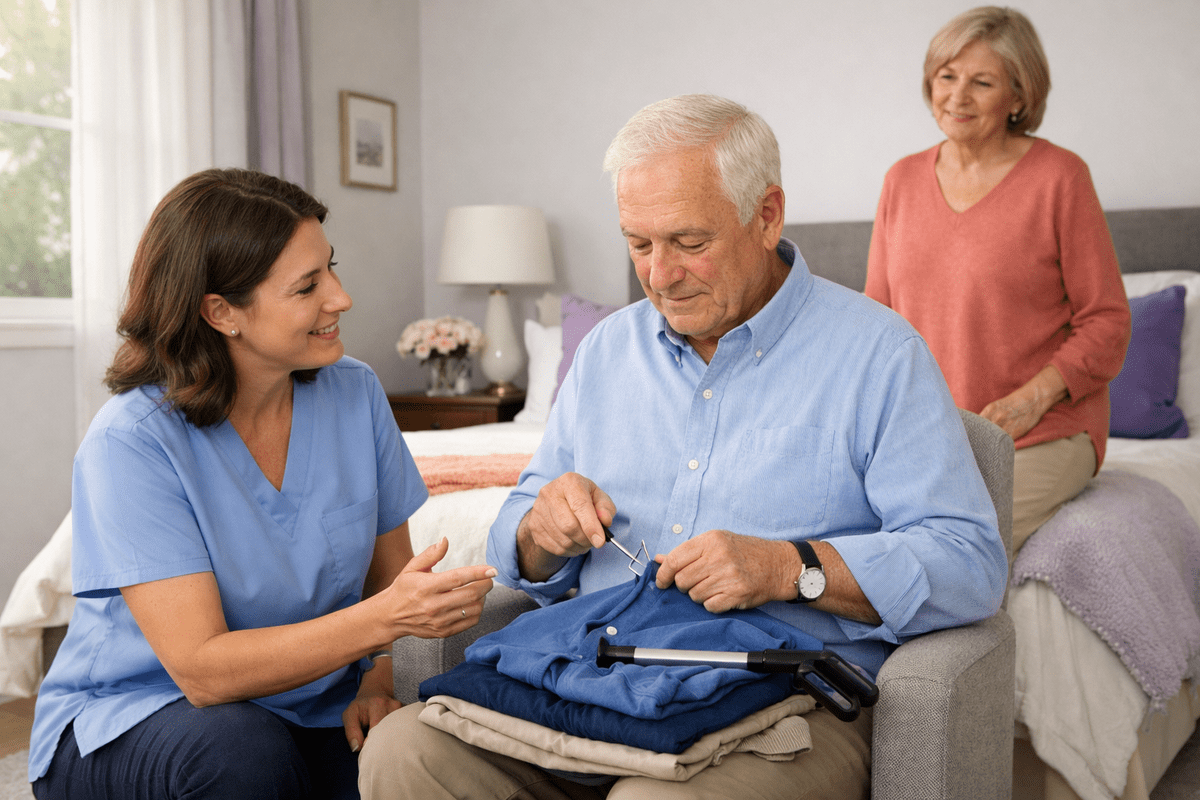
Getting dressed can feel surprisingly complicated after illness, surgery, stroke, pain, weakness, or a change in balance. A shirt that used to slide on easily may now catch at the shoulder. Pants may be hard to pull over the feet. Buttons may take too long. Shoes may feel impossible because bending causes dizziness, pain, or shortness of breath. When dressing becomes difficult, the day often starts with frustration before the patient has even left the bedroom.
Dressing training at home helps patients rebuild safer, more independent routines for clothing tasks. Occupational therapy looks at the way the patient actually dresses in the home, including the chair they use, the bed height, the closet setup, the lighting, the clothing style, and the level of caregiver help. The focus is practical: make the routine safer, easier, and more successful without taking away independence too soon.
HarvardCare Home Health provides occupational therapy that supports dignity, privacy, and daily function. Dressing is not a small task when it affects confidence, hygiene, appointments, family visits, and the ability to feel like oneself. The right training can help patients conserve energy, reduce fall risk, protect painful joints, and use adaptive tools more effectively.
When Dressing Starts Taking Over the Morning
Families may notice that dressing is taking much longer than it used to, that the patient stays in sleepwear most of the day, or that a caregiver has started doing nearly everything. The patient may avoid certain clothing, skip socks, wear unsafe shoes, or become upset when buttons, zippers, or sleeves do not cooperate. These changes may be related to weakness, arthritis, tremors, limited shoulder motion, poor balance, low vision, cognitive changes, or fatigue.
Dressing is also a fall risk when it is done while standing, bending, reaching, or balancing on one foot. Pulling up pants, stepping into underwear, putting on socks, or fastening shoes can create moments of instability. A patient may grab the edge of a dresser, lean on a rolling chair, or rush because they feel embarrassed. Occupational therapy helps slow the routine down and rebuild it around safer choices.
What the Therapist May Practice During Visits
The occupational therapist may observe or simulate parts of the dressing routine while preserving privacy and comfort. The therapist can help identify which parts of the task are truly difficult and which parts are being made harder by setup. Sometimes the patient has enough ability but needs a different sequence, a better chair, easier clothing, or a tool that reduces bending.
Practice may include upper body dressing, lower body dressing, socks, shoes, fasteners, braces, compression garments when appropriate, and safe clothing management before transfers or toileting. The therapist may work on sitting balance, reaching, one-handed techniques, shoulder protection, joint protection, pacing, and how to keep frequently used clothing within reach.
For a patient after stroke, dressing training may include hemi-dressing techniques, attention to the weaker side, and strategies for avoiding shoulder strain. For arthritis, the plan may include joint protection and easier fasteners. For weakness or shortness of breath, the focus may be seated dressing, rest breaks, and arranging clothing to avoid repeated trips across the room.
Adaptive Tools and Energy Conservation
Adaptive equipment can be helpful, but only when it matches the patient’s needs and home routine. A reacher may help with pants or laundry. A sock aid may reduce bending. A long-handled shoehorn may make shoes easier. Elastic laces may help when tying is painful or unsafe. A dressing stick or button hook may support upper body clothing or small fasteners. The therapist can train the patient to use these tools correctly, because a tool that is handed to a patient without practice often ends up unused.
Energy conservation is equally important. Patients who tire easily may need to sit for most of the task, gather clothing before starting, dress the weaker or more painful side first, choose clothing that is easier to manage, and pause before standing. The therapist may help the patient build a routine that protects energy for the rest of the day instead of spending it all on getting dressed.
A safe dressing plan may include:
- Using a stable chair with arms instead of the edge of a soft bed.
- Keeping shoes, socks, and frequently worn clothing within easy reach.
- Choosing non-slip footwear that supports safe walking.
- Avoiding standing on one leg to put on pants or shoes.
- Using adaptive tools only after they are fitted and practiced.
- Planning rest breaks when fatigue, pain, or shortness of breath increases.
Family Support Without Taking Over Independence
Caregivers often step in because they want to prevent frustration or falls. That is understandable, but doing the whole task for the patient can reduce practice, confidence, and independence. Occupational therapy can teach caregivers how to provide the right amount of help. This may include setting up clothing, giving verbal cues, standing nearby for safety, helping with one difficult step, or allowing extra time.
The therapist may also help families understand when independence is realistic and when hands-on help is needed. The goal is not to force the patient to struggle. The goal is to support ability safely while avoiding unnecessary dependence. Caregivers can learn safer body mechanics, privacy-conscious assistance, and warning signs such as dizziness, unusual pain, confusion, or unsafe loss of balance.
Why Patients Choose HarvardCare Home Health
Dressing training works best when it is specific to the person, not copied from a generic handout. HarvardCare Home Health focuses on the patient’s real bedroom, bathroom, clothing choices, mobility limits, and caregiver support. Our occupational therapy approach respects the emotional side of dressing while addressing the physical safety issues that can lead to falls, missed appointments, and reduced confidence.
When dressing difficulty is part of a larger change in daily function, the therapist can connect goals with ADL Training at Home, Caregiver Training at Home, Home Safety Evaluation, and In-Home Occupational Therapy. If balance, walking, or leg strength is also limiting dressing safety, In-Home Physical Therapy Services may also be relevant.
Medicare and Home Health Eligibility
Dressing training may be included in home health occupational therapy when eligibility requirements are met. Medicare and other payers may consider factors such as physician order, skilled need, homebound status, and whether the service is medically necessary as part of the plan of care. Coverage cannot be guaranteed without review.
If dressing difficulty began or worsened after hospitalization, surgery, illness, a fall, stroke, progressive weakness, or pain, the request may be appropriate for a home health eligibility review. HarvardCare Home Health can help families understand the next steps and coordinate with the ordering provider when needed.
Related Services for Daily Independence
Dressing often overlaps with bathing, toileting, transfers, and home safety. Patients may also need Bathing Training at Home, Toileting Training at Home, Transfer Training at Home, or Fall Risk Assessment at Home depending on the risks observed at home.
Request Dressing Training at Home
If dressing has become slow, unsafe, painful, or too dependent on family help, complete the form on this page or call HarvardCare Home Health. The team can review the request, discuss eligibility, and help determine whether home occupational therapy is the right next step.
FAQs
Do you have questions?
Got questions about Dressing Training at Home? Here are answers to what patients and families ask most.
Yes. The therapist may teach one-handed techniques, safer sequencing, attention to the weaker side, and ways to protect the shoulder and balance.
Tools may include a reacher, sock aid, dressing stick, button hook, long-handled shoehorn, elastic laces, or clothing modifications when appropriate.
The therapist may suggest safer clothing features, but the plan should respect the patient's preferences, dignity, and normal routine.
Yes. Caregivers can learn how to set up clothing, cue the patient, provide the right level of help, and avoid taking over unnecessarily.
No. It may help adults of different ages after surgery, stroke, injury, illness, pain, weakness, or neurological change when dressing is affected.
Yes. The therapist may practice safer seated techniques, adaptive tools, footwear choices, and ways to avoid bending or standing on one leg unsafely.
It can reduce risk by improving sitting balance, pacing, clothing setup, footwear safety, and caregiver assistance. It cannot remove every risk.
It may be covered as part of home health when requirements such as physician order, skilled need, and homebound status are met. Eligibility must be reviewed.
Complete the form on this page or call HarvardCare Home Health so the team can review the situation and next steps.
TESTIMONIALS
What Our Patients & Families Say
AREAS WE SERVE
Dressing Training at Home Near You
Our licensed healthcare professionals provide expert care in the comfort of your home. We proudly serve patients and families throughout Los Angeles County.
Serving 97 cities across LA County
- A
- Agoura Hills
- Alhambra
- Altadena
- Arcadia
- B
- Bel Air
- Bellflower
- Beverly Hills
- Boyle Heights
- Brentwood
- Burbank
- C
- Calabasas
- Carson
- Century City
- Cerritos
- Claremont
- Compton
- Covina
- Culver City
- D
- Diamond Bar
- Downey
- E
- Eagle Rock
- East Los Angeles
- Echo Park
- Encino
- G
- Gardena
- Glendale
- Glendora
- Granada Hills
- H
- Hacienda Heights
- Hancock Park
- Harbor City
- Hawthorne
- Highland Park
- Hollywood
- Hollywood Hills
- I
- Inglewood
- K
- Koreatown
- L
- La Crescenta-Montrose
- La Mirada
- Lakewood
- Lincoln Heights
- Long Beach
- Los Angeles
- Los Feliz
- M
- Malibu
- Manhattan Beach
- Mar Vista
- Marina del Rey
- Mid-City
- Mid-Wilshire
- Miracle Mile
- Monrovia
- Montebello
- Monterey Park
- N
- North Hollywood
- Northridge
- Norwalk
- P
- Pacific Palisades
- Palms
- Palos Verdes Estates
- Palos Verdes Peninsula
- Panorama City
- Pasadena
- Pico Rivera
- Playa Vista
- Pomona
- Porter Ranch
- R
- Rancho Palos Verdes
- Redondo Beach
- Reseda
- Rolling Hills Estates
- Rowland Heights
- S
- San Dimas
- San Gabriel
- San Marino
- San Pedro
- Santa Clarita
- Santa Monica
- Sawtelle
- Sherman Oaks
- Silver Lake
- South Gate
- South Pasadena
- Studio City
- T
- Tarzana
- Torrance
- V
- Van Nuys
- Venice
- W
- West Covina
- West Hollywood
- West Los Angeles
- Westchester
- Westlake Village
- Westwood
- Whittier
- Wilmington
- Woodland Hills
More Services

In-Home Wound Care Services
- Board-certified wound care nurses
- Personalized treatment plans
- All wound types treated
Diabetic Wound Care at Home
- Diabetes wound specialists
- Blood sugar optimization support
- Advanced offloading techniques
Skilled Nursing Care at Home
- Registered nurses available 7 days a week
- Comprehensive care coordination
- IV therapy and infusion services