
 Wound Care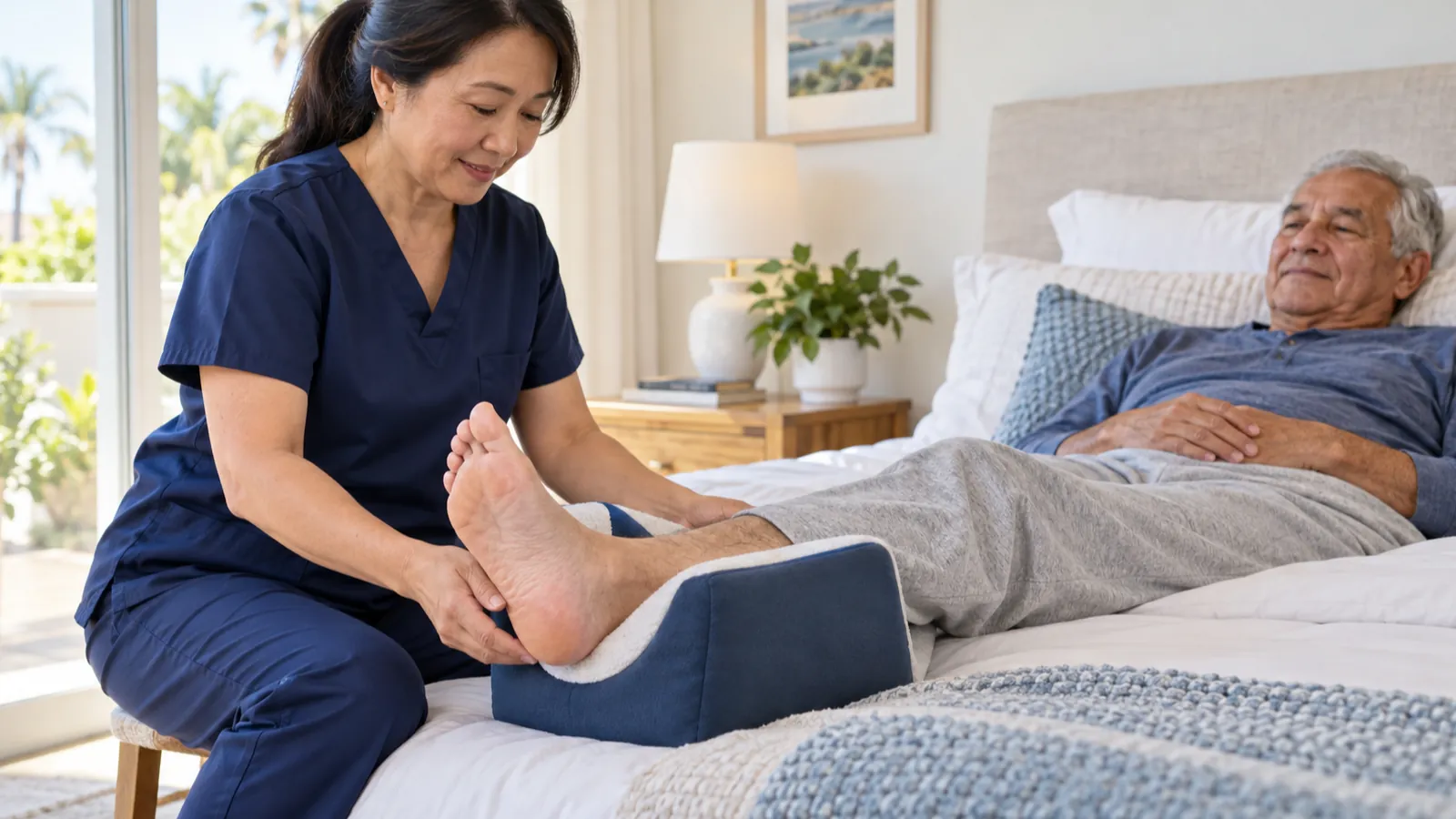

A heel pressure injury can develop when the heel remains against a bed, recliner, footrest, brace, or other surface long enough to reduce blood flow and damage tissue. The heel has little padding between skin and bone, so people who cannot reposition themselves may develop an injury before an open sore is visible. Prevention depends on early risk assessment and a patient-specific plan.
This guide helps Los Angeles families recognize concerns and support clinician-directed prevention at home. It is not a substitute for a nursing assessment, and caregivers should not create their own repositioning or device plan for a medically complex patient.
Why heels are vulnerable to pressure injury
The heel is a bony prominence with a relatively small contact area. Pressure, friction, and shear can damage skin and deeper tissue, especially when circulation or sensation is reduced. Moisture, swelling, poor nutrition, and medical devices can add risk.
People at higher risk may include those who:
- Spend long periods in bed or a chair
- Cannot move or reposition their legs independently
- Have diabetes, neuropathy, poor circulation, or leg swelling
- Recently had surgery, a stroke, serious illness, or hospitalization
- Use a cast, splint, brace, boot, compression device, or oxygen tubing near the foot
- Have poor intake, unplanned weight loss, dehydration, or fragile skin
- Have had a previous pressure injury
Risk can change quickly after illness or a decline in mobility. HarvardCare’s pressure ulcer care at home includes assessment and ordered treatment for eligible patients, but prevention should begin before the skin opens.
Early warning signs on the heel
Check heels at the frequency recommended by the care team. Compare both feet and report:
- Red, purple, maroon, blue, or dark discoloration
- Color that does not return to the person’s usual tone after pressure is relieved
- Skin that feels warmer or cooler than nearby tissue
- A firm, boggy, spongy, or unusually soft area
- Tenderness, burning, tingling, numbness, or new heel pain
- A blister, crack, blood-filled area, drainage, or open sore
- A dark or black area, especially if it is new or changing
Pressure injury can look different across skin tones. Color change may be subtle on darker skin, so temperature, texture, pain, swelling, and comparison with nearby tissue are important. Do not massage a discolored or painful heel.
What to do when you notice a heel change
Remove pressure using the method already in the patient’s care plan and contact the nurse or treating clinician promptly. Do not place the heel back on the same surface while waiting for instructions. Report when the change was first seen, its color and size, pain, temperature, drainage, and any new device or mobility change.
Do not pop a blister, peel skin, cut dark tissue, or apply peroxide, alcohol, iodine, ointment, or an adhesive dressing without clinical direction. Do not try to stage the injury yourself. A clinician should determine whether the change is pressure-related and whether circulation, infection, a device, or another condition needs evaluation.
Seek urgent medical evaluation for rapidly spreading redness, severe or escalating pain, a cold or newly discolored foot, new weakness or confusion, fever with worsening wound findings, or other acute changes. Call 911 for life-threatening symptoms. Home health is not an emergency service.
Heel offloading: removing pressure safely
Offloading means positioning the leg so the heel does not bear weight against the support surface. The Agency for Healthcare Research and Quality includes heel elevation and heel protectors among measures in its pressure-ulcer prevention tools.
How to offload safely depends on the patient’s circulation, joint position, contractures, edema, medical devices, fall risk, skin condition, and ability to move. A pillow placed incorrectly can create pressure behind the knee, allow the heel to slide back onto the bed, or interfere with a device. Use the exact positioning method and equipment recommended by the nurse or therapist.
Do not use a donut-shaped cushion unless the clinical team specifically directs it. Do not improvise with rolled towels, rigid objects, or loose equipment that can migrate, create a new pressure point, or become a fall hazard.
Repositioning is more than following a clock
Regular repositioning is central to pressure-injury prevention, but there is no single schedule that is right for everyone. The plan depends on mobility, skin response, support surface, comfort, medical stability, and tolerance. Some patients need small shifts in addition to larger position changes.
Caregivers should be taught how to move the patient without dragging the heels across sheets. Use prescribed lift or transfer equipment, and ask for help when a move is unsafe for either person. If the patient repeatedly slides down in bed or a chair, tell the care team so positioning and equipment can be reassessed.
The AHRQ Skin Under Pressure resources emphasize pressure-injury prevention, staging awareness, and the connection between pressure injuries and infection.
Daily heel protection checklist
- Inspect both heels as instructed, using good lighting.
- Compare color, temperature, texture, and comfort with nearby skin and the opposite heel.
- Confirm that the heel is offloaded using the prescribed method.
- Check that boots, splints, tubing, bedding, and clothing are not creating pressure or friction.
- Keep skin clean and dry; manage perspiration or incontinence according to the care plan.
- Keep sheets smooth and remove crumbs or small objects from the bed.
- Use moisturizer only on intact skin and only as directed; do not leave the heel slippery before a transfer.
- Record and report any new change rather than waiting for the skin to open.
For a broader prevention routine, review ways to prevent pressure ulcers in bedridden seniors.
Medical devices and heel pressure
A brace, cast, compression sleeve, sequential compression device, shoe, or protective boot can create pressure if it shifts or fits poorly. Follow instructions for skin checks and device removal. Do not alter or discontinue a prescribed device without contacting the ordering clinician.
Report numbness, tingling, swelling, discoloration, pain, cold toes, a new odor, drainage, or a device that feels tighter than usual. If a device cannot be safely removed for inspection, contact the clinical team rather than forcing it.
Nutrition, hydration, and medical conditions
Skin health is affected by the whole person. Poor intake, dehydration, diabetes, vascular disease, edema, anemia, and serious illness may increase risk or slow healing. Tell the care team about changes in appetite, weight, blood sugar, swelling, or general health.
Do not begin supplements or a restrictive diet solely to prevent a pressure injury. A physician or dietitian should tailor recommendations to kidney disease, diabetes, heart failure, medications, swallowing problems, and other conditions.
How home health clinicians support prevention
A home health nurse can assess skin, mobility, circulation concerns, devices, moisture, nutrition risk, and caregiver ability; document changes; and coordinate with the physician. Physical or occupational therapy may help with bed mobility, transfers, positioning, and equipment when ordered.
If an injury is present, a wound care nurse at home may provide ordered assessment and treatment, teach the caregiver, and report deterioration. Visit frequency and supplies depend on clinical need, provider orders, eligibility, payer rules, and the plan of care.
Frequently asked questions about heel pressure injuries
Is red skin on the heel always a pressure injury?
No. Irritation, friction, infection, circulation problems, and other conditions can cause color change. Persistent discoloration or a change in temperature, texture, or pain needs clinician assessment.
Can I massage a red heel?
Do not massage discolored or painful tissue. Friction and pressure may worsen injury. Remove pressure according to the care plan and report the change.
Should I put a pillow under the heel?
Use only the positioning method recommended for the patient. Proper offloading usually supports the lower leg while keeping the heel free, but placement and equipment must account for circulation, joints, devices, and mobility.
Can a heel pressure injury be hidden under dark skin?
Early change may be harder to see on darker skin. Compare temperature, firmness, swelling, pain, and appearance with surrounding skin and the other heel, and report any difference.
Ask about pressure-injury care at home
If a homebound patient in Los Angeles County has a heel change or an ordered pressure-injury plan requiring skilled care, learn about HarvardCare’s in-home wound care services or contact the intake team.
HarvardCare reviews eligibility, orders, service area, clinical appropriateness, and availability. An inquiry does not guarantee admission, coverage, supplies, visit frequency, or start-of-care timing.
