 HarvardCare at Home
  HarvardCare at Home
  Wound Care
It is skilled nursing support for physician-ordered compression, including swelling checks, skin assessment, patient education, caregiver teaching, and physician communication.
WOUND CARE
Compression Therapy at Home
Compression therapy at home supports patients with ordered wraps or stockings, swelling checks, skin protection, education, and physician coordination.
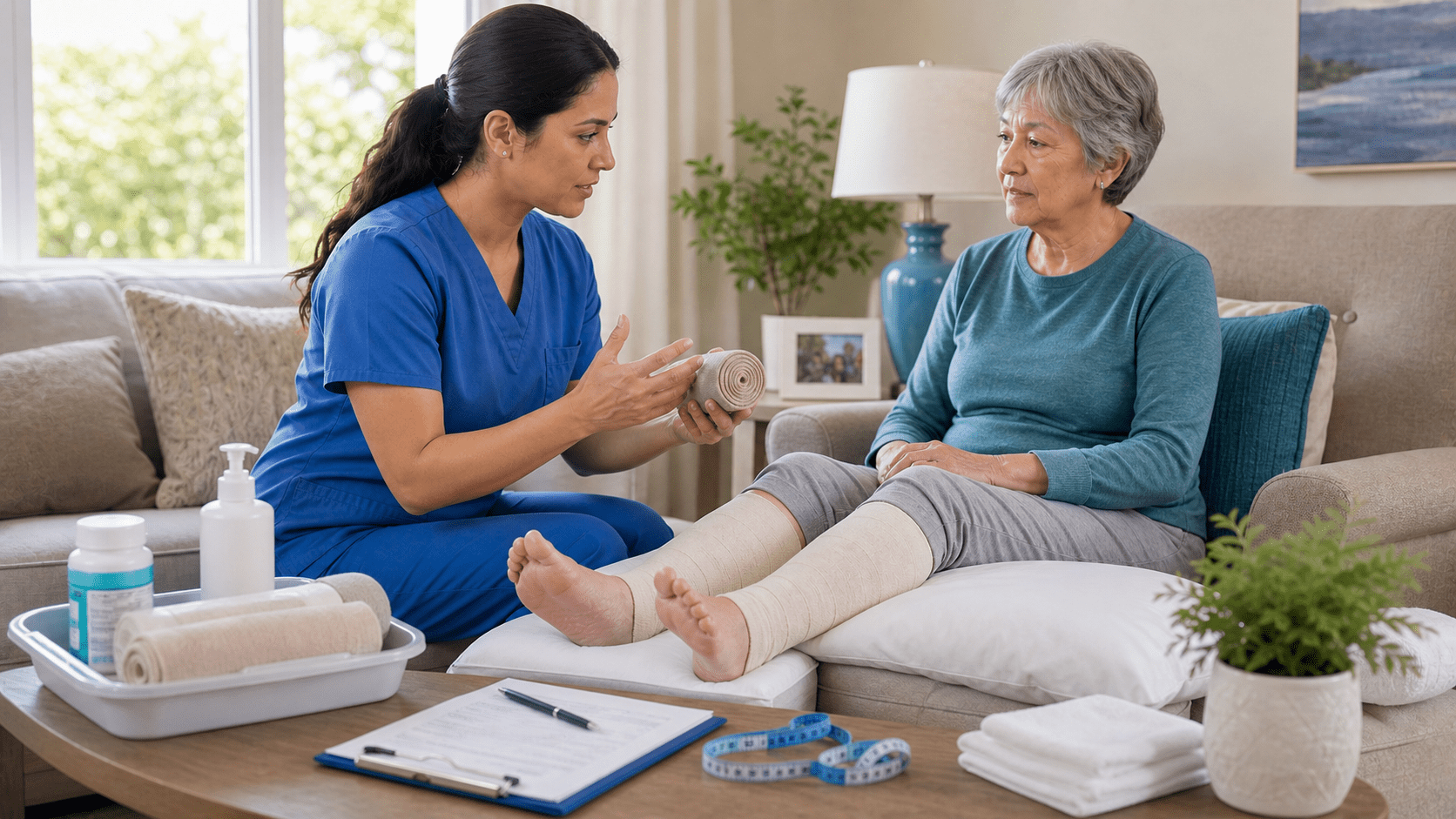
Compression Therapy at Home for Swelling, Skin Protection, and Wound Support
Compression Therapy at Home supports patients who have physician-ordered compression for leg swelling, venous insufficiency, fragile lower-leg skin, or wound-related edema. Compression can be an important part of care, but it is also a therapy that needs the right instructions, careful skin checks, and attention to comfort. A wrap, stocking, or compression system that is not applied correctly may cause pressure marks, pain, or circulation concerns.
HarvardCare at Home provides skilled nursing support for patients in Los Angeles County who need help following a compression plan safely at home. Our nurses review the physician orders, assess the skin, check swelling, teach caregivers, and communicate changes to the physician. The service is designed to make ordered compression more manageable while keeping safety at the center of the home care routine.
Who May Need Compression Therapy at Home?
This service may help patients with chronic leg swelling, venous disease, lower-leg wounds, fragile skin, weeping skin, or recurring ulcers. It may also help patients who have difficulty applying ordered wraps or stockings because of weakness, arthritis, balance problems, vision changes, or limited caregiver support. Some patients need compression education after a wound clinic, vascular visit, hospital discharge, or physician referral.
Compression therapy should not be treated as a one-size-fits-all solution. Some patients need vascular assessment before compression is used, and some medical conditions require special caution. A home health nurse helps the patient follow the ordered plan, but the nurse does not replace the physician or vascular specialist. If the order is unclear, the nurse can help clarify the plan before care continues.
What This Service Includes
During a compression therapy visit, the nurse reviews orders, checks the legs and feet, observes skin color and temperature, looks for open areas, and assesses swelling and comfort. If compression has been ordered, the nurse may provide education, monitor how the wrap or stocking is fitting, and check for pressure marks or symptoms that suggest the plan needs review. The nurse can also document changes so the physician has a clearer picture of what is happening at home.
Care may include teaching the patient or caregiver how to protect the skin, avoid wrinkles or bunching, keep supplies clean, elevate the legs as ordered, and report discomfort early. When wounds are present, compression support may need to be coordinated with dressing changes. The nurse helps keep the care sequence organized so the dressing stays protected and the compression plan follows physician instructions.
The nurse also looks at real home barriers that can affect the plan. Some patients cannot reach their feet, cannot see the back of the leg, or do not have a caregiver available every day. Others have trouble keeping stockings smooth, remembering when compression should be removed, or knowing whether a pressure mark is normal. Skilled home visits help turn written instructions into a routine the patient can actually follow.
When Compression Therapy May Be Needed
A patient may need compression therapy at home when swelling makes the skin tight, when drainage increases around the lower leg, when venous disease contributes to wounds, or when a physician orders wraps or stockings to support circulation and fluid control. Home support may also be needed when repeated clinic trips are difficult or when caregivers are unsure how to manage compression safely.
Warning signs should be reported quickly. New severe pain, numbness, tingling, blue or pale toes, cold skin, sudden swelling, shortness of breath, or a wrap that feels too tight should not be ignored. Compression therapy can be helpful when correctly ordered and monitored, but discomfort or circulation changes need prompt attention. The nurse can help families understand which symptoms are expected and which should trigger a call.
How HarvardCare at Home Helps
HarvardCare at Home brings skilled nursing oversight into the home. The nurse checks whether compression is being used as ordered, whether the skin is tolerating it, whether swelling is changing, and whether the patient or caregiver understands the routine. If the care plan is not working, the nurse can communicate with the physician instead of leaving the family to guess.
Compression therapy may connect with venous leg ulcer treatment at home, in-home wound care services, wound dressing changes at home, and non-healing wound care at home. Patients with pressure-related skin breakdown may also need pressure ulcer care at home.
Medicare and Home Health Eligibility
Compression therapy support may be part of Medicare-covered home health when eligibility requirements are met, the patient has a physician order, is homebound under Medicare rules, and needs intermittent skilled nursing care. Coverage depends on the patient condition, ordered services, payer requirements, and whether skilled assessment or treatment is medically necessary.
HarvardCare at Home can help families understand what referral information may be needed. We do not promise coverage or a specific outcome. The safest approach is to follow the physician plan, keep follow-up appointments, and report new symptoms early so the care team can respond when swelling, skin condition, or wound drainage changes.
Related Services and Next Steps
Patients receiving compression therapy may also need skilled nursing care at home or a home health nurse visit for broader assessment, medication review, and care coordination. The right plan depends on the reason compression was ordered and whether wounds, swelling, mobility limits, or caregiver needs are part of the situation.
To ask about compression therapy at home, contact HarvardCare at Home through our Contact page or submit information through Secure Intake. Our team can review the request, explain next steps, and help determine what physician orders or documentation may be needed to check eligibility.
Frequently Asked Questions
The FAQ section for this service covers physician orders, compression safety, caregiver teaching, warning signs, home health eligibility, and how visits may be scheduled. These answers are general education and should be used with the patient specific care plan. Compression instructions can vary by condition, wound type, vascular status, and physician preference.
Families should ask questions any time the wrap or stocking causes discomfort, slipping, bunching, skin marks, or confusion. A practical home routine should protect the skin, support the ordered goal, and make it clear who to call when symptoms change. HarvardCare at Home helps turn written instructions into a safer daily routine.
The service is also useful when compression is only one part of a larger home health plan. A patient may need wound care, medication review, fall-prevention support, or chronic disease monitoring at the same time. Coordinating those needs helps the nurse see the full picture instead of treating swelling as an isolated problem.
FAQs
Do you have questions?
Got questions about Compression Therapy at Home? Here are answers to what patients and families ask most.
It may help patients with physician-ordered compression needs, venous swelling, lower-leg wounds, fragile skin, limited mobility, or caregivers who need skilled support at home.
Yes. Compression should follow physician or qualified clinician orders because some circulation conditions require caution or additional evaluation before compression is used.
It may be covered when Medicare home health requirements are met, the patient is homebound, and a physician orders intermittent skilled nursing care.
Visit frequency depends on the physician orders, skin condition, wound drainage, swelling, caregiver ability, and how much skilled care is needed.
Report new severe pain, numbness, color change, cold toes, shortness of breath, sudden swelling, fever, spreading redness, odor, or worsening drainage.
Yes. Nurses can teach caregivers how to protect skin, watch for pressure marks, keep supplies organized, and follow the ordered care plan safely between visits.
Yes. Compression that is too tight or not appropriate for the patient can cause pain, skin injury, or circulation concerns. Report discomfort or color changes promptly.
Compression affects circulation and skin pressure. It should follow clinical orders, and new pain, color change, coldness, numbness, or sudden swelling should be reported quickly.
Contact HarvardCare at Home or submit secure intake information so the team can review the situation and explain next steps for referral and eligibility review.
TESTIMONIALS
What Our Patients & Families Say
AREAS WE SERVE
Compression Therapy at Home Near You
Our licensed healthcare professionals provide expert care in the comfort of your home. We proudly serve patients and families throughout Los Angeles County.
Serving 97 cities across LA County
- A
- Agoura Hills
- Alhambra
- Altadena
- Arcadia
- B
- Bel Air
- Bellflower
- Beverly Hills
- Boyle Heights
- Brentwood
- Burbank
- C
- Calabasas
- Carson
- Century City
- Cerritos
- Claremont
- Compton
- Covina
- Culver City
- D
- Diamond Bar
- Downey
- E
- Eagle Rock
- East Los Angeles
- Echo Park
- Encino
- G
- Gardena
- Glendale
- Glendora
- Granada Hills
- H
- Hacienda Heights
- Hancock Park
- Harbor City
- Hawthorne
- Highland Park
- Hollywood
- Hollywood Hills
- I
- Inglewood
- K
- Koreatown
- L
- La Crescenta-Montrose
- La Mirada
- Lakewood
- Lincoln Heights
- Long Beach
- Los Angeles
- Los Feliz
- M
- Malibu
- Manhattan Beach
- Mar Vista
- Marina del Rey
- Mid-City
- Mid-Wilshire
- Miracle Mile
- Monrovia
- Montebello
- Monterey Park
- N
- North Hollywood
- Northridge
- Norwalk
- P
- Pacific Palisades
- Palms
- Palos Verdes Estates
- Palos Verdes Peninsula
- Panorama City
- Pasadena
- Pico Rivera
- Playa Vista
- Pomona
- Porter Ranch
- R
- Rancho Palos Verdes
- Redondo Beach
- Reseda
- Rolling Hills Estates
- Rowland Heights
- S
- San Dimas
- San Gabriel
- San Marino
- San Pedro
- Santa Clarita
- Santa Monica
- Sawtelle
- Sherman Oaks
- Silver Lake
- South Gate
- South Pasadena
- Studio City
- T
- Tarzana
- Torrance
- V
- Van Nuys
- Venice
- W
- West Covina
- West Hollywood
- West Los Angeles
- Westchester
- Westlake Village
- Westwood
- Whittier
- Wilmington
- Woodland Hills
More Services

In-Home Wound Care Services
- Board-certified wound care nurses
- Personalized treatment plans
- All wound types treated
Diabetic Wound Care at Home
- Diabetes wound specialists
- Blood sugar optimization support
- Advanced offloading techniques
Skilled Nursing Care at Home
- Registered nurses available 7 days a week
- Comprehensive care coordination
- IV therapy and infusion services