
 Wound Care
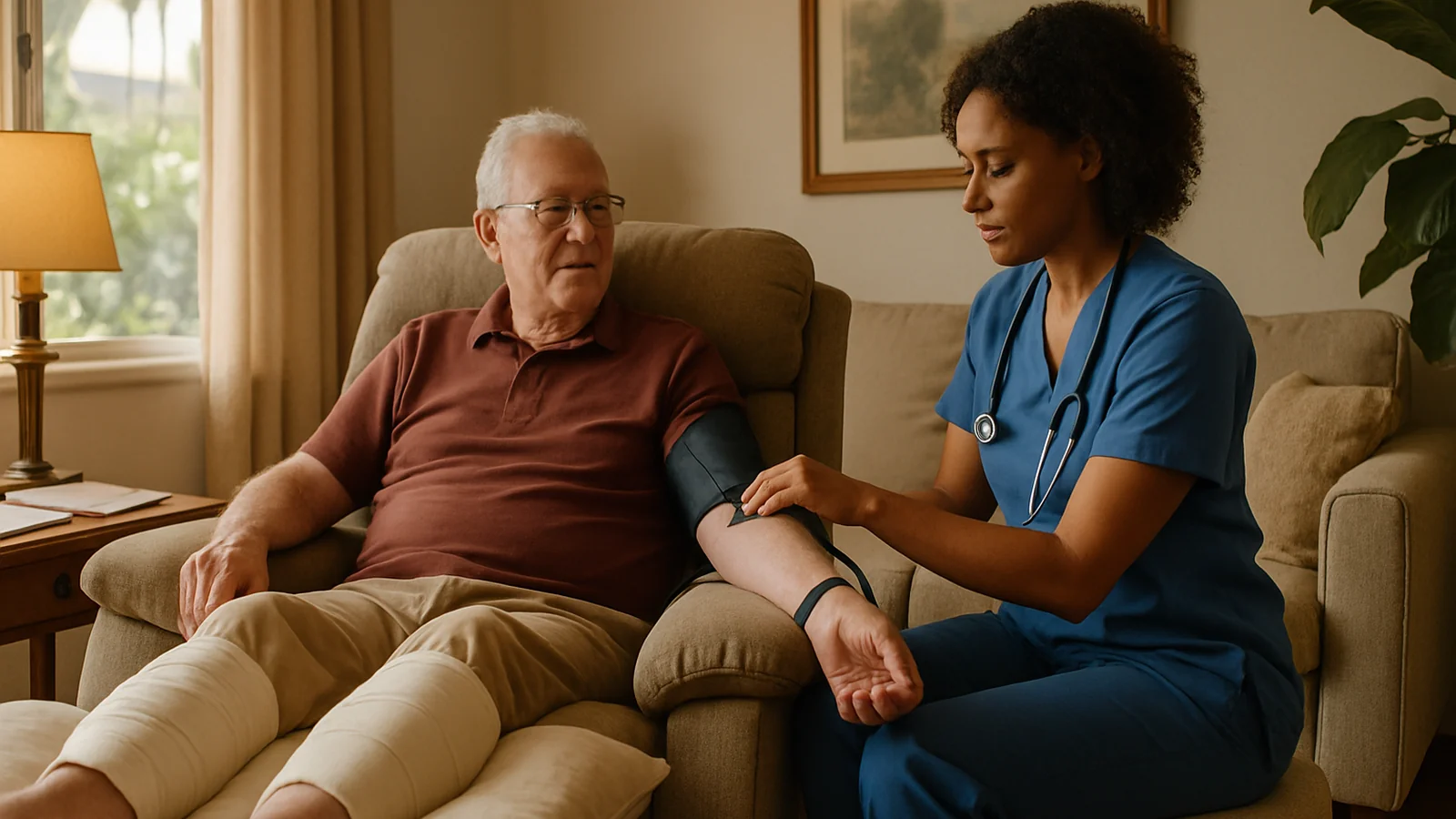

Swollen legs that feel heavy, look shiny, and start to leak clear or yellow fluid can be worrying. The skin may feel tight, socks may leave deep marks, and small scrapes may stop healing. If you or someone you care for is living with this, you may be wondering whether edema wound care at home is possible, what a home health nurse can actually do, and when swelling needs urgent attention instead.
This guide explains why chronic leg swelling can lead to weeping skin and wounds, how a Medicare-certified home health agency may help when a provider orders care, what you can do between visits, and which warning signs mean you should call 911 or seek urgent care. It is written for patients and families in Los Angeles County who are trying to decide whether to call a home health agency.
This article is general education, not medical advice. Always follow the orders and instructions of your treating provider. If you have a medical emergency, call 911. Home health is not an emergency service.
Why leg swelling can lead to weeping skin and wounds
Edema means extra fluid has collected in the tissues. In the legs, gravity pulls that fluid down toward the ankles and feet, which is why swelling is often worse at the end of the day and after long periods of sitting or standing.
When swelling lasts for weeks or months, the skin is stretched and under constant pressure. Over time it can become fragile, dry, itchy, discolored, or thickened. Fluid may seep through the surface of the skin. This is often called weeping or leaking skin, and it can soak socks, bandages, and bedding.
Skin that stays wet is easier to damage. Moisture can soften and break down the surface, small cracks can open, and a minor bump against a bed frame or wheelchair footrest can turn into a wound that is slow to close. Wet, broken skin can also give bacteria a way in. That is why swelling, skin condition, and wound healing are usually treated as one connected problem rather than three separate ones.
If you notice white, softened skin around a wound, you may find our article on why skin turns white around a wound helpful for understanding moisture-related skin changes.
Causes of chronic leg swelling vary and need a provider’s evaluation
Leg swelling is a symptom, not a diagnosis. Several different conditions can cause it, and the right treatment depends on the cause. Some common possibilities include:
- Venous insufficiency. The veins in the legs have trouble moving blood back toward the heart, so fluid pools in the lower legs. This is a frequent cause of chronic swelling and of venous leg ulcers.
- Heart failure. When the heart does not pump as effectively as it should, fluid can build up in the legs, abdomen, or lungs.
- Lymphedema. The lymphatic system, which normally drains fluid from tissues, is damaged or not working well. This may happen after cancer treatment, surgery, infection, or for other reasons.
- Medication-related swelling. Some medicines can cause fluid retention or ankle swelling as a side effect.
- Kidney or liver conditions, low protein levels, and other medical problems can also play a part.
Often more than one factor is involved. A person might have venous disease and heart failure at the same time, for example, and each one changes what is safe. Compression that helps one condition may be unsafe if circulation in the arteries is poor or if heart failure is not well controlled.
Because of this, it is important not to guess. Your doctor or another qualified provider should evaluate new or worsening swelling, decide what tests are needed, and write the treatment plan. Do not stop, start, or change any medication, including water pills, without talking to your provider first.
How home health nursing may help with edema wound care at home
When a provider orders home health and the patient meets eligibility rules, a home health nurse can carry out much of the day-to-day work that keeps swollen, fragile skin protected. The exact services depend on the physician-ordered plan of care. Visit frequency and length are also set by that plan, not by the agency or the family.
Here is what edema wound care at home may include when ordered.
Skin and wound assessment
The nurse looks at the legs and feet, checks skin color and temperature, notes areas of weeping, and measures any wounds. Tracking these details over time helps the nurse and provider see whether things are improving, staying the same, or getting worse.
Wound care and dressing changes
For wounds or areas of broken skin, the nurse cleans and dresses them according to the provider’s orders. Weeping skin often needs absorbent dressings and careful protection of the surrounding skin. HarvardCare Home Health offers venous leg ulcer treatment at home for patients whose provider has ordered it.
Compression when ordered
Compression is a common part of treatment for some types of swelling, especially venous disease and lymphedema. It may include wraps, bandage systems, or garments. Compression is a prescribed treatment, not a one-size-fits-all product, and it is only applied when the provider orders it and it is safe for that patient. Learn more about compression therapy at home, or read our article on the role of compression therapy in treating leg wounds.
Monitoring weight and swelling for heart failure
When heart failure is part of the picture, the nurse may check weight, blood pressure, heart rate, breathing, and the degree of swelling, and compare them with earlier visits. Changes are reported to the provider according to the plan of care. A heart failure home health nurse can also review daily weight logs with you and explain which changes your provider wants to hear about.
Education for patients and caregivers
Much of the value of home health comes from teaching. The nurse may show you how to inspect skin, protect fragile areas, keep the skin clean and moisturized as directed, put on and take off ordered compression garments, recognize warning signs, and know who to call. The goal is for you and your family to feel more confident between visits.
Elevation and positioning as directed
Raising the legs can help some types of swelling, but how high, how often, and for how long depends on the person. Elevation may not be suitable for everyone, for example some people with certain heart or circulation problems. The nurse can explain what your provider has recommended and help you find practical ways to do it at home.
Coordination with your provider
The nurse communicates with your doctor about how the skin and wounds are responding, asks for updated orders when needed, and may coordinate with a wound clinic or specialist if you also see one. You can read more about edema treatment at home on our service page.
For a step-by-step look at a typical visit, read what happens at a home health wound care visit.
Venous leg ulcers and swelling
When swelling is caused by venous insufficiency, the skin around the ankles and lower legs is especially vulnerable. Open wounds in this area are often venous leg ulcers. They tend to be shallow, may produce a lot of drainage, and can take a long time to heal if the underlying swelling is not addressed.
Treatment usually focuses on two things at once: caring for the wound itself and reducing the swelling that keeps it from healing. That is why compression, when ordered, often goes hand in hand with wound dressings. For a deeper explanation, see our guide to venous ulcers: causes, symptoms, and treatment.
Not every leg wound is venous. Wounds caused by poor arterial circulation, pressure, diabetes, or injury need different approaches, and some treatments for venous ulcers can be harmful for arterial wounds. Your provider will determine the type of wound and the right plan.
Red flags: when leg swelling is an emergency
Some swelling needs immediate attention, not a scheduled home visit. Call 911 or go to an emergency department right away if you notice:
- Sudden swelling in one leg, especially with pain, tenderness, warmth, or redness in the calf or thigh
- Calf pain that is new or getting worse
- Shortness of breath, chest pain, or coughing up blood
- Trouble breathing when lying flat, or waking up gasping for air
- Confusion, fainting, or severe weakness
Sudden one-sided swelling with calf pain can be a sign of a blood clot. Shortness of breath or chest pain may mean a clot has traveled to the lungs or that heart failure is getting worse. These situations are emergencies.
Contact your provider promptly, the same day if possible, if you notice:
- Spreading redness, warmth, or increasing pain around a wound or swollen area
- Fever or chills
- Drainage that changes color, becomes thick, or has a bad smell
- A wound that is getting larger or deeper
- Rapid weight gain or swelling that is quickly getting worse, if you have heart failure
- Numbness, tingling, color changes, or pain in the toes while wearing compression
Your provider or home health nurse may give you specific numbers or signs to watch for. Follow those instructions, as they are tailored to your condition.
Who may qualify for home health edema and wound care
Medicare may cover home health services when the patient meets eligibility rules and the care is medically necessary and ordered. In general, that means:
- The patient is homebound. Under CMS rules, this means that because of illness or injury the person needs a device such as a walker or wheelchair, special transportation, or help from another person to leave home, or leaving home is medically not advised. In addition, the person is normally unable to leave home, and leaving requires a considerable and taxing effort.
- A provider orders home health and the care is provided under a home health plan of care.
- The patient needs intermittent skilled care, such as skilled nursing, physical therapy, speech therapy, or continuing occupational therapy.
- A face-to-face encounter related to the main reason for home health takes place within 90 days before or 30 days after the start of care.
Being homebound does not mean you can never leave the house. Leaving for medical appointments, adult day care, or religious services, and short, infrequent outings such as a haircut or a family event, do not by themselves disqualify someone. Our article on what qualifies as homebound for Medicare goes into more detail. You can also review the Medicare home health services page.
Many people with chronic leg swelling are homebound because heavy, painful legs, open wounds, shortness of breath, or balance problems make walking far or climbing steps very difficult. Others still drive and run errands without much effort. People in that second group are usually not eligible for home health and are often better served by an outpatient wound clinic, a vein specialist, or their regular provider’s office.
If you have a Medicare Advantage plan or other coverage, rules such as network and prior authorization may apply. HarvardCare Home Health intake reviews coverage case by case. See our insurance information page for more.
The Los Angeles County angle: why care at home can matter
For people with swollen, weeping legs, getting to a clinic is not always simple. Across Los Angeles County, some practical realities make home care worth considering when someone is truly homebound:
- Stairs and hillside homes. Many homes in areas with steep streets and hillside lots have long outdoor staircases or multiple levels. Walking down and back up on swollen, painful legs can be exhausting and risky.
- Apartments without elevators. Plenty of older apartment buildings have walk-up units. A second or third floor apartment can be a real barrier for someone who struggles with stairs.
- Long drives and heavy traffic. A clinic visit can mean a long car ride in traffic, plus parking and waiting. Sitting for a long time with legs down can also make swelling worse.
- Working caregivers. Adult children and spouses often work long hours. Taking time off for frequent clinic appointments may not be realistic.
- Multilingual families. Many households speak more than one language. Teaching that happens at home, with the family present, can make it easier for everyone to understand instructions and ask questions.
HarvardCare Home Health serves patients across Los Angeles County, including communities such as Pasadena and Long Beach. Service availability is confirmed during intake.
What you can do between home health visits
Home health visits are intermittent, which means much of the daily care falls to you and your family. Your nurse will give you instructions based on your orders. In general, these habits may help support skin and wound care between visits, if your provider agrees:
- Check the skin daily. Look at the legs, ankles, feet, and between the toes. Use a mirror or ask a family member to help with areas that are hard to see.
- Keep dressings clean and dry and change them only as instructed. If a dressing becomes soaked or comes loose, follow the plan your nurse gave you for that situation.
- Protect fragile skin. Pad bed rails, wheelchair footrests, and other hard edges if your nurse suggests it. Be gentle when washing and drying the legs.
- Wear compression only as ordered. Put it on and take it off the way you were taught, and remove it and call your provider if you have numbness, tingling, increased pain, or color changes in the toes.
- Weigh yourself as directed if you have heart failure, at the same time each day, and write it down.
- Take medications exactly as prescribed and keep an updated list. Our in-home medication management services may help when a provider orders them.
- Move as your provider recommends. Gentle ankle and leg movement may help circulation for some people, but follow your own provider’s guidance.
- Write down questions for your next nurse visit or provider appointment.
Avoid trying new creams, home remedies, or over-the-counter wraps on weeping skin or open wounds without checking with your provider or nurse first. Some products can irritate fragile skin or interfere with healing.
What home health nurses cannot do
It helps to know the limits of home health so expectations are clear:
- Home health is not around-the-clock care. Nurses visit intermittently according to the plan of care.
- The nurse does not make a diagnosis or start new treatments without a provider’s order.
- Home health is not an emergency service. For emergencies, call 911.
- Certain procedures, imaging, and specialist treatments happen in a clinic or hospital setting.
Home health often works alongside a wound clinic, vein specialist, cardiologist, or primary care provider. The provider directs the plan, and the nurse carries out orders at home and reports back.
Some patients need both specialist care and home visits. Our article on home health wound care vs a wound clinic explains how the two can work together.
Frequently asked questions about edema wound care at home
Can a home health nurse treat weeping legs?
When a provider orders it and the patient qualifies for home health, a nurse can assess the skin, apply ordered dressings, protect the surrounding skin, apply compression when ordered, and teach you how to care for the legs between visits. The provider decides on the treatment plan.
Does Medicare cover edema wound care at home?
Medicare may cover home health services, including skilled nursing for wound care, if the patient is homebound, needs intermittent skilled care, has a face-to-face encounter, and the care is ordered by a provider under a plan of care. Coverage depends on each person’s situation and plan.
Will the nurse put compression wraps on my legs?
Only if your provider orders compression and it is considered safe for you. Compression is not right for everyone, for example when arterial circulation is poor. If it is ordered, the nurse may apply it and teach you or a caregiver how to manage it.
How often will the nurse visit?
There is no set number. Visit frequency and length are set by the physician-ordered plan of care and may change as your condition changes. Your nurse can explain the current schedule.
When should I call 911 instead of waiting for a visit?
Call 911 for sudden swelling in one leg with calf pain, shortness of breath, chest pain, trouble breathing when lying down, fainting, or confusion. These may be signs of a blood clot or a serious heart problem.
Can home health work with my wound clinic?
Yes. Many patients see a wound clinic or specialist who directs the treatment, while a home health nurse carries out the orders at home between clinic visits, as long as the patient qualifies for home health.
What if my loved one is not homebound?
If the person drives, runs errands, or leaves home regularly without taxing effort, they usually do not qualify for Medicare home health. An outpatient wound clinic or their provider’s office may be a better fit.
Talk to HarvardCare Home Health about edema and wound care
If you or a family member is homebound and has chronic leg swelling, weeping skin, or a leg wound, HarvardCare Home Health can review whether home health may be an option. Call (323) 484-4440 or send a message through our contact form. Doctors, discharge planners, and case managers can use our referral form.
Contacting HarvardCare Home Health does not guarantee admission, coverage, visit frequency or a start date. Eligibility depends on a provider’s order, homebound status, and other requirements reviewed at intake.
