
 Wound Care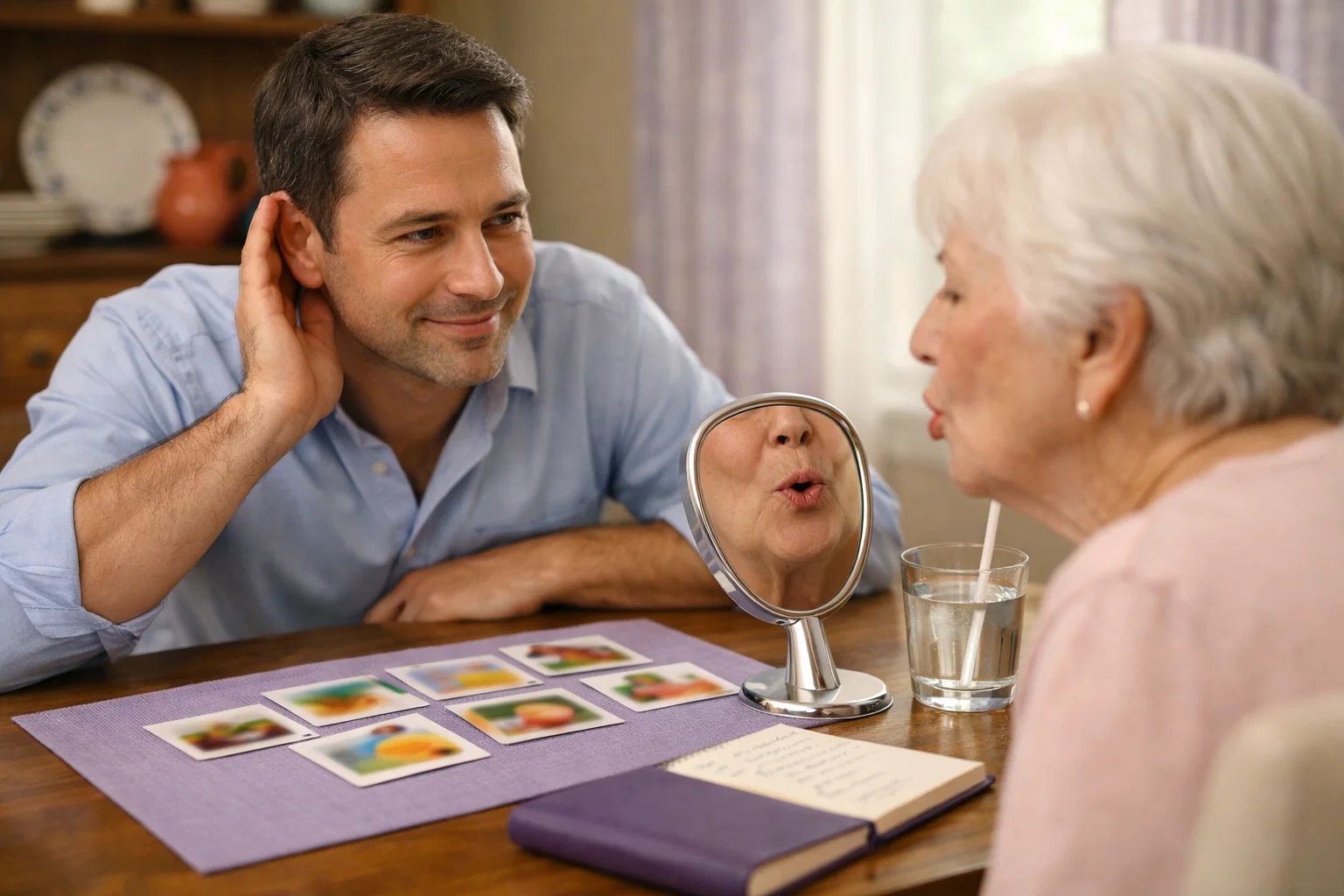

After a stroke, surgery, or diagnosis with a progressive neurological condition, speech and swallowing problems can be devastating. Fortunately, Medicare covers speech therapy visits right in your home. The cost to you: $0. However, many patients never access this benefit because they don’t know it exists.
This guide explains what Medicare covers for in-home speech-language pathology, who qualifies, and what to expect from visits. HarvardCare at Home provides Medicare-certified speech therapy throughout Los Angeles County. Visit our home health care page to learn more about all covered services.
Yes — Medicare Covers Speech Therapy at Home
Medicare Part B covers in-home speech-language pathology (SLP) as part of its home health benefit. When you meet eligibility criteria, Medicare pays 100% of covered SLP visits. Additionally, all Medicare Advantage plans must match Original Medicare’s home health coverage. There is no copay, no deductible, and no visit limit for qualifying homebound patients.
Speech-language pathology is a skilled service under Medicare. It must be provided by a licensed speech-language pathologist — not an aide or technician. As a result, it qualifies for the same $0 cost structure as skilled nursing and physical therapy under the home health benefit. Learn more about all covered services on our home health care page.
What Speech Therapy Services Does Medicare Cover at Home?
Swallowing Disorders (Dysphagia)
Dysphagia is the most common reason Medicare patients receive home speech therapy. It affects up to 68% of nursing home residents. However, it is also widespread among stroke survivors, Parkinson’s patients, and people recovering from head and neck cancer. Swallowing problems increase the risk of aspiration pneumonia — one of the leading causes of death in neurologically impaired patients.
In-home SLP for dysphagia includes a thorough swallowing assessment and diet texture recommendations. Additionally, therapists provide swallowing exercises, compensatory positioning strategies, and caregiver education on safe feeding techniques. Specifically, home-based therapy allows the SLP to observe the patient’s actual mealtime setup — the chair, table height, utensils, and foods — and make practical changes in real time. For stroke-related dysphagia, read our guide on stroke recovery at home.
Aphasia and Speech Disorders After Stroke
Aphasia is a language disorder that affects speaking, understanding, reading, and writing. It develops after stroke or traumatic brain injury. Additionally, dysarthria — slurred or weak speech — is common following neurological events. In-home SLP addresses both through direct therapy, compensatory communication strategies, and augmentative communication device training.
Treating aphasia at home offers unique advantages. Fatigue is a major barrier to consistent outpatient attendance — and consistency is essential for aphasia recovery. Furthermore, working in the home environment means therapy immediately applies to real-life conversations with family members. Read our guide on physical therapy after stroke for the broader rehabilitation picture.
Voice Disorders
Voice disorders are common in Parkinson’s disease and after head and neck surgery. LSVT LOUD is the gold standard treatment for Parkinson’s-related hypophonia — the soft, monotone voice that affects up to 90% of patients with this condition. It is a high-intensity, evidence-based protocol delivered by certified speech-language pathologists. Importantly, all 16 LSVT LOUD sessions must be completed consistently for optimal outcomes. Home-based delivery makes that consistency achievable, even for patients with significant mobility limitations.
Cognitive-Communication Disorders
Cognitive-communication disorders affect the thinking skills that support communication — memory, attention, problem-solving, and organization. They are common after stroke, traumatic brain injury, and in various stages of dementia. However, they are often overlooked compared to more obvious language symptoms. In-home SLP addresses these through cognitive rehabilitation strategies, memory compensation techniques, and structured communication environments. Additionally, caregiver education helps families support communication at home between therapy sessions. Read our guide on how occupational therapy supports dementia patients for the complementary OT approach.
Who Qualifies for Medicare Home Speech Therapy?
To receive Medicare-covered in-home SLP, you must meet four criteria. First, you must be enrolled in Medicare Part A, Part B, or a Medicare Advantage plan. Second, you must be homebound — leaving home requires considerable effort or assistance. Third, a physician must order speech therapy as part of a home health plan of care. Fourth, you must receive care through a Medicare-certified agency like HarvardCare at Home.
Importantly, speech therapy alone can qualify a patient for a Medicare home health episode — similar to physical therapy. Once you qualify based on any skilled service, all covered services including SLP can be added to your plan of care. For full eligibility details, read our guides on how to get home health care through Medicare and what qualifies as homebound for Medicare.
Conditions That Commonly Lead to Home SLP
Many conditions create a need for in-home speech therapy. Stroke is the most common entry point — aphasia, dysarthria, and dysphagia all frequently occur post-stroke. Parkinson’s disease causes both voice and swallowing impairment as it progresses. Traumatic brain injury affects communication, cognition, and swallowing simultaneously. Head and neck cancer treatment — surgery, radiation, and chemotherapy — commonly causes dysphagia and voice changes. Additionally, ALS, multiple sclerosis, and other progressive neurological conditions all create ongoing SLP needs that qualify for Medicare home health coverage.
For stroke patients, our stroke rehab at home service coordinates PT, OT, and SLP under a single plan of care. Read the full stroke recovery at home caregiver guide for a comprehensive overview.
The Jimmo Standard and Long-Term SLP Coverage
Many patients with progressive neurological conditions worry that Medicare will stop covering speech therapy once improvement stops. However, this concern is addressed directly by the Jimmo v. Sebelius settlement. Under Jimmo, Medicare cannot deny coverage simply because a patient’s condition is chronic or unlikely to improve. Maintenance SLP — for example, ongoing dysphagia monitoring and management to prevent aspiration in a Parkinson’s patient — qualifies as a covered skilled service even when no improvement is expected. As a result, patients with long-term speech and swallowing needs can receive ongoing Medicare-covered SLP as long as they remain homebound and require skilled care.
What to Expect During a Home SLP Visit
Your first SLP visit is a comprehensive evaluation lasting 60–90 minutes. The therapist reviews your medical history and physician orders, then assesses your speech clarity and intelligibility, language comprehension and expression, voice quality and volume, swallowing safety, cognitive-communication skills, and daily communication needs. Based on these findings, short-term and long-term goals are established along with a treatment plan.
Follow-up visits focus on therapeutic exercises, strategy practice, and caregiver education. In-home sessions are practical by design — the SLP works with your real mealtime setup, your family members, and your communication environment. For more on first visits, read our guide on what to expect during your first home health visit.
Is There a Limit on Home SLP Visits?
No — there is no statutory visit limit for Medicare home speech therapy. As long as you remain homebound and require skilled SLP, Medicare continues to cover visits. Your physician recertifies your plan of care every 60 days. Moreover, under the Jimmo v. Sebelius standard, maintenance SLP qualifies even when improvement is not expected. There is no annual cap — only the ongoing clinical need determines how long coverage continues.
Home SLP vs. Outpatient Speech Therapy
Outpatient speech therapy under Medicare Part B requires a 20% coinsurance after meeting your annual $257 deductible. In contrast, home-based SLP under the home health benefit is free. For homebound patients, the financial advantage is significant. Beyond cost, home SLP is clinically superior for many patients. Real-life context, family involvement, and eliminating transportation fatigue all contribute to better outcomes. In Los Angeles, avoiding hours of traffic to reach an outpatient clinic is itself a meaningful clinical advantage for patients with fatigue or neurological conditions.
How HarvardCare at Home Delivers SLP in Los Angeles
HarvardCare at Home provides in-home speech-language pathology throughout Los Angeles County. Our SLPs coordinate closely with skilled nursing, PT, and OT under a unified plan of care. We serve patients in Los Angeles, Glendale, Burbank, Pasadena, Santa Monica, Long Beach, Torrance, and throughout the county.
To get started, visit our home health care page, read our frequently asked questions, or contact our team. You can also learn how to talk to your doctor about home health services and how to choose the right home health agency.
Caregiver Role in Home Speech Therapy
Family members and caregivers play a critical role in speech therapy outcomes. In-home SLP visits actively involve caregivers in treatment. Specifically, caregivers learn safe feeding techniques for dysphagia patients, communication strategies for patients with aphasia, and how to set up the environment to support communication. As a result, the therapeutic effect of each visit extends throughout the day — not just during the hour the therapist is present. Our caregiver training at home service formalizes this education for families who need more intensive instruction. Read our guide on caring for elderly parents at home for broader caregiver guidance.
Frequently Asked Questions About Medicare Home SLP
Does Medicare cover LSVT LOUD at home? Yes — when delivered by a certified SLP as part of a Medicare home health episode. The therapist must be LSVT LOUD certified. Coverage requires homebound status and a physician order.
Can Medicare cover SLP for dementia patients? Yes — when the patient is homebound and SLP is needed to maintain safe swallowing or communication. Maintenance therapy for dementia-related communication and swallowing decline qualifies under the Jimmo standard.
How many SLP visits per week does Medicare cover? Visit frequency is determined by your physician’s orders and your therapist’s clinical judgment. There is no set number — it depends on your condition’s severity and your goals. Intensive protocols like LSVT LOUD require four visits per week for four weeks. Maintenance programs may be less frequent.
What if my Medicare Advantage plan denies SLP? File an appeal. Read our guide on how to appeal a Medicare home health denial for the step-by-step process. All MA plans must cover the same home health services as Original Medicare — denials based on coverage gaps are often improper and overturnable.
Speech Therapy and Wound Care Patients
Some wound care patients also need speech therapy. This is particularly true for patients with diabetic complications or neurological conditions. For example, a Parkinson’s patient receiving wound care at home may also have dysphagia. In that case, both skilled nursing wound care and SLP can be covered simultaneously under one Medicare home health episode. Specifically, HarvardCare at Home coordinates all needed services under a single plan of care. As a result, patients receive seamless, integrated care without managing multiple agencies. Visit our Medicare wound care in Los Angeles page to learn how our wound care and SLP services work together.
How to Get a Speech Therapy Referral
Getting started requires a physician’s order for home health services that includes speech-language pathology. Your primary care physician, neurologist, or any treating specialist can write this order. Additionally, if you are being discharged from a hospital or rehabilitation facility, ask your discharge planner to include SLP in your home health orders. Many patients don’t receive SLP referrals at discharge simply because they don’t ask. However, if you or a family member has noticed swallowing difficulties, speech changes, or communication problems, ask your doctor directly. Read our guide on how to get a doctor to order home health services for practical guidance on having this conversation.
Signs You or a Loved One May Need Home Speech Therapy
Several signs suggest a speech-language pathology evaluation is needed. Coughing or choking during or after eating or drinking is a key warning sign of dysphagia. Additionally, a wet or gurgly voice quality after eating suggests possible aspiration. Difficulty chewing, prolonged mealtimes, or avoiding certain food textures are also red flags. Furthermore, speech that is difficult to understand, unusually soft, or monotone may indicate a treatable voice disorder. In patients who have had a stroke, difficulty finding words, understanding spoken language, reading, or writing are signs of aphasia that SLP can address. Finally, recurring pneumonia in older adults — especially those with neurological conditions — may indicate silent aspiration. Specifically, if your loved one has had two or more bouts of pneumonia in a single year, a swallowing evaluation is warranted. Contact our team through our contact page or read our frequently asked questions to find out if home SLP is the right next step.
