
 Wound Care
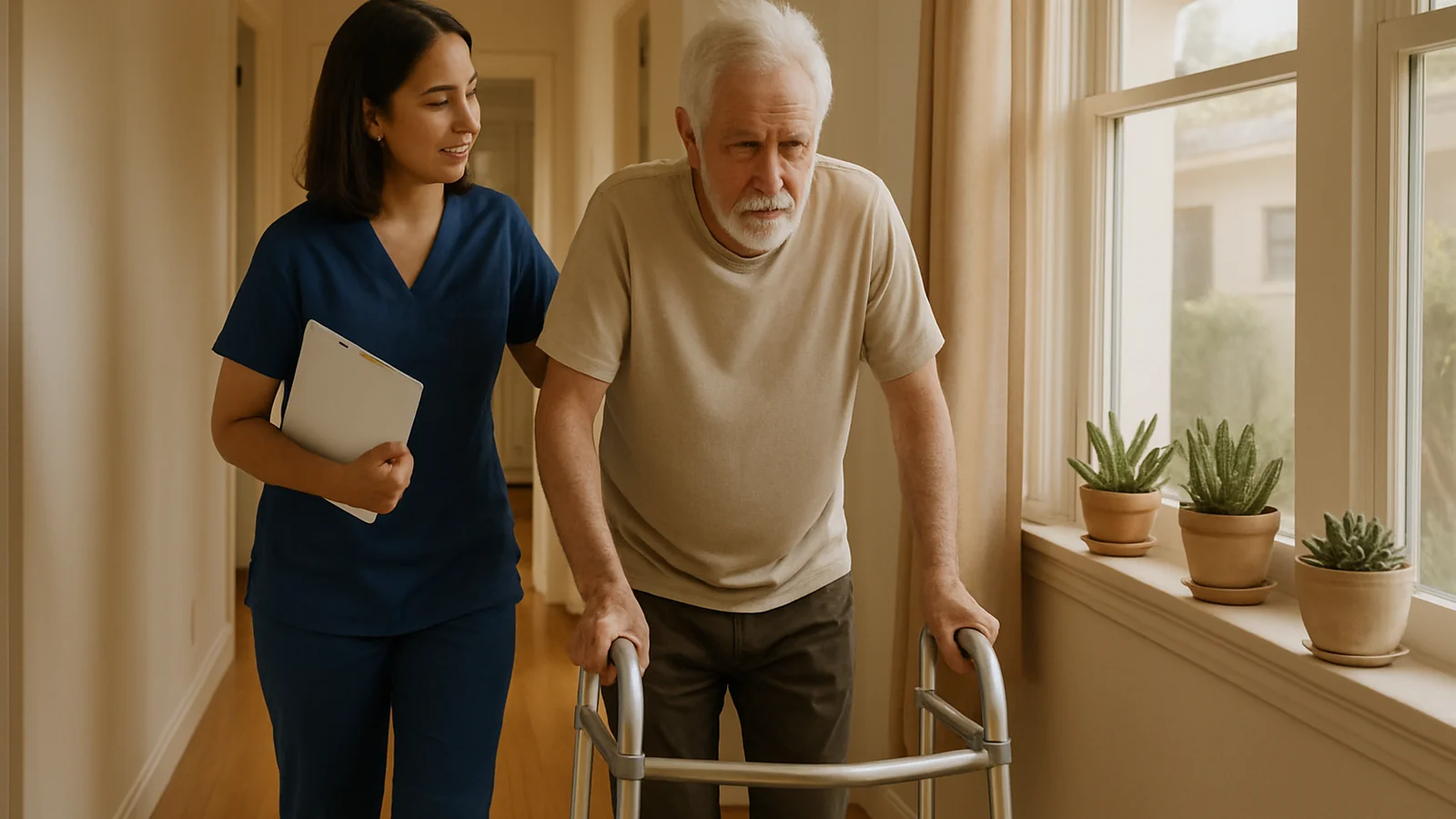

If you or a parent needs physical therapy in Los Angeles, you will probably hear about three different options: home health PT, outpatient PT at a clinic, and mobile PT that comes to your door. Comparing home health vs outpatient physical therapy can feel confusing because all three use licensed physical therapists, and two of them can happen in your living room. The real difference is not the quality of the therapist. It is who the service is designed for, how it is ordered, and how it is paid for.
This guide explains how each type of physical therapy usually works, who tends to fit each one, and what questions to ask before you choose. It also explains, plainly, why HarvardCare Home Health can only serve patients who are homebound, and why many people are better served somewhere else.
Three kinds of physical therapy, one goal
All three options share the same broad purpose. A physical therapist evaluates how you move, finds what is limiting you, and builds a plan to help you walk, transfer, climb stairs, balance, and get back to daily activities as safely as possible. The exercises may look similar. The therapist’s training is the same. What changes is the setting, the rules around eligibility, and the kind of patient each model is built for.
Here is a short overview before we go deeper:
- Home health physical therapy is part of a home health plan of care from a Medicare-certified home health agency. It is for patients who are homebound and need intermittent skilled care, and it requires a physician or allowed provider order.
- Outpatient physical therapy happens at a clinic, hospital outpatient department, or rehab center. You travel to the therapist, usually on a set schedule, and you often have access to more equipment.
- Mobile or concierge physical therapy is provided by a private practice therapist who travels to you. It is usually not home health. Patients are often active people who prefer the convenience of home sessions.
None of these is better than the others in every situation. Each one is a good fit for some people and a poor fit for others.
What home health physical therapy is
Home health physical therapy is delivered by a home health agency under a plan of care that a physician or allowed practitioner signs. A physical therapist visits your home, completes an evaluation, and sets goals that relate to your condition and your home environment. Visits are intermittent, which means the therapist comes on a schedule set by the plan of care rather than every day for hours at a time.
Because the therapist works in your actual home, the sessions focus on the places where you live your life: the bed you get out of, the bathroom you use, the hallway you walk, the steps at your front door, and the chair you sit in. You can read more about what this looks like on our in-home physical therapy services page, and the post on what happens during a home health physical therapy visit walks through a typical session.
Home health PT is often one part of a bigger picture. A patient coming home after a hospital stay may also need skilled nursing for medications or a wound, occupational therapy for bathing and dressing, or a medical social worker to connect the family with resources. The home health agency coordinates those services with the ordering provider.
Who home health PT is for
Home health PT is designed for people who have real difficulty leaving home because of an illness or injury. Common examples include a patient who just came home after a hospital stay and is very weak, someone recovering from surgery who needs a walker and another person’s help to get to the car, or an older adult with several health conditions for whom a trip out is exhausting and unsafe.
How Medicare may cover home health PT
Medicare may cover home health physical therapy when the patient is eligible. In general, that means the patient is under the care of a physician or allowed practitioner, has a plan of care, needs intermittent skilled services such as physical therapy, is homebound, and has had a face-to-face encounter related to the reason for home health within 90 days before or 30 days after the start of care. The care must come from a Medicare-certified agency. The official overview is on Medicare’s home health services page, and our post on whether Medicare covers physical therapy at home explains the details in plain language.
If you have a Medicare Advantage plan or another type of coverage, the rules and the list of agencies you can use may be different. Our insurance information page explains how intake reviews coverage. Please do not assume coverage until it has been checked.
What homebound actually means
The homebound requirement is the single biggest factor in deciding between home health vs outpatient physical therapy, so it is worth understanding clearly. Medicare uses two criteria, and a patient needs to meet both.
Criterion one: because of illness or injury, the patient needs the help of a supportive device (such as a walker, cane, or wheelchair), special transportation, or another person to leave home. Or, leaving home is medically not recommended because of the patient’s condition.
Criterion two: the patient is normally unable to leave home, and leaving home requires a considerable and taxing effort.
Homebound does not mean you can never leave the house. Absences for medical care, adult day care, and religious services do not by themselves disqualify you. Infrequent or short absences, such as a haircut or attending a family event, are also generally allowed. What matters is the overall picture of how hard it is for you to leave home.
For a fuller explanation with examples, read what qualifies as homebound for Medicare. If you are unsure, the treating provider and the home health intake team can help sort it out.
What outpatient physical therapy is
Outpatient physical therapy takes place at a clinic. You or a family member drive you there, or you use a ride service, and you work with a therapist for a scheduled session. Many outpatient clinics have equipment that is hard to bring into a home, such as treadmills, parallel bars, weight machines, pools in some locations, and specialized tools for sports or orthopedic rehab.
Outpatient PT can be a strong fit for people who can get to appointments without a taxing effort. That includes many patients after joint surgery once they are moving well, people with back or neck pain, athletes, people recovering from sprains or strains, and older adults who drive or are driven easily and want to build strength and balance in a structured setting.
Outpatient therapy also allows you to work on skills that only happen out in the world. Walking across a large parking lot, getting in and out of different cars, and moving through crowded spaces are all part of getting back to normal life. For someone who is ready, those challenges are useful.
How outpatient PT is usually paid for
Outpatient therapy is often billed under a different part of insurance than home health. Under Original Medicare, outpatient therapy generally falls under Part B, which may include cost sharing. Medicare Advantage and other plans have their own rules for referrals, prior authorization, and copays. Ask the clinic and your plan what applies to you before you start.
What mobile or concierge physical therapy is
Mobile PT, sometimes called concierge PT, means a physical therapist from a private practice comes to your home, your gym, or your workplace. The setting looks like home health, but the model is different. A mobile PT practice is usually not a home health agency, and its patients usually do not need to be homebound.
Mobile PT can be a great choice for busy people, for patients who want one-on-one time in a familiar setting, or for someone who can leave home but simply prefers not to fight traffic for every session. Some mobile practices accept certain insurance plans and bill as outpatient therapy, while others are private pay. Policies vary widely, so ask the practice directly how they bill and what you will owe.
Mobile PT usually focuses on physical therapy alone. If you also need skilled nursing, occupational therapy, or care coordination after a hospital stay, a mobile PT practice may not be set up to provide those services together.
Home health vs outpatient physical therapy: a side-by-side look
Here are the main differences in one place. These are general patterns, and your own situation may differ.
- Where it happens: home health and mobile PT happen at your home. Outpatient PT happens at a clinic.
- Who it is for: home health is for homebound patients with a skilled need. Outpatient and mobile PT are for people who can leave home, or who are not homebound under Medicare’s definition.
- How it starts: home health requires a physician or allowed practitioner order, a face-to-face encounter, and a plan of care. Outpatient and mobile PT usually start with a referral or prescription, depending on your plan and state rules.
- What else is included: home health can include nursing, occupational therapy, speech therapy, a medical social worker, and a home health aide when appropriate and ordered. Outpatient and mobile PT usually focus on therapy alone.
- Equipment: outpatient clinics usually have the most equipment. Home health and mobile PT use what can be brought in, plus the furniture and layout of your home.
- Schedule: home health visit frequency is set by the plan of care. Outpatient and mobile PT schedules are usually arranged between you and the clinic.
- How it ends: home health PT often ends when goals are met or when you are no longer homebound. Many people then move on to outpatient PT to keep making progress.
If you are not homebound, home health is not the right fit
This is the most important part of this article, so we will say it directly. If you drive yourself, run errands, go out regularly without a considerable and taxing effort, or travel to work or social activities on your own, you are probably not homebound under Medicare’s definition. In that case, you are usually better served by outpatient physical therapy or a mobile or concierge PT practice.
HarvardCare Home Health is a Medicare-certified home health agency, and we can only admit patients who are homebound and meet the other home health requirements. We cannot accept patients who are not homebound, even if home sessions would be more convenient. That is not a judgment about your needs. It is how the home health benefit is designed.
Outpatient and mobile PT therapists do excellent work, and they are the right choice for a great many people. If you are active and able to get out, a good outpatient clinic or a mobile PT practice near you may be exactly what you need. Ask your doctor for a recommendation, check with your insurance plan about which providers are in network, and choose the setting that fits your goals.
Signs home health PT may be the better fit
Home health PT may be worth asking about when several of these are true:
- You recently came home from a hospital, skilled nursing facility, or inpatient rehab and are much weaker than before.
- You need a walker, wheelchair, or another person’s help to get out the door safely.
- Leaving home leaves you exhausted, short of breath, in significant pain, or at high risk of falling.
- Your doctor has told you to limit leaving home for medical reasons.
- You have had recent falls or near falls, especially at home.
- You also need skilled nursing for medications, wounds, or a new diagnosis.
- Your family helps you but cannot safely get you to clinic visits several times a week.
Fall risk is a common reason families start looking at home health. Our post on how physical therapy helps with fall risk in seniors explains what therapists look at, and a home safety evaluation can be part of a home health plan of care when ordered.
If home health sounds like the right fit, our guide on how to get physical therapy at home after a hospital or rehab stay walks through the steps from discharge to the first visit.
The Los Angeles County angle
Where you live affects how hard it is to get to therapy, and Los Angeles County has some real challenges that families should think about honestly.
Getting to the clinic. A trip to an outpatient clinic in LA can mean a long drive in heavy traffic, finding parking, and a walk from the parking structure to the office. For a healthy adult, that is an annoyance. For someone who is very weak after a hospital stay, it may be a considerable and taxing effort, which is part of what the homebound definition describes. For someone who is recovering well, it may be perfectly manageable.
Stairs and hillsides. Many homes in neighborhoods with hillside streets have steep driveways or long flights of steps to the front door. Many apartment buildings, especially older ones, have no elevator. For a patient using a walker, a second-floor walk-up can turn every outing into a major effort. A home health therapist can work on those specific steps and help the family plan safer ways in and out.
Caregivers who work. In many LA families, the adult children who help a parent also have full-time jobs and long commutes. Taking time off for several clinic visits each week may not be realistic. That alone does not make someone homebound, but it is one reason families want to understand all their options.
Multilingual households. Los Angeles County is home to families who speak many languages. Whatever setting you choose, ask whether the therapist or clinic can communicate clearly with the patient and the family member who helps with exercises, and whether interpreter support is available.
HarvardCare Home Health serves homebound patients across the county. You can learn about in-home physical therapy in Los Angeles, and see area pages for home health in Glendale and home health in Long Beach, among other communities.
Questions to ask before you choose
Whichever direction you are leaning, these questions can help you make a clear decision:
- Can the patient leave home without a considerable and taxing effort? Do they need a device, another person, or special transportation to get out?
- What has the doctor said about leaving home, activity limits, and the goals of therapy?
- Does the patient need only physical therapy, or also nursing, occupational therapy, or help with medications?
- What type of insurance does the patient have, and which providers are in network?
- Who will help with home exercises between visits?
- For outpatient or mobile PT: how far is the clinic or how does the practice bill, and what will the patient owe?
- For home health: does the agency serve your area, and what does it need from the doctor to start?
Before you pick up the phone, it can help to review what to have ready before you call a home health agency, such as the doctor’s name, the medication list, and the insurance card.
What happens when home health PT ends
Home health is usually not meant to last forever. As a patient gets stronger, the plan of care is reviewed. When goals are met, or when the patient is no longer homebound, home health PT ends. That is often good news. It may mean you can now get out of the house more easily.
Many people move from home health PT to outpatient PT or a mobile PT practice to keep building strength and endurance. The home health therapist can share what they worked on and help you understand what kind of therapy might come next. Your doctor will decide whether to order more therapy.
This article is general education and is not medical advice. Always follow the orders and guidance of your treating provider. If you have a medical emergency, call 911. Home health is not an emergency service.
For more on how the length of therapy is decided, see how many home health physical therapy visits you may get.
Frequently asked questions about home health vs outpatient physical therapy
Can I choose home health PT just because it is more convenient?
Not under the home health benefit. Home health PT is for patients who are homebound and need intermittent skilled care. If leaving home is not a considerable and taxing effort for you, outpatient or mobile PT is usually the better fit.
Is mobile PT the same as home health PT?
No. Both happen at home, but mobile PT usually comes from a private practice that does not require patients to be homebound. Home health PT comes from a home health agency under a physician-ordered plan of care for homebound patients.
Can I go to my doctor’s appointments and still be homebound?
Yes. Leaving home for medical care does not by itself mean you are not homebound. Adult day care, religious services, and infrequent or short absences such as a haircut or a family event are also generally allowed.
Do I need a doctor’s order for home health physical therapy?
Yes. Home health requires an order from a physician or allowed practitioner, a plan of care, and a face-to-face encounter related to the reason for home health within 90 days before or 30 days after the start of care.
How many home health PT visits will I get?
There is no fixed number. The physical therapist evaluates you and recommends a plan, and the visit frequency is set by the physician-ordered plan of care. It is reviewed as you make progress.
Can I switch from home health PT to outpatient PT later?
Yes, and many people do. When you are stronger and no longer homebound, home health ends, and your doctor may refer you to outpatient or mobile PT to keep working toward your goals.
Does Medicare cover outpatient PT and home health PT the same way?
No. They are covered under different rules. Medicare may cover home health PT when you are eligible and it is medically necessary and ordered. Outpatient PT is generally under Part B and may include cost sharing. Check with your plan for your own coverage.
Talk with HarvardCare Home Health about home health PT
If the patient is homebound and may need physical therapy at home, call HarvardCare Home Health at (323) 484-4440. Patients and families can also use our contact form. Doctors, discharge planners, and case managers can send a patient through the referral form.
If you are not homebound, we encourage you to look into outpatient PT or a mobile PT practice near you, since we cannot accept patients who do not meet home health requirements.
Contacting HarvardCare Home Health does not guarantee admission, coverage, visit frequency or a start date. Eligibility is reviewed during intake and care follows the physician-ordered plan of care.

