 Wound Care
 Skilled Nursing Care
 Physical Therapy
 Occupational Therapy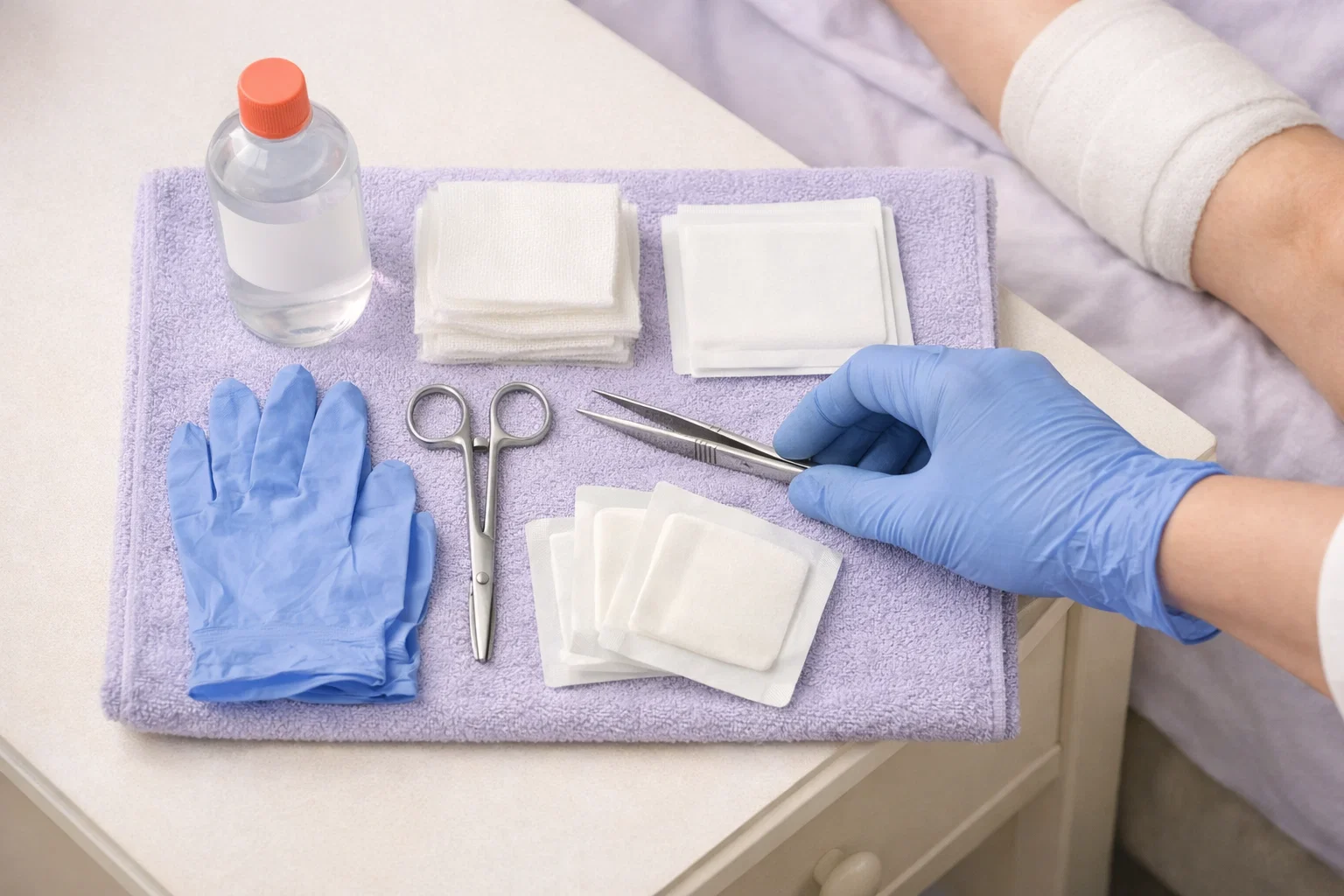

If you or a loved one has a chronic wound that isn’t healing, your doctor or wound care nurse may recommend debridement. It sounds clinical and unfamiliar, but debridement is one of the most important and evidence-based interventions in wound care — and in many cases, it’s what finally gets a stalled wound to start healing.
This guide explains what wound debridement is, why it’s necessary, the different types, and how Medicare covers debridement as part of skilled nursing wound care at home through HarvardCare at Home, serving Los Angeles County.
What Is Wound Debridement?
Wound debridement is the medical process of removing dead, damaged, infected, or contaminated tissue from a wound to promote healing. The word comes from the French word meaning “to free” — and that’s exactly what debridement does: it frees the wound from the burden of non-viable tissue that is blocking the healing process.
In a healthy acute wound — a fresh surgical incision or a simple laceration — the body’s natural healing process efficiently clears damaged tissue and rebuilds new healthy tissue in a predictable sequence. But in chronic wounds — diabetic foot ulcers, pressure ulcers, venous leg ulcers, or non-healing surgical wounds — this process breaks down. Dead and devitalized tissue accumulates in the wound bed, creating a barrier to healing and a breeding ground for bacteria. Debridement restores the wound to an acute healing state by clearing this barrier.
Why Dead Tissue Prevents Healing
To understand why debridement is so important, it helps to understand what non-viable tissue does to a wound. Dead tissue (necrotic tissue, slough, or eschar) in a wound bed physically blocks the migration of new cells across the wound surface. It provides a nutrient-rich environment for bacteria to colonize and form biofilm — a protective coating that makes bacteria highly resistant to antibiotics and the immune system. And It maintains a chronically elevated level of inflammation in the wound that prevents the wound from progressing through the healing phases. It releases enzymes that break down the new tissue the body is trying to build. The result is a wound stuck in a chronic inflammatory state that cannot move forward to the proliferative and remodeling phases needed for closure.
Research consistently shows that wounds with adequate debridement heal significantly faster than those without. For diabetic foot ulcers specifically, studies show debridement can reduce healing time by 30–50%. At HarvardCare at Home, debridement is a core component of our Medicare wound care in Los Angeles program and our in-home wound care services.
Types of Wound Debridement
There are five main methods of debridement, each with specific indications, advantages, and limitations. A skilled wound care nurse selects the appropriate method — or combination of methods — based on wound type, the amount and type of non-viable tissue, the wound’s overall condition, the patient’s health status, and clinical goals.
Sharp Debridement
Sharp debridement uses sterile instruments — scalpels, scissors, curettes, or forceps — to physically cut and remove non-viable tissue from the wound bed. It is the fastest and most precise debridement method, allowing the clinician to selectively remove dead tissue while preserving healthy underlying structures. Nurses and other qualified clinicians can perform conservative sharp debridement (removal of loose, clearly non-viable tissue above the level of viable tissue) within their scope of practice under state law.
Our wound care nurses at home are trained in conservative sharp debridement and perform it as needed during wound care visits. For wounds requiring more extensive sharp surgical debridement (cutting below the level of viable tissue), a physician or advanced practice provider performs the procedure, often in an outpatient or hospital setting before the patient transitions to home wound care.
Enzymatic Debridement
Enzymatic debridement uses a prescription topical agent containing proteolytic enzymes — substances that chemically break down dead tissue proteins. The most commonly used product in the United States is collagenase ointment (brand name Santyl), which specifically targets denatured collagen in necrotic tissue while sparing healthy tissue. Enzymatic debridement is particularly useful for wounds with thick, adherent eschar that would require extensive sharp debridement, wounds in patients who cannot tolerate sharp debridement due to pain or bleeding risk, and as an ongoing adjunct to maintain a clean wound bed between sharp debridement sessions. Enzymatic debriding agents are prescription medications covered under Medicare Part D, not under the home health benefit itself. Our nurses educate patients and caregivers on proper application technique and monitor response to enzymatic debridement at every visit.
Autolytic Debridement
Autolytic debridement harnesses the body’s own natural healing processes. When a moist dressing is applied to a wound, the wound’s natural fluids — which contain enzymes and immune cells — soften and liquefy non-viable tissue over time. Dressings such as hydrogels, hydrocolloids, and transparent films promote autolytic debridement by maintaining a moist, warm wound environment. Autolytic debridement is the gentlest and most selective method, but it is also the slowest. It is best suited for wounds with small amounts of non-viable tissue, patients who cannot tolerate other methods, and maintenance of a clean wound bed between other debridement interventions. Our wound dressing changes at home team selects dressings that promote autolytic debridement when appropriate for the wound’s condition.
Mechanical Debridement
Mechanical debridement uses physical force to remove non-viable tissue. Traditional wet-to-dry dressings (wet gauze applied to the wound, allowed to dry, then removed) are the oldest form of mechanical debridement — the dressing sticks to necrotic tissue and pulls it off when removed. However, this method is non-selective (it can remove healthy granulating tissue along with necrotic tissue) and painful, and is no longer considered best practice. Modern forms of mechanical debridement include wound irrigation under pressure (using a syringe or irrigation device to flush debris from the wound), pulsatile lavage, and monofilament fiber pads that mechanically lift debris. Wound irrigation is routinely performed by our nurses as part of every wound assessment visit to cleanse the wound bed and reduce bacterial load.
Biological Debridement (Maggot Therapy)
Biological debridement, or larval therapy, uses sterile medicinal maggots — larvae of the green bottle fly Lucilia sericata — to selectively digest necrotic tissue while sparing healthy tissue. Maggots also secrete substances that reduce bacterial load, including methicillin-resistant Staphylococcus aureus (MRSA), and stimulate wound healing. While it sounds unconventional, maggot therapy has a strong evidence base and is FDA-cleared for wound debridement. It is typically reserved for highly complex wounds that have not responded to other debridement methods. HarvardCare at Home coordinates with wound care specialists for patients who may benefit from this advanced intervention.
Wound Biofilm and Why It Matters for Debridement
One of the most important recent advances in wound care science is the understanding of biofilm — a structured community of bacteria embedded in a self-produced protective matrix that adheres to the wound surface. Biofilm is estimated to be present in approximately 60–80% of chronic wounds. Bacteria in a biofilm are up to 1,000 times more resistant to antibiotics than free-floating bacteria, making systemic antibiotic treatment alone largely ineffective against biofilm-associated wound infections.
Debridement is the most effective strategy for disrupting and removing biofilm from wounds. Sharp debridement physically removes biofilm-laden tissue; irrigation with appropriate solutions disrupts surface biofilm; and ongoing wound care practices prevent biofilm from reforming. Understanding and managing biofilm is a key component of our wound care team’s approach to non-healing chronic wounds. Read our guides on why won’t my wound heal and why chronic wounds need professional care to heal for more on the science of chronic wound management.
Which Wounds Need Debridement?
Debridement is indicated for wounds that contain any amount of slough (soft, yellow or tan, moist non-viable tissue), eschar (hard, dry, black or brown necrotic tissue), devitalized or undermined tissue, or evidence of biofilm (wound bed that appears to “restart” after each cleaning). The most common wound types requiring debridement include diabetic foot ulcers, pressure ulcers (especially Stage III and IV), venous leg ulcers with significant slough, non-healing post-surgical wounds, and infected wounds with devitalized tissue.
Our wound care nurses assess every wound for debridement needs at each visit. Patients with diabetic foot wounds benefit from our specialized diabetic wound care at home service, while patients with bedsores benefit from our pressure ulcer care at home service. All of these conditions are covered by Medicare when the patient is homebound and requires skilled nursing care.
Does Debridement Hurt?
Pain during debridement varies considerably based on the method used, the wound location, the extent of debridement required, and individual pain sensitivity. Patients with diabetic neuropathy may have reduced sensation and experience less pain during debridement — though this reduced sensation also means they may not feel the wound worsening, which is why regular professional assessment is so critical. Sharp debridement of non-viable tissue (which has no nerve supply) is often painless, while debridement near viable tissue margins may cause discomfort. Our nurses discuss pain management before each session and ensure patient comfort throughout the procedure. Topical anesthetics, positioning, and pacing the procedure appropriately all help manage debridement-related discomfort.
Medicare Coverage for Wound Debridement at Home
Medicare covers wound debridement as part of the home health skilled nursing benefit — at $0 cost to qualifying patients. When you are homebound and require skilled nursing wound care, your nurse can perform sharp debridement, apply enzymatic debriding agents (with physician orders), and use irrigation and autolytic techniques as part of every covered visit.
Under Medicare Part B’s surgical dressing benefit, wounds that have been debrided qualify for Medicare coverage of wound dressings. This means debridement not only directly promotes healing — it also unlocks Medicare coverage for the dressings needed to maintain the wound afterward. Visit our Medicare wound care in Los Angeles page for a full overview of what Medicare covers for wound care at home, and read our guide on is home wound care covered by Medicare.
Our chronic wound care at home, non-healing wound care at home, and infected wound care at home services all include debridement as a core clinical component when indicated. Our certified wound care nurses hold credentials including CWOCN, CWCN, and WCC, representing the highest standards in wound management.
Debridement and Wound Healing: What to Expect
After effective debridement, wounds typically show a brighter red, beefy appearance in the wound bed — this is granulation tissue, a sign that the wound has moved into the proliferative (healing) phase. The wound may initially appear larger after debridement because hidden undermined or tunneled areas are opened and revealed. This is normal and expected. The wound should then progressively decrease in size as new tissue fills in from the base and edges contract inward.
Patients often ask how long it takes for a wound to heal after debridement starts. The timeline varies significantly based on wound size, depth, underlying conditions (especially diabetes and vascular disease), nutritional status, and patient compliance with wound care instructions. Read our detailed guide on how long does a wound take to heal by wound type for wound-specific healing timelines, and our guide on 8 daily habits that promote faster wound healing for what patients can do to support recovery.
Nutrition and Debridement: Supporting the Healing Process
Debridement creates a wound environment capable of healing, but the body still needs adequate nutritional building blocks to actually build new tissue. Protein is the most critical nutrient for wound healing — it’s required to build new collagen and support immune function. Vitamins C and zinc play key roles in collagen synthesis and immune defense. Adequate hydration maintains tissue perfusion and cellular function. Our nurses routinely assess nutritional status and provide education on wound-healing nutrition as part of every care episode. Read our guides on 10 foods that speed up wound healing and the impact of nutrition on wound healing in older adults for detailed nutritional guidance.
Getting Wound Debridement at Home Through HarvardCare at Home
HarvardCare at Home provides expert wound debridement and comprehensive wound management for Medicare patients throughout Los Angeles County. Our certified wound care nurses assess every wound at every visit, select the appropriate debridement method, perform conservative sharp debridement when indicated, and use evidence-based dressing protocols to maintain an optimal wound healing environment between visits.
We serve wound care patients in Los Angeles, Glendale, Burbank, Pasadena, Encino, Van Nuys, North Hollywood, Sherman Oaks, and throughout LA County. To get started, visit our home health care page, review our frequently asked questions, or contact our wound care team today.