
 Wound Care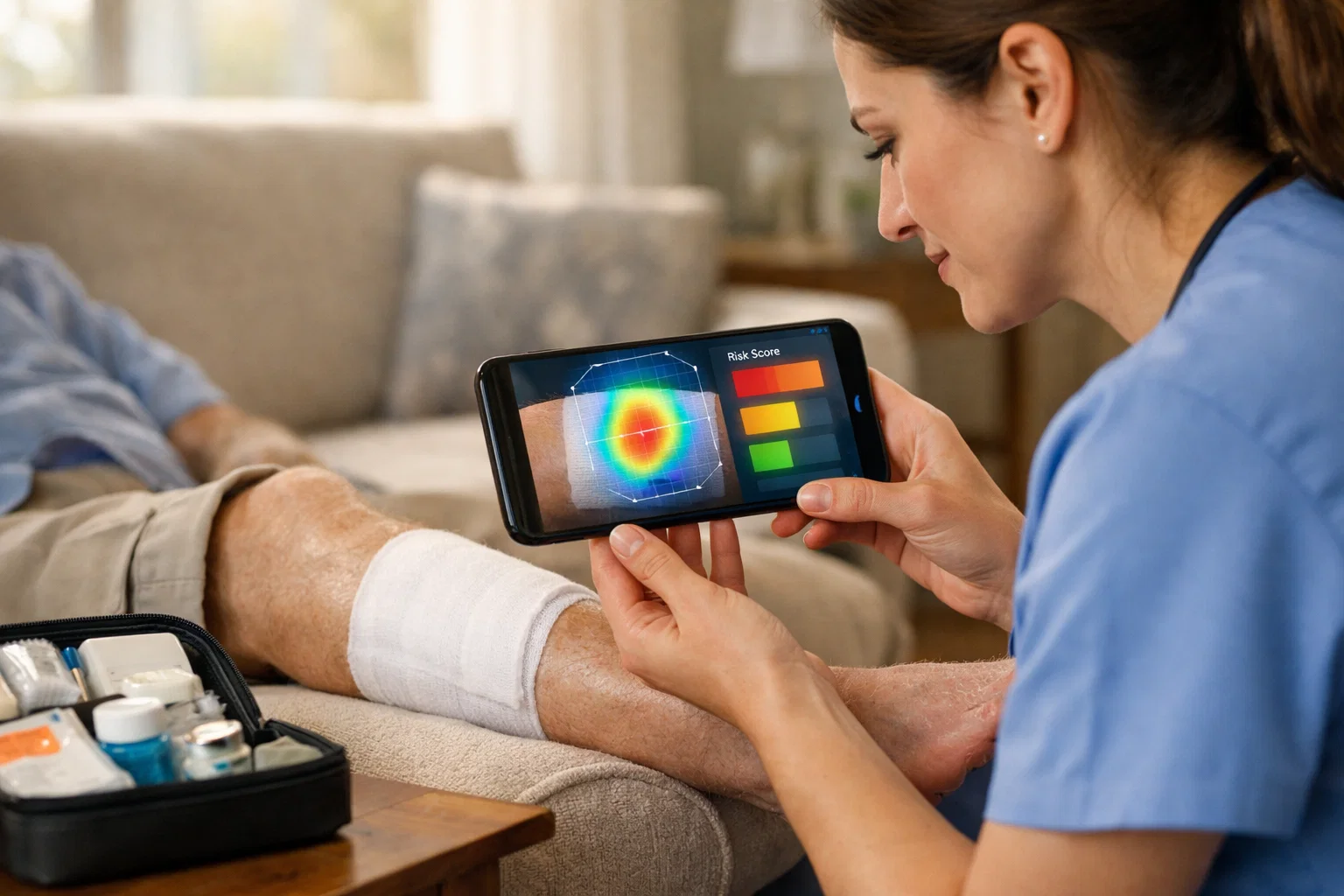

Artificial Intelligence Enters the Wound Care Clinic
Artificial intelligence is reshaping healthcare across specialties, and wound care is no exception. AI-powered tools are improving how wounds are assessed, documented, monitored, and treated. While these technologies support rather than replace clinical expertise, they are making wound care more accurate, consistent, and data-driven.
For the millions of Americans living with chronic wounds, AI innovations promise better outcomes through earlier intervention, more precise treatment selection, and improved care coordination.
AI-Powered Wound Assessment
Accurate wound assessment forms the foundation of effective treatment. AI is making assessment more precise and consistent.
Automated Wound Measurement
Traditional wound measurement relies on rulers and clinician estimation, introducing variability between observers and visits. AI-powered imaging systems analyze photographs to calculate wound dimensions with millimeter precision.
These systems measure wound length, width, and area automatically, track size changes over time with precision, detect subtle changes that human observers might miss, and create standardized documentation across all visits and providers.
For patients receiving wound dressing changes at home, consistent measurement helps clinicians and physicians track healing progress accurately.
Tissue Classification
AI algorithms can analyze wound bed images to identify and quantify different tissue types including healthy granulation tissue indicating healing, slough requiring removal, necrotic tissue needing debridement, epithelial tissue showing wound closure, and exposed structures like bone or tendon.
This analysis helps wound care nurses document wounds objectively and select appropriate treatments.
Infection Detection
Some AI systems show promise in detecting early signs of infection before they become clinically obvious. By analyzing subtle changes in wound appearance, temperature patterns, and other markers, AI may identify infections in time for early intervention.
Early infection detection prevents the complications described in our article on wound infection signs and treatment.
Predictive Analytics for Wound Healing
AI excels at identifying patterns in large datasets. Applied to wound care, this capability enables prediction of healing trajectories.
Healing Probability Models
Machine learning models trained on thousands of wound cases can predict the likelihood that a wound will heal within a specific timeframe. These predictions consider wound characteristics, patient factors, and treatment history.
Wounds predicted to have low healing probability can be escalated to advanced treatments earlier rather than waiting for failure of standard approaches. This proactive approach addresses the problem of wounds that stall, as discussed in our article on reasons wounds stop healing.
Complication Risk Assessment
AI models can flag patients at elevated risk for infection, dehiscence, or other complications. High-risk patients receive intensified monitoring and preventive interventions.
For patients with diabetes, AI risk assessment complements the specialized approach of diabetic wound care. Understanding diabetes and slow wound healing helps contextualize these predictions.
Treatment Response Prediction
Different wounds respond to different treatments. AI systems are learning to match wound characteristics with treatment approaches most likely to succeed. A wound that may not respond to standard dressings might be identified early as a candidate for wound vac therapy or other advanced interventions.
AI in Clinical Decision Support
Beyond assessment, AI is supporting treatment decisions.
Dressing Selection Guidance
Choosing the right wound dressing from hundreds of available products challenges even experienced clinicians. AI decision support tools analyze wound characteristics and recommend appropriate dressing categories based on evidence and outcomes data.
This support helps ensure patients receive optimal wound care matched to their specific wound needs.
Protocol Compliance Monitoring
AI can monitor whether care follows evidence-based protocols. If documentation suggests a wound appropriate for debridement has not received it, or a diabetic foot ulcer lacks offloading documentation, AI systems can alert care teams.
This oversight supports quality improvement in chronic wound care programs.
Resource Optimization
AI helps healthcare organizations allocate wound care resources efficiently. By predicting which patients need intensive intervention versus routine monitoring, organizations can direct specialized resources where they provide greatest benefit.
Digital Wound Documentation
AI is transforming how wound information is captured and shared.
Automated Documentation
Natural language processing and computer vision can generate wound assessment documentation from photographs and brief notes. This reduces documentation burden on clinicians while creating more complete, consistent records.
Longitudinal Tracking
AI systems maintain comprehensive wound histories showing how wounds change over time. Clinicians can instantly visualize healing trends, compare current status to any previous point, and identify when healing deviates from expected trajectories.
This tracking supports understanding of wound healing timelines and the stages of wound healing.
Care Coordination
AI-enhanced documentation flows seamlessly between home health providers, physicians, specialists, and hospitals. All providers see the same accurate, up-to-date wound information, preventing communication gaps that can compromise care.
Remote Monitoring and Telehealth
AI enables new models of wound care delivery.
Between-Visit Monitoring
Patients or caregivers can photograph wounds between professional visits. AI analysis of these images can detect concerning changes and alert clinicians, enabling earlier intervention when problems develop.
This monitoring complements regular wound dressing changes with additional safety nets.
Virtual Wound Consultations
AI-enhanced telehealth allows wound care specialists to evaluate wounds remotely with near in-person accuracy. Patients in Woodland Hills, Long Beach, or any location can access specialist expertise without travel.
Smart Alert Systems
AI monitors incoming wound data and generates alerts when attention is needed. Rather than reviewing every image, clinicians focus on cases flagged as concerning, improving efficiency while maintaining safety.
Limitations and Considerations
While promising, AI in wound care has important limitations.
Clinical Judgment Remains Essential
AI supports but does not replace clinical expertise. Wound care decisions involve patient preferences, comorbidities, care settings, and other factors that require human judgment. A wound care nurse’s assessment encompasses far more than what any algorithm can capture.
Data Quality Matters
AI systems are only as good as the data they learn from. Ensuring training data represents diverse wound types and patient populations is essential for equitable outcomes.
Technology Access
Not all patients and providers have equal access to AI-enabled wound care tools. Ensuring technology benefits all patients, not just those with the most resources, requires intentional effort.
Regulatory Considerations
AI medical devices face regulatory requirements. Systems used for diagnosis or treatment recommendations must demonstrate safety and effectiveness.
What This Means for Patients
For patients with wounds, AI advances translate into potential benefits including more accurate assessment of wound progress, earlier detection of problems, better-matched treatments, improved care coordination, and access to specialist expertise through telehealth.
These technologies are becoming part of standard wound care practice. Patients receiving professional wound care increasingly benefit from AI-enhanced assessment and monitoring.
The Human Element Remains Central
Despite technological advances, wound care remains fundamentally about human connection and clinical expertise. The nurse who assesses a wound also assesses the patient’s pain, emotional state, home environment, and support system. Technology enhances but cannot replace this comprehensive caring.
Professional wound care combines technological tools with compassionate, skilled clinicians. If you have a wound that needs attention, explore our wound care services or contact us to learn how we can help.
