 Wound Care
 Skilled Nursing Care
 Physical Therapy
 Occupational Therapy

Acute Care Comes Home
A quiet revolution is transforming how hospitals deliver care. Hospital-at-home programs, which provide acute-level treatment in patients’ own homes rather than hospital rooms, are expanding rapidly across the United States. What began as an innovative pilot has become a significant component of the healthcare landscape.
This shift has implications for patients, families, and the broader healthcare system. Understanding what hospital-at-home means and how it connects to home health services helps patients navigate the evolving care options available to them.
What Is Hospital-at-Home?
Hospital-at-home programs deliver acute hospital-level care in a patient’s residence.
The Concept
Patients who would otherwise be admitted to a hospital receive treatment at home. They remain under the care of a hospital-based physician team. Nurses, therapists, and other clinicians visit multiple times daily. Remote monitoring technology tracks vital signs continuously. Medications, laboratory tests, imaging, and other services come to the patient.
Who Qualifies
Hospital-at-home programs typically serve patients with conditions like pneumonia, heart failure exacerbation, COPD exacerbation, cellulitis, certain infections, and other conditions requiring hospital-level care but not intensive care.
Patients must have appropriate home environments and support systems. Not everyone who needs hospitalization is a candidate, but many are.
How It Differs from Home Health
Hospital-at-home is acute care, equivalent to inpatient hospitalization. Patients are considered hospital inpatients even though they are physically at home. Care intensity is high with multiple daily visits and continuous monitoring.
Traditional home health skilled nursing provides post-acute and chronic care. Visits occur less frequently. Patients are stable enough not to need hospital-level intervention.
Many patients transition from hospital-at-home to traditional home health services as they recover. The post-hospital discharge process works similarly whether the patient leaves a physical hospital or completes hospital-at-home care.
Why Hospital-at-Home Is Growing
Several factors drive the rapid expansion of these programs.
Patient Outcomes
Research shows hospital-at-home patients often do better than those in traditional hospitals. Studies demonstrate lower mortality rates, fewer complications, less delirium and cognitive decline, fewer falls, lower readmission rates, and higher patient satisfaction.
Patients avoid hospital-acquired infections, sleep in their own beds, and maintain normal routines. The psychological benefits of home recovery are significant.
Cost Savings
Hospital-at-home costs 30 to 40 percent less than traditional hospitalization. Lower facility overhead, reduced complications, and shorter care episodes contribute to savings.
Capacity Relief
Hospitals face chronic capacity constraints. Moving appropriate patients home frees beds for those who truly need facility-based care. During the pandemic, hospital-at-home provided essential surge capacity.
Regulatory Support
Medicare waivers expanded during the pandemic have continued, allowing more hospitals to offer these programs with reimbursement. Over 300 hospitals across more than 100 health systems now have hospital-at-home programs.
Technology Enablement
Remote monitoring technology makes hospital-at-home feasible. Wearable devices track vital signs continuously. Video visits enable frequent physician contact. Electronic communication keeps care teams coordinated.
The Patient Experience
What does hospital-at-home actually look like for patients?
Admission
Patients are evaluated in the emergency department or clinic. Those meeting criteria are offered hospital-at-home as an alternative to traditional admission. Accepting patients are transported home with initial equipment and medications.
Daily Care
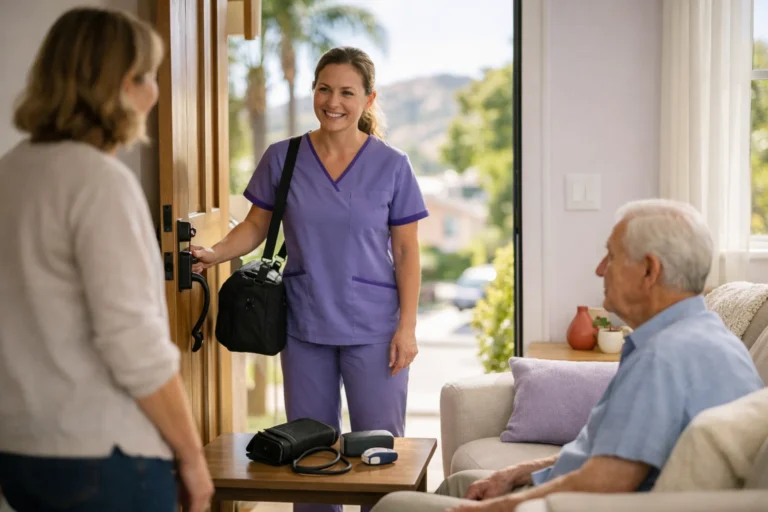
Nurses visit at least twice daily, often more frequently. Physicians conduct daily video or in-person visits. Specialists consult remotely. Laboratory technicians come to the home for blood draws. Portable imaging equipment handles X-rays and some other tests.
Monitoring
Continuous remote monitoring tracks vital signs, alerting clinical teams to changes. Patients have direct communication lines to their care team around the clock.
Discharge
When acute care is complete, patients transition to appropriate follow-up. Many benefit from continued home health services including skilled nursing, physical therapy, and wound care as they fully recover.
How This Connects to Home Health
Hospital-at-home and traditional home health serve different but complementary roles.
The Care Continuum
For many patients, the journey includes acute illness requiring hospital-level care, hospital-at-home providing that acute care, transition to home health for continued skilled care, and eventual independence or ongoing chronic care management.
Post-Acute Services
Home health services commonly needed after hospital or hospital-at-home stays include skilled nursing for transition support, wound care for any wounds or incisions, rehabilitation therapy to rebuild strength and function, medication management for complex regimens, and disease-specific monitoring and education.
Our article on transitioning from hospital to home explores this process in detail.
Wound Care Connections
Patients hospitalized for conditions involving wounds, whether diabetic wounds, pressure ulcers, or surgical complications, often need continued professional wound care after acute treatment. The wound care nurse continues what hospital teams began.
Implications for Patients and Families
More Care Options
Hospital-at-home adds another option for patients who need acute care. For appropriate candidates, it offers an alternative to traditional hospitalization with potential quality and comfort advantages.
Active Participation
Home-based acute care requires patient and family engagement. Unlike hospital admission where the institution handles everything, hospital-at-home involves the patient’s household. Family members may assist with certain tasks and must communicate with care teams about changes.
Comfort vs Convenience
Being home has clear comfort benefits. However, it also means your home becomes a care setting. Some patients prefer the separation that hospitalization provides.
Not for Everyone
Hospital-at-home works for specific patients and conditions. Those needing intensive care, lacking appropriate home environments, or preferring traditional hospitalization still go to the hospital.
The Future of Care Delivery
Hospital-at-home reflects broader shifts toward home-based care delivery.
Continuing Expansion
As more health systems gain experience and more conditions prove appropriate for home treatment, hospital-at-home will likely continue growing. Regulatory support and reimbursement pathways are increasingly established.
Technology Integration
Remote monitoring, telehealth, and AI-powered clinical decision support will further enable safe home-based acute care. What seems cutting-edge today will become standard.
Seamless Transitions
Better coordination between hospital-at-home and traditional home health will create seamless care journeys. Patients will move between care levels without falling through gaps.
Finding Care in Los Angeles
Whether you need hospital-at-home, traditional home health, or both, services are available throughout the Los Angeles region. Home health reaches patients in Beverly Hills, Pasadena, Santa Monica, Glendale, Long Beach, Torrance, Burbank, and communities throughout the county.
Understanding Your Options
The healthcare landscape is evolving. Understanding options from acute hospital-at-home programs to skilled home health nursing helps you make informed decisions when care needs arise.
If you have questions about home health services following hospitalization or acute illness, contact us or explore our complete services.