 HarvardCare at Home
  HarvardCare at Home
  Wound Care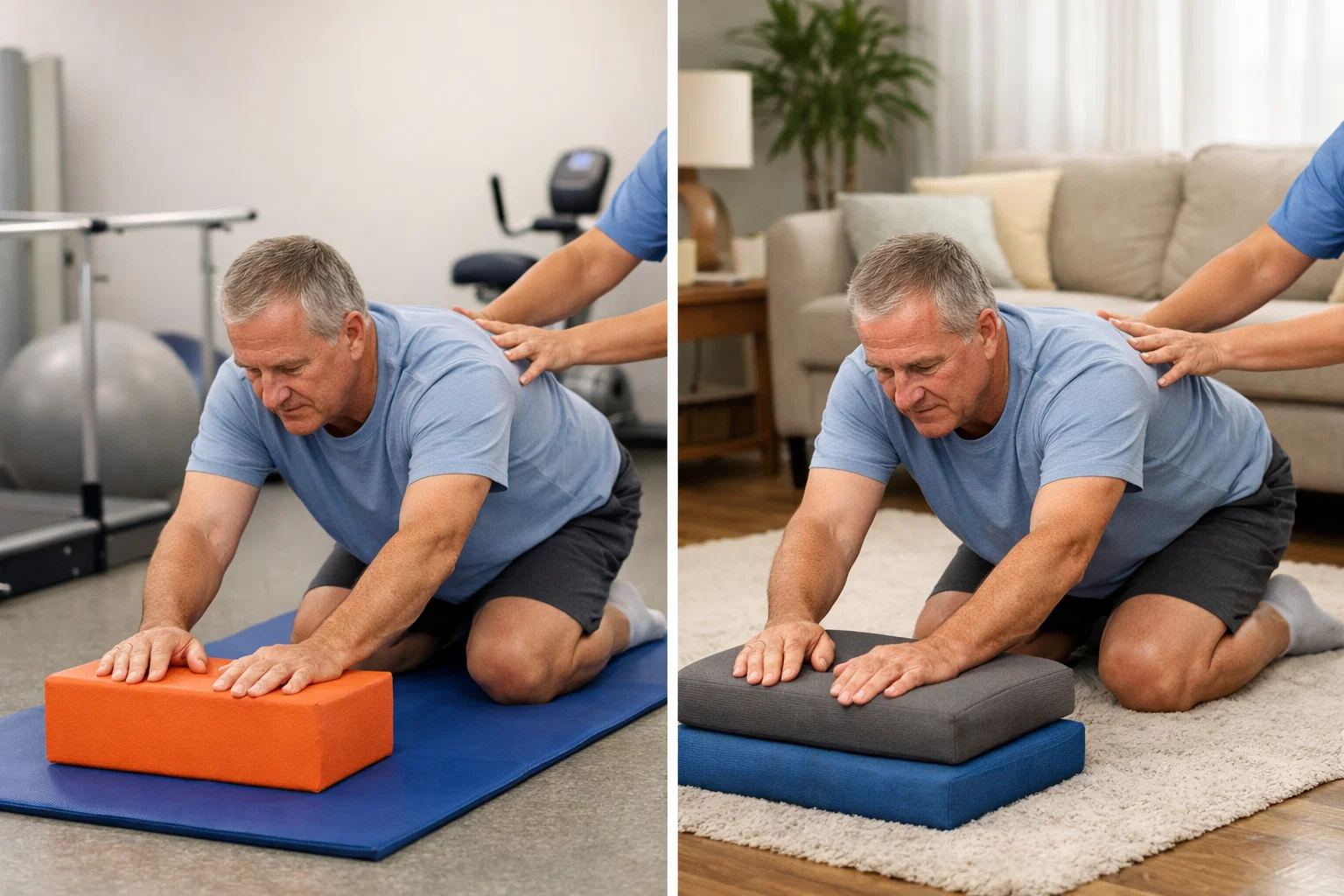

Research Validates Home Physical Therapy Outcomes
For years, patients have wondered whether physical therapy received at home could match the results of clinic-based outpatient therapy. Now a growing body of research provides a clear answer: for many patients, home-based rehabilitation delivers outcomes equal to or better than facility-based care.
This finding has significant implications for how rehabilitation services are delivered, particularly for seniors and others who face barriers accessing traditional outpatient therapy.
What the Research Shows
Multiple studies have compared outcomes between home-based and outpatient physical therapy across various conditions.
Joint Replacement Recovery
Research on patients recovering from hip and knee replacement surgery consistently shows equivalent outcomes between home and outpatient therapy settings. A systematic review published in leading rehabilitation journals found no significant difference in functional outcomes between home-based and outpatient physical therapy following total knee replacement.
Patients receiving knee replacement rehabilitation at home achieved comparable range of motion, strength, and functional independence to those attending outpatient clinics. Similar findings apply to hip replacement recovery.
Stroke Rehabilitation
Studies of stroke rehabilitation demonstrate that home-based therapy can be as effective as facility-based rehabilitation for appropriate patients. Home therapy offers the additional advantage of practicing skills in the actual environment where patients need to function.
Our guide to physical therapy after stroke explains the rehabilitation process in detail.
Fall Prevention
Research strongly supports home-based fall prevention therapy. Studies show that exercise programs delivered at home reduce fall risk as effectively as facility-based programs. The Otago Exercise Programme, specifically designed for home delivery, has demonstrated 35 percent reduction in falls among high-risk seniors.
Learn more about how physical therapy reduces fall risk.
General Rehabilitation
Broader studies comparing home health physical therapy with outpatient services find equivalent outcomes across measures including strength gains, mobility improvement, pain reduction, and functional independence.
Why Home Therapy Works
Understanding why home-based therapy achieves strong outcomes helps explain its effectiveness.
Real-World Environment
Home therapists work in the actual environment where patients need to function. They see the real stairs, the real bathroom, the real obstacles patients face. Treatment addresses specific challenges rather than simulating them in a clinic.
A therapist helping a patient in Pasadena or Beverly Hills works with that patient’s actual home configuration, not a standardized clinic setup.
Reduced Barriers
Many patients struggle to attend outpatient appointments consistently. Transportation challenges, fatigue, pain, and scheduling conflicts cause missed sessions. Home therapy eliminates these barriers, resulting in better attendance and adherence.
Family Involvement
Home therapy naturally involves family members and caregivers. They observe techniques, learn how to assist safely, and understand the exercise program. Caregiver training becomes integrated with therapy sessions.
Personalized Approach
One-on-one attention in the home setting allows truly individualized therapy. The therapist focuses entirely on one patient without the distractions of a busy clinic environment.
Immediate Application
Skills learned during home therapy sessions can be practiced immediately in context. There is no gap between learning a transfer technique and using it in the actual bathroom where it matters.
Who Benefits Most from Home Therapy
While home therapy works well for many patients, certain groups benefit particularly.
Seniors with Mobility Limitations
Older adults who struggle with transportation or tire easily often do better with home-based care. They receive full benefit from therapy sessions without exhaustion from travel.
Post-Surgical Patients
Post-surgery rehabilitation often begins when patients cannot easily travel. Home therapy allows immediate initiation of rehabilitation when it matters most.
Articles on hip replacement recovery week by week and home health support for hip replacement explain how home therapy fits into surgical recovery.
Patients with Fall Risk
Patients at risk for falls benefit from therapy that addresses their specific home environment. Fall risk assessment and home safety evaluation are integrated with therapy.
Those with Chronic Conditions
Patients managing diabetes, heart failure, or other chronic conditions often juggle multiple medical appointments. Home therapy reduces appointment burden while providing necessary rehabilitation.
Cognitively Impaired Patients
Patients with dementia or cognitive impairment often do better in familiar surroundings. Home therapy reduces confusion and anxiety associated with unfamiliar environments.
Combining Therapy with Other Home Health Services
Home therapy integrates seamlessly with other home health services for comprehensive care.
Skilled Nursing Coordination
Skilled nursing and therapy work together. Nurses manage medical needs while therapists address function. Communication between disciplines ensures coordinated care.
Wound Care Integration
Patients with wounds receiving professional wound care can also receive physical therapy. Therapists accommodate wound precautions while working on mobility and strength.
Occupational Therapy
Occupational therapy at home addresses daily living skills. ADL training and adaptive equipment training help patients function independently.
Medicare Coverage for Home Physical Therapy
Medicare covers home physical therapy at 100 percent when eligibility criteria are met. There are no copays or deductibles for covered home health services.
Our Medicare home health coverage guide explains eligibility requirements in detail.
What to Expect from Home Physical Therapy
Patients new to home therapy often wonder what it involves.
Initial Evaluation
The therapist conducts a comprehensive evaluation including strength and range of motion testing, balance assessment, gait analysis, functional evaluation, home safety assessment, and goal setting.
Regular Treatment Sessions
Ongoing sessions typically include therapeutic exercises, manual therapy techniques, gait and balance training, functional activity practice, home exercise program progression, and patient and family education.
Home Exercise Program
What patients do between visits matters as much as the sessions themselves. Therapists develop and progress home exercise programs tailored to each patient’s abilities and goals.
Our article on what happens during a home health physical therapy visit provides detailed information.
Accessing Home Physical Therapy
Getting started with home physical therapy requires a physician order.
After Hospital Discharge
Hospital discharge teams often arrange home therapy before patients leave. Post-hospital discharge services frequently include physical therapy.
Through Your Doctor
Ask your physician about home physical therapy if you have rehabilitation needs but face barriers to outpatient care. Doctors can order home health services for qualifying patients.
After Evaluating Your Needs
If you are unsure whether home therapy is right for you, discuss your situation with your healthcare provider. Factors including medical condition, homebound status, and goals determine appropriateness.
Services Across Los Angeles
Home physical therapy is available throughout the Los Angeles area. Services reach patients in Beverly Hills, Pasadena, Santa Monica, Glendale, Long Beach, Torrance, Burbank, Woodland Hills, and communities throughout the county.
The Evidence Is Clear
Research confirms what patients have experienced: home-based physical therapy works. For appropriate patients, it delivers outcomes matching or exceeding facility-based care while offering greater convenience, comfort, and accessibility.
If you need rehabilitation but face barriers to outpatient therapy, home-based care may be the right choice. Explore our physical therapy services or contact us to discuss your needs.
