 HarvardCare at Home
  Wound Care
 Skilled Nursing Care
 Physical Therapy
 Occupational Therapy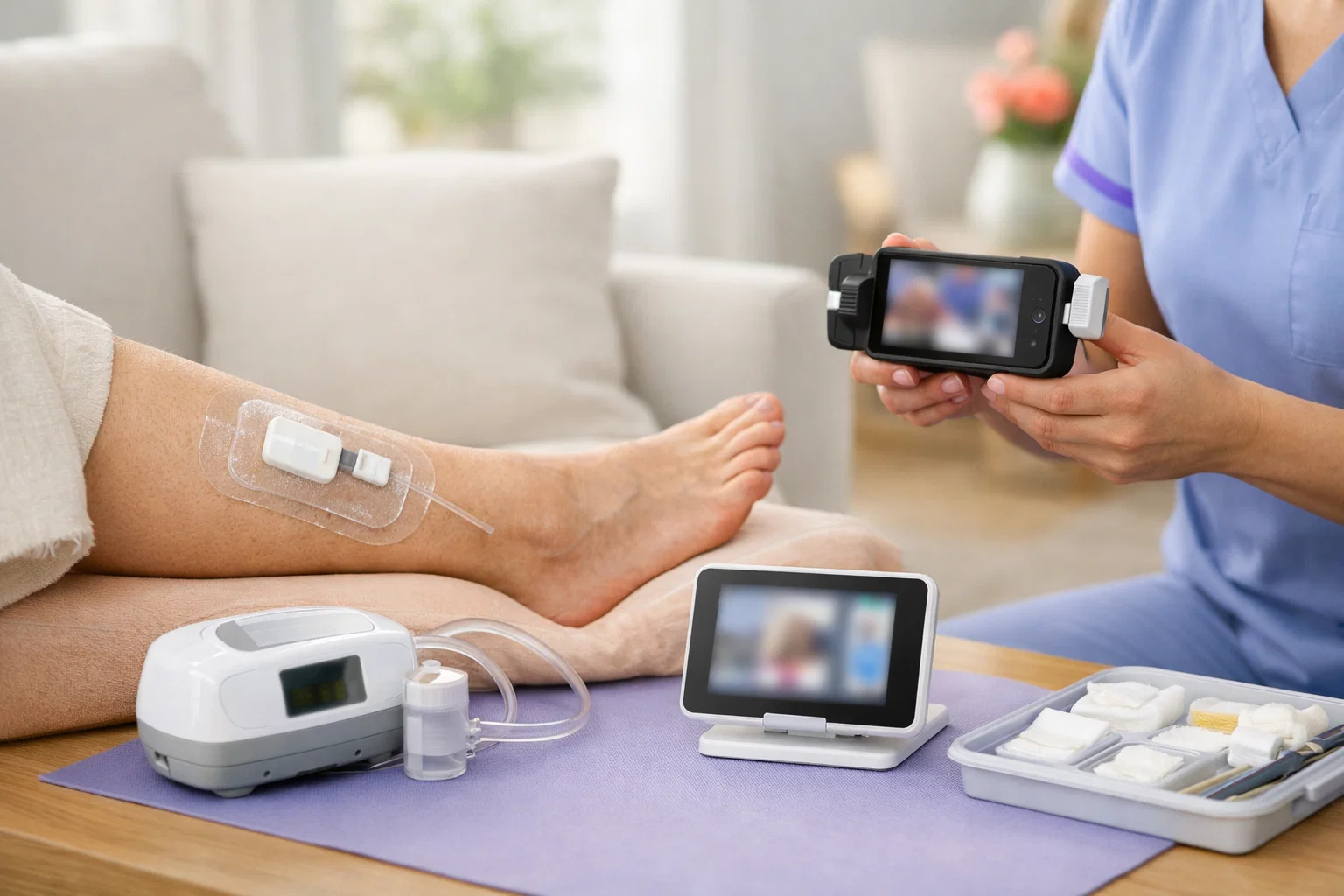

Innovations Transforming How Wounds Heal
The field of wound care is experiencing a technological revolution. Advances in materials science, bioengineering, and digital health are creating new treatment options that heal wounds faster, reduce complications, and improve quality of life for millions of patients with chronic and complex wounds.
These innovations matter because wound care represents a massive healthcare challenge. An estimated 8.2 million Americans live with chronic wounds, costing the healthcare system over $28 billion annually. As the population ages and diabetes rates climb, these numbers continue growing. Better wound care technology is not just a medical advancement. It is a healthcare necessity.
Advanced Wound Dressings
The simple bandage has evolved into sophisticated therapeutic devices.
Bioactive Dressings
Modern bioactive dressings do more than cover wounds. They actively participate in healing. Collagen-based dressings provide scaffolding for new tissue growth. Antimicrobial dressings containing silver, honey, or other agents fight infection while maintaining a healing environment. Growth factor-infused dressings deliver compounds that stimulate cellular repair.
These advanced dressings are now routinely used in professional wound care for chronic wounds that have failed simpler treatments.
Smart Dressings
The next generation of wound dressings incorporates sensors and monitoring technology. Smart dressings can detect infection before visible symptoms appear by monitoring pH, temperature, and bacterial markers. Some prototypes change color to indicate wound status, alerting patients and caregivers to problems between professional visits.
While still emerging, smart dressing technology promises to reduce complications by enabling earlier intervention. For patients receiving wound dressing changes at home, these innovations could provide continuous monitoring between nursing visits.
Bioengineered Skin Substitutes
For wounds that cannot close on their own, bioengineered skin products offer alternatives to traditional skin grafting. These products range from acellular matrices that provide structure for the patient’s own cells to populate, to living skin equivalents containing human cells that actively produce growth factors and wound-healing compounds.
Bioengineered products are particularly valuable for diabetic foot ulcers and venous leg ulcers that have resisted other treatments.
Negative Pressure Wound Therapy Advances
Wound vac therapy has been a wound care mainstay for years, but recent innovations are expanding its applications and effectiveness.
Smaller, Smarter Devices
New wound vac units are smaller, lighter, and quieter than previous generations. Portable devices allow patients greater mobility and comfort. Smart features automatically adjust pressure based on wound response and alert clinicians to issues remotely.
Combination Therapies
Innovative approaches combine negative pressure with other treatments. Instillation therapy delivers antimicrobial solutions or wound-healing compounds directly to the wound bed under negative pressure. This combination addresses infection while promoting tissue growth.
Single-Use Systems
Disposable, single-use negative pressure devices make the technology accessible for smaller wounds and shorter treatment durations. These systems bring wound vac benefits to wounds that previously would not have warranted the traditional equipment.

Oxygen-Based Therapies
Oxygen is essential for wound healing, and new technologies deliver it more effectively.
Topical Oxygen Therapy
Portable devices now deliver concentrated oxygen directly to wound surfaces. Unlike hyperbaric oxygen therapy requiring specialized chambers, topical oxygen can be administered at home. Studies show benefits for diabetic ulcers and other chronic wounds, particularly in patients who cannot access hyperbaric facilities.
Oxygen-Releasing Dressings
Some advanced dressings release oxygen slowly into the wound bed over days. These products provide continuous oxygen supplementation between dressing changes, supporting cellular metabolism and fighting anaerobic bacteria.
Regenerative Medicine Approaches
Regenerative medicine aims to restore tissue rather than simply close wounds.
Platelet-Rich Plasma
PRP therapy concentrates healing factors from the patient’s own blood and applies them to wounds. This autologous approach delivers growth factors that stimulate tissue regeneration. While not new, improved preparation techniques and better understanding of optimal applications are expanding PRP use in wound care.
Stem Cell Therapies
Research into stem cell applications for wound healing continues advancing. Various approaches use the patient’s own stem cells or donor cells to enhance healing in wounds that have exhausted other options. While still largely investigational, stem cell therapies represent a promising frontier.
Extracellular Matrix Products
Products derived from human or animal tissue provide the structural and signaling components that guide tissue regeneration. These matrices support the body’s own healing processes rather than replacing them.
Digital Health and Wound Care
Technology is transforming not just wound treatment but wound care delivery.
Telehealth Integration
Telehealth has expanded rapidly in wound care. Patients can now share wound images with clinicians between visits. Remote monitoring allows earlier intervention for problems. Virtual consultations connect patients with wound care specialists regardless of location.
For home health patients, telehealth complements in-person wound care nursing visits with additional touchpoints and monitoring.
AI-Powered Wound Assessment
Artificial intelligence is improving wound assessment accuracy and consistency. AI systems can analyze wound photographs to measure size precisely, classify wound characteristics, track healing progress over time, predict healing trajectories, and identify wounds at risk for complications.
These tools support clinical decision-making without replacing the expertise of wound care professionals.
Electronic Health Records Integration
Better data integration allows wound care information to flow seamlessly between home health providers, physicians, specialists, and hospitals. This coordination prevents gaps in care and ensures all providers have current wound status information.
What This Means for Patients
These technological advances translate into real benefits for people living with wounds.
Faster Healing
Advanced treatments can reduce healing time significantly. Wounds that once took months may heal in weeks with appropriate technology.
More Treatment Options
When one approach fails, alternatives exist. Patients no longer face a choice between basic dressings and surgery. A spectrum of intermediate options addresses wounds at every stage.
Better Quality of Life
Smaller devices, less frequent dressing changes, reduced pain, and faster healing all improve daily life for wound care patients.
More Care at Home
Technologies once available only in hospitals or specialized clinics can now be delivered at home. Patients in Beverly Hills, Pasadena, Long Beach, and communities throughout Los Angeles can access advanced wound treatments without leaving home.
Accessing Advanced Wound Care
The best technology means nothing without access. Professional wound care services bring these advances to patients who need them.
Professional Assessment
A wound care nurse evaluates which technologies and treatments are appropriate for each wound. Not every wound needs advanced therapy, but wounds that do should receive it.
Insurance Coverage
Medicare and most insurance cover medically necessary wound care including many advanced treatments. Our Medicare home health coverage guide explains what is covered.
Coordination with Specialists
Home health wound care coordinates with physicians and specialists to ensure patients receive optimal treatment, including referrals for advanced therapies when appropriate.
The Future of Wound Care
Innovation in wound care continues accelerating. Personalized medicine approaches will match treatments to individual patient characteristics. Nanotechnology may deliver therapeutic agents at the cellular level. Bioprinting may eventually create replacement tissue on demand.
For patients with wounds today, the message is hopeful. More effective treatments exist now than ever before. Wounds that once seemed hopeless can often heal with the right approach. If you have a wound that is not healing, advanced options may help.
Learn about available chronic wound care services or contact us to discuss treatment options for difficult wounds.


