 HarvardCare at Home
  Wound Care
 Skilled Nursing Care
 Physical Therapy
 Occupational Therapy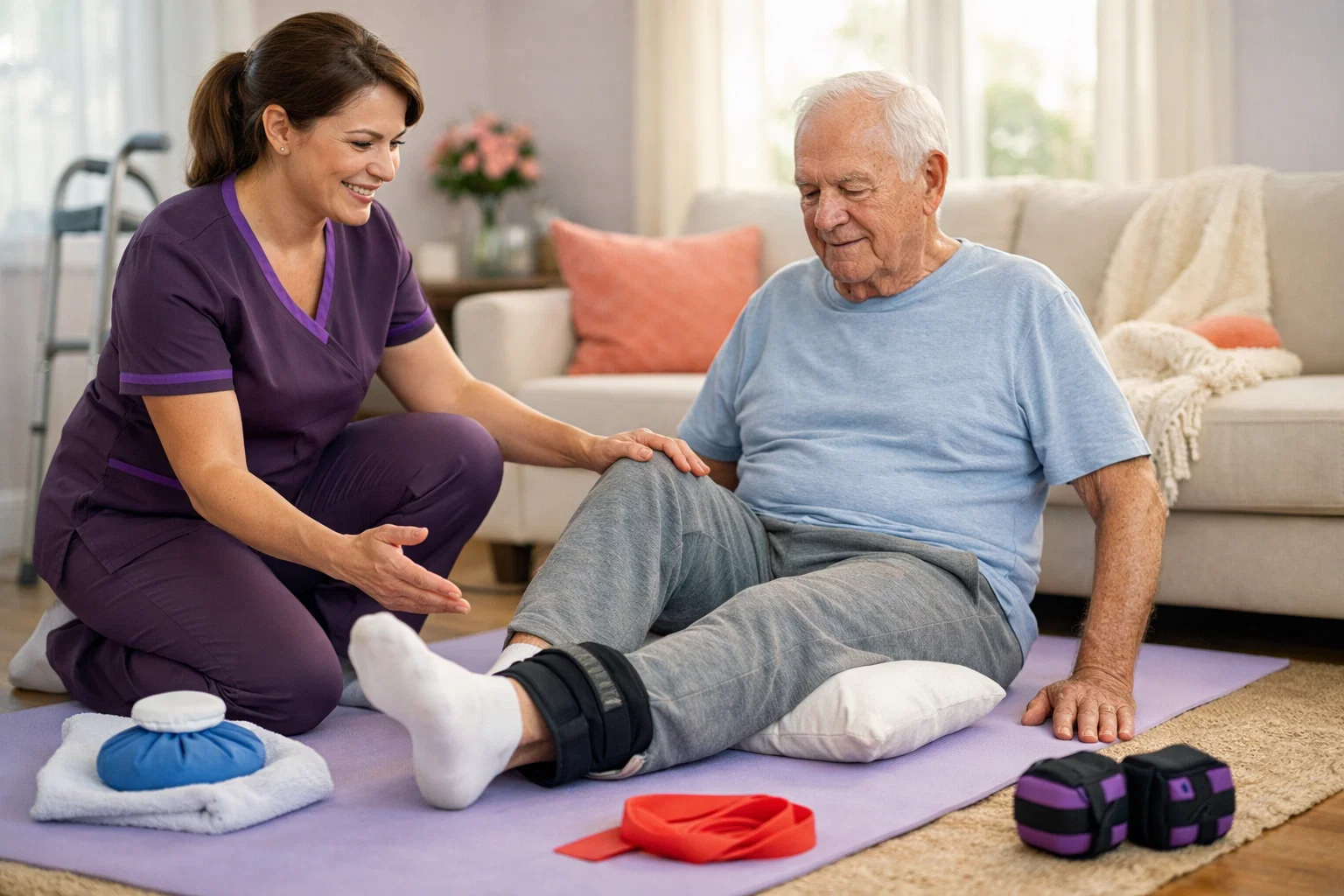

Your Roadmap to Knee Replacement Recovery
Knee replacement surgery offers the promise of life without constant knee pain. But the surgery itself is just the beginning. What happens in the weeks and months after determines whether you achieve the full benefits this procedure can provide.
Recovery requires commitment, patience, and proper support. This comprehensive guide walks you through knee replacement recovery at home, from the day you return from the hospital through your return to normal activities.
The First Days at Home
Coming home after knee replacement brings both relief and new challenges.
What to Expect
The first week at home is demanding. Your knee is swollen and sore. Pain medication is necessary. Movement is difficult. Fatigue is significant. You depend on others for many basic needs.
This is normal. Every knee replacement patient experiences this initial difficulty. It gets better.
Managing Pain
Pain control is essential for recovery. Proper pain management allows you to participate in physical therapy, perform prescribed exercises, sleep adequately, and maintain positive outlook.
Take pain medication as prescribed. Do not wait until pain is severe. Staying ahead of pain is easier than catching up.
Ice your knee regularly to reduce swelling and pain. Follow your surgeon’s instructions for icing frequency and duration.
Swelling Control
Swelling is expected and persists for weeks to months. Manage swelling by elevating your leg when sitting or lying, applying ice as directed, wearing compression stockings if prescribed, performing ankle pumps frequently, and avoiding prolonged standing initially.
The Importance of Early Movement
It may seem counterintuitive, but movement is essential from day one. Early movement prevents blood clots, reduces stiffness, and begins the strengthening process. Your surgeon wants you moving, not resting completely.
Setting Up for Success at Home
Proper home preparation makes recovery safer and easier.
Essential Equipment
Most knee replacement patients need a walker initially, progressing to a cane, ice machine or ice packs, raised toilet seat, shower chair or bench, grabber or reacher tool, and comfortable chair with firm armrests.
Home Safety
Before surgery or immediately upon returning home, ensure pathways are clear of clutter and cords, throw rugs are removed, nightlights illuminate paths to the bathroom, a chair is available at proper height, and stairs have secure handrails.
A professional home safety evaluation identifies hazards specific to your situation. Fall risk assessment determines your personal risk factors after surgery.
Organizing Your Space
Set up a recovery area with everything within reach including medications, phone, water, remote controls, and reading materials. Minimize the need to get up for frequently needed items.
Physical Therapy: The Key to Recovery
Physical therapy is not optional after knee replacement. It is essential for achieving good outcomes.
Why Therapy Matters So Much
Your new knee joint can only do what the surrounding muscles enable. Without proper strengthening and range of motion work, even a perfectly placed implant will not function well. Patients who commit to therapy consistently achieve better outcomes.
Home-Based Physical Therapy
Knee replacement rehabilitation at home offers significant advantages. Therapy occurs in your actual environment. Your therapist sees the real stairs you need to climb, the real bathroom you use, the real challenges you face.
Home health physical therapy typically begins within days of hospital discharge. Early goals include safe transfers and walking, pain and swelling management, basic range of motion, blood clot prevention exercises, and stair navigation if applicable.
What Therapy Includes
Post-surgery rehabilitation progresses through phases. Initial therapy focuses on regaining motion and basic function. Progressive strengthening addresses quadriceps, hamstrings, and hip muscles. Balance training improves stability. Functional training addresses real-life activities. Gait training eliminates limp and improves walking quality.
Your Homework
Therapy visits are just part of recovery. The exercises you do between visits matter enormously. Expect to perform exercises multiple times daily. Your therapist provides a home exercise program tailored to your progress. Consistency determines results.
Week-by-Week Recovery Timeline
Understanding typical recovery progression helps set realistic expectations.
Weeks 1-2: The Hardest Part
Focus on pain management and swelling control. Begin basic exercises and walking with walker. Expect significant assistance needs. Physical therapy begins. Sleep may be disrupted. This is the most difficult period.
During this time, skilled nursing may visit to monitor your incision, manage medications, and assess your overall recovery. Post-surgical wound care ensures your incision heals properly.
Weeks 3-4: Building Momentum
Pain decreases and medication needs reduce. Swelling remains but improves. Walking distance increases. May transition from walker to cane. Therapy intensity increases. Sleep improves. Greater independence with daily activities.
Weeks 5-6: Growing Independence
Most patients use a cane or no assistive device at home. Driving may be possible depending on which knee was replaced. Return to light activities. Continued therapy focuses on strengthening. Incision typically fully healed. Energy improves.
Weeks 7-12: Continued Progress
Range of motion approaches maximum. Strengthening continues. Walking endurance builds. Many patients return to work for sedentary jobs. Exercise tolerance increases. Swelling continues decreasing.
Months 3-6: Approaching Normal
Most daily activities resume. Continued strengthening recommended. Low-impact exercise is possible. Stiffness continues improving. Maximum recovery for many patients occurs during this period.
Months 6-12: Final Recovery
Full recovery for most patients. Maximum strength achieved. Final range of motion established. Return to most activities. Some continued improvement possible.
Range of Motion Goals
Achieving adequate knee bend (flexion) and straightening (extension) is crucial.
Why Range of Motion Matters
You need adequate range for daily activities. Bending at least 90 degrees allows normal sitting. Bending 105-110 degrees allows stair climbing normally. Bending 115 degrees or more allows rising from low chairs easily. Full straightening prevents limping.
Working on Range of Motion
Your physical therapist guides range of motion exercises. Common approaches include heel slides, seated knee bends, prone hangs for extension, and stationary cycling when appropriate.
Range of motion work can be uncomfortable. This discomfort is necessary and normal. There is a difference between therapeutic discomfort and harmful pain. Your therapist helps you distinguish between them.
Strengthening Exercises
Strong muscles support your new joint and enable normal function.
Key Muscle Groups
Quadriceps on the front of your thigh are particularly important. These muscles often weaken significantly before and after surgery. Rebuilding quadriceps strength is a primary therapy focus.
Other important muscles include hamstrings on the back of your thigh, gluteal muscles in your buttocks, hip flexors and abductors, and calf muscles.
Exercise Progression
Exercises progress from simple to complex. Early exercises focus on muscle activation and gentle strengthening. Progressive resistance increases as you heal. Functional exercises mimic real activities. Your therapist advances your program as appropriate.
Preventing Complications
Awareness of potential complications helps you recognize problems early.
Blood Clots
Blood clots are a serious risk after knee replacement. Prevention includes taking blood thinners as prescribed, performing ankle pumps frequently, walking regularly, wearing compression stockings if prescribed, and staying hydrated.
Seek immediate medical attention for calf pain or swelling, chest pain or shortness of breath, or sudden severe leg pain.
Infection
Watch your incision for signs of infection including spreading redness, increased warmth, drainage, opening of the incision, and fever. Report concerns promptly. Learn about signs of wound infection.
Stiffness
Inadequate range of motion can become permanent if not addressed. Commit to your exercise program. Communicate with your therapist if progress stalls. Early intervention for stiffness produces better outcomes.
Falls
Fall risk is elevated after knee replacement. Fall prevention therapy addresses balance and strength deficits. Use assistive devices as directed. Do not rush your progression. Our article on how physical therapy reduces fall risk explains these strategies.
Nutrition for Recovery
Your body needs fuel to heal.
Protein
Protein supports tissue repair and muscle rebuilding. Include protein at every meal. Good sources include eggs, meat, fish, poultry, dairy, beans, and nuts.
Other Important Nutrients
Vitamin C supports healing. Vitamin D aids bone health. Iron prevents anemia. Adequate calories fuel the recovery process. See our article on foods that promote healing.
Hydration
Adequate fluid intake supports healing and helps prevent constipation, a common issue after surgery.
Daily Living During Recovery
Bathing
Keep your incision dry until cleared by your surgeon. Use a shower chair for safety. Have grab bars installed if not already present. Consider a handheld shower head.
Dressing
Use adaptive aids like sock aids, long-handled shoehorns, and reachers. Adaptive equipment training through occupational therapy teaches proper use of these devices.
Sleep
Sleep disruption is common initially. Find comfortable positions with pillows for support. Take pain medication before bed if needed. Sleep improves as healing progresses.
Returning to Driving
Driving requires adequate strength, reaction time, and range of motion. Most surgeons clear driving at four to six weeks for left knee replacement with automatic transmission, six to eight weeks for right knee replacement, and when you can perform emergency braking safely.
Follow your surgeon’s specific guidance.
Support for Your Recovery
You do not have to navigate recovery alone.
Home Health Services
Medicare and most insurance cover home health after knee replacement. Services include physical therapy, occupational therapy, skilled nursing, and wound care.
Learn more about Medicare coverage for home health.
Caregiver Support
Family members play an important role. Caregiver training teaches safe assistance techniques. Our guide on preparing for post-surgery recovery helps families get ready.
Finding Knee Replacement Rehab in Los Angeles
If you are recovering from knee replacement in the Los Angeles area, home health physical therapy is available throughout the region. Services reach Beverly Hills, Pasadena, Santa Monica, Glendale, Long Beach, Torrance, Burbank, and surrounding communities.
Your New Beginning
Knee replacement recovery demands effort. There will be challenging days. Progress sometimes feels slow. But the vast majority of knee replacement patients achieve significant pain relief and improved function.
Commit to your therapy. Do your exercises. Be patient with the process. Accept help when offered. The knee pain that brought you to surgery can become a memory, replaced by mobility and activities you thought were lost.
For questions about knee replacement rehabilitation services, contact us or explore our complete services.


