
 Wound Care
 Skilled Nursing Care
 Physical Therapy
 Occupational Therapy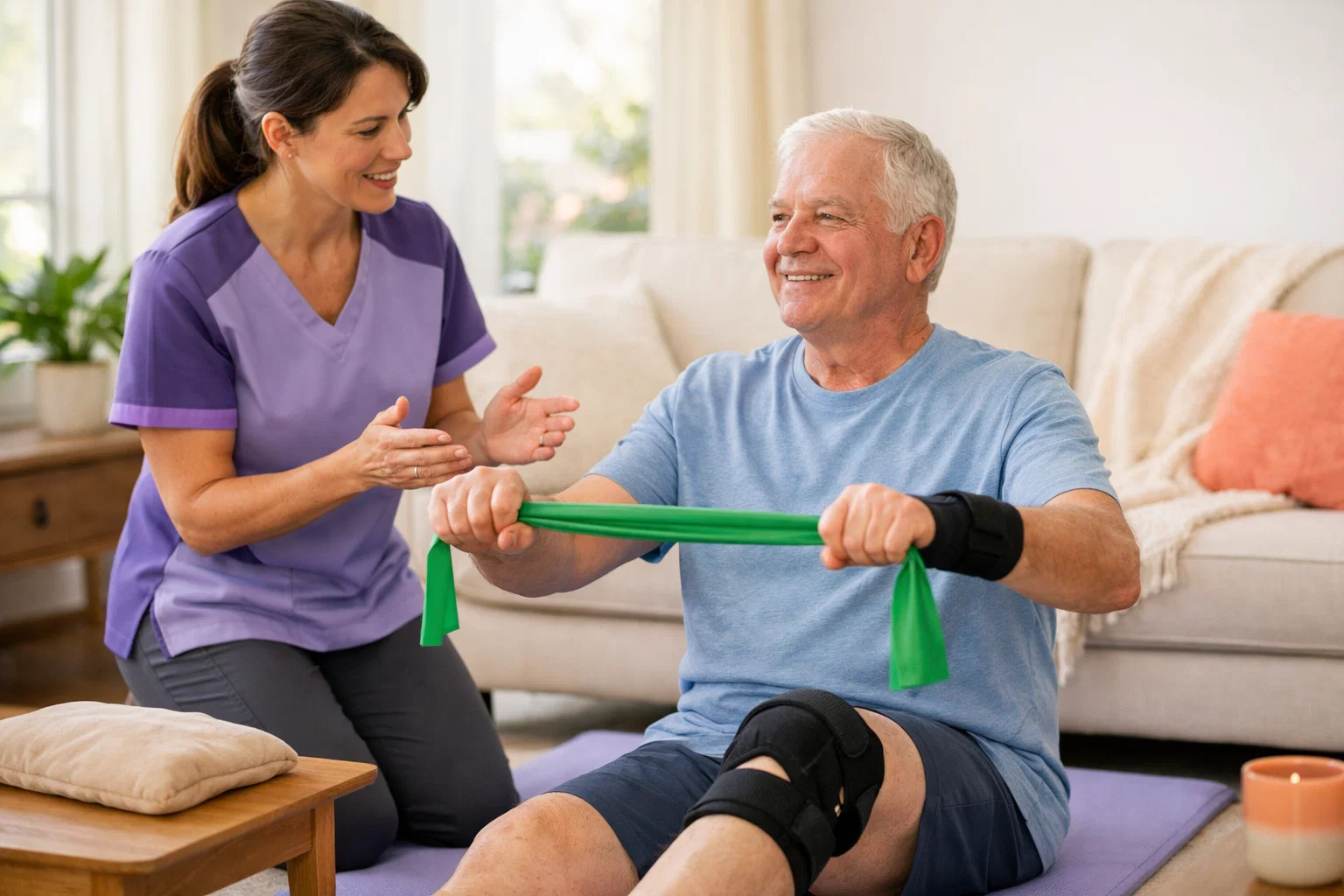

Living With Joint Pain
Arthritis affects more than 54 million American adults, making it one of the most common causes of chronic pain and disability. The stiffness, aching, and swelling that characterize arthritis can transform simple activities like climbing stairs, opening jars, or walking through a grocery store into painful challenges. Many people assume that arthritis means accepting permanent limitations and managing symptoms with medication alone.
Physical therapy offers a different path. Research consistently shows that appropriate exercise and movement therapy reduce arthritis pain, improve function, and help patients maintain independence. Understanding how physical therapy helps arthritis empowers you to pursue treatment that addresses root causes rather than simply masking symptoms.
HarvardCare at Home provides specialized physical therapy for arthritis patients throughout Los Angeles County, bringing professional treatment directly to homes where patients can exercise comfortably and learn techniques applicable to their daily routines.
How Arthritis Causes Pain
Understanding the mechanisms behind arthritis pain helps explain why physical therapy works. Multiple factors contribute to the discomfort arthritis patients experience, and effective treatment addresses each of these factors.
Inflammation within the joint generates pain signals, causes swelling, and damages cartilage over time. In inflammatory types of arthritis like rheumatoid arthritis, the immune system attacks joint tissues directly. In osteoarthritis, mechanical wear and tear triggers inflammatory responses. Both situations benefit from interventions that reduce inflammation.
Cartilage degradation removes the smooth, cushioning surface that allows bones to glide past each other painlessly. As cartilage wears away, bone contacts bone, generating pain and promoting further damage. While cartilage cannot regenerate, proper joint loading through exercise helps maintain remaining cartilage and slows further deterioration.
Muscle weakness develops around arthritic joints as patients reduce activity to avoid pain. This weakness actually increases joint stress because muscles normally absorb forces that would otherwise load joint surfaces. The resulting cycle of pain causing weakness causing more pain traps many arthritis patients in progressive decline.
Joint stiffness from inactivity reduces range of motion and forces abnormal movement patterns. Connective tissues tighten, synovial fluid thickens, and joints that could still move well become restricted. This stiffness itself causes pain and limits function beyond what the arthritis alone would produce.
What Physical Therapy Does for Arthritis
Physical therapy addresses each mechanism of arthritis pain through targeted interventions. A comprehensive treatment program combines multiple approaches tailored to your specific type of arthritis, affected joints, and functional goals.
Strengthening exercises build the muscles surrounding arthritic joints. Stronger muscles absorb more force during movement, reducing stress on damaged joint surfaces. Research shows that patients who strengthen muscles around arthritic knees experience significant pain reduction and improved function, often comparable to results from pain medication but without side effects.
Range of motion exercises maintain flexibility and prevent the progressive stiffness that worsens arthritis symptoms. Gentle stretching keeps connective tissues pliable. Joint mobilization techniques performed by your therapist address restrictions that home stretching alone cannot resolve. These interventions help joints move through their full available range, reducing the strain of compensatory movement patterns.
Aerobic conditioning improves overall health while reducing arthritis symptoms. Low-impact activities like walking, swimming, or cycling increase circulation to joints, promote healthy cartilage, and support weight management. Patients who maintain aerobic fitness experience less arthritis pain and better function than sedentary patients with similar joint damage.
Balance and coordination training reduces fall risk for arthritis patients whose joint pain and stiffness compromise stability. Fall prevention therapy addresses this risk through exercises that challenge and improve balance systems. Learn how physical therapy reduces fall risk for seniors with various conditions.
Pain management techniques including heat, ice, electrical stimulation, and manual therapy provide relief during sessions and teach patients strategies for managing flares at home. These approaches complement exercise rather than replacing it, making movement more comfortable so patients can participate fully in therapeutic activities.
Evidence Supporting Physical Therapy for Arthritis
Scientific research strongly supports physical therapy as a first-line treatment for arthritis. Major medical organizations including the American College of Rheumatology recommend exercise and physical therapy before or alongside medication for most arthritis patients.
Studies comparing physical therapy to pain medication for knee osteoarthritis found equivalent pain relief with therapy, but therapy patients also gained strength and function while medication patients did not. When researchers followed patients long-term, those who continued exercising maintained their improvements while those relying solely on medication showed gradual decline.
Research on hip osteoarthritis shows that structured exercise programs reduce pain, improve walking ability, and delay or prevent the need for hip replacement surgery. Patients who build hip strength and maintain mobility often function well with arthritic joints that imaging suggests should cause severe disability.
For inflammatory arthritis like rheumatoid arthritis, exercise was once discouraged due to fears of worsening joint damage. Modern research has reversed this guidance completely. Appropriate exercise reduces inflammation, maintains joint health, and improves quality of life without increasing disease activity. Physical therapists design programs that account for the fluctuating nature of inflammatory conditions.
Types of Arthritis and Treatment Approaches
Different types of arthritis benefit from modified treatment approaches, though core principles remain consistent. Your physical therapist evaluates your specific diagnosis and tailors intervention accordingly.
Osteoarthritis, the most common form, results from wear and tear on joint cartilage over time. Weight-bearing joints like knees and hips suffer most frequently, though osteoarthritis can affect any joint. Physical therapy for osteoarthritis emphasizes strengthening, weight management through increased activity, and movement modifications that reduce joint stress during daily activities.
Rheumatoid arthritis is an autoimmune condition causing inflammation that attacks joint linings. It typically affects joints symmetrically and can cause systemic symptoms beyond joint pain. Physical therapy for rheumatoid arthritis coordinates with medical management of the underlying disease. Therapists design exercise programs that maintain function during flares without exacerbating inflammation, then advance activity during periods of disease control.
Psoriatic arthritis affects some patients with the skin condition psoriasis, causing joint inflammation that ranges from mild to severely destructive. Physical therapy helps maintain mobility and strength while protecting vulnerable joints from excessive stress.
Gout results from uric acid crystal deposits in joints, causing intense episodic pain followed by periods of relative comfort. Physical therapy between acute episodes helps maintain function and may reduce attack frequency by improving overall metabolic health through exercise.
What to Expect From Physical Therapy
Understanding the typical course of physical therapy for arthritis helps you set appropriate expectations and commit to the process. Results develop over weeks to months rather than appearing immediately.
Your initial evaluation includes detailed assessment of your affected joints, measurement of strength and range of motion, observation of how you move during functional activities, and discussion of your goals. This evaluation guides development of your individualized treatment plan.
Early sessions focus on establishing your exercise program and ensuring you perform movements correctly. Your therapist may use manual techniques to improve joint mobility and reduce pain. You learn which activities help your arthritis and which might aggravate symptoms.
Progressive exercise advances as you build tolerance. Resistance increases, balance challenges intensify, and activities become more functional. Your therapist monitors your response and adjusts programming based on how you progress.
Transition to independent management happens as you master your exercise program and understand how to modify activities based on your symptoms. Many arthritis patients benefit from periodic check-ins even after completing formal therapy, allowing their therapist to advance their program and address emerging issues.
Home-Based Therapy Advantages for Arthritis
Arthritis patients particularly benefit from receiving physical therapy at home. Several factors make home-based treatment ideal for managing this chronic condition.
Joint stiffness typically peaks in the morning for arthritis patients. Traveling to a clinic appointment means moving when your body feels worst. Home-based therapy allows scheduling when your joints feel most mobile, optimizing your ability to participate fully in treatment.
Temperature control matters significantly for arthritis symptoms. Cold environments worsen stiffness, while overheating can exacerbate inflammation. Your home environment allows precise temperature control that clinic waiting rooms and treatment areas cannot match.
Home-based therapy addresses your actual daily environment. Your therapist observes which specific movements cause difficulty and modifies your home setup to reduce joint stress. Kitchen organization, bathroom modifications, and furniture selection directly impact how much your arthritis affects daily function.
Ongoing management of arthritis requires consistent daily exercise that patients must perform independently. Learning these exercises in your home environment, using your own furniture and equipment, ensures skills transfer directly to your daily routine.
Patients throughout Los Angeles benefit from our home-based arthritis care, including those in West Hollywood, Manhattan Beach, Rancho Palos Verdes, and Pasadena.
Complementary Approaches
Physical therapy works best as part of a comprehensive arthritis management strategy. Several complementary approaches enhance the benefits of exercise-based treatment.
Weight management reduces stress on weight-bearing joints dramatically. Each pound of body weight creates roughly four pounds of force across knee joints during walking. Losing even modest amounts of weight provides significant relief for hip and knee arthritis while making exercise more comfortable.
Nutrition supports joint health through anti-inflammatory dietary patterns and specific nutrients. Foods that support healing often overlap with those that reduce arthritis inflammation. Omega-3 fatty acids, colorful vegetables, and adequate protein all contribute to joint health.
Medication prescribed by your physician may reduce inflammation and pain, making physical therapy more tolerable and effective. Rather than viewing medication and therapy as competing approaches, most patients benefit from combining them appropriately.
Assistive devices recommended by your physical therapist or occupational therapist can reduce joint stress during activities you cannot avoid. Jar openers, long-handled reachers, and properly fitted canes allow continued independence while protecting vulnerable joints.
Getting Started
If arthritis limits your activities or causes ongoing pain, physical therapy can help. The earlier you begin appropriate exercise and movement therapy, the better your long-term outcomes. Joints that have severely deteriorated may still benefit, but intervention before significant damage produces superior results.
Ask your physician for a physical therapy referral, or contact HarvardCare at Home directly to learn about our in-home physical therapy services. We work with arthritis patients throughout Los Angeles County, including Glendale, Calabasas, Downey, Claremont, and communities throughout the region.
Our experienced therapists understand the challenges arthritis presents and design individualized programs that respect your current limitations while progressively building your capabilities. The pain and stiffness you experience today does not have to define your future. Physical therapy offers a path toward reduced pain, improved function, and maintained independence for years to come.