
 Wound Care
It is aide support with assigned clothing routines when dressing help is appropriate and included in the home health plan.
HOME HEALTH AIDE
Dressing Assistance at Home
Dressing assistance at home may help patients manage clothing safely, conserve energy, protect privacy, and stay comfortable under a care plan.
EXCELLENT 


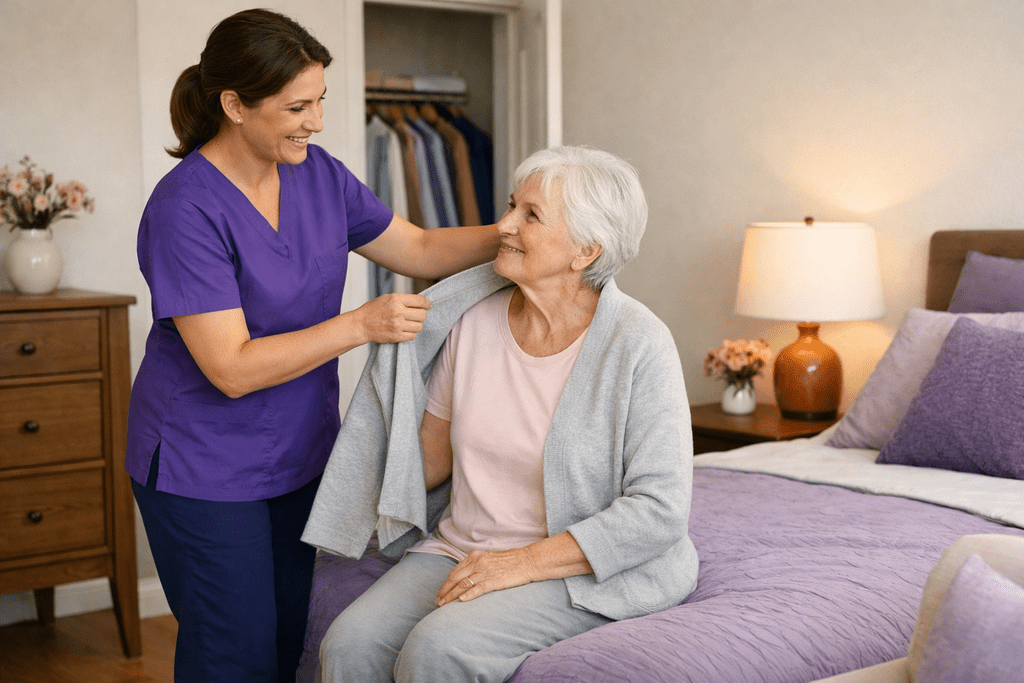
Getting dressed can become one of the most frustrating parts of the day after illness, weakness, surgery, pain, stroke, or a long hospital stay. A patient may struggle to pull clothing over the shoulders, fasten buttons, lift a leg into pants, manage socks, or stand long enough to complete the routine. Families may try to help, but dressing is private, physically awkward, and often tied to the patient’s sense of independence.
HarvardCare Home Health provides dressing assistance at home when home health aide support is appropriate and included in the plan of care. The focus is safe, respectful help with clothing routines while encouraging the patient to participate as much as possible. This is not unlimited private caregiver care; aide support must fit the provider order, skilled need, homebound status, care plan, and eligibility review.
Dressing assistance may connect with Dressing Training at Home, ADL Training at Home, or In-Home Occupational Therapy when the patient needs skilled training to regain function. A home health aide may help with assigned dressing tasks under the care plan while clinicians address the underlying limitations.
Why dressing may become hard
Dressing requires strength, balance, coordination, flexibility, vision, attention, and planning. It may involve bending, reaching, twisting, standing, and using both hands. Even a simple shirt or pair of pants can become difficult if the patient has pain, weakness, shortness of breath, limited shoulder motion, poor hand coordination, or fear of falling.
Common situations that lead to dressing difficulty include:
- Stroke or neurological changes that affect one side of the body.
- Arthritis, shoulder pain, hand weakness, or stiffness.
- Hip or knee surgery precautions that limit bending or reaching.
- General weakness after hospitalization or infection.
- Balance problems while standing to pull up clothing.
- Cognitive changes that make clothing order or fasteners confusing.
When dressing becomes hard, patients may stay in sleepwear, avoid changing clothes, wear unsafe footwear, or become exhausted before the day begins. Dressing assistance can make the routine safer and more comfortable when it is part of the home health plan.
What dressing assistance may include
A home health aide may help with assigned dressing tasks based on the care plan. The aide’s role is to support daily comfort and safety, not to replace skilled therapy or make clinical decisions. The patient should still be encouraged to participate in the parts of dressing they can safely manage.
Dressing assistance may include:
- Gathering clothing and helping the patient choose practical, comfortable items.
- Helping with shirts, pants, socks, shoes, sweaters, or outerwear as assigned.
- Supporting safe seated dressing when standing is risky.
- Helping the patient avoid rushing, overreaching, or losing balance.
- Protecting privacy during clothing changes.
- Reporting new pain, swelling, dizziness, skin changes, or weakness observed during dressing.
Small choices matter. Loose clothing, front-opening garments, non-slip footwear, and simple fasteners may make dressing easier. If adaptive tools or training are needed, occupational therapy may help determine what is safe and realistic.
Fall prevention and energy conservation
Dressing creates fall risk because patients often stand on one leg, bend forward, reach for clothing, or turn quickly. Fatigue can make the end of the routine more dangerous than the beginning. A patient who feels steady at first may become shaky after several minutes of effort.
Safer dressing routines may include:
- Sitting for as much of the routine as possible.
- Keeping clothing within easy reach before starting.
- Using stable footwear and avoiding slippery socks when walking.
- Allowing rest breaks before standing.
- Choosing clothing that does not require difficult reaching or fasteners.
- Leaving extra time so the patient is not rushed.
The aide can support pacing and privacy during assigned dressing help. If the patient needs to learn new dressing methods, Dressing Training at Home may be appropriate. If transfers, standing balance, or walking are unsafe, therapy and nursing may need to coordinate with aide support.
How dressing assistance connects with OT
Occupational therapy focuses on daily function. When a patient cannot dress safely, an OT may assess range of motion, strength, balance, cognition, pain, equipment, and the home setup. The therapist may teach one-handed strategies, adaptive equipment use, energy conservation, or safer sequencing.
Aide support can complement that skilled work. The aide may help the patient carry out assigned personal care tasks while following the care plan. Families can also learn how to set up clothing, reduce clutter, and encourage the patient without doing everything for them.
This balance is important. If family members take over too much, the patient may lose confidence. If they provide too little help, dressing may become unsafe. HarvardCare Home Health helps families understand the difference between skilled dressing training and aide assistance with daily routines.
Medicare and home health aide support
Dressing assistance may be part of a Medicare home health plan when ordered and approved as part of eligible care. Common requirements may include a provider order, skilled need, homebound status, care plan, and agency eligibility review. Coverage is not guaranteed, and aide visit frequency depends on the plan and authorization.
Home health aide support is not the same as open-ended custodial care. If a patient needs ongoing help throughout the day, the family may need additional private-duty or community resources. HarvardCare Home Health can review whether dressing assistance may fit within home health and explain next steps clearly.
Why choose HarvardCare Home Health
Dressing help requires patience and respect. HarvardCare Home Health understands that clothing choices, modesty, and independence matter. Our approach is practical: support the assigned task, keep the patient safe, protect privacy, and report changes that may need clinical attention.
We also coordinate aide support with therapy and nursing when appropriate. That matters when dressing problems are caused by pain, stroke, weakness, surgery recovery, or cognitive changes. Families should not have to guess whether they need an aide, therapist, nurse, or all three under a coordinated plan.
Families can help by choosing clothing that matches the patient’s current abilities instead of the routine they used before illness. Soft fabrics, simple closures, stable shoes, and a seated setup may protect energy. If dressing suddenly becomes much harder, that change should be reported because it may signal pain, weakness, swelling, confusion, or another clinical concern.
Related services for daily dressing
Dressing assistance may be related to Home Health Aide Services, Personal Care Assistance at Home, Dressing Training at Home, Transfer Training at Home, and Caregiver Training at Home.
Ask about dressing assistance
If dressing has become unsafe, painful, exhausting, or stressful, complete the form on this page or call HarvardCare Home Health. The agency can review the situation and help determine whether dressing assistance may be appropriate as part of an eligible home health plan.
FAQs
Do you have questions?
Got questions about Dressing Assistance at Home? Here are answers to what patients and families ask most.
An aide may help with socks, shoes, and clothing as assigned under the care plan, while encouraging safe patient participation.
Occupational therapy may be needed for skilled dressing training, while aide support may help with assigned personal care tasks.
It may reduce risk during dressing routines by supporting safer setup and pacing, but no service can guarantee fall prevention.
It may be included in eligible home health care when ordered and approved under the plan. Coverage is not guaranteed.
Some garments may require specific instructions or skilled oversight. The agency can review what is appropriate under the plan.
Families can prepare clothing, reduce clutter, allow enough time, and report new pain, dizziness, weakness, or confusion.
Comfortable, easy-to-manage clothing, stable footwear, and simple fasteners may help, but recommendations depend on patient needs.
Yes. OT may teach safer techniques while an aide helps with assigned dressing assistance under the care plan.
Complete the form on this page or call HarvardCare Home Health to discuss the patient situation and eligibility review.
TESTIMONIALS
What Our Patients & Families Say
AREAS WE SERVE
Dressing Assistance at Home Near You
Our licensed healthcare professionals provide expert care in the comfort of your home. We proudly serve patients and families throughout Los Angeles County.
Serving 279 cities across LA County
- A
- Acton
- Adams-Normandie
- Agoura Hills
- Agua Dulce
- Alhambra
- Alondra Park
- Altadena
- Angelino Heights
- Arcadia
- Arleta
- Arlington Heights
- Artesia
- Arts District
- Atwater Village
- Avocado Heights
- Azusa
- B
- Baldwin Hills
- Baldwin Park
- Bassett
- Beachwood Canyon
- Bel Air
- Bell
- Bell Gardens
- Bellflower
- Beverly Crest
- Beverly Grove
- Beverly Hills
- Beverlywood
- Boyle Heights
- Bradbury
- Brentwood
- Broadway-Manchester
- Burbank
- C
- Calabasas
- Canoga Park
- Canyon Country
- Carson
- Carthay
- Castaic
- Castle Heights
- Central-Alameda
- Century City
- Cerritos
- Charter Oak
- Chatsworth
- Chesterfield Square
- Cheviot Hills
- Chinatown
- Citrus
- City Terrace
- Claremont
- Commerce
- Compton
- Country Club Park
- Covina
- Crenshaw
- Cudahy
- Culver City
- Cypress Park
- D
- Del Aire
- Del Rey
- Desert View Highlands
- Diamond Bar
- Downey
- Downtown Los Angeles
- Duarte
- E
- Eagle Rock
- East Hollywood
- East Los Angeles
- East Pasadena
- East Rancho Dominguez
- East San Gabriel
- East Whittier
- Echo Park
- El Camino Village
- El Monte
- El Segundo
- El Sereno
- Elysian Valley
- Encino
- Exposition Park
- F
- Fairfax
- Florence
- Florence-Firestone
- G
- Gardena
- Garvanza
- Glassell Park
- Glendale
- Glendora
- Gramercy Park
- Granada Hills
- Green Meadows
- H
- Hacienda Heights
- Hancock Park
- Harbor City
- Harbor Gateway
- Harvard Heights
- Harvard Park
- Hasley Canyon
- Hawaiian Gardens
- Hawthorne
- Hermon
- Hermosa Beach
- Hidden Hills
- Highland Park
- Historic Filipinotown
- Hollywood
- Hollywood Hills
- Holmby Hills
- Huntington Park
- Hyde Park
- I
- Inglewood
- J
- Jefferson Park
- K
- Kinneloa Mesa
- Koreatown
- L
- La Cañada Flintridge
- La Crescenta-Montrose
- La Habra Heights
- La Mirada
- La Puente
- La Verne
- Ladera Heights
- Lake Balboa
- Lake Hughes
- Lake Los Angeles
- Lake View Terrace
- Lakewood
- Lancaster
- Larchmont
- Lawndale
- Leimert Park
- Lennox
- Leona Valley
- Lincoln Heights
- Little Armenia
- Little Tokyo
- Littlerock
- Lomita
- Long Beach
- Los Angeles
- Los Feliz
- Lynwood
- M
- Malibu
- Manchester Square
- Manhattan Beach
- Mar Vista
- Marina del Rey
- Mayflower Village
- Maywood
- Mid-City
- Mid-Wilshire
- Miracle Mile
- Mission Hills
- Monrovia
- Montebello
- Montecito Heights
- Monterey Park
- Mt Washington
- N
- Newhall
- NoHo Arts District
- North El Monte
- North Hills
- North Hollywood
- North Long Beach
- Northridge
- Norwalk
- P
- Pacific Palisades
- Pacoima
- Palmdale
- Palms
- Palos Verdes Estates
- Palos Verdes Peninsula
- Panorama City
- Paramount
- Park La Brea
- Pasadena
- Pearblossom
- Pico Rivera
- Pico-Robertson
- Pico-Union
- Playa del Rey
- Playa Vista
- Pomona
- Porter Ranch
- Q
- Quartz Hill
- R
- Rancho Dominguez
- Rancho Palos Verdes
- Rancho Park
- Redondo Beach
- Reseda
- Rolling Hills
- Rolling Hills Estates
- Rosemead
- Rowland Heights
- S
- San Dimas
- San Fernando
- San Gabriel
- San Marino
- San Pasqual
- San Pedro
- Santa Clarita
- Santa Fe Springs
- Santa Monica
- Saugus
- Sawtelle
- Sepulveda
- Shadow Hills
- Sherman Oaks
- Sherman Village
- Sherwood Forest
- Sierra Madre
- Signal Hill
- Silver Lake
- South Central
- South El Monte
- South Gate
- South Park
- South Pasadena
- South San Gabriel
- South San Jose Hills
- South Whittier
- Stevenson Ranch
- Stonehurst
- Studio City
- Sun Valley
- Sun Village
- Sunland
- Sunset Park
- Sylmar
- T
- Tarzana
- Temple City
- Thai Town
- Toluca Lake
- Topanga
- Torrance
- Tujunga
- U
- University Hills
- University Park
- V
- Val Verde
- Valencia
- Valinda
- Valley Glen
- Valley Village
- Van Nuys
- Venice
- Vermont Knolls
- Vermont Square
- Vermont Vista
- Vermont-Slauson
- Victor Heights
- View Park-Windsor Hills
- Vincent
- W
- Walnut
- Walnut Park
- Watts
- West Adams
- West Athens
- West Carson
- West Covina
- West Hills
- West Hollywood
- West Los Angeles
- West Puente Valley
- West Rancho Dominguez
- West Whittier-Los Nietos
- Westchester
- Westlake
- Westlake Village
- Westmont
- Westwood
- Westwood Village
- Whitley Heights
- Whittier
- Willowbrook
- Wilmington
- Wilshire Center
- Windsor Square
- Winnetka
- Woodland Hills
More Services

In-Home Wound Care Services
- Board-certified wound care nurses
- Personalized treatment plans
- All wound types treated
Diabetic Wound Care at Home
- Diabetes wound specialists
- Blood sugar optimization support
- Advanced offloading techniques
Skilled Nursing Care at Home
- Registered nurses available 7 days a week
- Comprehensive care coordination
- IV therapy and infusion services