 HarvardCare at Home
  Wound Care
 Skilled Nursing Care
 Physical Therapy
 Occupational Therapy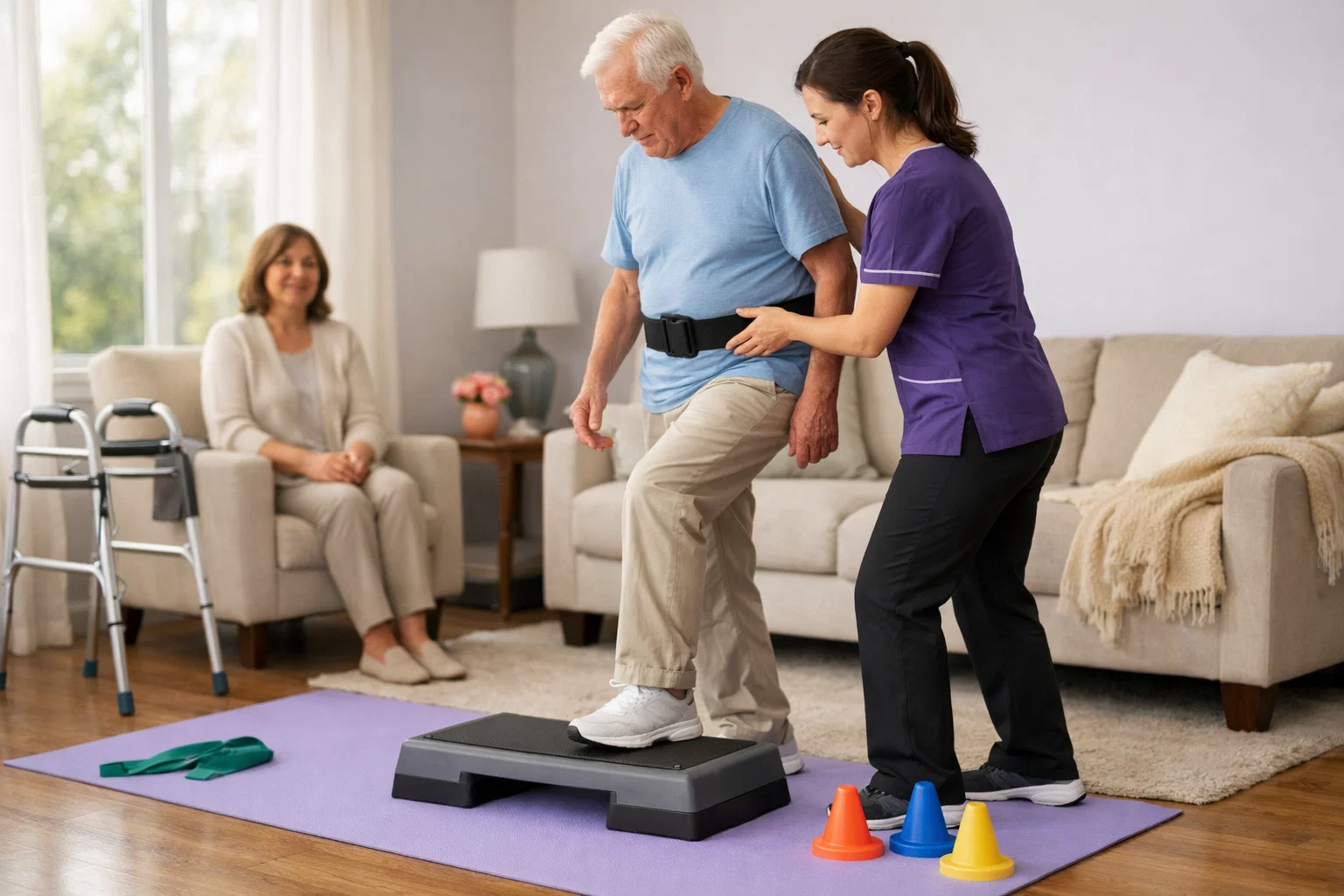

Demystifying Your First PT Visit at Home
If you have been told you will receive physical therapy at home, you likely have questions. What will happen? What will the therapist do? Do you need equipment? Will it hurt? Will it actually help?
Home health physical therapy brings professional rehabilitation to your living room, bedroom, or wherever you need it. Understanding what happens during these visits helps you prepare, participate fully, and get the most from your therapy experience.
How Home Physical Therapy Gets Started
Before your first visit, several things happen behind the scenes.
The Referral
Home physical therapy requires a physician order. This typically comes from your primary care doctor, surgeon, or hospital discharge team. The order specifies that you need physical therapy, the diagnosis or reason for therapy, and any specific restrictions or precautions.
Scheduling
The home health agency contacts you to schedule your first visit. Initial evaluations are typically longer than regular visits, often 45 to 60 minutes. Try to schedule when you are alert and have energy. Make sure someone is home if the therapist needs assistance or if you have concerns about being alone.
Before the Therapist Arrives
Prepare for your visit by wearing comfortable, loose-fitting clothing, having your shoes available if walking will be part of the session, clearing space in the area where therapy will occur, having your medication list available, and noting any questions you want to ask.
The Initial Evaluation Visit
Your first physical therapy visit is a comprehensive evaluation that establishes the baseline for your treatment.
Medical History Review
The therapist begins by reviewing your current medical situation, surgical history if applicable, other health conditions, medications that might affect therapy, pain levels and locations, and what you were doing before your condition changed.
Physical Assessment
The therapist performs a thorough physical evaluation including range of motion measurements to see how well your joints move, strength testing for key muscle groups, balance and coordination assessment, walking analysis if you are ambulatory, functional testing to see how you manage daily activities, and pain assessment during movement.
Home Environment Assessment
One significant advantage of home therapy is the therapist sees your actual environment. They assess pathways and potential hazards, stairs and their safety features, bathroom accessibility, bedroom setup, and equipment needs.
This assessment may lead to home safety recommendations and fall risk identification.
Goal Setting
Together, you and the therapist establish goals. Effective goals are specific, measurable, and meaningful to your life. Examples include walking to the mailbox independently in four weeks, climbing stairs safely with a rail in three weeks, getting in and out of bed without assistance, and returning to cooking meals for yourself.
Your goals drive the treatment plan. What matters to you matters to your therapist.
Treatment Plan Development
Based on evaluation findings and your goals, the therapist develops a plan that includes visit frequency typically two to three times per week, expected duration of therapy, specific interventions and exercises, and a home exercise program you perform between visits.
What Happens During Regular Therapy Visits
After the initial evaluation, regular visits follow a general pattern while adapting to your progress.
Check-In
Each visit begins with the therapist asking how you have been since the last visit, whether you have had any falls, pain changes, or new concerns, how the home exercises are going, and whether anything has changed with your medications or health status.
Warm-Up
Sessions typically start with gentle activities to prepare your body. This might include range of motion exercises, gentle walking, light stretching, or joint mobilization.
Therapeutic Exercises
The core of each session involves exercises targeting your specific needs.
Strengthening
Exercises to rebuild muscle strength using your body weight, resistance bands, light weights, or functional movements like sit-to-stand repetitions.
Balance Training
Activities to improve stability including standing exercises with varying support levels, weight shifting, reaching activities, and dynamic balance challenges. Fall prevention therapy focuses heavily on balance improvement.
Range of Motion
Exercises to improve joint flexibility and movement including stretching, joint mobilization, and guided movement through available range.
Functional Training
Practicing real-life activities like bed mobility and transfers, stair climbing, walking on different surfaces, getting in and out of chairs, and bathroom transfers.
Gait Training
If walking is a focus, the therapist works on walking pattern and quality, assistive device use such as walker or cane, endurance building, safety on different surfaces, and transitioning to less assistive support.
Manual Therapy
Some sessions include hands-on techniques by the therapist such as joint mobilization, soft tissue work, stretching assistance, and pain-reducing techniques.
Home Exercise Program
Near the end of each visit, the therapist reviews and updates your home exercise program. New exercises may be added. Existing exercises may be progressed. Form corrections are made. Questions are answered.
What you do between visits matters as much as what happens during visits. Consistent daily exercise drives recovery.
Education
Every visit includes some education about your condition, safe movement, energy conservation, pain management strategies, and preventing re-injury or complications.
Common Conditions Treated at Home
Home health physical therapy addresses many conditions effectively.
Post-Surgical Recovery
Physical therapy after surgery is among the most common home health referrals. Post-surgery rehabilitation includes hip replacement recovery, knee replacement recovery, and other orthopedic surgeries.
Our guides on hip replacement recovery and home health after hip replacement provide detailed information.
Stroke Recovery
Stroke rehabilitation at home helps survivors regain mobility, strength, and balance. Read our complete guide to physical therapy after stroke.
Fall Prevention
Patients who have fallen or are at risk receive fall prevention therapy focused on balance, strength, and environmental safety. Our article on how physical therapy reduces fall risk explains the approach.
Back Pain
Back pain physical therapy addresses pain and functional limitations from spinal conditions.
General Deconditioning
After illness or prolonged inactivity, patients may need therapy to rebuild basic strength and endurance for safe daily function.
How Home PT Differs from Outpatient PT
Home therapy offers distinct advantages over clinic-based therapy.
Real Environment
Your therapist works with your actual stairs, your bathroom, your bed. Solutions are practical and immediately applicable. There is no guessing about whether exercises will translate to your home situation.
No Transportation Required
Eliminating travel removes a major barrier. No driving when you should not be driving. No waiting for rides. No exhausting trips that drain the energy you need for therapy.
Personalized Attention
Home visits are one-on-one. Your therapist is focused entirely on you without the distractions of a busy clinic environment.
Family Involvement
Caregivers can observe and learn during sessions. Caregiver training becomes natural as family members watch and participate. This helps them support your recovery between visits.
Safety Assessment
Home therapists identify and address environmental hazards. They recommend modifications and equipment specific to your actual needs.
What You Need to Know
Duration of Home PT
Home physical therapy typically continues for several weeks. The exact duration depends on your condition severity, progress rate, goals, and insurance coverage.
Most patients receive therapy two to three times per week for four to eight weeks. Some conditions require longer treatment.
Insurance Coverage
Medicare covers home health physical therapy at 100 percent when eligibility requirements are met. Most private insurance also covers home health therapy. Learn about Medicare home health coverage for detailed eligibility information.
What If Therapy Is Painful?
Some discomfort during therapy is normal, especially after surgery. Your therapist works within your tolerance while still challenging you enough to make progress. Communication is key. Tell your therapist about pain. They adjust accordingly.
How to Get the Most from Your Visits
Do your home exercises consistently between visits. Communicate openly about pain, concerns, and progress. Ask questions when you do not understand something. Be honest about what you can and cannot do. Stay committed even when progress feels slow.
Working with Other Home Health Services
Physical therapy often works alongside other home health disciplines.
Occupational Therapy
Occupational therapy addresses daily living skills while PT focuses on mobility and strength. Together they provide comprehensive rehabilitation. OT services include ADL training and adaptive equipment training.
Skilled Nursing
Skilled nursing manages medical needs while therapy handles rehabilitation. Nurses coordinate with therapists for comprehensive care.
Wound Care
Patients with wounds receive wound care coordinated with therapy. Wound status affects activity levels. Therapy accommodates wound care needs and precautions.
Finding Home Physical Therapy in Los Angeles
Home health physical therapy is available throughout the Los Angeles area. Professional rehabilitation services reach communities including Beverly Hills, Pasadena, Santa Monica, Glendale, Long Beach, Torrance, Woodland Hills, and dozens more.
For wound care alongside physical therapy, location-specific services are available in areas like Beverly Hills, Pasadena, and Santa Monica.
Ready for Your First Visit?
Home physical therapy is an opportunity. It brings expert rehabilitation to where you live, where you need to function, where recovery actually matters. Approach it with commitment and openness, and it can make a meaningful difference in your recovery.
If you have questions about home health physical therapy, visit our FAQ page or contact us directly.


