 HarvardCare at Home
  Wound Care
 Skilled Nursing Care
 Physical Therapy
 Occupational Therapy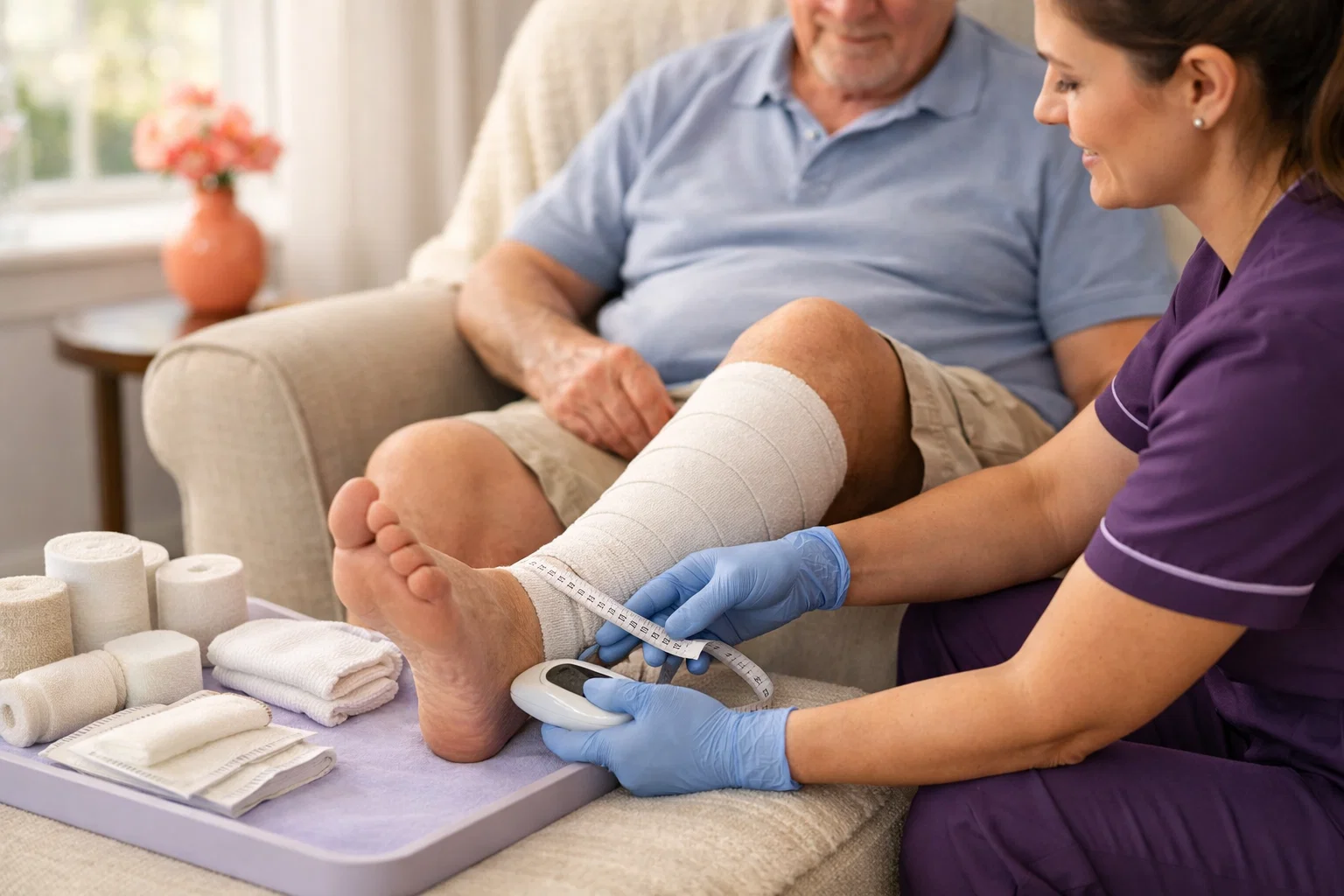

What Are Venous Ulcers
Venous ulcers are open wounds that develop on the legs, typically around the ankles, due to poor blood flow in the veins. These wounds are the most common type of leg ulcer, accounting for the majority of chronic leg wounds. Understanding what causes venous ulcers and how they are treated helps patients and families navigate this challenging condition.
Venous ulcers affect hundreds of thousands of Americans and can significantly impact quality of life. However, with proper treatment addressing both the wound and the underlying circulation problem, most venous ulcers can heal.
How Venous Ulcers Develop
Venous ulcers result from chronic venous insufficiency, a condition where leg veins do not effectively return blood to the heart.
Normal Vein Function
Veins return blood from the body to the heart. In the legs, blood must travel upward against gravity. Valves inside leg veins prevent blood from flowing backward. Calf muscles pump blood upward when you walk.
Chronic Venous Insufficiency
When vein valves become damaged, blood flows backward and pools in the lower legs. This increased pressure in leg veins is called venous hypertension.
Over time, venous hypertension damages skin and underlying tissue. Fluid leaks from blood vessels into surrounding tissue. Inflammation damages skin. Eventually, the skin breaks down and an ulcer forms.
Risk Factors
Factors that increase risk for chronic venous insufficiency and venous ulcers include history of blood clots in leg veins (deep vein thrombosis), varicose veins, obesity, multiple pregnancies, occupations requiring prolonged standing, previous leg injuries or surgeries, older age, and family history of vein problems.
Recognizing Venous Ulcers
Venous ulcers have characteristic features that distinguish them from other types of leg wounds.
Location
Venous ulcers typically develop on the lower leg between the knee and ankle, most commonly around the inner ankle (medial malleolus). They rarely occur on the foot itself.
Appearance
Venous ulcers are usually shallow with irregular edges. The wound bed often appears red and may have yellow tissue. Drainage is common, sometimes heavy. The wounds may be large, sometimes wrapping around the leg.
Surrounding Skin Changes
The skin around venous ulcers typically shows signs of chronic venous disease including brownish discoloration (hemosiderin staining), hardened, leathery skin (lipodermatosclerosis), eczema-like changes with scaling and itching, swelling especially at the end of the day, and visible varicose veins.
Symptoms
Venous ulcers may cause aching or heaviness in the leg, pain that improves with elevation, itching around the wound, and discomfort with prolonged standing.
Pain from venous ulcers is typically less severe than arterial ulcers, though secondary infection can increase pain significantly.
The Importance of Proper Diagnosis
Not all leg ulcers are venous ulcers. Proper diagnosis is essential because treatment differs for different ulcer types.
Differential Diagnosis
Other conditions that cause leg ulcers include arterial insufficiency causing ischemic ulcers, diabetes causing diabetic foot ulcers, mixed arterial and venous disease, vasculitis, malignancy, and trauma.
Vascular Assessment
Before treatment, clinicians assess blood flow to determine whether arterial disease is present. The ankle-brachial index (ABI) compares blood pressure at the ankle to blood pressure in the arm. This simple test helps identify arterial problems that would affect treatment choices, particularly regarding compression therapy.
Additional Testing
Some patients need additional evaluation including duplex ultrasound to assess vein function and identify blood clots, and further vascular studies if arterial disease is suspected.
Treating Venous Ulcers
Effective venous ulcer treatment addresses both the wound itself and the underlying venous disease.
Compression Therapy
Compression is the cornerstone of venous ulcer treatment. External compression counteracts the venous hypertension that caused the ulcer.
How Compression Works
Compression supports damaged veins, helping them move blood upward. This reduces swelling, improves circulation, and creates conditions for healing.
Compression Methods
Compression options include multi-layer compression bandages applied by clinicians, compression stockings worn daily after ulcer healing, compression wraps patients can apply themselves, and pneumatic compression devices for selected patients.
Compression Levels
Therapeutic compression for venous ulcers typically requires significant pressure. The specific level depends on wound characteristics and patient factors. Compression must be adjusted or avoided if significant arterial disease is present.
Wound Care
Professional wound care manages the ulcer while compression addresses the underlying problem.
Wound Assessment
Clinicians assess wound size, depth, tissue types, drainage, infection signs, and healing progress at each visit.
Debridement
Removing dead tissue helps venous ulcers heal. Debridement methods vary based on wound characteristics.
Dressings
Appropriate dressings manage drainage, maintain moisture balance, and work under compression bandages. Dressing selection depends on wound characteristics and may change as the wound evolves.
Infection Management
When infection complicates venous ulcers, appropriate treatment is essential. Topical antimicrobials may be sufficient for surface infection. Deeper infection may require systemic antibiotics.
Leg Elevation
Elevating the legs above heart level helps reduce venous pressure and swelling. Patients should elevate legs when resting, several times daily if possible.
Exercise and Movement
Walking and calf exercises activate the muscle pump that helps move blood out of the legs. Unless contraindicated, regular walking supports healing.
Treating Underlying Vein Disease
For some patients, procedures to treat damaged veins improve healing and prevent recurrence. Options include ablation procedures that close damaged veins, sclerotherapy that closes smaller veins, and in some cases surgery.
Vascular specialists determine whether such procedures are appropriate based on individual circumstances.
Home Health for Venous Ulcer Care
Professional wound care delivered at home through home health services effectively manages many venous ulcers.
What Home Health Provides
Skilled nursing provides comprehensive wound assessment, compression bandage application, wound care and dressing changes, patient and caregiver education, and monitoring of healing progress.
Benefits of Home-Based Care
Home health wound care offers convenience for patients with mobility limitations, consistent professional monitoring, care in the patient actual living environment, and reduced burden of travel to wound care centers.
Coordination with Specialists
Home health nurses communicate with wound care specialists and vascular physicians, ensuring coordinated treatment of complex venous ulcers.
Living with Venous Ulcers
Venous ulcers often take months to heal. Managing daily life during this extended treatment period requires attention and adaptation.
Managing Drainage
Venous ulcers often produce significant drainage. Proper dressings and compression help manage drainage. Protecting clothing and furniture may be necessary.
Skin Care
The skin around venous ulcers needs protection. Moisturize dry skin. Protect from trauma. Treat eczema-like changes as directed.
Activity Balance
Balance activity with elevation. Walking supports healing, but prolonged standing worsens venous pressure. Elevate legs during rest periods throughout the day.
Compression Compliance
Wearing compression consistently as prescribed is essential for healing and preventing recurrence. Compression may be uncomfortable initially, but most patients adapt.
Preventing Recurrence
Venous ulcers frequently recur after healing. Prevention strategies reduce this risk.
Lifelong Compression
After a venous ulcer heals, continued compression stocking use is typically recommended for life. Compression prevents the venous pressure buildup that caused the original ulcer.
Skin Care
Protect vulnerable leg skin from injury. Moisturize regularly. Treat minor injuries promptly before they become ulcers.
Weight Management
Excess weight worsens venous disease. Weight loss, if appropriate, supports vein health.
Activity
Regular walking and calf exercises support venous return. Avoid prolonged standing or sitting when possible.
Leg Elevation
Continue elevating legs regularly to reduce venous pressure.
Prompt Attention to Skin Changes
If skin changes or early breakdown appear, seek professional evaluation promptly. Early intervention prevents full ulcer development.
When Healing Is Difficult
While most venous ulcers heal with appropriate treatment, some prove resistant.
Factors Affecting Healing
Healing may be prolonged by large ulcer size, long duration before treatment, non-compliance with compression, uncontrolled underlying conditions, mixed arterial and venous disease, and infection.
Advanced Treatments
For difficult wounds, advanced treatments may be considered including skin grafts, bioengineered skin products, negative pressure wound therapy, and vein procedures to improve circulation.
Specialist Referral
Wounds not responding to standard treatment warrant evaluation by wound care specialists or vascular surgeons who can assess whether additional interventions might help.
Getting Help for Venous Ulcers
If you have a wound on your lower leg that is not healing, do not wait to seek professional evaluation. Early treatment produces better outcomes than delayed care for advanced wounds.
Professional wound care through home health or wound care centers provides the comprehensive treatment venous ulcers require. With consistent compression, appropriate wound care, and attention to underlying vein disease, most venous ulcers can heal.


