
 Wound Care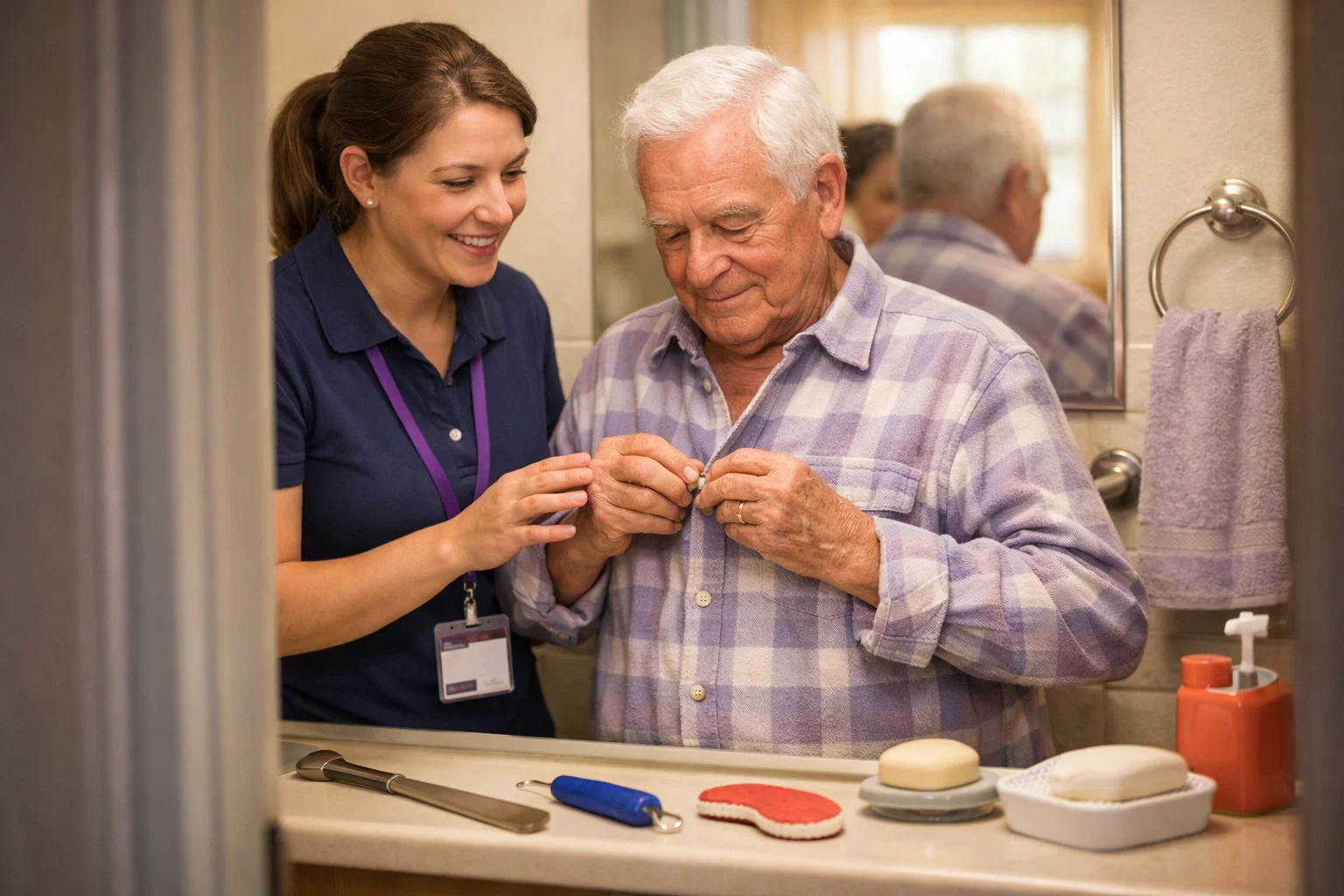

fOccupational therapy is one of Medicare’s most valuable and least understood home health benefits. If you or a loved one struggles with daily activities — getting dressed, preparing meals, bathing safely, or managing household tasks — after an illness, surgery, or due to a chronic condition, Medicare may cover occupational therapy visits right in your home at $0 cost.
This guide explains exactly what Medicare covers for in-home occupational therapy, who qualifies, what OT actually does during visits, and how HarvardCare at Home delivers this care throughout Los Angeles County.
Yes — Medicare Covers Occupational Therapy at Home
Medicare Part B covers in-home occupational therapy as part of its home health benefit. When you meet eligibility criteria, Medicare pays 100% of covered OT visits — no deductible, no copay. This applies to Original Medicare and all Medicare Advantage plans, which must cover the same home health services as Original Medicare.
Occupational therapy is a skilled service under Medicare, meaning it must be provided by a licensed occupational therapist (OT) or certified occupational therapy assistant (COTA) under OT supervision. It’s not aide-level care — it’s a clinical service requiring specialized assessment, clinical reasoning, and intervention planning. Learn more about our in-home occupational therapy and visit our home health care page for a complete overview of what Medicare covers.
What Occupational Therapy Services Does Medicare Cover at Home?
Activities of Daily Living (ADL) Training
ADLs are the fundamental self-care tasks that define independence: bathing, dressing, grooming, toileting, feeding, and transferring (moving from bed to chair, in and out of the shower). When illness, surgery, or a chronic condition impairs your ability to perform these tasks safely, an occupational therapist assesses the specific barriers — whether physical, cognitive, or environmental — and develops strategies to restore or maintain independence.
OT interventions for ADLs include teaching compensatory techniques that work around physical limitations, recommending and training on adaptive equipment (long-handled tools, dressing aids, shower chairs, grab bars), modifying how tasks are performed to reduce pain or effort, and practicing the actual tasks in your real home environment. Our ADL training at home service covers all of these interventions for qualifying Medicare patients.
Adaptive Equipment Training
Adaptive equipment bridges the gap between what your body can do and what daily life requires. An OT assesses which devices would genuinely help you — not just recommend a catalog of products — and then trains you and your caregivers on proper use. Common adaptive equipment for home health OT patients includes reachers and grabbers for picking up items without bending, sock aids and long-handled shoehorns for dressing with limited bending or reach, button hooks and zipper pulls for fine motor limitations, weighted utensils for patients with tremor, non-slip mats and shower chairs for bathing safety, and modified keyboards or writing tools for communication.
Our adaptive equipment training at home service is specifically designed to ensure patients use their equipment correctly and confidently — not just receive it and leave it in a closet. Read more about how occupational therapy helps seniors live independently at home.
Home Safety Evaluation
One of the most impactful OT services for homebound seniors is a comprehensive home safety evaluation. Your occupational therapist systematically assesses every area of your home for fall hazards and accessibility barriers — and provides specific, actionable recommendations. Assessment areas include entrance and exits (steps, ramps, handrails, lighting), living room and bedroom (furniture arrangement, floor coverings, lighting, bed height), bathroom (grab bar placement and adequacy, shower and tub access, toilet height), kitchen (reach, storage arrangement, appliance safety), and pathways throughout the home (adequate width for mobility devices, clutter, cord management).
A home safety evaluation can dramatically reduce fall risk — falls are the leading cause of injury death in older adults, and the majority of falls happen at home. Our home safety evaluation service and fall risk assessment at home complement each other as part of a comprehensive safety approach. Read our guide on 5 home safety modifications to prevent falls in seniors.
Cognitive Rehabilitation
Occupational therapists are trained to address cognitive impairments that affect daily function — including memory, attention, problem-solving, sequencing, and safety judgment. For patients with mild cognitive impairment, dementia, traumatic brain injury, or post-stroke cognitive changes, OT helps develop compensatory strategies and environmental supports that allow patients to manage daily life more safely. This includes using calendars, checklists, and reminder systems; simplifying routines; reorganizing the home environment to support memory and reduce confusion; and caregiver training on communication techniques and safety monitoring. Our team provides specialized OT for dementia patients — read our guide on how occupational therapy supports dementia patients at home.
Energy Conservation and Fatigue Management
Many conditions that qualify patients for home health — heart failure, COPD, cancer, chronic pain, post-COVID syndrome — cause profound fatigue that makes daily activities exhausting. Occupational therapists teach energy conservation techniques: pacing activities throughout the day, prioritizing tasks and eliminating non-essential effort, reorganizing the home to reduce unnecessary movement, using adaptive equipment to reduce exertion, and planning rest periods strategically. These techniques allow patients to accomplish what matters most to them while managing their energy within the constraints of their condition. Our nursing team also addresses fatigue management in patients managing heart failure at home and COPD at home.
Fine Motor and Upper Extremity Rehabilitation
After stroke, hand surgery, nerve injury, or with conditions like Parkinson’s disease or rheumatoid arthritis, fine motor function and upper extremity strength are often impaired. OT addresses these limitations through therapeutic exercises, functional task practice (writing, typing, cooking, grooming), hand splinting when indicated, edema management, and scar management after hand surgery. These interventions restore the hand and arm function needed for independence in daily tasks. Our therapists work closely with patients recovering from stroke — read our guide on a complete guide to physical therapy after stroke which covers the interdisciplinary rehab approach including OT.
Caregiver Training
In-home OT visits aren’t just for patients — they’re for the families and caregivers who provide daily support. OT teaches caregivers safe assistance techniques for transfers and mobility, proper use of adaptive equipment, how to set up the home environment to support the patient’s independence, strategies for managing behavioral symptoms in dementia patients, and how to gradually reduce assistance as the patient regains skills. Our caregiver training at home service formalizes this education for families who need more intensive instruction. Read our guide on caring for elderly parents at home for broader caregiver guidance.
Who Qualifies for Medicare Home Occupational Therapy?
To receive Medicare-covered in-home OT, you must meet four criteria: you are enrolled in Medicare Part A, Part B, or a Medicare Advantage plan; you are homebound (leaving home requires considerable effort, use of an assistive device, or another person’s help); your physician has ordered occupational therapy as part of a home health plan of care; and you receive care through a Medicare-certified agency like HarvardCare at Home.
An important Medicare rule to understand: occupational therapy alone cannot open a Medicare home health episode — you must first qualify based on skilled nursing, physical therapy, or speech therapy. However, once you qualify for home health through one of those services, OT can be added to your plan of care and will continue to be covered even if the qualifying service ends. This means OT often continues as a standalone service after a patient completes PT, for example. Read our full eligibility guide at how to get home health care through Medicare and understand the homebound standard at what qualifies as homebound for Medicare.
Conditions That Commonly Lead to Home OT
Occupational therapy is beneficial for a wide range of conditions. After stroke, OT is essential for relearning ADLs, managing upper extremity weakness, and adapting to cognitive changes. After hip or knee replacement, OT teaches safe movement techniques, adaptive equipment use, and home modifications to support recovery — read about home health after hip replacement and our hip replacement rehab at home service. For heart failure and COPD, OT teaches energy conservation and activity modification that keeps patients functional within their cardiopulmonary limits. And or Parkinson’s disease, OT addresses the progressive functional impairments that accompany motor symptoms. For dementia, OT designs environments and routines that maximize safety and independence as cognitive function changes. After fractures or orthopedic injuries, OT helps patients adapt daily routines around their activity restrictions.
What to Expect During a Home OT Visit
Your first OT visit is a comprehensive evaluation lasting 60–90 minutes. The therapist reviews your medical history, surgical reports, and physician orders, then performs a thorough functional assessment — observing how you perform actual daily tasks in your real home environment. They assess upper and lower extremity strength and range of motion, fine motor skills, balance and safety during functional tasks, cognitive status using validated screening tools, home environment safety, and caregiver support and training needs. Based on this evaluation, the therapist establishes functional goals and a treatment plan.
Follow-up visits focus on therapeutic activities and task practice, home modification recommendations, adaptive equipment fitting and training, caregiver instruction, and progression toward your functional goals. OT sessions in the home are hands-on and practical — you practice the real tasks you need to do in the real environment where you do them. Read more in our guide on what to expect during your first home health visit.
How Much Does Home OT Cost Under Medicare?
For covered home health OT services, your out-of-pocket cost is $0 — no deductible, no copay, no coinsurance for the visits themselves. The only potential cost is a 20% coinsurance on durable medical equipment (like a shower chair or raised toilet seat) after your annual $257 Part B deductible. Medicare Advantage plans cover the same OT services but may require prior authorization. HarvardCare at Home handles all Medicare billing and authorization on your behalf.
In comparison, outpatient OT under Medicare Part B requires a 20% coinsurance after meeting your deductible — typically $30–60 per session. For homebound patients who qualify, in-home OT through the home health benefit is far more affordable and more convenient. Read our guide on what is the cost of home care for the elderly for context on the full range of home care costs in LA.
Is There a Limit on Home OT Visits?
No — there is no statutory limit on Medicare home OT visits. As long as you remain homebound and require skilled occupational therapy services, care continues. Your physician recertifies your need every 60 days. For patients recovering from surgery or acute illness, OT may be short-term — 4 to 8 weeks. For patients with chronic progressive conditions like Parkinson’s or dementia, OT may continue indefinitely under the Jimmo v. Sebelius maintenance standard. Read more about how long therapy takes to work for condition-specific guidance.
OT and Wound Care: An Integrated Approach
Patients with wounds often benefit from occupational therapy as part of their care plan. For patients with diabetic foot ulcers, OT helps with adaptive equipment for safe dressing changes, upper body strengthening to support non-weight-bearing mobility, and home modification to allow safe navigation without loading the affected foot. For patients with pressure ulcers, OT addresses positioning, pressure relief techniques, and mobility to prevent new wounds from forming. HarvardCare at Home coordinates OT with our wound care nursing team for patients with overlapping needs. Visit our Medicare wound care in Los Angeles page and our in-home wound care services page to learn more.
How to Get Home OT Started in Los Angeles
Getting started requires a physician’s referral for home health care that includes occupational therapy in the plan of care. Your primary care physician, orthopedic surgeon, neurologist, or any treating specialist can initiate this. If you are being discharged from a hospital or rehab facility, ask your discharge planner to include OT in your home health orders.
HarvardCare at Home serves patients requiring in-home OT throughout Los Angeles County — from Los Angeles and Santa Monica to Glendale, Pasadena, Burbank, Long Beach, Torrance, Encino, and throughout the region. To learn more, visit our home health care page, read our frequently asked questions, or contact our team. You can also learn how to talk to your doctor about home health services and how to choose the right home health agency.

