
 Wound Care
It is a skilled SLP assessment of swallowing concerns, mealtime routines, symptoms, caregiver observations, and possible care planning needs in the home.
SPEECH THERAPY
Swallowing Evaluation at Home
In-home swallowing evaluation by an SLP to observe mealtime concerns, caregiver questions, and safer care planning needs.
EXCELLENT 

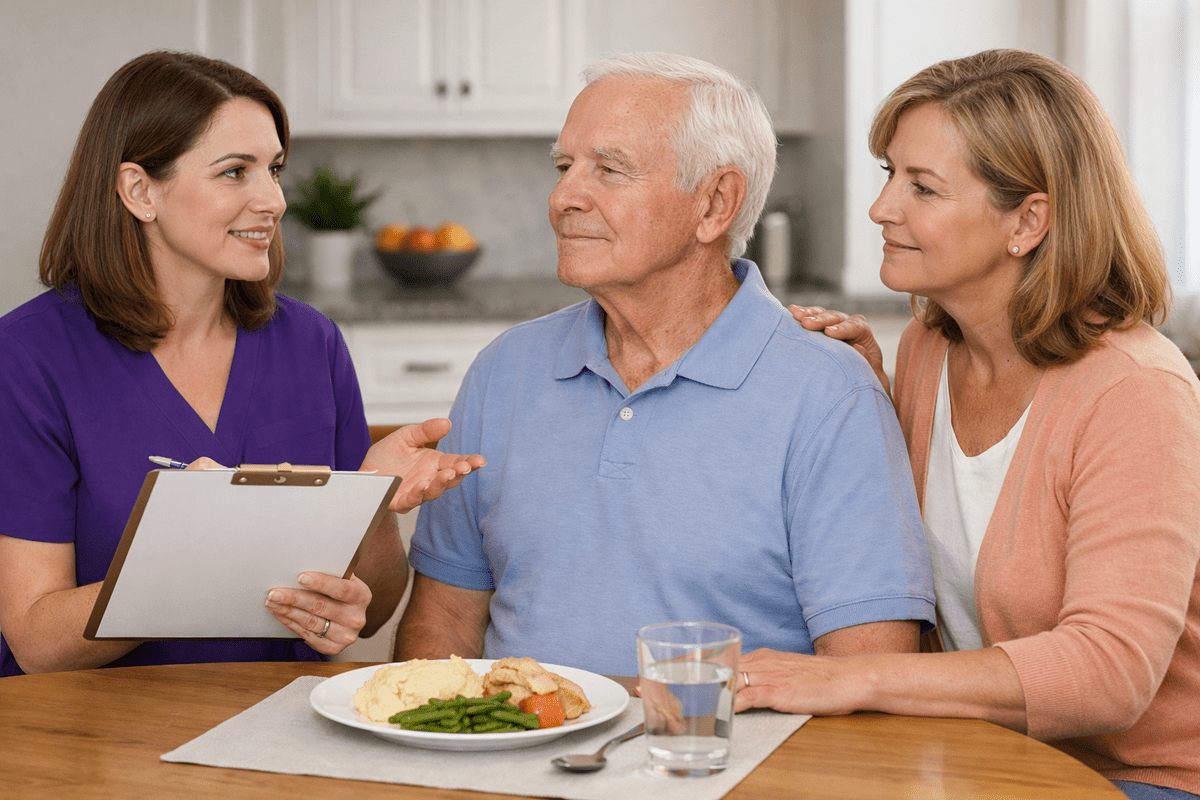
When swallowing changes are new or unclear, families often need a starting point. A patient may cough only with liquids, avoid certain foods, take longer to eat, have trouble swallowing pills, or seem tired halfway through a meal. The family may wonder whether the problem is serious, what to report, and whether therapy is needed.
A swallowing evaluation at home gives a speech-language pathologist the chance to understand the concern in the patient real environment. The SLP can ask focused questions, observe posture and routines, review caregiver concerns, and help identify whether swallowing therapy, provider follow-up, or additional care coordination may be appropriate.
HarvardCare Home Health offers swallowing evaluation support for patients who may have difficulty traveling and need skilled home health assessment. The evaluation is not a guarantee of coverage or a replacement for emergency care, but it can help families move from uncertainty toward a clearer care plan.
When a swallowing evaluation may be needed
A swallowing evaluation may be requested when eating or drinking is no longer predictable or comfortable. Some symptoms are obvious, while others are patterns that build over time. Families should be especially alert after stroke, hospitalization, pneumonia, neurological disease, dementia, weakness, or major changes in alertness.
- Coughing or throat clearing during or after meals.
- Wet or gurgly voice after drinking.
- Food left in the mouth, pocketing, or difficulty chewing.
- Meals taking much longer than they used to.
- Reduced intake, weight loss, or dehydration concern.
- Difficulty swallowing pills.
- Caregiver concern that meals feel unsafe or stressful.
Sudden severe symptoms, choking, breathing difficulty, or signs of a medical emergency require immediate medical attention. A home evaluation is for appropriate non-emergency assessment within a home health plan.
What the SLP may observe
The speech-language pathologist may begin with a conversation about recent medical changes, diet, liquids, medication swallowing, respiratory history, oral care, dentition, alertness, fatigue, and the symptoms that prompted the request. The therapist may also ask caregivers what they see during meals and what strategies have already been tried.
If appropriate, the SLP may observe the patient with food or liquid in a controlled way. The focus may include posture, alertness, oral control, pacing, cough response, voice quality, fatigue, and caregiver cueing. The therapist may also evaluate communication and cognition because memory, attention, and direction-following can affect mealtime safety.
Home setup matters
Chair height, table position, lighting, distractions, meal timing, dentures, utensils, and caregiver location can all affect swallowing routines. Seeing the home setup helps the SLP make recommendations that are more practical than generic advice.
Questions families should prepare
Families can make the evaluation more useful by sharing clear observations. It helps to think about patterns before the visit rather than trying to remember everything during the session.
- Which foods or liquids cause the most concern?
- Does coughing happen before, during, or after the swallow?
- Has the patient had pneumonia, fever, chest congestion, or weight loss?
- Are pills difficult to swallow?
- Does the patient get tired, distracted, or confused during meals?
- What has the provider already recommended?
- What does the family need to feel more confident at meals?
Photos or notes about usual meals can be helpful, but the most important thing is honest detail. The SLP needs to know what really happens at home.
How recommendations are communicated
After the evaluation, the SLP may explain findings, suggest safer routines, recommend therapy goals, teach caregiver strategies, or advise provider follow-up. Recommendations may involve positioning, pacing, mealtime setup, oral care discussion, symptom tracking, or a request for additional medical assessment if needed.
If swallowing therapy is appropriate, the evaluation may guide the next visits. If the concern requires medical follow-up, the SLP can help the family understand what information to share with the provider. If another discipline may help, such as nursing or occupational therapy, the care team can discuss coordination.
From evaluation to practical next steps
Families often feel better once they understand what should happen next. A swallowing evaluation may lead to a therapy plan, caregiver education, provider communication, further testing, or monitoring of symptoms. The right next step depends on what the SLP observes, the patient medical history, and the provider instructions.
The SLP may help the family organize observations into clear information: what happened, when it happened, which food or liquid was involved, how long it lasted, and whether the patient had other symptoms. This makes conversations with the provider more useful and reduces vague worry.
The evaluation can also identify when the home setup is contributing to risk. A chair, table, lighting, distractions, dentures, meal timing, or caregiver cueing pattern may need adjustment before therapy can be effective. Small changes can make the plan easier to follow.
When recommendations are explained in the home, caregivers can ask practical questions right away. They can point to the usual chair, the cups the patient prefers, the pills that are difficult, and the exact place where meals become stressful. That context helps the SLP make guidance more specific and easier to repeat after the visit.
Related swallowing therapy and skilled nursing
A swallowing evaluation often connects to other services. If the patient needs ongoing therapy, swallowing therapy at home or dysphagia treatment at home may be recommended. If clinical monitoring, medication education, or broader health assessment is needed, skilled nursing care at home may also be relevant.
For patients recovering from stroke, families may also review stroke rehab at home. If cognition, routines, or daily safety are part of the concern, cognitive rehab at home or in-home occupational therapy may be appropriate to discuss.
Why choose HarvardCare Home Health
HarvardCare Home Health approaches swallowing evaluation with care, patience, and practical focus. Families often come to us because they are worried but unsure what the symptoms mean. The home-based evaluation helps turn observations into a clearer plan while respecting the patient comfort and dignity.
Our team understands that swallowing concerns may overlap with communication, cognition, weakness, fatigue, medications, and caregiver stress. The SLP can help identify the functional concerns and guide the family toward appropriate next steps without making unsupported guarantees.
Medicare and home health eligibility note
A swallowing evaluation may be part of home health speech therapy when there is a provider order, skilled need, and homebound status. Coverage is not guaranteed. HarvardCare Home Health must review eligibility, documentation, payer requirements, and clinical need before confirming services.
Request a swallowing evaluation
If swallowing symptoms are causing concern at home, complete the form on this page or call HarvardCare Home Health. The team can review the request, discuss symptoms, and help determine whether a home health swallowing evaluation and eligibility review are appropriate next steps.
FAQs
Do you have questions?
Got questions about Swallowing Evaluation at Home? Here are answers to what patients and families ask most.
Consider requesting help when there is coughing, choking, wet voice, food pocketing, long meals, reduced intake, weight loss, or caregiver concern.
A home evaluation can identify concerns and guide recommendations, but some patients may need provider follow-up or instrumental testing.
When appropriate and safe, the SLP may observe eating or drinking to understand symptoms, posture, pacing, and caregiver support.
Prepare details about symptoms, food and liquid concerns, medications, recent illness, respiratory history, weight changes, and provider instructions.
Yes. The evaluation helps understand risk and needs. Therapy may follow if ongoing skilled treatment is appropriate.
Skilled nursing may be appropriate when clinical monitoring, medication education, nutrition concerns, or broader health needs are present.
Coverage is not guaranteed. Home health generally requires a provider order, skilled need, homebound status, and eligibility review.
Seek emergency help for choking, breathing difficulty, or severe sudden symptoms. Contact the provider for new or worsening swallowing concerns.
Complete the form on this page or call HarvardCare Home Health so the request and eligibility can be reviewed.
TESTIMONIALS
What Our Patients & Families Say
AREAS WE SERVE
Swallowing Evaluation at Home Near You
Our licensed healthcare professionals provide expert care in the comfort of your home. We proudly serve patients and families throughout Los Angeles County.
Serving 279 cities across LA County
- A
- Acton
- Adams-Normandie
- Agoura Hills
- Agua Dulce
- Alhambra
- Alondra Park
- Altadena
- Angelino Heights
- Arcadia
- Arleta
- Arlington Heights
- Artesia
- Arts District
- Atwater Village
- Avocado Heights
- Azusa
- B
- Baldwin Hills
- Baldwin Park
- Bassett
- Beachwood Canyon
- Bel Air
- Bell
- Bell Gardens
- Bellflower
- Beverly Crest
- Beverly Grove
- Beverly Hills
- Beverlywood
- Boyle Heights
- Bradbury
- Brentwood
- Broadway-Manchester
- Burbank
- C
- Calabasas
- Canoga Park
- Canyon Country
- Carson
- Carthay
- Castaic
- Castle Heights
- Central-Alameda
- Century City
- Cerritos
- Charter Oak
- Chatsworth
- Chesterfield Square
- Cheviot Hills
- Chinatown
- Citrus
- City Terrace
- Claremont
- Commerce
- Compton
- Country Club Park
- Covina
- Crenshaw
- Cudahy
- Culver City
- Cypress Park
- D
- Del Aire
- Del Rey
- Desert View Highlands
- Diamond Bar
- Downey
- Downtown Los Angeles
- Duarte
- E
- Eagle Rock
- East Hollywood
- East Los Angeles
- East Pasadena
- East Rancho Dominguez
- East San Gabriel
- East Whittier
- Echo Park
- El Camino Village
- El Monte
- El Segundo
- El Sereno
- Elysian Valley
- Encino
- Exposition Park
- F
- Fairfax
- Florence
- Florence-Firestone
- G
- Gardena
- Garvanza
- Glassell Park
- Glendale
- Glendora
- Gramercy Park
- Granada Hills
- Green Meadows
- H
- Hacienda Heights
- Hancock Park
- Harbor City
- Harbor Gateway
- Harvard Heights
- Harvard Park
- Hasley Canyon
- Hawaiian Gardens
- Hawthorne
- Hermon
- Hermosa Beach
- Hidden Hills
- Highland Park
- Historic Filipinotown
- Hollywood
- Hollywood Hills
- Holmby Hills
- Huntington Park
- Hyde Park
- I
- Inglewood
- J
- Jefferson Park
- K
- Kinneloa Mesa
- Koreatown
- L
- La Cañada Flintridge
- La Crescenta-Montrose
- La Habra Heights
- La Mirada
- La Puente
- La Verne
- Ladera Heights
- Lake Balboa
- Lake Hughes
- Lake Los Angeles
- Lake View Terrace
- Lakewood
- Lancaster
- Larchmont
- Lawndale
- Leimert Park
- Lennox
- Leona Valley
- Lincoln Heights
- Little Armenia
- Little Tokyo
- Littlerock
- Lomita
- Long Beach
- Los Angeles
- Los Feliz
- Lynwood
- M
- Malibu
- Manchester Square
- Manhattan Beach
- Mar Vista
- Marina del Rey
- Mayflower Village
- Maywood
- Mid-City
- Mid-Wilshire
- Miracle Mile
- Mission Hills
- Monrovia
- Montebello
- Montecito Heights
- Monterey Park
- Mt Washington
- N
- Newhall
- NoHo Arts District
- North El Monte
- North Hills
- North Hollywood
- North Long Beach
- Northridge
- Norwalk
- P
- Pacific Palisades
- Pacoima
- Palmdale
- Palms
- Palos Verdes Estates
- Palos Verdes Peninsula
- Panorama City
- Paramount
- Park La Brea
- Pasadena
- Pearblossom
- Pico Rivera
- Pico-Robertson
- Pico-Union
- Playa del Rey
- Playa Vista
- Pomona
- Porter Ranch
- Q
- Quartz Hill
- R
- Rancho Dominguez
- Rancho Palos Verdes
- Rancho Park
- Redondo Beach
- Reseda
- Rolling Hills
- Rolling Hills Estates
- Rosemead
- Rowland Heights
- S
- San Dimas
- San Fernando
- San Gabriel
- San Marino
- San Pasqual
- San Pedro
- Santa Clarita
- Santa Fe Springs
- Santa Monica
- Saugus
- Sawtelle
- Sepulveda
- Shadow Hills
- Sherman Oaks
- Sherman Village
- Sherwood Forest
- Sierra Madre
- Signal Hill
- Silver Lake
- South Central
- South El Monte
- South Gate
- South Park
- South Pasadena
- South San Gabriel
- South San Jose Hills
- South Whittier
- Stevenson Ranch
- Stonehurst
- Studio City
- Sun Valley
- Sun Village
- Sunland
- Sunset Park
- Sylmar
- T
- Tarzana
- Temple City
- Thai Town
- Toluca Lake
- Topanga
- Torrance
- Tujunga
- U
- University Hills
- University Park
- V
- Val Verde
- Valencia
- Valinda
- Valley Glen
- Valley Village
- Van Nuys
- Venice
- Vermont Knolls
- Vermont Square
- Vermont Vista
- Vermont-Slauson
- Victor Heights
- View Park-Windsor Hills
- Vincent
- W
- Walnut
- Walnut Park
- Watts
- West Adams
- West Athens
- West Carson
- West Covina
- West Hills
- West Hollywood
- West Los Angeles
- West Puente Valley
- West Rancho Dominguez
- West Whittier-Los Nietos
- Westchester
- Westlake
- Westlake Village
- Westmont
- Westwood
- Westwood Village
- Whitley Heights
- Whittier
- Willowbrook
- Wilmington
- Wilshire Center
- Windsor Square
- Winnetka
- Woodland Hills
More Services

In-Home Wound Care Services
- Board-certified wound care nurses
- Personalized treatment plans
- All wound types treated
Diabetic Wound Care at Home
- Diabetes wound specialists
- Blood sugar optimization support
- Advanced offloading techniques
Skilled Nursing Care at Home
- Registered nurses available 7 days a week
- Comprehensive care coordination
- IV therapy and infusion services