
 Wound Care
It is occupational therapy focused on helping a patient use a shower chair safely as part of bathing setup, transfers, pacing, and caregiver support.
OCCUPATIONAL THERAPY
Shower Chair Training at Home
Occupational therapy shower chair training at home for safer bathing setup, transfers, water safety, pacing, and caregiver support.
EXCELLENT 


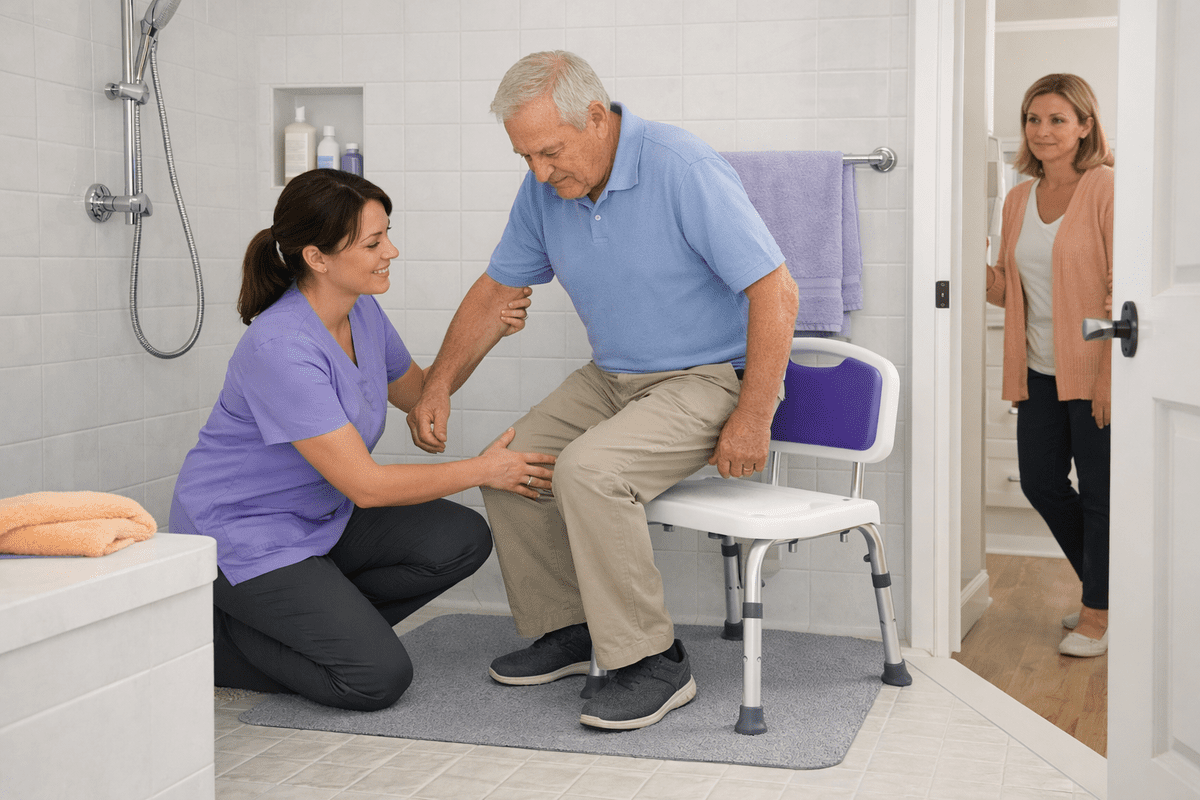
A shower chair can make bathing safer, but it does not automatically make the bathroom safe. The chair may be too low, too high, unstable, placed in the wrong direction, or difficult to reach with a walker. A patient may still struggle with getting in, sitting down, washing safely, drying, standing, and leaving the bathroom without fatigue or fear.
Shower chair training at home gives patients occupational therapy support for using a shower chair correctly in their own bathroom. The therapist can review the chair, shower or tub entry, handheld shower, grab bars, nonskid surfaces, towel placement, water controls, privacy concerns, and caregiver assistance. Training happens while respecting dignity and can often be practiced fully clothed before bathing routines are attempted.
HarvardCare Home Health helps patients and families create safer bathing routines that fit the home. This service may help older adults and patients recovering from illness, surgery, hospitalization, stroke, falls, arthritis, weakness, pain, or shortness of breath.
Why Shower Chairs Help but Still Need Training
Seated bathing can reduce standing time, fatigue, and balance demands. However, the patient still has to transfer to the chair, sit with control, reach supplies, avoid slipping, manage water, and stand or exit safely. If the chair slides, tips, sits unevenly, blocks the shower entry, or is hard to clean around, it may create new problems.
Patients may also use the chair in unsafe ways. They may try to step around it, sit before they are aligned, lean too far to reach soap, stand to wash because items are out of reach, or pull on a towel bar instead of using a stable support. Caregivers may not know where to stand or how to help without compromising privacy.
Occupational therapy turns the shower chair from a piece of equipment into part of a safer routine. The therapist can help the patient practice setup, entry, seated positioning, reaching, pacing, and exit strategies.
Setup, Transfers, Water Safety, Fatigue, and Privacy
Shower chair setup includes chair height, leg stability, placement, drainage, seat orientation, and whether the patient can reach water controls and bathing supplies. The therapist may review whether a standard shower chair, tub transfer bench, handheld shower, grab bars, or long-handled sponge may be more appropriate for the situation.
Transfers require careful planning. The patient may need to approach with a walker, turn slowly, reach for appropriate support, sit with control, and move legs safely. In a tub, stepping over the edge may be unsafe for some patients, and a tub transfer bench may be considered. In a walk-in shower, the threshold, floor slope, and chair placement matter.
Water safety includes temperature control, wet surfaces, soap placement, and avoiding rushed movement when the patient is cold or tired. Fatigue can build quickly during bathing, so pacing may include gathering supplies ahead of time, sitting for most of the task, using rest breaks, and choosing the best time of day.
Privacy is also part of safety. Some patients resist help because they feel exposed. The therapist can teach caregivers how to prepare the bathroom, provide cues, wait nearby, and assist only when needed so the patient remains as independent and comfortable as possible.
What OT May Practice During Visits
The occupational therapist may simulate shower chair transfers while the patient remains fully clothed. They may practice approach, alignment, sitting, reaching, turning, and standing. The therapist may also review how the patient will manage towels, clothing, soap, shampoo, handheld shower controls, and drying off.
Training may include how to keep both feet supported, avoid leaning too far, use grab bars appropriately, keep supplies close, and pause before standing. For patients with shoulder pain, arthritis, or limited reach, adaptive tools may be discussed. For patients with dizziness or shortness of breath, the plan may include symptom monitoring and rest breaks.
If the patient has skin concerns, wounds, catheter needs, or clinical bathing restrictions, the therapist may coordinate with skilled nursing or the provider. Occupational therapy focuses on function and safety, but some clinical concerns require medical guidance.
Caregiver Support and Home Safety Checklist
Caregivers can learn how to set up the bathroom before bathing, where to stand, how to cue the transfer, and how to protect privacy. They may also learn when the patient should not shower without help and when symptoms should be reported.
A home safety checklist may include:
- Confirm the shower chair is stable before each use.
- Keep soap, shampoo, towel, and clothing within easy reach.
- Use appropriate grab bars rather than towel bars for support.
- Remove loose mats or hazards near the shower entrance.
- Check water temperature before the patient enters.
- Plan rest breaks if fatigue, pain, or shortness of breath increases.
Related Bathing and Transfer Services
Shower chair training often connects with Bathing Training at Home, Grab Bars Training at Home, Transfer Training at Home, Adaptive Equipment Training at Home, and Home Safety Evaluation. If walking to the bathroom or standing balance is unsafe, In-Home Physical Therapy Services may also be relevant.
Some patients also need support with the routines before and after bathing. Getting clothing ready, moving from bedroom to bathroom, drying off, dressing, and leaving the bathroom safely can all affect whether the shower chair plan works. The therapist can connect these pieces so the patient is not left with a chair that helps one part of bathing but leaves the rest of the routine unsafe or exhausting afterward.
Why Choose HarvardCare Home Health
HarvardCare Home Health provides practical occupational therapy in the home, where bathing safety has to work. The therapist can see the real shower, chair, doorway, grab bars, water controls, towels, and caregiver routine. This makes recommendations more useful than general equipment advice.
Our approach respects privacy and independence while addressing real fall risks. The goal is to help the patient bathe with better safety, less fear, and the right level of support from family or caregivers.
Medicare and Home Health Eligibility
Shower chair training may be part of a skilled home health occupational therapy plan when eligibility requirements are met. This may include physician order, skilled need, homebound status, and payer review. Coverage cannot be guaranteed without review.
If bathing has become unsafe after illness, surgery, hospitalization, a fall, weakness, or balance changes, HarvardCare Home Health can review the request and help determine whether home occupational therapy is appropriate.
Families can also prepare by noting which part of bathing feels hardest: entering the shower, sitting safely, reaching supplies, standing afterward, or leaving the bathroom. That detail helps the therapist focus training where it will make the daily routine safer and more realistic.
Request Shower Chair Training
If a shower chair is present but bathing still feels unsafe, or if your family is unsure what setup is best, complete the form on this page or call HarvardCare Home Health. The team can review eligibility and help determine next steps.
FAQs
Do you have questions?
Got questions about Shower Chair Training at Home? Here are answers to what patients and families ask most.
No. The therapist provides training, assessment, and education. Personal care assistance is different from skilled occupational therapy.
Yes. Transfers, setup, reaching, and safety routines can often be practiced fully clothed before bathing occurs.
No. Some patients may need a tub transfer bench, different chair height, grab bars, or another setup depending on the bathroom and abilities.
Yes. The therapist may teach seated bathing, pacing, supply setup, and rest breaks to reduce exhaustion.
Yes. Caregivers can learn setup, cueing, privacy-conscious assistance, water safety, and warning signs.
The therapist can review the setup and recommend safer placement or equipment review. Unsafe equipment should not be used until addressed.
It may include how to use grab bars during shower chair transfers when grab bars are part of the bathroom setup.
It may be covered when home health requirements are met, including physician order, skilled need, and homebound status when applicable. Eligibility must be reviewed.
Complete the form on this page or call HarvardCare Home Health so the team can review the request and next steps.
TESTIMONIALS
What Our Patients & Families Say
AREAS WE SERVE
Shower Chair Training at Home Near You
Our licensed healthcare professionals provide expert care in the comfort of your home. We proudly serve patients and families throughout Los Angeles County.
Serving 279 cities across LA County
- A
- Acton
- Adams-Normandie
- Agoura Hills
- Agua Dulce
- Alhambra
- Alondra Park
- Altadena
- Angelino Heights
- Arcadia
- Arleta
- Arlington Heights
- Artesia
- Arts District
- Atwater Village
- Avocado Heights
- Azusa
- B
- Baldwin Hills
- Baldwin Park
- Bassett
- Beachwood Canyon
- Bel Air
- Bell
- Bell Gardens
- Bellflower
- Beverly Crest
- Beverly Grove
- Beverly Hills
- Beverlywood
- Boyle Heights
- Bradbury
- Brentwood
- Broadway-Manchester
- Burbank
- C
- Calabasas
- Canoga Park
- Canyon Country
- Carson
- Carthay
- Castaic
- Castle Heights
- Central-Alameda
- Century City
- Cerritos
- Charter Oak
- Chatsworth
- Chesterfield Square
- Cheviot Hills
- Chinatown
- Citrus
- City Terrace
- Claremont
- Commerce
- Compton
- Country Club Park
- Covina
- Crenshaw
- Cudahy
- Culver City
- Cypress Park
- D
- Del Aire
- Del Rey
- Desert View Highlands
- Diamond Bar
- Downey
- Downtown Los Angeles
- Duarte
- E
- Eagle Rock
- East Hollywood
- East Los Angeles
- East Pasadena
- East Rancho Dominguez
- East San Gabriel
- East Whittier
- Echo Park
- El Camino Village
- El Monte
- El Segundo
- El Sereno
- Elysian Valley
- Encino
- Exposition Park
- F
- Fairfax
- Florence
- Florence-Firestone
- G
- Gardena
- Garvanza
- Glassell Park
- Glendale
- Glendora
- Gramercy Park
- Granada Hills
- Green Meadows
- H
- Hacienda Heights
- Hancock Park
- Harbor City
- Harbor Gateway
- Harvard Heights
- Harvard Park
- Hasley Canyon
- Hawaiian Gardens
- Hawthorne
- Hermon
- Hermosa Beach
- Hidden Hills
- Highland Park
- Historic Filipinotown
- Hollywood
- Hollywood Hills
- Holmby Hills
- Huntington Park
- Hyde Park
- I
- Inglewood
- J
- Jefferson Park
- K
- Kinneloa Mesa
- Koreatown
- L
- La Cañada Flintridge
- La Crescenta-Montrose
- La Habra Heights
- La Mirada
- La Puente
- La Verne
- Ladera Heights
- Lake Balboa
- Lake Hughes
- Lake Los Angeles
- Lake View Terrace
- Lakewood
- Lancaster
- Larchmont
- Lawndale
- Leimert Park
- Lennox
- Leona Valley
- Lincoln Heights
- Little Armenia
- Little Tokyo
- Littlerock
- Lomita
- Long Beach
- Los Angeles
- Los Feliz
- Lynwood
- M
- Malibu
- Manchester Square
- Manhattan Beach
- Mar Vista
- Marina del Rey
- Mayflower Village
- Maywood
- Mid-City
- Mid-Wilshire
- Miracle Mile
- Mission Hills
- Monrovia
- Montebello
- Montecito Heights
- Monterey Park
- Mt Washington
- N
- Newhall
- NoHo Arts District
- North El Monte
- North Hills
- North Hollywood
- North Long Beach
- Northridge
- Norwalk
- P
- Pacific Palisades
- Pacoima
- Palmdale
- Palms
- Palos Verdes Estates
- Palos Verdes Peninsula
- Panorama City
- Paramount
- Park La Brea
- Pasadena
- Pearblossom
- Pico Rivera
- Pico-Robertson
- Pico-Union
- Playa del Rey
- Playa Vista
- Pomona
- Porter Ranch
- Q
- Quartz Hill
- R
- Rancho Dominguez
- Rancho Palos Verdes
- Rancho Park
- Redondo Beach
- Reseda
- Rolling Hills
- Rolling Hills Estates
- Rosemead
- Rowland Heights
- S
- San Dimas
- San Fernando
- San Gabriel
- San Marino
- San Pasqual
- San Pedro
- Santa Clarita
- Santa Fe Springs
- Santa Monica
- Saugus
- Sawtelle
- Sepulveda
- Shadow Hills
- Sherman Oaks
- Sherman Village
- Sherwood Forest
- Sierra Madre
- Signal Hill
- Silver Lake
- South Central
- South El Monte
- South Gate
- South Park
- South Pasadena
- South San Gabriel
- South San Jose Hills
- South Whittier
- Stevenson Ranch
- Stonehurst
- Studio City
- Sun Valley
- Sun Village
- Sunland
- Sunset Park
- Sylmar
- T
- Tarzana
- Temple City
- Thai Town
- Toluca Lake
- Topanga
- Torrance
- Tujunga
- U
- University Hills
- University Park
- V
- Val Verde
- Valencia
- Valinda
- Valley Glen
- Valley Village
- Van Nuys
- Venice
- Vermont Knolls
- Vermont Square
- Vermont Vista
- Vermont-Slauson
- Victor Heights
- View Park-Windsor Hills
- Vincent
- W
- Walnut
- Walnut Park
- Watts
- West Adams
- West Athens
- West Carson
- West Covina
- West Hills
- West Hollywood
- West Los Angeles
- West Puente Valley
- West Rancho Dominguez
- West Whittier-Los Nietos
- Westchester
- Westlake
- Westlake Village
- Westmont
- Westwood
- Westwood Village
- Whitley Heights
- Whittier
- Willowbrook
- Wilmington
- Wilshire Center
- Windsor Square
- Winnetka
- Woodland Hills
More Services

In-Home Wound Care Services
- Board-certified wound care nurses
- Personalized treatment plans
- All wound types treated
Diabetic Wound Care at Home
- Diabetes wound specialists
- Blood sugar optimization support
- Advanced offloading techniques
Skilled Nursing Care at Home
- Registered nurses available 7 days a week
- Comprehensive care coordination
- IV therapy and infusion services