
 Wound Care
It is home physical therapy focused on shoulder motion, strength, pain control, precautions, and daily function after injury or surgery.
Rotator Cuff Rehab at Home
Rotator cuff rehab at home helps patients recover shoulder motion, strength, daily function, and confidence after injury, pain, or surgery.
EXCELLENT 


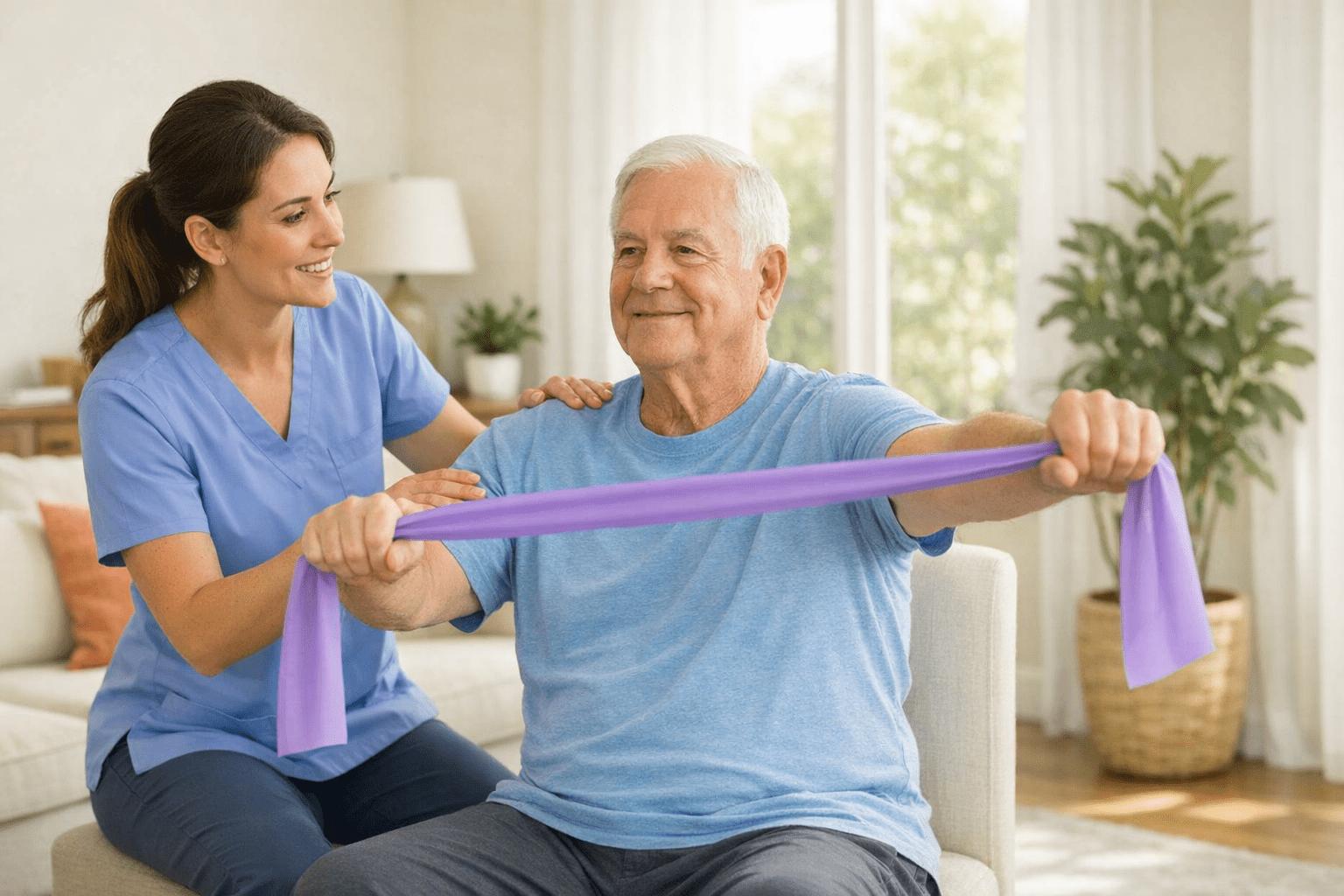
Shoulder pain or rotator cuff weakness can make the simplest home routine feel complicated. Reaching into a cabinet, pushing up from a chair, getting dressed, bathing, using a walker, or sleeping comfortably may all become harder when the shoulder is painful, stiff, or weak. After surgery, the concern is even greater because patients often need to protect healing tissue while still moving enough to prevent stiffness.
Rotator cuff rehab at home gives patients skilled physical therapy in the environment where they actually need the shoulder to work. The therapist can see how the patient reaches, transfers, dresses, rests, moves through the bathroom, and manages household tasks. That makes the plan more practical than a generic exercise sheet, especially for older adults, post-surgical patients, and people who are homebound or limited by pain, weakness, or fall risk.
HarvardCare Home Health helps patients follow a physician-directed plan with careful attention to safety, comfort, and daily function. The goal is not to rush recovery. The goal is to help the patient regain useful shoulder movement, rebuild strength at the right pace, and avoid movements that could create unnecessary pain or setbacks.
Why Rotator Cuff Recovery Is Difficult at Home
The rotator cuff is a group of muscles and tendons that help lift, rotate, and stabilize the shoulder. When it is injured, irritated, weak, or healing after surgery, patients may compensate by shrugging, twisting the back, holding the arm close, or avoiding movement entirely. These habits can protect the shoulder for a short time, but they can also lead to stiffness, weakness, neck discomfort, and reduced independence.
Home routines add extra challenges. A patient may need to reach for medication, pull on clothing, bathe safely, use both arms for a walker, or get comfortable in bed. After surgery, sling use, precautions, pain medication, fatigue, and fear of damaging the repair can make the first weeks especially difficult. A therapist can help the patient understand what movements are appropriate for their stage of recovery and what should wait.
Common concerns after shoulder injury or surgery
- Pain when reaching overhead, behind the back, or across the body.
- Difficulty dressing, bathing, grooming, cooking, or using the bathroom.
- Weakness when lifting the arm or carrying light items.
- Fear of moving too much after rotator cuff surgery.
- Sleep disruption from shoulder pain or positioning problems.
- Caregiver uncertainty about what help is safe.
What Home Physical Therapy May Include
The therapist may evaluate shoulder motion, pain level, posture, arm position, swelling, strength, surgical precautions if applicable, home setup, and how the shoulder affects daily activities. For a post-surgical patient, the therapist also follows the physician or surgeon protocol and avoids progressing exercises faster than ordered. For a non-surgical injury, the therapist may focus on reducing painful movement patterns, improving mobility, and rebuilding strength around the shoulder blade and arm.
Home visits may include gentle range-of-motion exercises, assisted movement, scapular control, posture training, isometric strengthening, resistance band work when appropriate, transfer strategies, activity modification, and education on safe use of the arm. The therapist may also teach the patient how to use cold therapy, pillows, or positioning strategies if these are appropriate for the plan of care.
| Recovery need | How home PT may help |
|---|---|
| Stiffness | Gentle motion, positioning, and home exercises matched to the current stage. |
| Weakness | Progressive strengthening that respects pain, precautions, and movement quality. |
| Daily task limits | Dressing, grooming, transfers, reaching, and safe household activity coaching. |
| Post-surgical protection | Education on precautions, sling use, pacing, and surgeon-directed progression. |
Safe Range of Motion and Strengthening Support
Shoulder rehab requires careful progression. Moving too aggressively can increase pain or strain healing tissue, while avoiding movement for too long can make stiffness worse. A skilled therapist helps find the right middle ground. The plan may begin with supported movement, posture correction, hand and elbow motion, gentle pendulum-style activities when appropriate, or assisted shoulder movement within allowed ranges.
Strengthening is introduced based on the patient's condition, physician orders, surgical timeline, pain response, and movement control. The therapist watches for compensation, such as shoulder hiking, trunk leaning, breath-holding, or using momentum. Better form often matters more than more repetitions. A few high-quality movements can be more useful than a long routine done incorrectly.
The therapist may also help the patient understand the difference between expected soreness and symptoms that should be reported. This can reduce fear and prevent the patient from either stopping all movement or pushing through pain that deserves attention. Clear guidance makes the home exercise plan easier to follow between visits.
Daily Activity and Caregiver Guidance
Patients often need help translating shoulder precautions into real life. The therapist may teach how to put on a shirt, manage a sling, reach safely, support the arm during rest, stand from a chair without straining the shoulder, or set up frequently used items at waist level. If the patient uses a walker, the therapist may review whether shoulder pain is affecting balance or weight bearing through the arms.
Caregivers can play an important role, but they need clear boundaries. Pulling on the arm, forcing range of motion, or helping too quickly can increase discomfort. The therapist can show family members how to assist with clothing, bathing setup, home exercise reminders, and safe positioning without creating avoidable strain. This teaching helps families support recovery without guessing.
Why Patients Choose HarvardCare Home Health for Shoulder Rehab
HarvardCare Home Health brings therapy into the patient's real routine. Instead of focusing only on a shoulder measurement, the therapist looks at what the shoulder must do for the patient to live safely: get dressed, move through the home, use the bathroom, prepare simple meals, and rest without constant pain. That practical focus helps patients feel that the plan is connected to their actual goals.
Patients also benefit from coordination. When shoulder rehab follows surgery, the plan can reflect physician orders, precautions, and home health eligibility requirements. If daily activities are limited, in-home occupational therapy may also help with dressing, bathing, adaptive strategies, and household tasks. When the shoulder problem is part of a broader recovery, therapy can connect with other ordered home health services.
Medicare and Home Health Eligibility
Rotator cuff rehab at home may be part of a home health plan when there is a physician order, a skilled need for therapy, and homebound status under Medicare rules when applicable. Eligibility and coverage depend on the patient's condition, documentation, payer requirements, and the services ordered. HarvardCare Home Health can review the request and explain what information may be needed, but no coverage approval should be assumed before review.
Related services include in-home physical therapy services, post-surgery rehab at home, therapeutic exercises at home, and occupational therapy when daily tasks are affected.
Request Shoulder Rehab at Home
If shoulder pain, weakness, or rotator cuff recovery is limiting daily life, complete the form on this page or call HarvardCare Home Health. The agency can review the situation, discuss whether home health physical therapy may be appropriate, and explain next steps for eligibility review and physician-directed care.
FAQs
Do you have questions?
Got questions about Rotator Cuff Rehab at Home? Here are answers to what patients and families ask most.
Yes. When ordered by a physician or surgeon, therapy can follow the recovery protocol and help the patient progress safely at home.
No. Skilled therapy should respect pain, surgical precautions, healing timelines, and physician instructions.
New or worsening shoulder pain should be discussed with a medical provider. Therapy may begin when it is ordered and appropriate.
Yes. The therapist can teach safe reminders, positioning, and assistance while avoiding pulling or forcing the arm.
Yes. The therapist may address dressing, bathing setup, reaching, transfers, sling use, and safe household routines.
Therapy may help improve mobility and reduce stiffness when movement is appropriate for the patient condition and plan of care.
It may be covered when home health requirements are met, including physician order, skilled need, and homebound status when applicable.
Frequency depends on the evaluation, physician plan, safety needs, payer rules, and the patient response to therapy.
Complete the form on this page or call HarvardCare Home Health so the team can review the request and eligibility process.
TESTIMONIALS
What Our Patients & Families Say
EXCELLENT
AREAS WE SERVE
Rotator Cuff Rehab at Home Near You
Our licensed healthcare professionals provide expert care in the comfort of your home. We proudly serve patients and families throughout Los Angeles County.
Serving 97 cities across LA County
- A
- Agoura Hills
- Alhambra
- Altadena
- Arcadia
- B
- Bel Air
- Bellflower
- Beverly Hills
- Boyle Heights
- Brentwood
- Burbank
- C
- Calabasas
- Carson
- Century City
- Cerritos
- Claremont
- Compton
- Covina
- Culver City
- D
- Diamond Bar
- Downey
- E
- Eagle Rock
- East Los Angeles
- Echo Park
- Encino
- G
- Gardena
- Glendale
- Glendora
- Granada Hills
- H
- Hacienda Heights
- Hancock Park
- Harbor City
- Hawthorne
- Highland Park
- Hollywood
- Hollywood Hills
- I
- Inglewood
- K
- Koreatown
- L
- La Crescenta-Montrose
- La Mirada
- Lakewood
- Lincoln Heights
- Long Beach
- Los Angeles
- Los Feliz
- M
- Malibu
- Manhattan Beach
- Mar Vista
- Marina del Rey
- Mid-City
- Mid-Wilshire
- Miracle Mile
- Monrovia
- Montebello
- Monterey Park
- N
- North Hollywood
- Northridge
- Norwalk
- P
- Pacific Palisades
- Palms
- Palos Verdes Estates
- Palos Verdes Peninsula
- Panorama City
- Pasadena
- Pico Rivera
- Playa Vista
- Pomona
- Porter Ranch
- R
- Rancho Palos Verdes
- Redondo Beach
- Reseda
- Rolling Hills Estates
- Rowland Heights
- S
- San Dimas
- San Gabriel
- San Marino
- San Pedro
- Santa Clarita
- Santa Monica
- Sawtelle
- Sherman Oaks
- Silver Lake
- South Gate
- South Pasadena
- Studio City
- T
- Tarzana
- Torrance
- V
- Van Nuys
- Venice
- W
- West Covina
- West Hollywood
- West Los Angeles
- Westchester
- Westlake Village
- Westwood
- Whittier
- Wilmington
- Woodland Hills
More Services

In-Home Wound Care Services
- Board-certified wound care nurses
- Personalized treatment plans
- All wound types treated
Diabetic Wound Care at Home
- Diabetes wound specialists
- Blood sugar optimization support
- Advanced offloading techniques
Skilled Nursing Care at Home
- Registered nurses available 7 days a week
- Comprehensive care coordination
- IV therapy and infusion services