
 Wound Care
They are therapist-selected exercises performed at home to address strength, balance, flexibility, endurance, range of motion, and functional goals.
PHYSICAL THERAPY
Therapeutic Exercises at Home
Therapeutic exercises at home give patients a skilled, personalized plan to improve strength, balance, flexibility, endurance, and safe daily movement.
EXCELLENT 


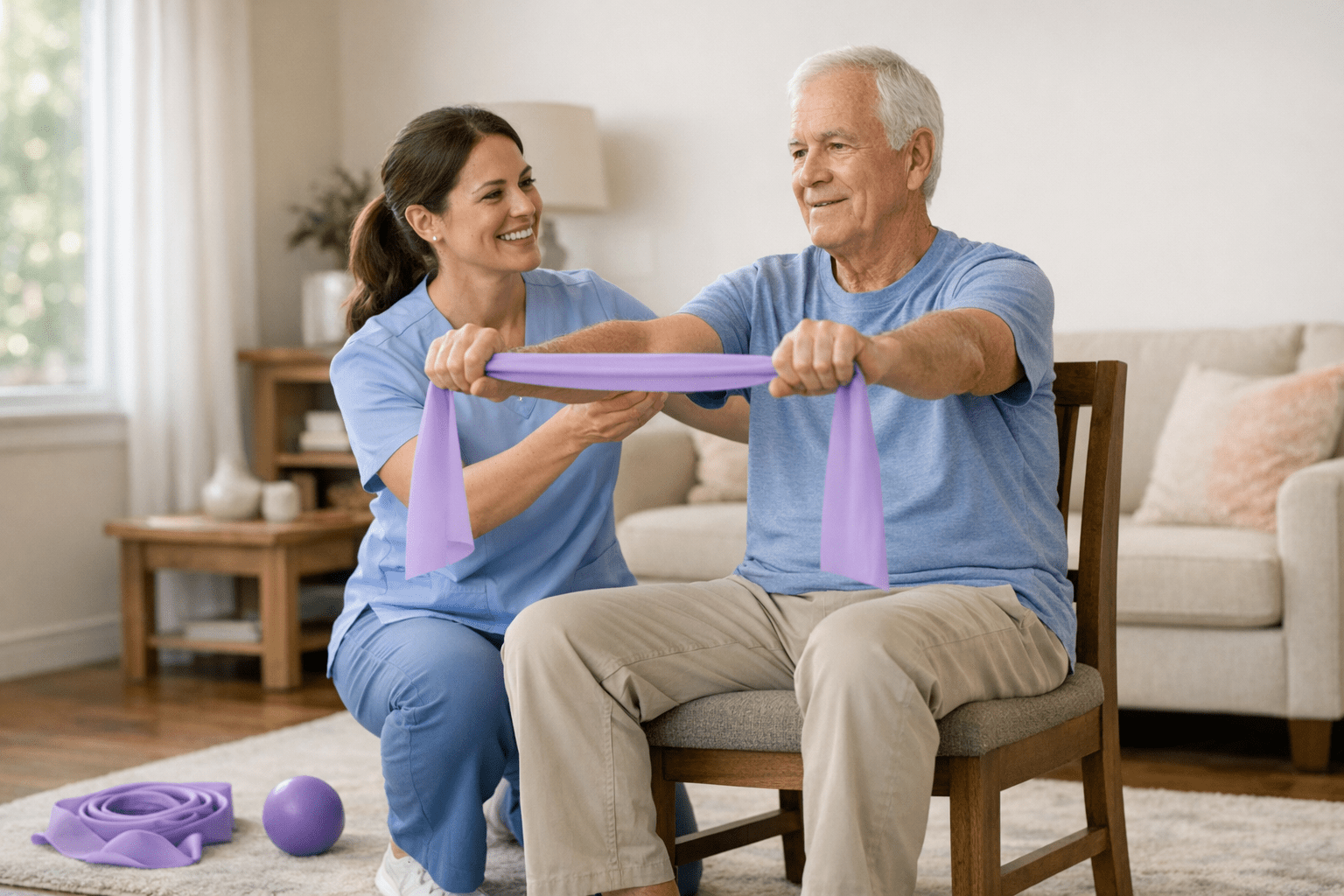
Many patients are told to “do exercises,” but the real question is which exercises, how often, how hard, and how to know whether they are helping. A generic exercise sheet can be confusing for an older adult who feels weak, dizzy, painful, or unsure about balance. Families may worry that encouraging exercise could cause a fall or make symptoms worse.
Therapeutic exercises at home are different because they are selected, taught, and progressed by a physical therapist for the patient's condition and goals. The therapist can see how the patient moves in the home, how much space is available, what furniture is used for support, and what daily tasks the patient wants to regain.
HarvardCare Home Health provides home-based therapeutic exercise support when a physician-directed plan includes skilled physical therapy. The aim is not to fill the day with busywork. The aim is to improve movement, safety, confidence, strength, balance, flexibility, and endurance in a way that supports real life at home.
How Therapeutic Exercise Differs From General Exercise
General exercise is often designed for fitness. Therapeutic exercise is designed to address a specific limitation, diagnosis, recovery need, or safety concern. The therapist considers pain, range of motion, strength, balance, endurance, precautions, assistive device use, fall risk, and the patient's ability to follow instructions safely.
For example, two patients may both be told they need leg exercises. One may need seated strengthening because standing is unsafe. Another may need standing balance work at the counter. A third may need gentle range-of-motion exercises after surgery. Therapeutic exercise matches the activity to the patient instead of forcing the patient into a generic routine.
What makes the plan skilled
- The therapist evaluates movement, symptoms, and home safety before selecting exercises.
- Exercises are connected to functional goals such as walking, transfers, stairs, or bathing.
- The plan is adjusted based on pain, fatigue, balance, breathing, and progress.
- Caregivers may be taught how to support practice safely.
- Progression is guided by clinical judgment, not guesswork.
Examples of Exercises and Goals
Therapeutic exercises may include seated knee extensions, ankle pumps, hip strengthening, sit-to-stand practice, heel raises, marching, side stepping, balance reaching, shoulder exercises, posture work, gentle stretching, breathing and pacing strategies, or walking intervals. The right mix depends on the patient's condition and goals.
The therapist may connect each exercise to a real-life purpose. Sit-to-stand practice supports toilet and chair transfers. Ankle and hip work may improve balance reactions. Gentle stretching can help posture and comfort. Walking intervals can build endurance for moving through the home. When patients understand why they are doing an exercise, they are more likely to participate.
| Therapy goal | Exercise focus may include |
|---|---|
| Better transfers | Sit-to-stand practice, leg strength, trunk control, and safe hand placement. |
| Improved balance | Standing weight shifts, supported reaching, turning practice, and ankle control. |
| More endurance | Walking intervals, pacing, rest breaks, and gradual activity tolerance. |
| Less stiffness | Gentle range of motion, stretching, posture work, and movement education. |
How Therapists Adjust the Plan Safely
A therapeutic exercise plan should change as the patient changes. If an exercise becomes too easy, the therapist may increase repetitions, resistance, standing time, or functional difficulty. If an exercise causes unsafe fatigue, pain, dizziness, or poor form, the therapist may modify it. This flexibility is one of the reasons skilled home therapy matters.
The therapist can also adjust for the home environment. A patient may not have a treatment table, open floor space, or exercise equipment. The plan may use a sturdy chair, kitchen counter, hallway, bed, walker, or resistance band. The therapist can teach where exercises should happen and which movements should not be attempted alone.
What Families Should Watch For
Families can support success by watching for consistency, safety, and symptoms. The goal is not to push the patient into exhaustion. Caregivers should report dizziness, chest discomfort, unusual shortness of breath, new pain, sudden weakness, confusion, falls, or a major change in tolerance. The therapist can help the family understand which responses are expected and which should be reported.
It is also helpful for caregivers to encourage the patient without taking over. A patient who is always lifted may not rebuild strength. A patient who is pushed too hard may become afraid or unsafe. Skilled guidance helps families find the middle ground.
Why HarvardCare Builds Plans Around the Home
HarvardCare Home Health understands that the best exercise plan is the one a patient can do safely in the place where they live. The therapist looks at the patient's actual chair, hallway, bed, bathroom route, lighting, and caregiver support. That makes the plan more realistic and more trustworthy for families who need help now, not theory.
The team also keeps the plan connected to broader home health needs. If the patient has fall risk, post-surgery precautions, nursing needs, or daily activity challenges, therapy can coordinate with the physician-directed plan and other disciplines when appropriate.
Keeping the Exercise Plan Clear Between Visits
Patients are more likely to follow a home program when the instructions are simple, specific, and tied to the day. The therapist may help decide which exercises should be practiced in the morning, which should be done only when someone is nearby, and which should stop if symptoms appear. This clarity matters for patients who are easily fatigued or overwhelmed by long instructions.
Families can support the plan by keeping the exercise area ready, removing clutter, placing the correct chair or walker nearby, and encouraging the patient to practice at the safest time of day. If the patient forgets instructions or rushes through movements, the therapist can simplify the routine and focus on fewer exercises done well.
The plan may also include simple tracking. A patient or caregiver might note how many sit-to-stands were completed, whether balance felt steadier, or whether walking after exercise felt easier or harder. These observations help the therapist adjust the program during the next visit and keep the work tied to meaningful progress.
Medicare and Home Health Eligibility
Therapeutic exercises at home may be covered as part of home health physical therapy when requirements are met, including a physician order, skilled need, and homebound status when Medicare rules apply. Coverage is not guaranteed and depends on the patient's situation, documentation, and payer rules.
Related services may include in-home physical therapy services, fall prevention therapy at home, post-surgery rehab at home, and in-home occupational therapy when exercises need to support daily tasks.
Request a Home Exercise Plan
If the patient needs more than a generic exercise handout, complete the form on this page or call HarvardCare Home Health. The agency can review the therapy need, physician order requirements, homebound status when applicable, and next steps for a safe home-based plan.
FAQs
Do you have questions?
Got questions about Therapeutic Exercises at Home? Here are answers to what patients and families ask most.
Therapeutic exercises are chosen and progressed based on the patient condition, safety, symptoms, goals, and physician-directed plan.
Patients recovering from surgery, illness, falls, weakness, pain, hospitalization, or reduced mobility may benefit when skilled therapy is needed.
Often yes. Therapists may use chairs, counters, walking paths, body weight, or simple bands depending on safety and goals.
Patients should report pain, dizziness, shortness of breath, or unusual symptoms so the therapist can adjust the plan or notify the physician.
Yes. Caregivers may learn setup, cueing, pacing, safety checks, and how to encourage practice without overassisting.
Progress may be tracked through safer transfers, walking distance, balance, endurance, strength, and ability to complete daily tasks.
It may be covered when home health requirements are met, including physician order, skilled need, and homebound status when applicable.
They may reduce certain fall risks by improving strength, balance, posture, and movement confidence, but no program prevents every fall.
Complete the page form or call HarvardCare Home Health so the team can review the therapy request and eligibility process.
TESTIMONIALS
What Our Patients & Families Say
AREAS WE SERVE
Therapeutic Exercises at Home Near You
Our licensed healthcare professionals provide expert care in the comfort of your home. We proudly serve patients and families throughout Los Angeles County.
Serving 279 cities across LA County
- A
- Acton
- Adams-Normandie
- Agoura Hills
- Agua Dulce
- Alhambra
- Alondra Park
- Altadena
- Angelino Heights
- Arcadia
- Arleta
- Arlington Heights
- Artesia
- Arts District
- Atwater Village
- Avocado Heights
- Azusa
- B
- Baldwin Hills
- Baldwin Park
- Bassett
- Beachwood Canyon
- Bel Air
- Bell
- Bell Gardens
- Bellflower
- Beverly Crest
- Beverly Grove
- Beverly Hills
- Beverlywood
- Boyle Heights
- Bradbury
- Brentwood
- Broadway-Manchester
- Burbank
- C
- Calabasas
- Canoga Park
- Canyon Country
- Carson
- Carthay
- Castaic
- Castle Heights
- Central-Alameda
- Century City
- Cerritos
- Charter Oak
- Chatsworth
- Chesterfield Square
- Cheviot Hills
- Chinatown
- Citrus
- City Terrace
- Claremont
- Commerce
- Compton
- Country Club Park
- Covina
- Crenshaw
- Cudahy
- Culver City
- Cypress Park
- D
- Del Aire
- Del Rey
- Desert View Highlands
- Diamond Bar
- Downey
- Downtown Los Angeles
- Duarte
- E
- Eagle Rock
- East Hollywood
- East Los Angeles
- East Pasadena
- East Rancho Dominguez
- East San Gabriel
- East Whittier
- Echo Park
- El Camino Village
- El Monte
- El Segundo
- El Sereno
- Elysian Valley
- Encino
- Exposition Park
- F
- Fairfax
- Florence
- Florence-Firestone
- G
- Gardena
- Garvanza
- Glassell Park
- Glendale
- Glendora
- Gramercy Park
- Granada Hills
- Green Meadows
- H
- Hacienda Heights
- Hancock Park
- Harbor City
- Harbor Gateway
- Harvard Heights
- Harvard Park
- Hasley Canyon
- Hawaiian Gardens
- Hawthorne
- Hermon
- Hermosa Beach
- Hidden Hills
- Highland Park
- Historic Filipinotown
- Hollywood
- Hollywood Hills
- Holmby Hills
- Huntington Park
- Hyde Park
- I
- Inglewood
- J
- Jefferson Park
- K
- Kinneloa Mesa
- Koreatown
- L
- La Cañada Flintridge
- La Crescenta-Montrose
- La Habra Heights
- La Mirada
- La Puente
- La Verne
- Ladera Heights
- Lake Balboa
- Lake Hughes
- Lake Los Angeles
- Lake View Terrace
- Lakewood
- Lancaster
- Larchmont
- Lawndale
- Leimert Park
- Lennox
- Leona Valley
- Lincoln Heights
- Little Armenia
- Little Tokyo
- Littlerock
- Lomita
- Long Beach
- Los Angeles
- Los Feliz
- Lynwood
- M
- Malibu
- Manchester Square
- Manhattan Beach
- Mar Vista
- Marina del Rey
- Mayflower Village
- Maywood
- Mid-City
- Mid-Wilshire
- Miracle Mile
- Mission Hills
- Monrovia
- Montebello
- Montecito Heights
- Monterey Park
- Mt Washington
- N
- Newhall
- NoHo Arts District
- North El Monte
- North Hills
- North Hollywood
- North Long Beach
- Northridge
- Norwalk
- P
- Pacific Palisades
- Pacoima
- Palmdale
- Palms
- Palos Verdes Estates
- Palos Verdes Peninsula
- Panorama City
- Paramount
- Park La Brea
- Pasadena
- Pearblossom
- Pico Rivera
- Pico-Robertson
- Pico-Union
- Playa del Rey
- Playa Vista
- Pomona
- Porter Ranch
- Q
- Quartz Hill
- R
- Rancho Dominguez
- Rancho Palos Verdes
- Rancho Park
- Redondo Beach
- Reseda
- Rolling Hills
- Rolling Hills Estates
- Rosemead
- Rowland Heights
- S
- San Dimas
- San Fernando
- San Gabriel
- San Marino
- San Pasqual
- San Pedro
- Santa Clarita
- Santa Fe Springs
- Santa Monica
- Saugus
- Sawtelle
- Sepulveda
- Shadow Hills
- Sherman Oaks
- Sherman Village
- Sherwood Forest
- Sierra Madre
- Signal Hill
- Silver Lake
- South Central
- South El Monte
- South Gate
- South Park
- South Pasadena
- South San Gabriel
- South San Jose Hills
- South Whittier
- Stevenson Ranch
- Stonehurst
- Studio City
- Sun Valley
- Sun Village
- Sunland
- Sunset Park
- Sylmar
- T
- Tarzana
- Temple City
- Thai Town
- Toluca Lake
- Topanga
- Torrance
- Tujunga
- U
- University Hills
- University Park
- V
- Val Verde
- Valencia
- Valinda
- Valley Glen
- Valley Village
- Van Nuys
- Venice
- Vermont Knolls
- Vermont Square
- Vermont Vista
- Vermont-Slauson
- Victor Heights
- View Park-Windsor Hills
- Vincent
- W
- Walnut
- Walnut Park
- Watts
- West Adams
- West Athens
- West Carson
- West Covina
- West Hills
- West Hollywood
- West Los Angeles
- West Puente Valley
- West Rancho Dominguez
- West Whittier-Los Nietos
- Westchester
- Westlake
- Westlake Village
- Westmont
- Westwood
- Westwood Village
- Whitley Heights
- Whittier
- Willowbrook
- Wilmington
- Wilshire Center
- Windsor Square
- Winnetka
- Woodland Hills
More Services

In-Home Wound Care Services
- Board-certified wound care nurses
- Personalized treatment plans
- All wound types treated
Diabetic Wound Care at Home
- Diabetes wound specialists
- Blood sugar optimization support
- Advanced offloading techniques
Skilled Nursing Care at Home
- Registered nurses available 7 days a week
- Comprehensive care coordination
- IV therapy and infusion services