
 Wound Care
It is skilled nursing support focused on lowering wound infection risk through clean dressing routines, monitoring, patient education, and physician communication.
Infection Prevention at Home
Skilled wound nurses help reduce infection risk at home with clean dressing routines, symptom monitoring, caregiver education, and physician communication.
EXCELLENT 


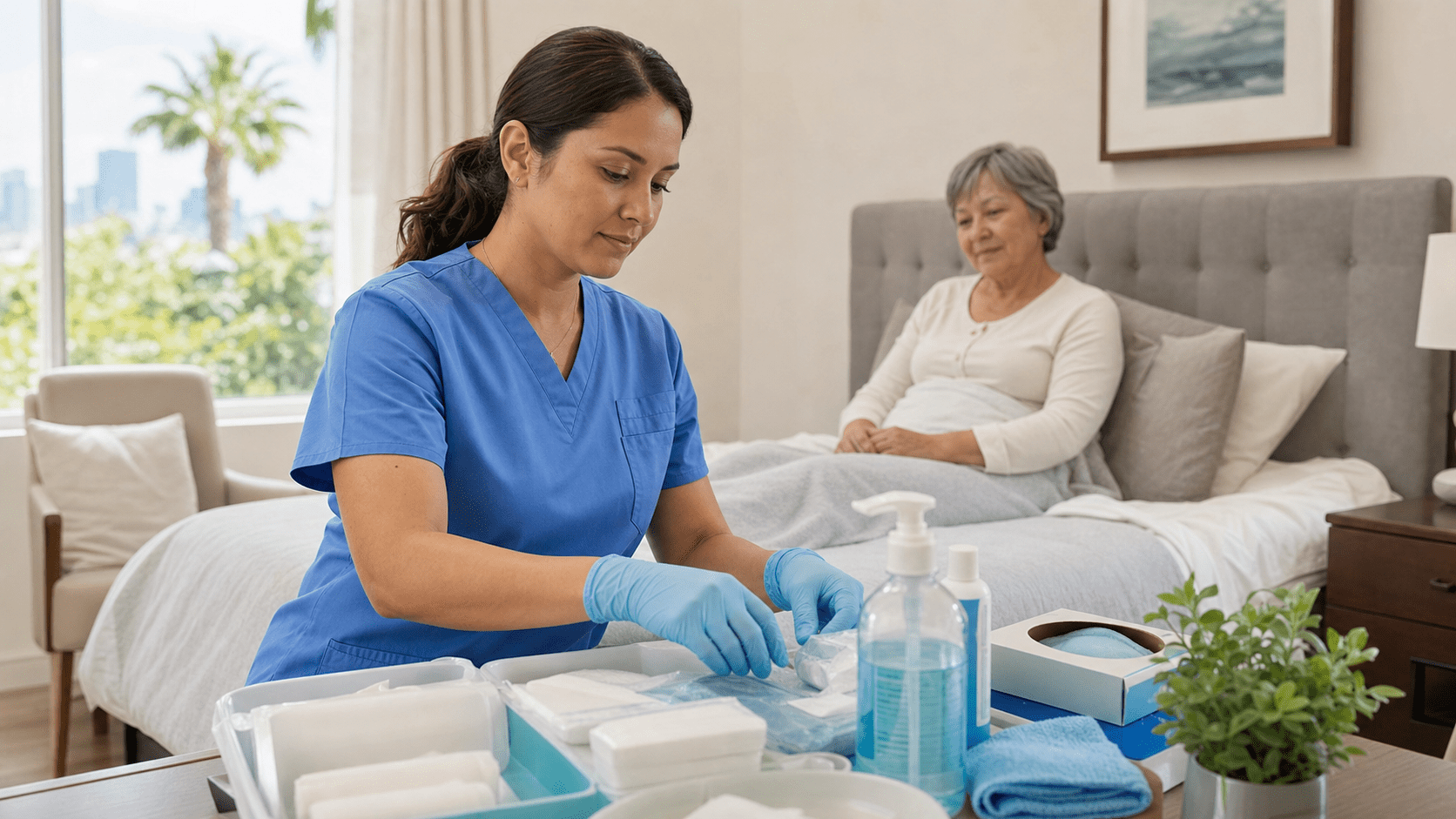
Infection Prevention at Home for Patients With Wounds
Infection Prevention at Home helps patients and families lower the risk of wound complications while care continues in the familiar setting of home. A wound may look stable one day and show early warning signs the next, especially after surgery, during recovery from an ulcer, or when a patient has diabetes, poor circulation, limited mobility, or a weaker immune system. Clean technique, consistent dressing routines, and careful observation can make a meaningful difference.
HarvardCare Home Health provides skilled nursing support for patients in Los Angeles County who need professional help keeping wounds clean, protected, and monitored. Our nurses do not treat infection prevention as a single task. They look at the wound, the dressing plan, drainage, skin condition, hand hygiene, supplies, caregiver confidence, nutrition, mobility, and whether symptoms should be reported to the physician. The goal is to help patients heal safely at home while reducing avoidable setbacks.
Who May Need Infection Prevention at Home?
This service may help patients who have a surgical incision, chronic wound, diabetic foot concern, pressure injury risk, venous leg ulcer, traumatic skin injury, or wound that requires regular dressing changes. It can also support people who recently left the hospital or skilled nursing facility and now need a safer home routine. Patients who live alone, rely on family caregivers, or have trouble reaching clinic appointments may benefit from having a skilled nurse come to the home.
Infection prevention is especially important when a wound has drainage, when a dressing must remain clean, when supplies are difficult to organize, or when the patient has medical conditions that slow healing. Diabetes, vascular disease, swelling, poor nutrition, smoking history, and limited movement can all raise risk. A home health nurse helps identify those risks early and teaches practical steps that fit the patient home environment.
What This Service Includes
During infection prevention visits, the nurse reviews the physician orders, evaluates the wound and surrounding skin, and follows the prescribed dressing plan. Care may include hand hygiene, sterile or clean dressing setup as ordered, safe removal and disposal of used dressings, assessment of drainage, odor, redness, swelling, warmth, pain, and changes in wound appearance. The nurse documents findings and communicates concerns when symptoms suggest that the care plan should be reviewed.
The service also includes education. Patients and caregivers learn how to keep supplies clean, when to wash hands, how to protect the dressing during bathing, what drainage changes may mean, and why skipped dressing changes can increase risk. The nurse may help organize supplies in a consistent location, review safe storage, and explain which symptoms require a same-day call. Education is kept patient-friendly because infection prevention only works when the routine is realistic.
When Infection Prevention May Be Needed
A patient may need this service after a hospital stay, after wound debridement, after surgery, during treatment for a chronic ulcer, or when a wound has a history of becoming infected. It may also be appropriate when a caregiver is overwhelmed by wound instructions or when the patient cannot safely inspect the area. Even a small wound can become serious if bacteria spread into deeper tissue, so early monitoring and clean technique matter.
Common warning signs include increased redness, warmth, swelling, worsening pain, new or heavier drainage, cloudy drainage, odor, fever, chills, or a wound that suddenly looks worse. These signs do not always mean there is an infection, but they should not be ignored. A home health nurse can help decide when to contact the physician, when urgent evaluation may be needed, and how to keep the wound protected while next steps are arranged.
What Families Can Expect During Visits
A home health nurse arrives with a clear plan for the visit. The nurse confirms the orders, checks the patient, prepares a clean work area, performs the ordered care, documents findings, and reviews instructions before leaving. This structure helps families understand what happened and what to watch for until the next visit. It also reduces the chance that important details are lost between the patient, caregiver, physician, and home health team.
The nurse can also identify practical home issues that increase infection risk. Pets, crowded supply areas, unclear disposal routines, moisture around the dressing, or confusion about hand hygiene can all interfere with safe wound care. Small changes in the home setup often make the plan easier to follow. The goal is not to make the home feel like a clinic, but to create a clean, organized routine that protects the wound.
How HarvardCare Home Health Helps
HarvardCare Home Health coordinates wound-related nursing care around the physician orders and the patient home needs. Our nurses bring a calm, organized approach to each visit. They check the wound, reinforce clean technique, and help families understand what they are seeing. If a change is concerning, the nurse can notify the physician and help the patient avoid delays in care.
Infection prevention may connect with wound dressing changes at home, infected wound care at home, in-home wound care services, or non-healing wound care at home. When wounds are slow to improve, these services can work together under the physician plan.
Medicare and Home Health Eligibility
Infection prevention support may be part of Medicare-covered home health when the patient meets eligibility requirements, has a physician order, is considered homebound under Medicare rules, and needs intermittent skilled nursing care. Coverage depends on the patient clinical situation, physician orders, and payer requirements. HarvardCare Home Health can help families understand the referral process and what information may be needed to check eligibility.
This service should not replace emergency care. If a patient has fever, confusion, spreading redness, severe pain, black tissue, or symptoms that feel urgent, the family should call the physician, seek urgent care, or call emergency services as appropriate. Home health nursing is designed to support safe care at home, but severe infection signs need prompt medical evaluation.
Frequently Asked Questions and Next Steps
The FAQ section for this service answers common questions about wound infection warning signs, physician orders, visit frequency, caregiver involvement, and Medicare home health eligibility. These answers are general education and should be used together with the patient specific instructions from the physician and home health nurse. Families should always follow the ordered plan and ask for clarification when instructions are unclear.
Patients who need infection prevention may also benefit from post-surgical wound care at home, pressure ulcer care at home, or a home health nurse visit. To ask about care, use the Contact page or Secure Intake.
FAQs
Do you have questions?
Got questions about Infection Prevention at Home? Here are answers to what patients and families ask most.
It may help patients with wounds, risk factors, limited mobility, recent hospital discharge, diabetes, circulation concerns, or caregivers who need skilled guidance at home.
Home health services generally require physician orders. HarvardCare Home Health can help explain what referral information may be needed.
It may be covered as part of home health when Medicare requirements are met, the patient is homebound, and a physician orders intermittent skilled nursing care.
Visit frequency depends on the wound, physician orders, drainage, risk level, and how much skilled care is needed. The plan may change as healing progresses.
Report fever, spreading redness, warmth, swelling, odor, pus-like drainage, worsening pain, black tissue, or a wound that suddenly looks worse.
Yes. Nurses teach practical steps such as protecting the dressing, watching for changes, keeping supplies clean, and knowing when to call for help.
No. Severe symptoms, rapid worsening, confusion, fever, or suspected serious infection should be handled with urgent medical guidance or emergency care.
Have medication lists, discharge paperwork, wound care orders, dressing supplies, insurance information, and physician contact details available if possible.
Contact HarvardCare Home Health or submit secure intake information so the team can review the situation and explain next steps for referral and eligibility review.
TESTIMONIALS
What Our Patients & Families Say
EXCELLENT
AREAS WE SERVE
Infection Prevention at Home Near You
Our licensed healthcare professionals provide expert care in the comfort of your home. We proudly serve patients and families throughout Los Angeles County.
Serving 97 cities across LA County
- A
- Agoura Hills
- Alhambra
- Altadena
- Arcadia
- B
- Bel Air
- Bellflower
- Beverly Hills
- Boyle Heights
- Brentwood
- Burbank
- C
- Calabasas
- Carson
- Century City
- Cerritos
- Claremont
- Compton
- Covina
- Culver City
- D
- Diamond Bar
- Downey
- E
- Eagle Rock
- East Los Angeles
- Echo Park
- Encino
- G
- Gardena
- Glendale
- Glendora
- Granada Hills
- H
- Hacienda Heights
- Hancock Park
- Harbor City
- Hawthorne
- Highland Park
- Hollywood
- Hollywood Hills
- I
- Inglewood
- K
- Koreatown
- L
- La Crescenta-Montrose
- La Mirada
- Lakewood
- Lincoln Heights
- Long Beach
- Los Angeles
- Los Feliz
- M
- Malibu
- Manhattan Beach
- Mar Vista
- Marina del Rey
- Mid-City
- Mid-Wilshire
- Miracle Mile
- Monrovia
- Montebello
- Monterey Park
- N
- North Hollywood
- Northridge
- Norwalk
- P
- Pacific Palisades
- Palms
- Palos Verdes Estates
- Palos Verdes Peninsula
- Panorama City
- Pasadena
- Pico Rivera
- Playa Vista
- Pomona
- Porter Ranch
- R
- Rancho Palos Verdes
- Redondo Beach
- Reseda
- Rolling Hills Estates
- Rowland Heights
- S
- San Dimas
- San Gabriel
- San Marino
- San Pedro
- Santa Clarita
- Santa Monica
- Sawtelle
- Sherman Oaks
- Silver Lake
- South Gate
- South Pasadena
- Studio City
- T
- Tarzana
- Torrance
- V
- Van Nuys
- Venice
- W
- West Covina
- West Hollywood
- West Los Angeles
- Westchester
- Westlake Village
- Westwood
- Whittier
- Wilmington
- Woodland Hills
More Services

In-Home Wound Care Services
- Board-certified wound care nurses
- Personalized treatment plans
- All wound types treated
Diabetic Wound Care at Home
- Diabetes wound specialists
- Blood sugar optimization support
- Advanced offloading techniques
Skilled Nursing Care at Home
- Registered nurses available 7 days a week
- Comprehensive care coordination
- IV therapy and infusion services