
 Wound Care
It is aide support with assigned grooming and hygiene routines such as hair care, oral hygiene reminders, face washing, and shaving setup when included in the care plan.
HOME HEALTH AIDE
Grooming Assistance at Home
Grooming assistance at home may help with hair care, oral hygiene reminders, shaving setup, and daily appearance routines under a care plan.
EXCELLENT 


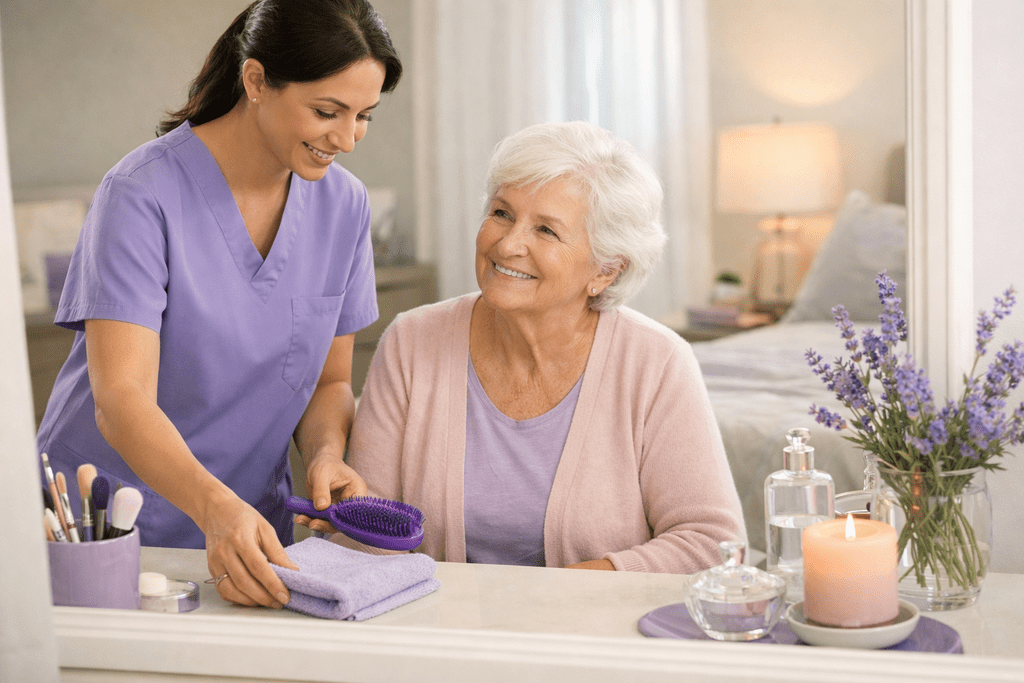
Grooming may seem like a small part of care, but it affects comfort, confidence, skin health, oral hygiene, and the way a patient feels around family or visitors. When an older adult or medically fragile patient stops brushing hair, shaving, washing the face, caring for the mouth, or keeping up with appearance routines, families often sense that something has changed. The patient may be tired, depressed, weak, in pain, afraid of standing at the sink, or unsure of the sequence.
HarvardCare Home Health provides grooming assistance at home when home health aide support is appropriate under an eligible care plan. Aide support may help the patient maintain daily routines without losing dignity. It is focused personal care support, not unlimited private caregiver service, and it must fit the provider order, home health plan, and eligibility review.
Grooming support can also help the clinical team notice changes. A home health aide may observe new fatigue, confusion, mouth discomfort, skin irritation, swelling, bruising, or difficulty using one hand. Those observations can be reported to the supervising team so nurses or therapists can respond when needed.
Why grooming matters for comfort and confidence
Daily appearance routines are connected to identity. A patient who has always cared about being clean-shaven, having hair combed, or wearing clean clothing may feel unlike themselves when grooming becomes difficult. Families may notice a decline in confidence before they understand the physical reason behind it.
Grooming also has practical health value. Oral hygiene supports comfort and can help families notice mouth pain or poor intake. Hair and skin routines may reveal dryness, redness, bruising, swelling, or discomfort. Face washing, hand hygiene, and clean clothing support general comfort and dignity.
Patients may need grooming assistance because of:
- Weakness or fatigue that makes standing at the sink difficult.
- Shoulder, hand, or arm limitations after stroke, injury, arthritis, or surgery.
- Cognitive changes that make sequencing harder.
- Shortness of breath during morning routines.
- Poor balance while reaching for grooming items.
- Depression, low motivation, or embarrassment after illness.
Grooming assistance gives the patient structured support without turning the routine into a struggle.
Examples of grooming assistance
A home health aide may help with grooming tasks assigned under the care plan. The exact support depends on the patient’s needs, safety, and scope of service. The aide’s role is to support comfort and hygiene while encouraging the patient to participate as much as safely possible.
Examples may include:
- Helping the patient gather grooming supplies before the routine begins.
- Assisting with hair brushing, basic hair care, or arranging supplies.
- Providing reminders or setup for oral hygiene.
- Helping with face washing, hand hygiene, and comfort routines.
- Supporting shaving setup or safe electric razor use when appropriate.
- Watching for skin, mouth, nail, or comfort concerns that should be reported.
The aide does not provide skilled dental care, medical skin treatment, wound care, or nail procedures outside scope. If a concern appears medical, the aide reports it to the home health team. A nurse may need to follow up, or the family may need to contact the provider.
How aide support may notice changes
Grooming routines bring the aide close enough to observe details that may otherwise be missed. A patient may not mention mouth pain, dizziness, or skin irritation. They may hide fatigue or avoid grooming because it takes too much effort. Aide support can reveal these patterns in a practical way.
Concerns that may be reported include:
- New shortness of breath or dizziness while sitting or standing at the sink.
- Confusion about familiar grooming steps.
- Reduced use of one arm or hand.
- Redness, bruising, swelling, skin breakdown, or unusual discomfort.
- Signs that oral care is painful or being skipped.
- A sudden decline in motivation or participation.
This reporting does not replace a skilled assessment, but it helps the team know when the patient may need a nurse, therapist, or provider follow-up.
Caregiver relief and a steadier routine
Families often try to handle grooming support quickly before work, appointments, or meals. That pressure can lead to frustration for both the patient and caregiver. The patient may feel corrected or rushed. The family may feel guilty for pushing too hard or worried they are missing something important.
Grooming assistance can make routines more predictable. The aide may help set up supplies, encourage rest breaks, keep the patient seated when appropriate, and use a calm approach. Families can still support the patient between visits, but they are not alone in managing a sensitive daily routine.
When grooming is tied to a larger functional problem, related services may help. ADL Training at Home may help with daily activity skills. Dressing Training at Home may support morning routines. In-Home Occupational Therapy may address arm, hand, cognitive, or safety barriers that make grooming hard.
Home health eligibility and aide scope
Grooming assistance may be part of a Medicare home health plan when ordered and approved as part of eligible care. Common eligibility elements include a provider order, skilled need, homebound status, a plan of care, and agency review. Coverage, frequency, and duration are not guaranteed.
It is important to understand scope. Home health aide support may help with assigned personal care tasks, but it is not a substitute for skilled nursing, occupational therapy, dental care, barber services, or unlimited custodial assistance. HarvardCare Home Health can explain what may fit within home health and what may require outside resources.
Why choose HarvardCare Home Health
Grooming support works best when it is respectful and observant. HarvardCare Home Health understands that helping someone brush hair or complete oral hygiene is not just a checklist item. It affects dignity, trust, and the patient’s willingness to accept care.
Our team focuses on care-plan coordination, privacy, and practical reporting. We help families understand what the aide may do, when skilled clinicians may need to be involved, and how to request help without overpromising coverage or visit frequency.
Families can support grooming success by keeping supplies simple and consistent. A labeled basket, seated setup, clean towels, and enough time can reduce stress. If the patient becomes frustrated, the aide can slow the routine, offer choices, and report patterns that may suggest pain, fatigue, depression, or cognitive change.
Related support at home
Grooming assistance may be helpful alongside Home Health Aide Services, Personal Care Assistance at Home, Dressing Training at Home, Caregiver Training at Home, or skilled nursing when clinical concerns are present.
Request grooming help at home
If grooming, hygiene, or appearance routines have become difficult, complete the form on this page or call HarvardCare Home Health. The agency can review the patient’s needs and discuss whether grooming assistance may be appropriate within an eligible home health plan.
FAQs
Do you have questions?
Got questions about Grooming Assistance at Home? Here are answers to what patients and families ask most.
An aide may provide reminders or setup for oral hygiene when appropriate. Dental or medical concerns should be addressed by the proper provider.
Aides must work within scope. Medical skin care, wound care, and certain nail care needs may require nursing or provider guidance.
Grooming supports comfort, dignity, confidence, hygiene, and observation of changes that may need clinical follow-up.
It may be included when ordered and approved as part of eligible home health care. Coverage is not guaranteed.
Occupational therapy may help address arm, hand, or daily activity limitations while aide support helps with assigned personal care.
Yes. Aides can report concerns such as fatigue, confusion, skin changes, mouth discomfort, or new difficulty with routines.
Yes. The goal is to protect dignity, explain care, and encourage safe participation.
Yes. Families can support routines and should report changes or concerns to the home health team.
Complete the form on this page or call HarvardCare Home Health to discuss needs and eligibility review.
TESTIMONIALS
What Our Patients & Families Say
AREAS WE SERVE
Grooming Assistance at Home Near You
Our licensed healthcare professionals provide expert care in the comfort of your home. We proudly serve patients and families throughout Los Angeles County.
Serving 279 cities across LA County
- A
- Acton
- Adams-Normandie
- Agoura Hills
- Agua Dulce
- Alhambra
- Alondra Park
- Altadena
- Angelino Heights
- Arcadia
- Arleta
- Arlington Heights
- Artesia
- Arts District
- Atwater Village
- Avocado Heights
- Azusa
- B
- Baldwin Hills
- Baldwin Park
- Bassett
- Beachwood Canyon
- Bel Air
- Bell
- Bell Gardens
- Bellflower
- Beverly Crest
- Beverly Grove
- Beverly Hills
- Beverlywood
- Boyle Heights
- Bradbury
- Brentwood
- Broadway-Manchester
- Burbank
- C
- Calabasas
- Canoga Park
- Canyon Country
- Carson
- Carthay
- Castaic
- Castle Heights
- Central-Alameda
- Century City
- Cerritos
- Charter Oak
- Chatsworth
- Chesterfield Square
- Cheviot Hills
- Chinatown
- Citrus
- City Terrace
- Claremont
- Commerce
- Compton
- Country Club Park
- Covina
- Crenshaw
- Cudahy
- Culver City
- Cypress Park
- D
- Del Aire
- Del Rey
- Desert View Highlands
- Diamond Bar
- Downey
- Downtown Los Angeles
- Duarte
- E
- Eagle Rock
- East Hollywood
- East Los Angeles
- East Pasadena
- East Rancho Dominguez
- East San Gabriel
- East Whittier
- Echo Park
- El Camino Village
- El Monte
- El Segundo
- El Sereno
- Elysian Valley
- Encino
- Exposition Park
- F
- Fairfax
- Florence
- Florence-Firestone
- G
- Gardena
- Garvanza
- Glassell Park
- Glendale
- Glendora
- Gramercy Park
- Granada Hills
- Green Meadows
- H
- Hacienda Heights
- Hancock Park
- Harbor City
- Harbor Gateway
- Harvard Heights
- Harvard Park
- Hasley Canyon
- Hawaiian Gardens
- Hawthorne
- Hermon
- Hermosa Beach
- Hidden Hills
- Highland Park
- Historic Filipinotown
- Hollywood
- Hollywood Hills
- Holmby Hills
- Huntington Park
- Hyde Park
- I
- Inglewood
- J
- Jefferson Park
- K
- Kinneloa Mesa
- Koreatown
- L
- La Cañada Flintridge
- La Crescenta-Montrose
- La Habra Heights
- La Mirada
- La Puente
- La Verne
- Ladera Heights
- Lake Balboa
- Lake Hughes
- Lake Los Angeles
- Lake View Terrace
- Lakewood
- Lancaster
- Larchmont
- Lawndale
- Leimert Park
- Lennox
- Leona Valley
- Lincoln Heights
- Little Armenia
- Little Tokyo
- Littlerock
- Lomita
- Long Beach
- Los Angeles
- Los Feliz
- Lynwood
- M
- Malibu
- Manchester Square
- Manhattan Beach
- Mar Vista
- Marina del Rey
- Mayflower Village
- Maywood
- Mid-City
- Mid-Wilshire
- Miracle Mile
- Mission Hills
- Monrovia
- Montebello
- Montecito Heights
- Monterey Park
- Mt Washington
- N
- Newhall
- NoHo Arts District
- North El Monte
- North Hills
- North Hollywood
- North Long Beach
- Northridge
- Norwalk
- P
- Pacific Palisades
- Pacoima
- Palmdale
- Palms
- Palos Verdes Estates
- Palos Verdes Peninsula
- Panorama City
- Paramount
- Park La Brea
- Pasadena
- Pearblossom
- Pico Rivera
- Pico-Robertson
- Pico-Union
- Playa del Rey
- Playa Vista
- Pomona
- Porter Ranch
- Q
- Quartz Hill
- R
- Rancho Dominguez
- Rancho Palos Verdes
- Rancho Park
- Redondo Beach
- Reseda
- Rolling Hills
- Rolling Hills Estates
- Rosemead
- Rowland Heights
- S
- San Dimas
- San Fernando
- San Gabriel
- San Marino
- San Pasqual
- San Pedro
- Santa Clarita
- Santa Fe Springs
- Santa Monica
- Saugus
- Sawtelle
- Sepulveda
- Shadow Hills
- Sherman Oaks
- Sherman Village
- Sherwood Forest
- Sierra Madre
- Signal Hill
- Silver Lake
- South Central
- South El Monte
- South Gate
- South Park
- South Pasadena
- South San Gabriel
- South San Jose Hills
- South Whittier
- Stevenson Ranch
- Stonehurst
- Studio City
- Sun Valley
- Sun Village
- Sunland
- Sunset Park
- Sylmar
- T
- Tarzana
- Temple City
- Thai Town
- Toluca Lake
- Topanga
- Torrance
- Tujunga
- U
- University Hills
- University Park
- V
- Val Verde
- Valencia
- Valinda
- Valley Glen
- Valley Village
- Van Nuys
- Venice
- Vermont Knolls
- Vermont Square
- Vermont Vista
- Vermont-Slauson
- Victor Heights
- View Park-Windsor Hills
- Vincent
- W
- Walnut
- Walnut Park
- Watts
- West Adams
- West Athens
- West Carson
- West Covina
- West Hills
- West Hollywood
- West Los Angeles
- West Puente Valley
- West Rancho Dominguez
- West Whittier-Los Nietos
- Westchester
- Westlake
- Westlake Village
- Westmont
- Westwood
- Westwood Village
- Whitley Heights
- Whittier
- Willowbrook
- Wilmington
- Wilshire Center
- Windsor Square
- Winnetka
- Woodland Hills
More Services

In-Home Wound Care Services
- Board-certified wound care nurses
- Personalized treatment plans
- All wound types treated
Diabetic Wound Care at Home
- Diabetes wound specialists
- Blood sugar optimization support
- Advanced offloading techniques
Skilled Nursing Care at Home
- Registered nurses available 7 days a week
- Comprehensive care coordination
- IV therapy and infusion services