 HarvardCare at Home
  HarvardCare at Home
  Wound Care
 Skilled Nursing Care
 Physical Therapy
 Occupational Therapy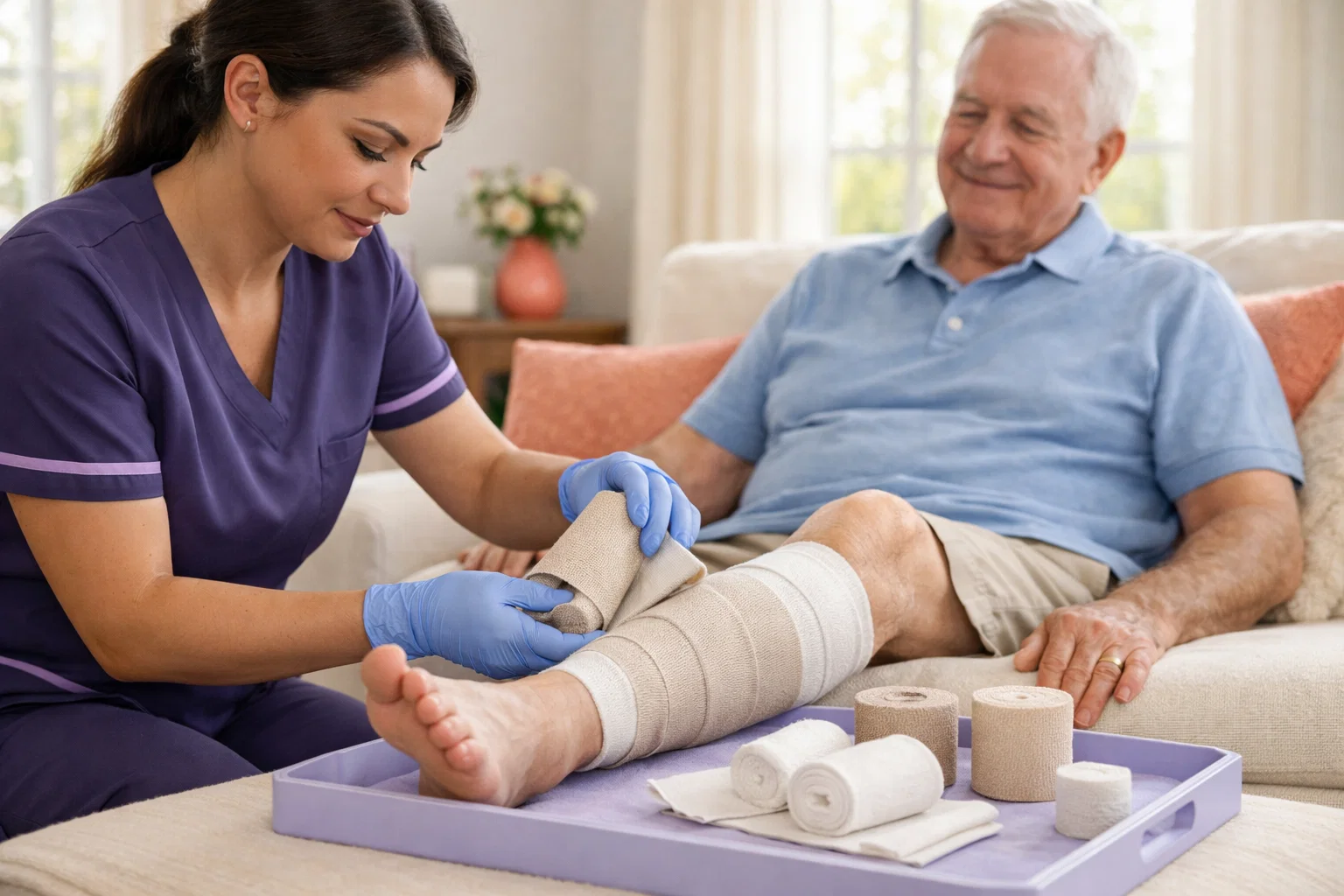

The Challenge of Venous Leg Ulcers
Venous leg ulcers represent one of the most common and challenging chronic wound types, affecting an estimated one percent of the adult population at some point during their lives. These painful, slow-healing wounds occur on the lower legs when damaged veins fail to return blood efficiently to the heart, creating conditions that break down skin and impair healing.
Unlike simple wounds that heal readily with basic care, venous ulcers require specialized treatment addressing the underlying circulatory problem. Without proper management targeting the root cause, these wounds persist for months or years and frequently recur even after healing. Understanding why venous ulcers require specialized approaches helps patients seek appropriate care and commit to treatment plans that achieve lasting results.
The combination of proper wound care and venous disease management offers the best chance for healing and preventing the recurrence that makes venous ulcers so frustrating for patients and clinicians alike.
Understanding Venous Insufficiency
Venous leg ulcers result from chronic venous insufficiency, a condition where leg veins cannot effectively return blood to the heart. Understanding this underlying problem explains why specialized treatment is necessary.
How Healthy Veins Work
Veins carry deoxygenated blood from tissues back to the heart. In the legs, blood must travel against gravity to reach the heart. Healthy veins accomplish this through a combination of muscle pumps and one-way valves.
When calf muscles contract during walking, they squeeze veins and push blood upward. Valves within the veins prevent blood from flowing backward between muscle contractions. This system efficiently returns blood to the heart despite the gravitational challenge.
When Veins Fail
Damage to vein valves or vein walls disrupts the normal return of blood. When valves become incompetent, blood flows backward and pools in lower leg veins. This condition, chronic venous insufficiency, creates sustained high pressure in the leg veins and surrounding tissues.
Causes of venous insufficiency include previous deep vein thrombosis (blood clots), varicose veins, obesity, prolonged standing occupations, multiple pregnancies, and genetic factors affecting vein structure. Often, multiple factors combine to produce venous insufficiency.
How Venous Insufficiency Causes Ulcers
The elevated venous pressure from insufficiency causes a cascade of tissue damage. High pressure in veins transmits to capillaries, causing fluid and proteins to leak into surrounding tissue. This leads to swelling, skin changes, and eventually tissue breakdown.
Chronic inflammation damages skin and subcutaneous tissue. Hemosiderin, an iron-containing pigment from leaked red blood cells, deposits in tissue causing characteristic brown discoloration. The skin becomes thickened, hardened, and fragile.
Eventually, the compromised tissue breaks down, forming an ulcer. Once an ulcer develops, the same venous hypertension that caused it also prevents healing. Without addressing the underlying venous problem, wounds cannot heal properly.
Recognizing Venous Leg Ulcers
Venous ulcers have distinctive characteristics that differentiate them from other wound types. Recognition of these features guides appropriate treatment selection.
Location
Venous ulcers typically occur on the lower leg between the ankle and mid-calf, most commonly on the inner (medial) aspect of the ankle. This location corresponds to areas of highest venous pressure and poorest tissue health in venous insufficiency.
Wound Appearance
Venous ulcers characteristically have irregular, sloping edges rather than the punched-out appearance of arterial ulcers. The wound bed typically contains red granulation tissue when healthy, though yellow fibrous tissue may be present.
Drainage tends to be moderate to heavy, often requiring absorbent dressings. The drainage is typically serous or serosanguinous unless infection is present.
Surrounding Skin Changes
The skin around venous ulcers shows characteristic changes reflecting chronic venous insufficiency.
- Hemosiderin staining causing brown or bronze discoloration
- Lipodermatosclerosis producing hardened, woody-feeling skin
- Atrophie blanche appearing as white, scarred areas
- Edema ranging from mild to severe
- Varicose veins often visible on the affected leg
- Eczematous changes with itchy, flaky skin
Associated Symptoms
Patients with venous ulcers often experience leg aching or heaviness that worsens with prolonged standing and improves with elevation. Swelling typically increases throughout the day. The ulcer itself may be painful, particularly when infected or when dressings adhere to the wound.
Why Standard Wound Care Is Not Enough
Treating venous ulcers like simple wounds leads to frustration and failure. Standard wound care addresses the wound itself but not the underlying venous disease driving tissue breakdown.
The Persistent Problem
Applying dressings to a venous ulcer without addressing venous hypertension is like mopping up water without fixing the leaking pipe. The underlying problem continues causing damage regardless of wound care quality.
Wounds may show some improvement with good basic care, only to stall before healing or break down repeatedly. Without compression therapy addressing venous pressure, true healing cannot occur.
High Recurrence Rates
Even when venous ulcers heal with basic care alone, recurrence rates are extremely high. Studies show recurrence rates of 70 percent or more within three years when underlying venous disease is not addressed.
Patients experience cycles of wound development, prolonged treatment, eventual healing, and subsequent recurrence. This pattern continues until appropriate venous management is implemented.
The Foundation of Treatment: Compression Therapy
Compression therapy forms the cornerstone of venous ulcer treatment. Without adequate compression, other interventions cannot succeed. This requirement for compression exemplifies why specialized treatment is essential.
How Compression Works
External compression applied to the leg counteracts the elevated venous pressure causing tissue damage. Compression reduces the diameter of leg veins, improving valve function and blood flow back to the heart.
By reducing venous hypertension, compression decreases fluid leakage into tissues, reduces swelling, improves oxygen delivery, and creates conditions that allow wound healing to proceed.
Compression Methods
Several compression systems can effectively treat venous ulcers, each with advantages for different situations.
Compression Bandaging
Multi-layer compression bandages applied by trained clinicians provide sustained therapeutic compression. Various bandaging systems use combinations of padding, elastic, and inelastic components to achieve appropriate pressure levels.
Bandaging is typically changed one to three times weekly, depending on wound drainage and bandage type. Proper application technique is critical for effectiveness and safety.
Compression Stockings
Graduated compression stockings provide compression that is highest at the ankle and decreases toward the knee. Stockings are easier to apply than bandages and can be managed by patients independently.
Stockings are particularly important for preventing recurrence after ulcer healing. Long-term use of compression stockings significantly reduces the risk of new ulcer development.
Compression Wraps
Adjustable compression wraps offer an intermediate option between bandages and stockings. These devices can be adjusted by patients and caregivers, providing flexibility while maintaining compression.
Contraindications
Compression is not appropriate for all patients with leg wounds. Significant arterial disease contraindicates compression because reducing already compromised blood flow can cause tissue death.
Proper assessment including ankle-brachial index testing identifies patients who cannot safely receive full compression. Modified compression protocols may be appropriate for some patients with mixed arterial and venous disease.
Comprehensive Specialized Treatment
Effective venous ulcer management combines compression with wound care strategies tailored to venous ulcer characteristics.
Wound Bed Preparation
Creating an optimal wound environment accelerates healing. Debridement removes dead tissue and debris that impede healing. Maintaining appropriate moisture balance promotes cell migration and tissue formation.
Dressing Selection
Venous ulcers typically produce significant drainage, requiring absorbent dressings. Foam dressings, alginates, and hydrofiber dressings manage fluid while maintaining the moist environment wounds need.
Dressing changes must accommodate compression bandaging schedules. Selection considers absorption needs, wear time, and compatibility with compression systems.
Infection Management
While bacterial colonization is common in venous ulcers, clinical infection requires treatment. Signs of infection include increased pain, purulent drainage, surrounding cellulitis, and wound deterioration.
Topical antimicrobials may manage bacterial burden, while systemic antibiotics treat established infection. Compression typically continues during infection treatment unless cellulitis extends above the compression area.
Edema Management
Reducing leg edema supports healing by improving tissue perfusion and reducing skin fragility. Elevation when resting, compression therapy, and sometimes diuretic medications contribute to edema control.
Patients should elevate legs above heart level when sitting or lying down. Regular walking activates calf muscle pumps that assist venous return.
Skin Care
The damaged skin surrounding venous ulcers requires careful attention. Moisturizers protect fragile skin from cracking. Treatment of venous eczema reduces itching and inflammation. Protection from trauma prevents new wounds.
The Role of Professional Wound Care
Venous ulcer management requires knowledge and skills beyond basic wound care. Professional wound care services provide the specialized expertise these challenging wounds demand.
Assessment Expertise
Accurate diagnosis guides appropriate treatment. Professionals differentiate venous ulcers from arterial, diabetic, or other wound types requiring different approaches. They identify contraindications to compression and recognize complications requiring intervention.
Compression Application
Proper compression bandaging requires training and practice. Inadequate compression fails to address venous hypertension while excessive pressure causes tissue damage. Professional application ensures therapeutic compression safely delivered.
Treatment Coordination
Complex cases may benefit from vascular surgery consultation, dermatology input, or other specialty involvement. Wound care professionals coordinate this multidisciplinary approach.
Patient Education
Long-term management and recurrence prevention depend on patient understanding and engagement. Professional wound care includes education about venous disease, compression importance, lifestyle modifications, and warning signs requiring attention.
Preventing Recurrence
Healing a venous ulcer is only half the battle. Without ongoing management, recurrence is highly likely. Prevention strategies must continue indefinitely.
Compression Maintenance
Wearing compression stockings consistently after ulcer healing significantly reduces recurrence risk. Stockings should be replaced every three to six months as compression decreases with wear.
Lifestyle Modifications
Regular walking promotes venous return through calf muscle activation. Avoiding prolonged standing or sitting reduces venous pressure. Weight management decreases strain on the venous system.
Leg Elevation
Elevating legs above heart level when resting helps drain excess fluid and reduces venous pressure. This simple measure supports venous function throughout life.
Skin Monitoring
Regular inspection of legs for skin changes or early breakdown allows prompt intervention before ulcers develop fully. Early treatment of any skin changes prevents progression to ulceration.
Prompt Attention to New Wounds
If new wounds develop despite preventive measures, seeking immediate professional care optimizes healing chances and minimizes wound duration.
Seeking Specialized Care
If you have a leg wound that is not healing, particularly if you have signs of venous insufficiency like swelling, skin discoloration, or varicose veins, seek specialized wound care evaluation.
Home health skilled nursing can provide professional venous ulcer treatment in your home, including compression therapy, appropriate wound care, and ongoing monitoring. This specialized approach offers the best chance for healing and preventing the recurrence that makes venous ulcers so challenging.
Do not accept that slow-healing leg wounds are just something to live with. Specialized treatment targeting the underlying cause can heal wounds that have persisted for months or years and prevent them from returning.


