 HarvardCare at Home
 Wound Care
 Skilled Nursing Care
 Physical Therapy
 Occupational Therapy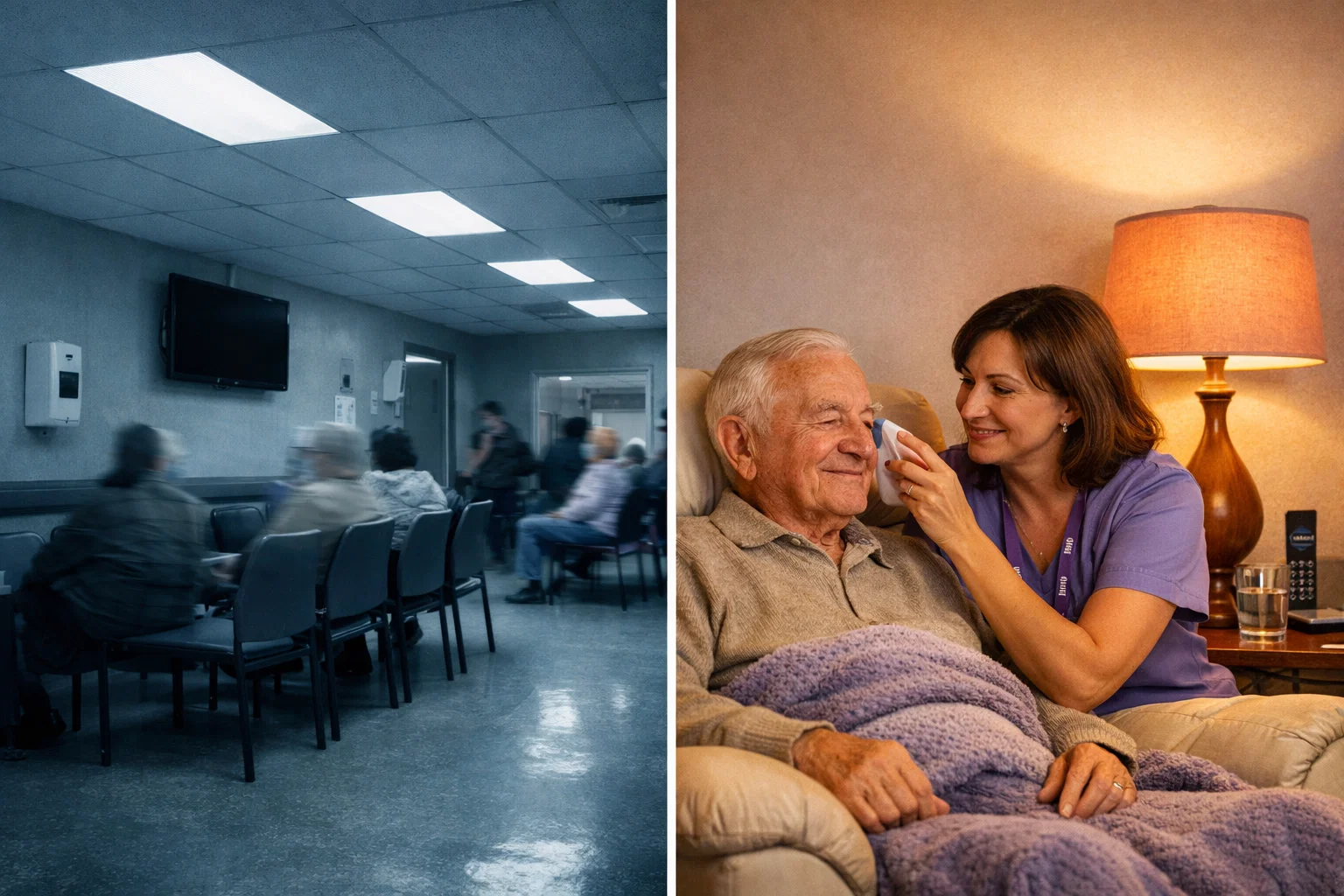

When you’re recovering at home after surgery, managing a chronic wound, or dealing with a complex medical condition, unexpected symptoms can trigger a difficult question: is this an emergency, or can my home health nurse handle it? Making the wrong call in either direction has consequences — going to the ER unnecessarily exposes you to long wait times, infection risk, and stress, while staying home when you should seek emergency care can be dangerous.
This guide helps you and your family distinguish between situations that require emergency care and situations where your home health nurse is the right first call. Print this out and keep it somewhere accessible — having a clear framework reduces panic and helps you act decisively when something goes wrong.
Call 911 or Go to the ER Immediately
Certain symptoms are always emergencies, regardless of your underlying condition. Do not wait to call your home health nurse in these situations — call 911 or go to the nearest emergency room.
Chest pain or pressure that doesn’t resolve within a few minutes, especially if accompanied by shortness of breath, pain radiating to the arm or jaw, sweating, or nausea. These are potential signs of a heart attack.
Sudden difficulty breathing that is severe and not explained by exertion. If you have COPD or heart failure, a sudden significant worsening of your baseline breathing difficulty — not a gradual change — warrants emergency evaluation.
Signs of stroke including sudden facial drooping, arm weakness, speech difficulty, sudden severe headache, or sudden vision changes. Use the FAST method: Face drooping, Arm weakness, Speech difficulty, Time to call 911.
Uncontrolled bleeding from a wound, surgical site, or any other location that does not stop with direct pressure after 10 to 15 minutes.
Loss of consciousness or seizures.
Sudden severe pain that is new and intense — particularly abdominal pain, headache, or chest pain that came on suddenly and is unlike anything you’ve experienced.
High fever with altered mental status. A fever above 101.5°F combined with confusion, extreme drowsiness, difficulty waking, or disorientation suggests a serious infection that may require emergency treatment.
Signs of severe allergic reaction including throat swelling, difficulty swallowing, wheezing, widespread hives, or feeling faint after taking a medication or being exposed to an allergen.
Falls with suspected fracture. If you fall and cannot bear weight on a leg, have visible deformity, severe swelling, or intense localized pain, seek emergency evaluation for possible fracture. Learn about fall prevention therapy to reduce future fall risk.
Call Your Home Health Nurse First
Many concerning symptoms — while they shouldn’t be ignored — don’t require emergency care. Your home health nurse is trained to assess these situations, provide intervention, and communicate with your physician to adjust your treatment plan. Call your home health nurse or the agency’s on-call line for these situations.
Wound changes that concern you such as increased redness around a wound, new or increased drainage, mild swelling, slight odor change, or a wound that appears to have gotten larger since the last visit. These may indicate early infection or a need to change the treatment approach, but they are typically manageable by your wound care nurse during the next visit or with an expedited visit. Read our post about signs your wound is infected and what to do next for a detailed reference.
Low-grade fever of 100.4°F to 101°F without confusion or severe symptoms. Your nurse will want to know about any fever because it can indicate early infection, but a low-grade fever alone — without the severe symptoms listed in the ER section — typically warrants a nurse assessment rather than an ER visit. Your nurse may request same-day lab work or communicate with your physician for antibiotic orders.
Medication side effects such as nausea, diarrhea, constipation, mild dizziness, rash, or appetite changes after starting a new medication. These are common and usually managed by adjusting the medication — something your nurse can coordinate with your physician. Exception: severe allergic reactions (throat swelling, difficulty breathing) always require emergency care.
Increased pain at your wound or surgical site that is moderate and not accompanied by fever, spreading redness, or severe swelling. Your nurse can assess the site, determine if the treatment plan needs adjustment, and communicate with your surgeon or physician.
Catheter problems including decreased urine output, minor leaking around the catheter, or cloudy urine without fever or severe symptoms. Your catheter care nurse can troubleshoot these issues during a visit. Exception: complete inability to urinate with increasing bladder pressure, or catheter problems accompanied by high fever, require urgent evaluation.
Ostomy concerns such as changes in output consistency, minor peristomal skin irritation, or difficulty with appliance adhesion. Your ostomy care nurse can address these during a regular or expedited visit. Exception: no output for extended periods combined with nausea and cramping may indicate a bowel obstruction requiring emergency evaluation.
Blood pressure readings that are elevated or low compared to your baseline, if you are alert, oriented, and not experiencing severe symptoms. Your nurse will want to know, and may contact your physician for a medication adjustment. Exception: dangerously high blood pressure with headache, vision changes, or chest pain requires emergency care.
Blood sugar fluctuations for diabetic patients that you can manage with your existing protocol (snacks for lows, insulin for highs) but want your nurse to know about. Exception: blood sugar that doesn’t respond to your protocol, or blood sugar accompanied by confusion, vomiting, or loss of consciousness, requires emergency care.
Swelling in legs or feet that is new or has increased. This is important information for your nurse and physician — it may indicate fluid retention (relevant for heart failure patients), a medication side effect, or a need for compression therapy. Exception: sudden severe swelling in one leg accompanied by pain and warmth may indicate a blood clot (DVT) and requires urgent evaluation.
The Gray Zone: When You’re Not Sure
Sometimes a situation doesn’t clearly fit either category. You notice something different but you’re not sure if it’s serious. In these moments, use this decision framework.
Is the patient alert, oriented, and able to communicate? If no, lean toward the ER. Is the symptom rapidly worsening over minutes to hours? If yes, lean toward the ER. Can the symptom wait until the next scheduled nurse visit (usually within one to three days)? If it’s causing significant distress or you’re worried it will worsen overnight, call the nurse line for a same-day or next-day assessment. Have you seen this symptom before? If your nurse has previously told you “call us if you see X,” and you’re now seeing X, call them — they gave you that instruction for a reason.
When in doubt, call your home health agency’s phone line. Most agencies have an on-call nurse available after hours who can help you determine the right course of action over the phone. At HarvardCare at Home, you can reach our team at (323) 484-4440 during business hours.
How Home Health Reduces Unnecessary ER Visits
Research shows that patients receiving home health services have significantly lower rates of emergency room utilization and hospital readmission. This isn’t because home health patients have less serious conditions — it’s because regular monitoring by a skilled nurse catches problems early, before they escalate to emergencies.
When your nurse visits your home multiple times per week, they establish a baseline understanding of your condition. They notice subtle changes — a wound edge that’s slightly more red, a blood pressure trend that’s creeping upward, a new confusion that wasn’t present last visit — and they intervene before these become crises. This proactive approach is one of the primary ways home health care prevents hospital readmissions.
Special Considerations for Wound Care Patients
Patients receiving wound care at home face a unique set of decisions. Wounds change over the course of healing, and knowing what’s normal versus concerning saves unnecessary ER trips while ensuring real problems get addressed quickly.
Normal wound healing involves gradual size reduction, healthy pink or red granulation tissue filling the wound bed, a small amount of clear or slightly yellow drainage, and mild discomfort that responds to prescribed pain management. These are positive signs — they mean your wound is progressing, and your nurse will document them at each visit.
Concerning changes that warrant a nurse call include an increase in drainage amount or a change to green or brown color, new redness or warmth spreading outward from the wound edges beyond what was present at the last visit, increased wound size compared to the last measurement, new or worsening odor, and moderate pain increase that your current regimen doesn’t control. Your wound care nurse can typically evaluate these within 24 hours and adjust your treatment plan. Read our detailed guide on how long wounds take to heal by type for realistic healing timelines.
Emergency wound situations include heavy active bleeding that soaks through dressings and doesn’t stop with direct pressure, signs of systemic infection (high fever, chills, rapid heart rate, confusion) in combination with wound changes, exposed bone or tendon visible in the wound, and a surgical wound that opens up completely (dehiscence) exposing deeper tissue. These require emergency evaluation — do not wait for your next scheduled nurse visit.
Prepare Now, Before an Emergency Happens
The best time to think about emergency decisions is before one occurs. Take these steps now while you’re calm and clear-headed.
Save your home health agency’s phone number in your phone and post it on the refrigerator. Keep a current medication list and medical summary easily accessible — paramedics and ER doctors need this information. Know which hospital your physician is affiliated with, as this is usually the best ER to go to if you have a choice. Discuss emergency plans with your home health nurse at your next visit — ask them specifically what signs should prompt an ER visit versus a nurse call for your particular condition. Make sure your family members or caregivers know the plan.
If you’re not currently receiving home health services and want to reduce your risk of emergency situations at home, talk to your physician about starting home health care. Learn how at how to get home health care through Medicare, or contact us at (323) 484-4440 to discuss your needs.