 HarvardCare at Home
  Wound Care
 Skilled Nursing Care
 Physical Therapy
 Occupational Therapy
Wound VAC therapy, also called negative pressure wound therapy, uses controlled suction to promote wound healing. A special foam dressing is placed in the wound, covered with an airtight seal, and connected to a portable pump that applies continuous or intermittent suction. This removes excess fluid, increases blood flow, reduces swelling, and stimulates new tissue growth. VAC therapy accelerates healing for many wounds that respond poorly to conventional treatment.
WOUND CARE
Wound VAC Therapy at Home
Wound VAC therapy at home throughout Los Angeles County. Our skilled nurses provide negative pressure wound therapy including setup, dressing changes, troubleshooting, and monitoring for complex wounds requiring advanced treatment. Medicare accepted.
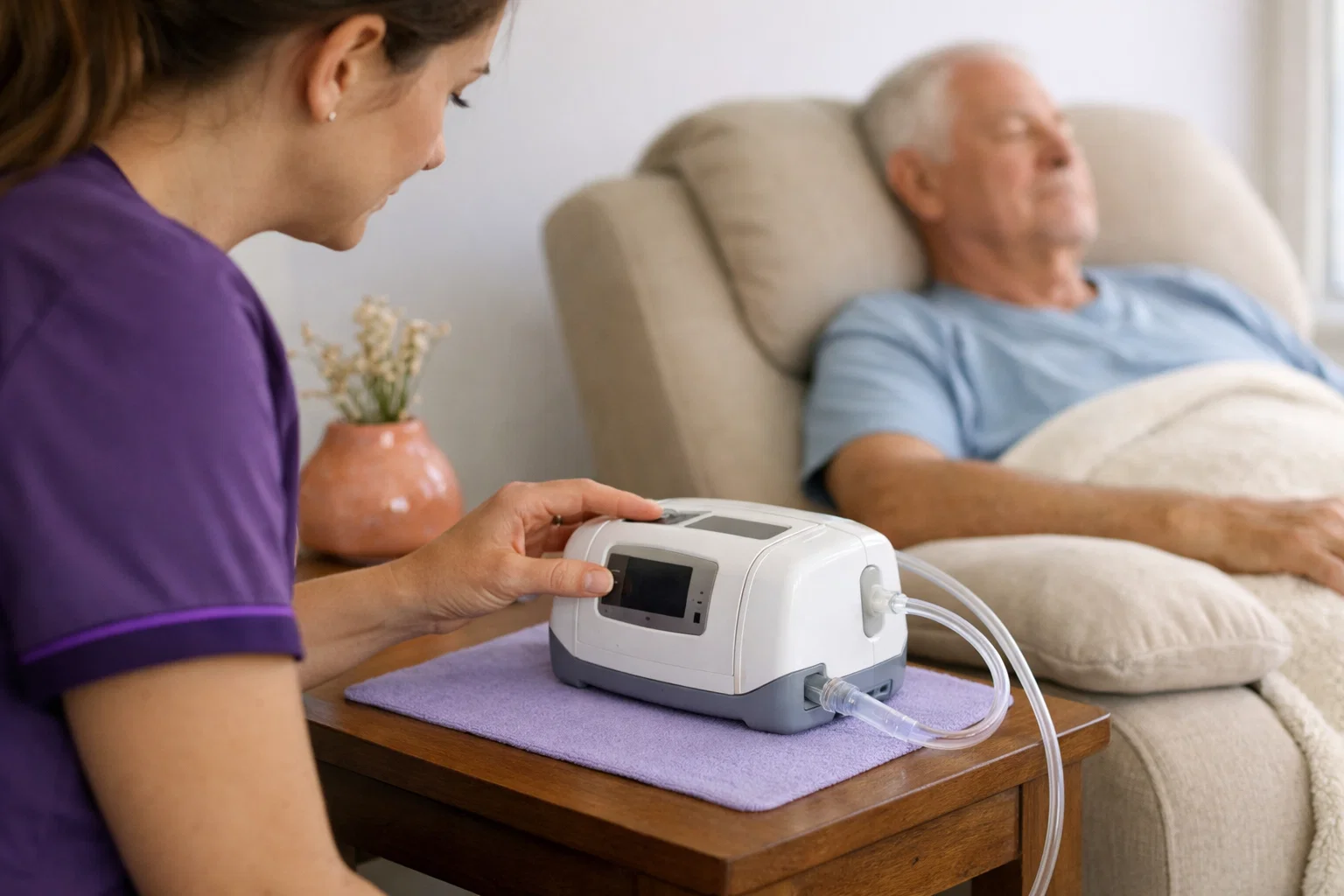
We Offer Wound VAC Therapy at Home in Los Angeles County
HarvardCare at Home is a licensed home health agency providing skilled wound care services throughout Los Angeles County. If your doctor has ordered negative pressure wound therapy (NPWT)—commonly called wound VAC therapy—our experienced nurses can deliver and manage this advanced treatment in your home.
Wound VAC therapy is often used for wounds that are deep, complex, slow-healing, or producing heavy drainage. Instead of frequent clinic visits, you can receive consistent professional care at home while we coordinate with your physician, monitor progress, and keep the therapy working properly.
What Is Wound VAC Therapy (Negative Pressure Wound Therapy)?
Negative pressure wound therapy (NPWT) uses a sealed dressing and controlled suction to support healing. The wound is covered with foam or gauze, sealed with an adhesive drape, and connected to a portable device that applies prescribed suction and collects drainage in a canister.
Many providers recommend NPWT to help:
- Remove excess wound drainage
- Reduce swelling around the wound
- Support blood flow to the wound bed
- Promote granulation tissue (healthy new tissue growth)
- Help reduce wound size over time
Who We Help: Wounds That May Benefit from NPWT
Our in-home wound VAC services may support patients with:
- Diabetic foot ulcers and other chronic wounds that are slow to heal
- Pressure ulcers (bed sores) when NPWT is clinically appropriate
- Venous leg ulcers with stalled healing
- Surgical wounds, including wounds that reopen (dehiscence)
- Traumatic wounds with tissue loss or heavy drainage
- Complex wounds with exposed structures when NPWT is ordered and appropriate
Note: NPWT is not right for every wound. We follow your physician’s orders and help coordinate next steps if the wound needs a different approach first.
Our In-Home Wound VAC Services
HarvardCare at Home provides complete NPWT support—from setup to transition off therapy.
Initial Assessment & Wound VAC Setup
We begin with a detailed wound assessment and confirm your provider’s NPWT orders. Then we:
- Fit the foam/gauze precisely to the wound bed
- Create a strong, airtight seal with the adhesive drape
- Start therapy at the prescribed settings
- Ensure the system is functioning properly before we leave
- Teach you the basics of safe device use at home
Skilled Dressing Changes (Typically Every 48–72 Hours)
Dressing changes are essential for effective NPWT. At each visit, our nurse will:
- Remove the dressing carefully and assess healing progress
- Cleanse the wound appropriately
- Re-fit and re-seal the dressing for consistent suction
- Confirm proper device function and drainage management
- Document progress and communicate concerns to the ordering provider
Wound VAC Troubleshooting & Alarm Support
If the device alarms due to a leak, tubing issue, or canister problem, we help quickly. We also teach simple steps you can try first—then provide phone support and home visits when needed to restore therapy.
Ongoing Monitoring & Physician Coordination
We track wound measurements, tissue quality, drainage changes, and surrounding skin condition. When the wound improves or needs a change in approach, we communicate with your physician to keep the plan aligned.
Transition Off VAC Therapy
Most patients use NPWT for a period of time, then transition to standard dressings or closure planning. We coordinate timing with your provider so therapy ends at the right moment—supporting the best chance of full closure.
Living with a Wound VAC at Home
Most modern wound VAC units are portable and battery-powered. Many patients can move around the home while therapy runs. Because the dressing must stay sealed and dry, we provide guidance on bathing, comfort, tubing placement, and activity recommendations based on wound location and your overall condition.
Insurance & Medicare Coverage for Wound VAC Therapy
Wound VAC therapy is often covered by Medicare and many insurance plans when medically necessary and properly documented. Coverage may include:
- The NPWT device
- Supplies (foam/gauze, drapes, canisters)
- Skilled nursing visits for dressing changes and wound management
Our team helps coordinate authorizations and works with the equipment supplier so treatment can start smoothly.
Schedule In-Home Wound VAC Therapy with HarvardCare at Home
If you or a loved one has a wound that requires wound VAC therapy, HarvardCare at Home can help. We provide in-home negative pressure wound therapy (NPWT) across Los Angeles County with skilled nursing, consistent monitoring, and clear patient education.
Call today for a free consultation to discuss eligibility, coverage, and next steps.
FAQs
Do you have questions?
Got questions about Wound VAC Therapy at Home? Here are answers to what patients and families ask most.
VAC therapy helps many difficult wounds including diabetic foot ulcers, pressure ulcers, venous and arterial ulcers, traumatic wounds, surgical wounds healing by secondary intention, dehisced surgical incisions, and wounds with significant drainage. It is particularly valuable for chronic wounds that have not responded to standard treatment and for large or deep wounds requiring accelerated granulation tissue formation.
VAC dressings typically require changing every 48 to 72 hours. Some wounds need more frequent changes, particularly those with heavy drainage or signs of infection. Each dressing change involves removing the old dressing, assessing the wound, cleansing appropriately, placing new precisely-fitted foam, reapplying the adhesive seal, and restarting therapy. Our nurses perform all dressing changes during home visits.
Most patients find VAC therapy comfortable once adjusted to the sensation. You may feel pulling or tugging when suction is applied initially. Dressing changes can cause some discomfort, particularly when removing the foam from the wound bed. We use techniques to minimize pain and can coordinate timing with pain medication if needed. Many patients report that VAC therapy is more comfortable than frequent conventional dressing changes.
Yes, modern VAC units are portable and battery-powered, allowing mobility. You can walk around your home and perform many normal activities while receiving therapy. The unit can be carried or placed in a shoulder bag. Some limitations depend on wound location—leg wounds may require elevation periods, for example. We provide guidance on activity appropriate for your specific situation.
Duration varies based on wound size, type, and healing response. Some wounds achieve adequate granulation within two to four weeks. Larger or more complex wounds may require therapy for several months. We monitor progress closely and continue therapy until the wound is ready for transition to conventional care or surgical closure. The goal is always the shortest effective treatment duration.
The most common cause of alarms is a seal leak, which you can often fix by smoothing the adhesive drape or applying additional drape strips we provide. Canister alarms indicate the canister needs emptying or replacement. Low battery alarms mean the unit needs charging. We teach you to respond to common alarms and provide materials for basic troubleshooting. For problems you cannot resolve, call us—we provide support and can visit if needed.
Medicare and most insurance plans cover wound VAC therapy when medically necessary. Coverage includes the therapy device rental, supplies like foam dressings and canisters, and skilled nursing visits for wound management. Prior authorization is typically required. We handle authorization paperwork and coordinate with equipment suppliers to ensure coverage is confirmed before therapy begins.
TESTIMONIALS
What Our Patients & Families Say
AREAS WE SERVE
Wound VAC Therapy at Home Near You
Our licensed healthcare professionals provide expert care in the comfort of your home. We proudly serve patients and families throughout Los Angeles County.
Serving 97 cities across LA County
- A
- Agoura Hills
- Alhambra
- Altadena
- Arcadia
- B
- Bel Air
- Bellflower
- Beverly Hills
- Boyle Heights
- Brentwood
- Burbank
- C
- Calabasas
- Carson
- Century City
- Cerritos
- Claremont
- Compton
- Covina
- Culver City
- D
- Diamond Bar
- Downey
- E
- Eagle Rock
- East Los Angeles
- Echo Park
- Encino
- G
- Gardena
- Glendale
- Glendora
- Granada Hills
- H
- Hacienda Heights
- Hancock Park
- Harbor City
- Hawthorne
- Highland Park
- Hollywood
- Hollywood Hills
- I
- Inglewood
- K
- Koreatown
- L
- La Crescenta-Montrose
- La Mirada
- Lakewood
- Lincoln Heights
- Long Beach
- Los Angeles
- Los Feliz
- M
- Malibu
- Manhattan Beach
- Mar Vista
- Marina del Rey
- Mid-City
- Mid-Wilshire
- Miracle Mile
- Monrovia
- Montebello
- Monterey Park
- N
- North Hollywood
- Northridge
- Norwalk
- P
- Pacific Palisades
- Palms
- Palos Verdes Estates
- Palos Verdes Peninsula
- Panorama City
- Pasadena
- Pico Rivera
- Playa Vista
- Pomona
- Porter Ranch
- R
- Rancho Palos Verdes
- Redondo Beach
- Reseda
- Rolling Hills Estates
- Rowland Heights
- S
- San Dimas
- San Gabriel
- San Marino
- San Pedro
- Santa Clarita
- Santa Monica
- Sawtelle
- Sherman Oaks
- Silver Lake
- South Gate
- South Pasadena
- Studio City
- T
- Tarzana
- Torrance
- V
- Van Nuys
- Venice
- W
- West Covina
- West Hollywood
- West Los Angeles
- Westchester
- Westlake Village
- Westwood
- Whittier
- Wilmington
- Woodland Hills
More Services

In-Home Wound Care Services
- Board-certified wound care nurses
- Personalized treatment plans
- All wound types treated

Diabetic Wound Care at Home
- Diabetes wound specialists
- Blood sugar optimization support
- Advanced offloading techniques

Skilled Nursing Care at Home
- Registered nurses available 7 days a week
- Comprehensive care coordination
- IV therapy and infusion services