
 Wound Care
It is home physical therapy focused on improving strength, walking, transfers, standing balance, endurance, and safer daily function.
PHYSICAL THERAPY
Weakness Recovery Therapy at Home
Weakness recovery therapy at home helps patients improve walking, transfers, standing balance, endurance, and safer daily function with home PT.
EXCELLENT 


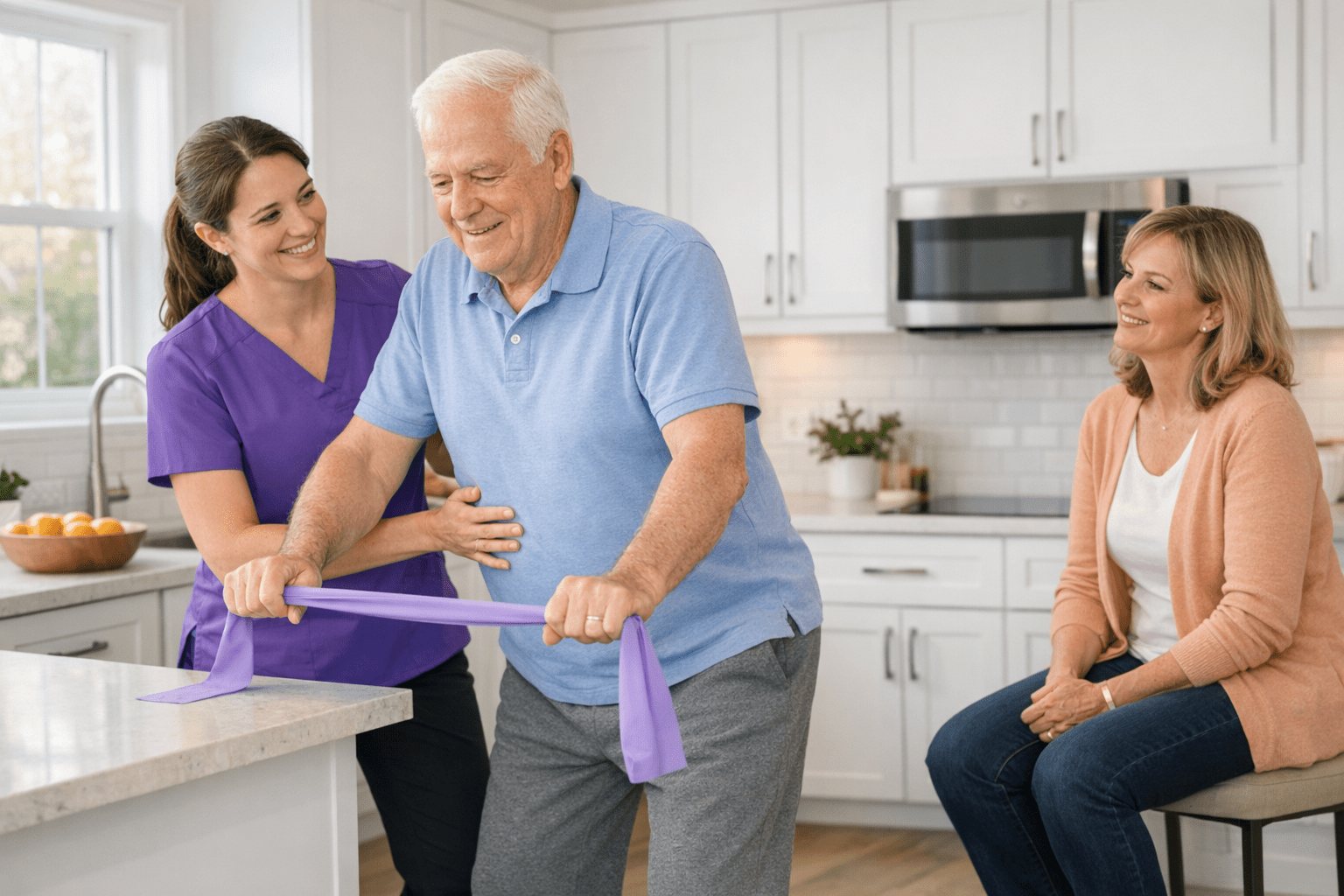
Weakness at home can become dangerous before anyone realizes how much has changed. A patient may start sitting more, skipping showers, using furniture for support, or waiting for a family member before walking. The home may look the same, but the patient's ability to move through it safely has changed.
Weakness recovery therapy at home turns that problem into a practical physical therapy plan. The therapist evaluates how weakness affects walking, transfers, stairs, standing balance, endurance, and daily routines. Then the patient practices the movements that matter most in the actual spaces where they need to function.
HarvardCare Home Health helps patients rebuild safer daily function when weakness follows illness, hospitalization, surgery, reduced activity, a fall, neurological changes, or chronic medical conditions. The goal is to help the patient move with more control and less fear while giving families a clearer way to support progress.
Why Weakness Can Become Dangerous at Home
Weakness affects more than strength. It changes reaction time, posture, confidence, and judgment. A weak patient may rush to sit before reaching the chair, drag a foot, lean too far on a walker, or avoid the bathroom until the need is urgent. These patterns can increase fall risk and caregiver strain.
Weakness can also make the patient less active, which leads to even more weakness. This cycle is common after hospitalization or illness. The patient rests because movement feels hard, then movement becomes harder because the body is resting too much. Skilled therapy helps interrupt that cycle with safe, purposeful practice.
Home warning signs
- More help needed for bed, chair, toilet, or shower transfers.
- Shorter walking distances or more frequent rest breaks.
- Unsteady standing at the sink, counter, or bedside.
- New use of furniture for balance.
- Recent falls, near falls, or fear of falling.
- Caregivers lifting more than guiding.
What Therapy May Focus On
The therapist may work on lower-body strength, trunk control, standing balance, walking endurance, gait pattern, transfers, stair safety, assistive device technique, and safe movement during daily tasks. The plan is based on the evaluation and physician-directed goals, not a one-size-fits-all routine.
For some patients, the early focus may be simply standing safely and walking short distances. Others may need balance reactions, turning practice, step training, or endurance work. The therapist may also teach energy conservation, rest breaks, and ways to make practice consistent without overwhelming the patient.
| Practical goal | Therapy may address |
|---|---|
| Walking | Stride, posture, device use, endurance, pacing, and turning. |
| Transfers | Chair height, hand placement, leg strength, and controlled sitting. |
| Stairs or steps | Strength, rail use, sequencing, balance, and fatigue management. |
| Standing balance | Weight shifts, counter support, posture, and safe reaching. |
Progress That Matters in Real Life
Progress is not only measured by exercise repetitions. It may show up as getting out of bed with less help, walking to the kitchen with better posture, standing long enough to brush teeth, turning without panic, or using the walker correctly without repeated reminders. These gains can make the home feel safer and reduce caregiver stress.
The therapist can monitor how the patient responds over time. If the patient becomes stronger, the plan can progress. If fatigue, pain, dizziness, or unsafe movement appears, the plan can be adjusted. That ongoing clinical judgment is important when weakness is connected to medical conditions or recent decline.
How Families Can Support Recovery
Families help most when they encourage safe practice without turning every movement into a test. The therapist may teach simple cues, safe guarding, when to allow independence, and when hands-on help is needed. Caregivers can also help keep pathways clear, make sure the patient uses the correct device, and avoid rushing transfers.
It is important to report sudden worsening, new falls, new pain, confusion, dizziness, shortness of breath, or major changes in walking. Weakness can be part of a therapy problem, but it can also signal medical issues that need physician review.
Why HarvardCare Helps Weakness Feel Less Overwhelming
HarvardCare Home Health approaches weakness recovery with patience and practical goals. Patients are not treated like they failed because they got weaker. The therapist helps identify what is still possible, what needs support, and how to move forward without unsafe pressure.
Because care happens at home, the therapist can see the patient's real barriers: the low couch, the narrow bathroom, the hallway turn, the step into the house, or the caregiver who is doing too much lifting. That context helps the plan feel trustworthy and relevant.
Turning Therapy Into a Safer Daily Routine
Weakness recovery works best when therapy carries over into the rest of the week. The therapist may help the patient and caregiver decide when to practice walking, which chair is safest for sit-to-stand work, where to stand for balance practice, and how much help should be given. This turns therapy from a once-in-a-while appointment into a safer daily routine.
Caregivers may also learn how to avoid mixed messages. If one person tells the patient to walk alone and another tells them never to move without help, the patient becomes confused and fearful. A clear plan can define which activities are safe alone, which need supervision, and which should wait for the therapist or physician guidance.
As strength improves, the therapist can adjust the plan so the patient keeps progressing without skipping important safety steps. That balance between challenge and protection is what helps weakness recovery translate into better home function.
The plan may include practical safeguards such as choosing one primary walking path, keeping the walker within reach, avoiding low or unstable chairs, and using consistent cues. These details reduce confusion and help the patient practice the same safe habits throughout the day. Consistency can make weak movements feel more predictable.
When the home routine is predictable, the patient can focus on quality of movement instead of guessing what to do next. The therapist may help the family choose a few priority tasks for the week, such as a safer bathroom transfer or a short supervised walk after breakfast, so progress stays specific and manageable.
Medicare and Home Health Eligibility
Weakness recovery therapy may be part of home health physical therapy when there is a physician order, a skilled need, and homebound status under Medicare rules when applicable. Coverage depends on the patient's condition, documentation, payer requirements, and ordered services. HarvardCare Home Health can review the request and explain the eligibility process without guaranteeing coverage.
Related services may include in-home physical therapy services, fall prevention therapy at home, post-surgery rehab at home, stroke rehab at home, and in-home occupational therapy when daily activities are affected.
Request Weakness Recovery Support
If weakness is making walking, transfers, stairs, or standing balance harder, complete the form on this page or call HarvardCare Home Health. The team can review the patient's needs, discuss whether a home health referral may be appropriate, and explain next steps for eligibility review.
FAQs
Do you have questions?
Got questions about Weakness Recovery Therapy at Home? Here are answers to what patients and families ask most.
Weakness may follow illness, hospitalization, surgery, inactivity, falls, neurological changes, or chronic medical conditions.
The therapist evaluates safety, function, symptoms, and goals, then builds a skilled plan connected to daily movement.
Yes. Therapy may address chair, bed, toilet, and shower transfer safety through strength, balance, setup, and caregiver training.
Therapy can reduce fall risk factors such as weakness, balance problems, poor device use, and unsafe movement habits, but cannot prevent every fall.
Progress may include walking distance, transfer assistance, standing tolerance, balance, endurance, and confidence during daily tasks.
Yes. Caregivers can learn cueing, safe support, pacing, home setup, and when to report changes.
It may be covered when home health requirements are met, including physician order, skilled need, and homebound status when applicable.
Sudden worsening, new confusion, chest symptoms, severe shortness of breath, or new neurological signs should be reported urgently.
Complete the form on this page or call HarvardCare Home Health so the team can review the request and eligibility process.
TESTIMONIALS
What Our Patients & Families Say
AREAS WE SERVE
Weakness Recovery Therapy at Home Near You
Our licensed healthcare professionals provide expert care in the comfort of your home. We proudly serve patients and families throughout Los Angeles County.
Serving 279 cities across LA County
- A
- Acton
- Adams-Normandie
- Agoura Hills
- Agua Dulce
- Alhambra
- Alondra Park
- Altadena
- Angelino Heights
- Arcadia
- Arleta
- Arlington Heights
- Artesia
- Arts District
- Atwater Village
- Avocado Heights
- Azusa
- B
- Baldwin Hills
- Baldwin Park
- Bassett
- Beachwood Canyon
- Bel Air
- Bell
- Bell Gardens
- Bellflower
- Beverly Crest
- Beverly Grove
- Beverly Hills
- Beverlywood
- Boyle Heights
- Bradbury
- Brentwood
- Broadway-Manchester
- Burbank
- C
- Calabasas
- Canoga Park
- Canyon Country
- Carson
- Carthay
- Castaic
- Castle Heights
- Central-Alameda
- Century City
- Cerritos
- Charter Oak
- Chatsworth
- Chesterfield Square
- Cheviot Hills
- Chinatown
- Citrus
- City Terrace
- Claremont
- Commerce
- Compton
- Country Club Park
- Covina
- Crenshaw
- Cudahy
- Culver City
- Cypress Park
- D
- Del Aire
- Del Rey
- Desert View Highlands
- Diamond Bar
- Downey
- Downtown Los Angeles
- Duarte
- E
- Eagle Rock
- East Hollywood
- East Los Angeles
- East Pasadena
- East Rancho Dominguez
- East San Gabriel
- East Whittier
- Echo Park
- El Camino Village
- El Monte
- El Segundo
- El Sereno
- Elysian Valley
- Encino
- Exposition Park
- F
- Fairfax
- Florence
- Florence-Firestone
- G
- Gardena
- Garvanza
- Glassell Park
- Glendale
- Glendora
- Gramercy Park
- Granada Hills
- Green Meadows
- H
- Hacienda Heights
- Hancock Park
- Harbor City
- Harbor Gateway
- Harvard Heights
- Harvard Park
- Hasley Canyon
- Hawaiian Gardens
- Hawthorne
- Hermon
- Hermosa Beach
- Hidden Hills
- Highland Park
- Historic Filipinotown
- Hollywood
- Hollywood Hills
- Holmby Hills
- Huntington Park
- Hyde Park
- I
- Inglewood
- J
- Jefferson Park
- K
- Kinneloa Mesa
- Koreatown
- L
- La Cañada Flintridge
- La Crescenta-Montrose
- La Habra Heights
- La Mirada
- La Puente
- La Verne
- Ladera Heights
- Lake Balboa
- Lake Hughes
- Lake Los Angeles
- Lake View Terrace
- Lakewood
- Lancaster
- Larchmont
- Lawndale
- Leimert Park
- Lennox
- Leona Valley
- Lincoln Heights
- Little Armenia
- Little Tokyo
- Littlerock
- Lomita
- Long Beach
- Los Angeles
- Los Feliz
- Lynwood
- M
- Malibu
- Manchester Square
- Manhattan Beach
- Mar Vista
- Marina del Rey
- Mayflower Village
- Maywood
- Mid-City
- Mid-Wilshire
- Miracle Mile
- Mission Hills
- Monrovia
- Montebello
- Montecito Heights
- Monterey Park
- Mt Washington
- N
- Newhall
- NoHo Arts District
- North El Monte
- North Hills
- North Hollywood
- North Long Beach
- Northridge
- Norwalk
- P
- Pacific Palisades
- Pacoima
- Palmdale
- Palms
- Palos Verdes Estates
- Palos Verdes Peninsula
- Panorama City
- Paramount
- Park La Brea
- Pasadena
- Pearblossom
- Pico Rivera
- Pico-Robertson
- Pico-Union
- Playa del Rey
- Playa Vista
- Pomona
- Porter Ranch
- Q
- Quartz Hill
- R
- Rancho Dominguez
- Rancho Palos Verdes
- Rancho Park
- Redondo Beach
- Reseda
- Rolling Hills
- Rolling Hills Estates
- Rosemead
- Rowland Heights
- S
- San Dimas
- San Fernando
- San Gabriel
- San Marino
- San Pasqual
- San Pedro
- Santa Clarita
- Santa Fe Springs
- Santa Monica
- Saugus
- Sawtelle
- Sepulveda
- Shadow Hills
- Sherman Oaks
- Sherman Village
- Sherwood Forest
- Sierra Madre
- Signal Hill
- Silver Lake
- South Central
- South El Monte
- South Gate
- South Park
- South Pasadena
- South San Gabriel
- South San Jose Hills
- South Whittier
- Stevenson Ranch
- Stonehurst
- Studio City
- Sun Valley
- Sun Village
- Sunland
- Sunset Park
- Sylmar
- T
- Tarzana
- Temple City
- Thai Town
- Toluca Lake
- Topanga
- Torrance
- Tujunga
- U
- University Hills
- University Park
- V
- Val Verde
- Valencia
- Valinda
- Valley Glen
- Valley Village
- Van Nuys
- Venice
- Vermont Knolls
- Vermont Square
- Vermont Vista
- Vermont-Slauson
- Victor Heights
- View Park-Windsor Hills
- Vincent
- W
- Walnut
- Walnut Park
- Watts
- West Adams
- West Athens
- West Carson
- West Covina
- West Hills
- West Hollywood
- West Los Angeles
- West Puente Valley
- West Rancho Dominguez
- West Whittier-Los Nietos
- Westchester
- Westlake
- Westlake Village
- Westmont
- Westwood
- Westwood Village
- Whitley Heights
- Whittier
- Willowbrook
- Wilmington
- Wilshire Center
- Windsor Square
- Winnetka
- Woodland Hills
More Services

In-Home Wound Care Services
- Board-certified wound care nurses
- Personalized treatment plans
- All wound types treated
Diabetic Wound Care at Home
- Diabetes wound specialists
- Blood sugar optimization support
- Advanced offloading techniques
Skilled Nursing Care at Home
- Registered nurses available 7 days a week
- Comprehensive care coordination
- IV therapy and infusion services