 Wound Care
It is occupational therapy focused on improving useful arm, shoulder, wrist, and hand function during daily home activities.
OCCUPATIONAL THERAPY
Upper Extremity Rehab at Home
Home occupational therapy for safer arm, shoulder, and upper extremity function during dressing, grooming, bathing, meals, and daily tasks.
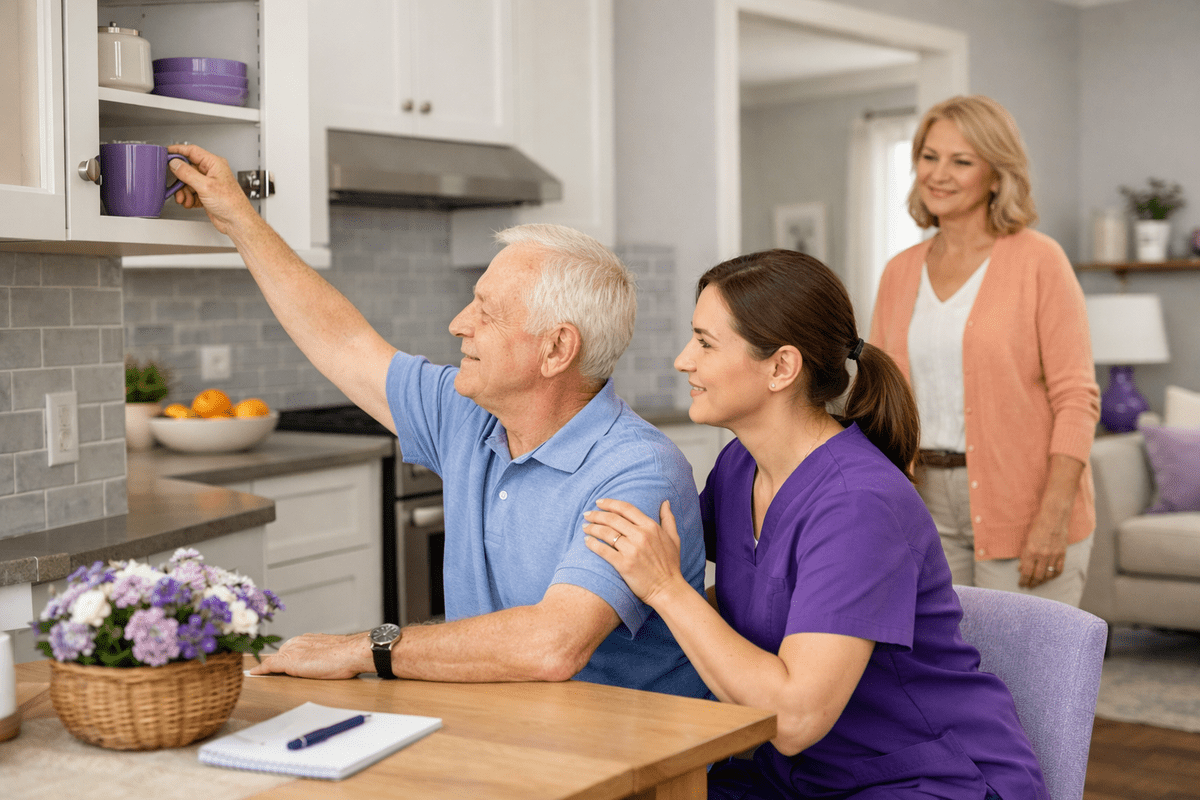
When the shoulder, arm, wrist, or hand is weak or painful, daily life can become harder in ways families may not expect. Reaching into a cabinet, pulling on a shirt, washing hair, holding a cup, opening a container, or steadying the body during a transfer can suddenly take too much effort. The patient may avoid using one arm, rely more on a caregiver, or stop doing routines that used to feel automatic.
Upper extremity rehab at home uses occupational therapy to help patients improve useful arm and shoulder function inside the real home environment. The therapist can evaluate how the patient reaches, lifts, carries, dresses, grooms, bathes, eats, and uses both arms during daily routines. The goal is not exercise for its own sake. The goal is safer function that supports independence.
HarvardCare Home Health helps patients work on upper extremity recovery with practical, patient-friendly strategies. This may be helpful after stroke, hospitalization, surgery, injury, arthritis flare, weakness, pain, or a decline in coordination. Therapy is tailored to what the patient needs to do at home, not only to what can be measured in a clinic.
Why Upper Extremity Weakness Affects Independence
The upper extremity includes the shoulder, arm, elbow, forearm, wrist, and hand. These body parts work together during nearly every daily task. A person may need shoulder motion to reach a closet shelf, elbow control to bring food to the mouth, wrist stability to hold a cup, and hand coordination to manage buttons or medications. When one part is limited, the entire routine can change.
Weakness or poor control may also affect safety. A patient may have trouble pushing up from a chair, holding a walker correctly, reaching for a grab bar, or protecting the arm during a transfer. If the weaker arm is ignored, it may become stiffer and less useful. If the patient overuses the stronger side, pain and fatigue can increase.
Occupational therapy helps connect arm recovery to daily activities. Rather than only counting repetitions, the therapist can ask what the patient is trying to do: dress with less help, bathe more safely, prepare a simple meal, hold a phone, or reach items without losing balance.
What an Occupational Therapist May Assess
The occupational therapist may assess range of motion, strength, pain, coordination, sensation, swelling, posture, shoulder protection, grasp, reaching pattern, and how the patient uses the arm during daily routines. The therapist may also observe how the home setup affects arm use. A cabinet that is too high, chair that is too low, walker that is poorly positioned, or bathroom layout that requires awkward reaching may create unnecessary strain.
Assessment may include practical tasks such as reaching for cups, managing clothing, using grooming items, lifting light household objects, opening containers, placing dishes, or positioning the arm during transfers. If the patient has stroke-related weakness, the therapist may also assess neglect, tone, shoulder safety, and whether the patient needs cues to include the affected side.
The therapist can then build a plan that balances practice, protection, pacing, and adaptation. Some patients need gentle movement and positioning. Others need strengthening, coordination work, or task-specific retraining.
Daily Tasks That May Improve With Upper Extremity Rehab
Upper extremity therapy at home often focuses on the tasks that matter most to the patient. These may include dressing, grooming, bathing, toileting, meal preparation, phone use, writing, reaching cabinets, carrying light items, or using adaptive equipment. The therapist can help the patient practice safer ways to complete these routines while reducing strain.
Common goals may include:
- Reaching into closets or cabinets without losing balance.
- Putting on shirts, jackets, or sweaters with less assistance.
- Washing hair, brushing teeth, shaving, or grooming safely.
- Holding utensils, cups, towels, or small household items.
- Using the arm safely during chair, bed, toilet, or shower transfers.
- Protecting a painful or weaker shoulder during daily movement.
Home Exercise and Adaptive Strategy Examples
The therapist may teach a home program that fits the patient, diagnosis, and provider instructions. This may include gentle range of motion, supported reaching, light strengthening, coordination tasks, posture work, or functional practice using household items. Exercises are usually more effective when they connect to daily tasks, such as reaching for a cup, folding towels, or moving items on a table.
Adaptive strategies may also help. The therapist may recommend moving frequently used items to safer heights, using long-handled grooming tools, choosing easier clothing, changing how the patient carries objects, or using adaptive equipment when grip or reach is limited. If pain increases, the plan may include pacing and symptom monitoring instead of pushing through.
Therapy may also help the patient learn which movements are worth practicing first. A person who wants to shower safely may need different arm goals than someone who wants to prepare breakfast or manage clothing. Prioritizing meaningful tasks keeps practice focused and helps families see how arm function connects to daily independence.
Caregiver Guidance
Caregivers can help by encouraging safe use of the arm without forcing movement that is painful or unsafe. The therapist may teach family members how to position the arm, set up daily tasks, give simple cues, and avoid pulling on the affected arm during transfers. This is especially important after stroke or when shoulder pain is present.
Families may also learn how to support practice between visits. Small daily opportunities, such as placing grooming items within reach or encouraging the patient to use the weaker arm during safe table tasks, can help reinforce therapy goals. Caregivers should also know when to report new pain, swelling, loss of movement, numbness, or sudden weakness to the healthcare provider.
Why Choose HarvardCare Home Health
HarvardCare Home Health focuses upper extremity rehab on practical function. The therapist can see the actual bathroom, kitchen, bedroom, chair, walker, and caregiver routine. This makes it easier to build exercises and strategies around the tasks the patient truly needs to do at home.
Upper extremity rehab may connect with In-Home Occupational Therapy, ADL Training at Home, Adaptive Equipment Training at Home, Stroke Rehab at Home, and Caregiver Training at Home when daily function or family support is affected.
Medicare and Home Health Eligibility
Upper extremity rehab may be part of a skilled home health occupational therapy plan when eligibility requirements are met. This can include physician order, skilled need, homebound status, and payer review. Coverage is not guaranteed without an eligibility review.
If arm or shoulder function has changed after illness, injury, surgery, hospitalization, stroke, or a decline in strength, HarvardCare Home Health can review the request and help determine whether home occupational therapy is appropriate.
Request Upper Extremity Rehab at Home
If arm, shoulder, wrist, or hand limitations are making daily routines harder or less safe, complete the form on this page or call HarvardCare Home Health. The team can review the concern, discuss eligibility, and help determine next steps for home occupational therapy.
FAQs
Do you have questions?
Got questions about Upper Extremity Rehab at Home? Here are answers to what patients and families ask most.
Patients with weakness, pain, stroke effects, arthritis, injury, surgery recovery, or reduced arm control may benefit when daily function is affected.
Yes, when appropriate. Exercises may include range of motion, strengthening, coordination, reaching, and task practice based on the care plan.
Yes. The therapist may practice clothing, bathing, grooming, reaching, and other daily activities affected by arm or shoulder limits.
Yes. Caregivers can learn safe setup, cueing, positioning, and how to avoid pulling on a painful or weak arm.
No. Upper extremity rehab may involve the shoulder, arm, elbow, wrist, and hand depending on the patient.
Yes. OT may address affected-arm use, positioning, shoulder safety, coordination, and daily task practice after stroke when appropriate.
Have medical instructions, braces or splints if used, adaptive tools, and examples of daily tasks that are difficult.
It may be covered when home health requirements are met, including physician order, skilled need, and homebound status when applicable. Eligibility must be reviewed.
Complete the form on this page or call HarvardCare Home Health so the team can review the request and next steps.
TESTIMONIALS
What Our Patients & Families Say
AREAS WE SERVE
Upper Extremity Rehab at Home Near You
Our licensed healthcare professionals provide expert care in the comfort of your home. We proudly serve patients and families throughout Los Angeles County.
Serving 97 cities across LA County
- A
- Agoura Hills
- Alhambra
- Altadena
- Arcadia
- B
- Bel Air
- Bellflower
- Beverly Hills
- Boyle Heights
- Brentwood
- Burbank
- C
- Calabasas
- Carson
- Century City
- Cerritos
- Claremont
- Compton
- Covina
- Culver City
- D
- Diamond Bar
- Downey
- E
- Eagle Rock
- East Los Angeles
- Echo Park
- Encino
- G
- Gardena
- Glendale
- Glendora
- Granada Hills
- H
- Hacienda Heights
- Hancock Park
- Harbor City
- Hawthorne
- Highland Park
- Hollywood
- Hollywood Hills
- I
- Inglewood
- K
- Koreatown
- L
- La Crescenta-Montrose
- La Mirada
- Lakewood
- Lincoln Heights
- Long Beach
- Los Angeles
- Los Feliz
- M
- Malibu
- Manhattan Beach
- Mar Vista
- Marina del Rey
- Mid-City
- Mid-Wilshire
- Miracle Mile
- Monrovia
- Montebello
- Monterey Park
- N
- North Hollywood
- Northridge
- Norwalk
- P
- Pacific Palisades
- Palms
- Palos Verdes Estates
- Palos Verdes Peninsula
- Panorama City
- Pasadena
- Pico Rivera
- Playa Vista
- Pomona
- Porter Ranch
- R
- Rancho Palos Verdes
- Redondo Beach
- Reseda
- Rolling Hills Estates
- Rowland Heights
- S
- San Dimas
- San Gabriel
- San Marino
- San Pedro
- Santa Clarita
- Santa Monica
- Sawtelle
- Sherman Oaks
- Silver Lake
- South Gate
- South Pasadena
- Studio City
- T
- Tarzana
- Torrance
- V
- Van Nuys
- Venice
- W
- West Covina
- West Hollywood
- West Los Angeles
- Westchester
- Westlake Village
- Westwood
- Whittier
- Wilmington
- Woodland Hills
More Services

In-Home Wound Care Services
- Board-certified wound care nurses
- Personalized treatment plans
- All wound types treated
Diabetic Wound Care at Home
- Diabetes wound specialists
- Blood sugar optimization support
- Advanced offloading techniques
Skilled Nursing Care at Home
- Registered nurses available 7 days a week
- Comprehensive care coordination
- IV therapy and infusion services