 HarvardCare at Home
  HarvardCare at Home
  Wound Care
 Skilled Nursing Care
 Physical Therapy
 Occupational Therapy
Physical therapy should begin as soon as possible after surgery—typically the day of or day after the procedure while still in the hospital. Home-based therapy should start within days of discharge to maintain momentum. Early rehabilitation is critical for preventing stiffness, managing swelling, and restoring motion before scar tissue formation can limit your ultimate range. Delays in therapy can permanently affect your outcome.
PHYSICAL THERAPY
Knee Replacement Rehab at Home
Knee replacement rehabilitation at home throughout Los Angeles County. Our licensed physical therapists provide post-surgical therapy including range of motion exercises, strengthening, gait training, and functional recovery in your home. Medicare accepted.
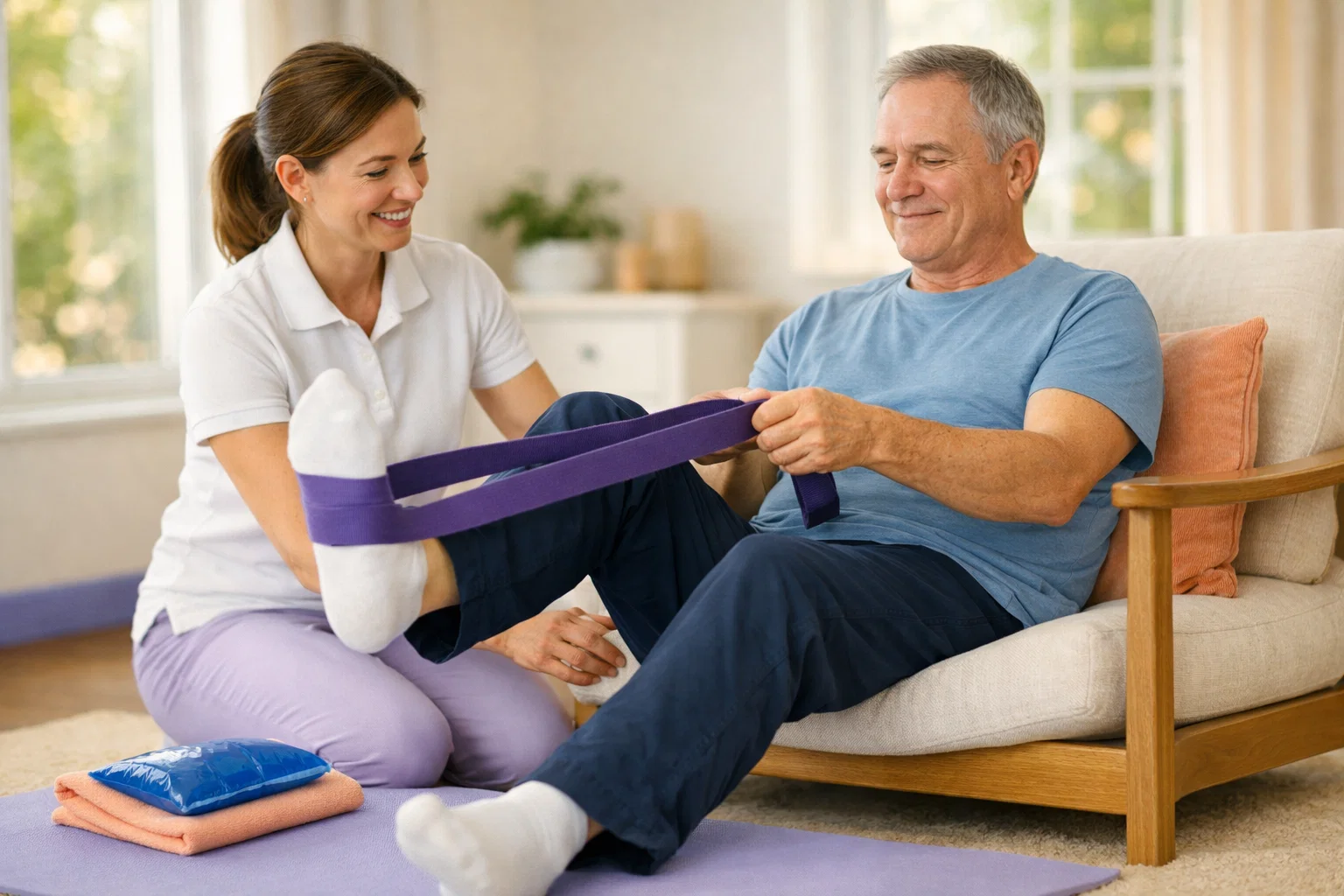
Expert Post-Surgical Rehabilitation for Your New Knee
Total knee replacement is one of the most successful surgeries in medicine, relieving chronic pain and restoring mobility for hundreds of thousands of patients each year. But surgery is only half the journey—your outcome depends heavily on the rehabilitation that follows. At HarvardCare at Home, our licensed physical therapists provide specialized knee replacement rehabilitation throughout Los Angeles County, helping you recover strength, flexibility, and function in the comfort of your own home where you will ultimately need to perform.
The weeks following knee replacement surgery are critical. Early, appropriate rehabilitation prevents complications, restores range of motion, builds strength, and gets you back to the activities that matter to you. Home-based therapy allows intensive rehabilitation to begin immediately after discharge, without the challenges of traveling to outpatient clinics while your new knee is still healing.
Understanding Knee Replacement Recovery
Knowing what to expect after surgery helps you participate effectively in your rehabilitation and set realistic expectations for your recovery timeline.
What Happens During Surgery
During total knee replacement, the damaged surfaces of the knee joint are removed and replaced with metal and plastic components that recreate a smooth, functional joint. The surgery addresses bone, cartilage, and surrounding soft tissues. While the mechanical joint is immediately functional, the surrounding muscles, tendons, and tissues need time to heal and adapt to the new anatomy.
The Healing Process
Recovery occurs in overlapping phases. The initial inflammatory phase involves swelling, pain, and tissue healing during the first few weeks. The proliferative phase involves formation of scar tissue and early strengthening over weeks two through six. The remodeling phase continues for months as tissues mature and adapt. Understanding these phases explains why rehabilitation progresses gradually and why patience is essential.
Recovery Timeline
Most patients can walk with an assistive device immediately after surgery and transition to a cane within two to four weeks. Driving typically resumes at four to six weeks for automatic transmission vehicles. Return to most daily activities occurs within six to twelve weeks. Maximum improvement continues for up to one year as tissues fully heal and strengthen. Individual timelines vary based on pre-surgical condition, overall health, and rehabilitation effort.
Factors Affecting Recovery
Several factors influence your rehabilitation outcome. Pre-operative knee condition and function matter—patients with better function before surgery typically recover faster. Overall health including weight, cardiovascular fitness, and other medical conditions affects healing and exercise tolerance. Motivation and compliance with rehabilitation significantly impact results. And the quality and intensity of physical therapy shapes your ultimate outcome.
Our Knee Replacement Rehabilitation Program
Our comprehensive program addresses all aspects of recovery through structured phases aligned with your healing timeline.
Initial Evaluation
Your first visit includes thorough assessment of your current status. We review your surgical procedure and any precautions from your surgeon. We evaluate range of motion in your new knee, strength in surrounding muscles, swelling and incision status, pain levels and management, gait pattern with current assistive device, and your home environment for safety and accessibility. This evaluation establishes baselines and guides your individualized treatment plan.
Early Phase Rehabilitation
The first two to three weeks focus on foundational recovery. We work on reducing swelling and managing pain through elevation, ice protocols, and gentle movement. We emphasize range of motion exercises to restore knee flexion and extension before scar tissue limits motion. We begin gentle strengthening of quadriceps and hip muscles essential for walking and stair climbing. We ensure safe mobility with your walker or cane. And we monitor your incision for healing and any signs of concern. This early phase establishes the foundation for all subsequent progress.
Progressive Strengthening Phase
As initial healing progresses, we advance to more intensive strengthening. Exercises target the quadriceps muscles that control knee stability and function, hamstrings for balance and knee control, hip abductors and extensors for pelvic stability during walking, and calf muscles for push-off during gait. We progress resistance systematically, ensuring muscles strengthen without stressing the healing joint. Strength gains during this phase dramatically improve function.
Functional Training Phase
Rehabilitation must translate to real-world activities. We incorporate functional training including advanced gait training for smooth, confident walking, stair climbing and descending with proper technique, transfers in and out of chairs, cars, and beds, balance activities preparing for varied surfaces and situations, and activity-specific training for your daily tasks and goals. This functional focus ensures your rehabilitation produces practical results.
Return to Activity Phase
As you approach discharge, we prepare you for independent activity. We ensure your home exercise program is established and sustainable, verify you can perform all necessary daily activities safely, address any remaining functional limitations, provide guidance on activity progression and precautions, and establish criteria for returning to recreational activities. Our goal is confident, independent function when formal therapy concludes.
Key Rehabilitation Components
Effective knee replacement rehabilitation addresses multiple interrelated areas.
Range of Motion
Restoring full knee motion is a primary early goal. You need approximately 0 degrees extension for normal walking and 90 degrees flexion for basic sitting and transfers. Greater flexion—110 to 120 degrees—allows stair climbing, rising from low chairs, and most daily activities. We use progressive stretching, manual therapy, and specific exercises to restore motion before scar tissue formation limits your ultimate range.
Strength Building
Knee replacement surgery temporarily weakens surrounding muscles, and many patients had pre-existing weakness from years of painful, limited activity. Rebuilding strength is essential for stability, function, and joint protection. Our progressive strengthening program targets all muscle groups affecting knee function, advancing resistance as you grow stronger.
Swelling Management
Post-surgical swelling is normal but can limit motion and cause discomfort. We teach effective swelling management including elevation positioning, ice application protocols, compression techniques when appropriate, gentle movement to promote circulation, and activity modification to prevent excessive swelling. Managing swelling facilitates all other aspects of rehabilitation.
Gait Training
Walking with your new knee feels different initially. We work on proper weight bearing and weight shifting, normal heel-to-toe gait pattern, appropriate step length and walking speed, safe use of assistive devices, progression from walker to cane to independent walking, and confidence on various surfaces and environments. Our goal is a natural, efficient walking pattern without limp or compensation.
Scar Tissue Management
Scar tissue formation is a normal part of healing but can limit motion if excessive. We use scar mobilization techniques, stretching protocols, and movement to promote healthy tissue formation while preventing adhesions that could restrict your knee permanently.
Pain Management
Some discomfort during rehabilitation is expected, but pain should not limit your progress. We help you distinguish productive discomfort from problematic pain, time therapy appropriately with medications, use ice and other modalities for pain control, and modify activities when needed without sacrificing progress. Effective pain management keeps rehabilitation on track.
The Home Advantage for Knee Replacement Rehab
Home-based rehabilitation offers significant benefits for knee replacement recovery.
Immediate Post-Discharge Care
Traveling to outpatient therapy in the first weeks after knee replacement is challenging and potentially painful. Home therapy begins immediately without transportation struggles, ensuring no gap in your rehabilitation during the critical early period.
Real Environment Training
Your ultimate goal is functioning in your home. When therapy happens there, you practice on your actual stairs, navigate your real bathroom, and transfer from your own furniture. Skills transfer immediately because there is nothing to transfer—you are already training in your functional environment.
Safety Assessment
We evaluate your home for safety during recovery, identifying potential hazards and recommending modifications. This might include temporary grab bars, furniture rearrangement, or removal of tripping hazards. Addressing safety in your actual environment prevents falls during the vulnerable recovery period.
Family and Caregiver Training
Family members often assist during early recovery. When therapy happens at home, we train caregivers in proper assistance techniques, exercise supervision, and recognition of problems. This shared knowledge improves your care between therapy visits.
Personalized Exercise Setup
Your home exercise program uses space and equipment available in your home. We identify household items that work for exercises and ensure your program is practical and sustainable in your actual living situation.
What to Expect
Knee replacement rehabilitation visits typically last 45-60 minutes. Early in recovery, visits occur two to three times weekly to maximize progress during the critical initial period. As you advance and become more independent with your home exercise program, frequency may decrease. Total duration depends on your progress but typically spans four to eight weeks of home therapy before transition to outpatient or independent exercise.
Each visit combines hands-on treatment, therapeutic exercise, functional training, and education. Your home exercise program—performed daily between visits—is equally important to your recovery. Patients who commit to their exercises consistently achieve the best outcomes.
Surgeon Coordination
We work closely with your orthopedic surgeon throughout rehabilitation. We follow their specific protocols and precautions, report progress at appropriate intervals, communicate any concerns promptly, and coordinate on decisions about activity progression and discharge timing. This collaboration ensures your rehabilitation aligns with your surgical care.
Insurance Coverage
Home physical therapy after knee replacement is covered by Medicare Part A for homebound patients with physician orders. In the weeks following surgery, most patients meet homebound criteria due to mobility limitations, driving restrictions, and fall risk. Medicare covers rehabilitation visits without copay for qualifying patients. Medi-Cal and most private insurance plans provide similar coverage.
Our team verifies coverage and manages authorization so you can focus on recovery.
Getting Started
If you have an upcoming knee replacement or have recently had surgery, contact HarvardCare at Home to arrange home physical therapy. Our experienced orthopedic rehabilitation therapists are ready to guide your recovery throughout Los Angeles County.
Your new knee has the potential to give you years of pain-free, active life. Proper rehabilitation is essential to achieving that potential. Call today for a free consultation and start your journey to full recovery.
FAQs
Do you have questions?
Got questions about Knee Replacement Rehab at Home? Here are answers to what patients and families ask most.
Most patients achieve 110-120 degrees of knee flexion after successful replacement and rehabilitation, which is sufficient for nearly all daily activities including stair climbing, rising from chairs, and most recreational activities. Some patients achieve greater range. Your ultimate motion depends on your pre-surgical condition, the surgery itself, and your commitment to rehabilitation, particularly range of motion exercises in the early weeks.
Recovery occurs over months, with different milestones along the way. Most patients walk with a cane by three to four weeks, drive by four to six weeks, and return to most daily activities by six to twelve weeks. However, full recovery with maximum strength and function typically takes six months to one year. Home physical therapy usually continues for four to eight weeks before transitioning to outpatient or independent exercise.
Some discomfort during rehabilitation is normal and expected—you are pushing a healing joint to regain motion and strength. However, therapy should not cause severe or lasting pain. We work within your tolerance, use ice and other techniques to manage discomfort, and time sessions appropriately with your pain medications. Our goal is productive rehabilitation that challenges you appropriately without causing excessive pain.
Your exercise program progresses through phases. Early exercises focus on restoring knee motion—straightening and bending—and activating the quadriceps muscle. As healing progresses, we add resistance exercises for quadriceps, hamstrings, hips, and calves. Functional exercises like sit-to-stand, step-ups, and balance activities prepare you for daily activities. We prescribe exercises appropriate for your current phase and progress them as you improve.
Yes, and for many knee replacement patients, home therapy is the better option initially. In the first weeks after surgery, traveling to outpatient therapy is difficult and potentially painful. Home therapy starts immediately, eliminates transportation challenges, and allows training in your actual living environment. Many patients complete all rehabilitation at home, while others transition to outpatient therapy once mobility improves.
TESTIMONIALS
What Our Patients & Families Say
AREAS WE SERVE
Knee Replacement Rehab at Home Near You
Our licensed healthcare professionals provide expert care in the comfort of your home. We proudly serve patients and families throughout Los Angeles County.
Serving 97 cities across LA County
- A
- Agoura Hills
- Alhambra
- Altadena
- Arcadia
- B
- Bel Air
- Bellflower
- Beverly Hills
- Boyle Heights
- Brentwood
- Burbank
- C
- Calabasas
- Carson
- Century City
- Cerritos
- Claremont
- Compton
- Covina
- Culver City
- D
- Diamond Bar
- Downey
- E
- Eagle Rock
- East Los Angeles
- Echo Park
- Encino
- G
- Gardena
- Glendale
- Glendora
- Granada Hills
- H
- Hacienda Heights
- Hancock Park
- Harbor City
- Hawthorne
- Highland Park
- Hollywood
- Hollywood Hills
- I
- Inglewood
- K
- Koreatown
- L
- La Crescenta-Montrose
- La Mirada
- Lakewood
- Lincoln Heights
- Long Beach
- Los Angeles
- Los Feliz
- M
- Malibu
- Manhattan Beach
- Mar Vista
- Marina del Rey
- Mid-City
- Mid-Wilshire
- Miracle Mile
- Monrovia
- Montebello
- Monterey Park
- N
- North Hollywood
- Northridge
- Norwalk
- P
- Pacific Palisades
- Palms
- Palos Verdes Estates
- Palos Verdes Peninsula
- Panorama City
- Pasadena
- Pico Rivera
- Playa Vista
- Pomona
- Porter Ranch
- R
- Rancho Palos Verdes
- Redondo Beach
- Reseda
- Rolling Hills Estates
- Rowland Heights
- S
- San Dimas
- San Gabriel
- San Marino
- San Pedro
- Santa Clarita
- Santa Monica
- Sawtelle
- Sherman Oaks
- Silver Lake
- South Gate
- South Pasadena
- Studio City
- T
- Tarzana
- Torrance
- V
- Van Nuys
- Venice
- W
- West Covina
- West Hollywood
- West Los Angeles
- Westchester
- Westlake Village
- Westwood
- Whittier
- Wilmington
- Woodland Hills
More Services

In-Home Wound Care Services
- Board-certified wound care nurses
- Personalized treatment plans
- All wound types treated

Diabetic Wound Care at Home
- Diabetes wound specialists
- Blood sugar optimization support
- Advanced offloading techniques

Skilled Nursing Care at Home
- Registered nurses available 7 days a week
- Comprehensive care coordination
- IV therapy and infusion services