
 Wound Care
It is skilled nursing support for physician-ordered intravenous antibiotic therapy delivered in the home when clinically appropriate.
SKILLED NURSING
IV Antibiotics Infusion at Home
IV antibiotics infusion at home supports ordered antibiotic therapy with skilled nurses, line checks, infusion monitoring, education, and physician updates.
EXCELLENT 


What This Service Is
IV Antibiotics Infusion at Home supports patients who have physician-ordered intravenous antibiotic therapy and need skilled nursing assistance in the home. Patients may need IV antibiotics after hospitalization, surgery, wound infection, bone infection, bloodstream infection, or another condition where the physician determines IV treatment is appropriate. Home infusion can reduce travel burden when the patient can be safely treated outside the hospital under orders.
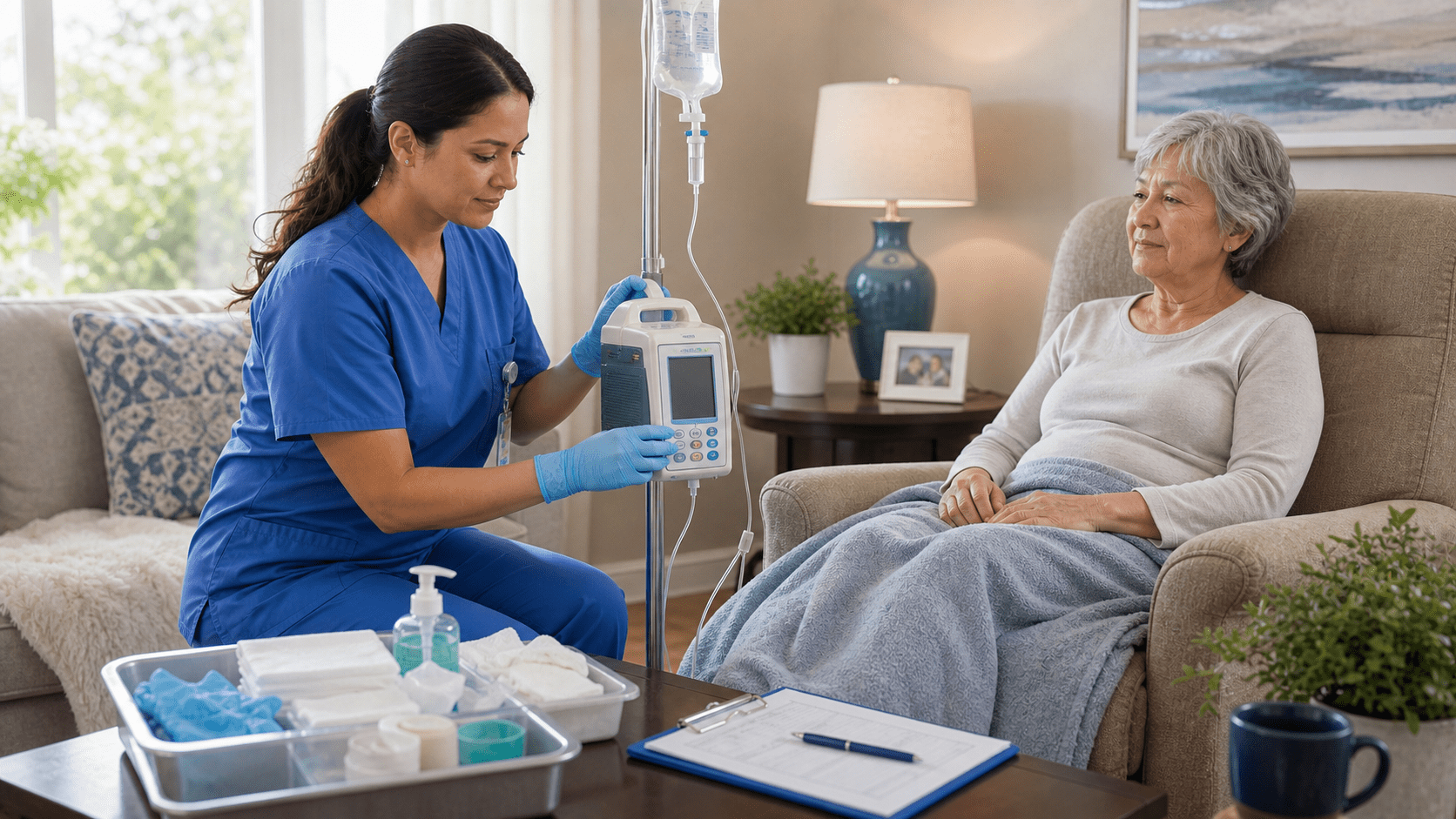
HarvardCare Home Health provides skilled nursing support for ordered IV antibiotic infusion in Los Angeles County. Nurses may help with line checks, infusion setup or monitoring, medication schedule education, side-effect monitoring, and communication with the physician or infusion pharmacy.
How It Is Different From Related Services
| Service | Primary focus |
|---|---|
| IV antibiotics infusion at home | Ordered antibiotic therapy, line safety, infusion monitoring, and infection symptom reporting. |
| IV therapy at home | Broader IV services that may include hydration, medications, or other ordered infusions. |
| PICC line care at home | Line dressing changes, flushing education, and monitoring for line complications. |
| Infected wound care | Wound assessment and treatment support when infection affects a wound. |
The services can overlap. A patient receiving IV antibiotics may also need PICC line care, wound care, or post-hospital nursing. The physician orders and the infusion pharmacy instructions determine what is appropriate.
Who May Qualify
Home infusion support may be appropriate when a physician orders IV antibiotics, the medication and line setup are suitable for home use, the patient can be monitored safely, and home health eligibility requirements are met. Some patients are discharged from the hospital with a PICC line, midline, or other access device and need skilled nursing follow-up.
Eligibility for Medicare-covered home health depends on physician order, homebound status, intermittent skilled need, and payer rules. Medication and infusion supply coverage may follow separate rules depending on the payer and pharmacy arrangement. HarvardCare Home Health can help explain the referral process without promising coverage.
What to Expect During Visits
- Review the antibiotic order, infusion schedule, and pharmacy instructions.
- Check the line site or covered dressing as appropriate.
- Monitor for fever, chills, rash, breathing symptoms, diarrhea, pain, swelling, or line concerns.
- Teach the patient and caregiver what symptoms should be reported.
- Document the visit and communicate concerns to the physician or infusion team.
The nurse may also review safe storage, hand hygiene, pump alarms, tubing safety, and what to do if a dose is missed or the line becomes dislodged. The exact visit tasks depend on the physician order, medication, access device, and agency policy.
Benefits for Patients and Caregivers
Receiving IV antibiotics at home can help patients recover in a familiar setting when home treatment is clinically appropriate. It may reduce repeated travel and make it easier for families to observe daily changes. Skilled nursing support can also reduce confusion about the infusion schedule, line precautions, and warning signs.
Caregivers should know that IV therapy is safety-sensitive. They should never change doses, skip line precautions, or ignore pump alarms without guidance. Serious symptoms such as trouble breathing, facial swelling, chest pain, fever with shaking chills, sudden line pain, or confusion require prompt medical attention.
Related Services
Related care may include IV therapy at home, PICC line care at home, skilled nursing care at home, a home health nurse visit, post-hospital discharge nursing, and infected wound care at home when a wound infection is involved.
Start IV Antibiotics Support at Home
To ask about IV antibiotics infusion at home, contact HarvardCare Home Health through our Contact page or submit details through Secure Intake. Helpful information includes the physician order, hospital discharge instructions, antibiotic name, infusion schedule, access device type, pharmacy contact, and insurance details.
Home Infusion Readiness: What Has to Be in Place
IV antibiotics at home require more coordination than many families expect. The physician order, infusion pharmacy instructions, access device, medication delivery schedule, nursing visits, and patient education all need to line up. A delay in one area can affect the entire plan. Skilled nursing support helps confirm that the patient understands the schedule, the supplies are present, and the care team knows who to call when questions come up.
The home should have a clean area for supplies, safe storage for medications, enough lighting for line checks, and a reliable way to reach the nurse, physician, or infusion pharmacy. The patient or caregiver should know what normal operation looks like and what is not normal. Pump alarms, leaking tubing, wet dressings, fever, chills, rash, or sudden line pain should never be ignored.
Coordination points before or during the first visit
- Antibiotic name, dose, frequency, and expected stop date.
- Infusion pharmacy contact information and delivery schedule.
- Type of access device, such as a PICC line or midline.
- Lab monitoring instructions if ordered by the physician.
- Who should be called for pump, medication, line, or symptom concerns.
Line Safety Compared With Oral Medication Support
Oral antibiotics usually focus on timing, side effects, and symptom monitoring. IV antibiotics include those concerns plus line safety. The access device creates additional risks, including infection, leaking, dislodgement, clotting, or dressing problems. That is why the nurse may pay close attention to hand hygiene, dressing condition, pump function, tubing, and symptoms near the line site.
This does not mean every patient receiving IV antibiotics belongs in the hospital. Many patients can safely continue therapy at home when the physician, infusion pharmacy, and home health team determine the setup is appropriate. The difference is that home infusion requires clear boundaries. Families should know which tasks are theirs, which tasks require nursing, and which symptoms require urgent medical care.
Caregiver Responsibilities and Limits
| Caregiver can often help with | Caregiver should not do without instruction |
|---|---|
| Keeping supplies organized and clean. | Changing medication doses or infusion schedules. |
| Watching for fever, chills, rash, swelling, or line changes. | Ignoring pump alarms or bypassing safety steps. |
| Calling the nurse, pharmacy, or physician when directed. | Removing lines, changing dressings, or flushing unless trained and ordered. |
When caregivers understand their role, home IV antibiotics can feel less overwhelming. The nurse reinforces the plan, documents findings, and helps the family escalate concerns through the right channel. That structure is especially important for patients recovering from infections that already required hospital-level attention.
The FAQ section below covers IV antibiotic orders, line care, infusion pharmacy coordination, warning signs, caregiver involvement, and home health eligibility.
Check Eligibility and Next Steps
To ask whether iv antibiotics infusion at home may fit the patient’s home health plan, contact HarvardCare Home Health or submit secure intake details. Our team can review the referral need, physician order requirements, homebound status when applicable, and next steps without making coverage guarantees.
Contact HarvardCare Home Health or use Secure Intake to request a review.
FAQs
Do you have questions?
Got questions about IV Antibiotics Infusion at Home? Here are answers to what patients and families ask most.
The physician or qualified prescribing clinician orders the antibiotic, dose, route, duration, and monitoring requirements.
It is a type of IV therapy focused on antibiotics. Broader IV therapy may include other ordered infusions.
Yes, when ordered and appropriate, skilled nurses can provide PICC-related care, line checks, and patient education.
Report fever, chills, rash, breathing symptoms, swelling, diarrhea, severe nausea, line pain, redness, leakage, or pump problems.
Caregivers may help observe symptoms and organize supplies, but skilled tasks depend on the order, training, and agency policy.
Home health nursing may be covered when eligibility requirements are met. Medication and infusion supplies may follow separate payer rules.
Do not guess or double doses. Contact the infusion pharmacy, physician, or nurse for instructions.
Duration depends on the infection, medication, physician order, and response to treatment.
Contact HarvardCare Home Health or submit secure intake details with the order, discharge papers, pharmacy information, and insurance details if available.
TESTIMONIALS
What Our Patients & Families Say
AREAS WE SERVE
IV Antibiotics Infusion at Home Near You
Our licensed healthcare professionals provide expert care in the comfort of your home. We proudly serve patients and families throughout Los Angeles County.
Serving 279 cities across LA County
- A
- Acton
- Adams-Normandie
- Agoura Hills
- Agua Dulce
- Alhambra
- Alondra Park
- Altadena
- Angelino Heights
- Arcadia
- Arleta
- Arlington Heights
- Artesia
- Arts District
- Atwater Village
- Avocado Heights
- Azusa
- B
- Baldwin Hills
- Baldwin Park
- Bassett
- Beachwood Canyon
- Bel Air
- Bell
- Bell Gardens
- Bellflower
- Beverly Crest
- Beverly Grove
- Beverly Hills
- Beverlywood
- Boyle Heights
- Bradbury
- Brentwood
- Broadway-Manchester
- Burbank
- C
- Calabasas
- Canoga Park
- Canyon Country
- Carson
- Carthay
- Castaic
- Castle Heights
- Central-Alameda
- Century City
- Cerritos
- Charter Oak
- Chatsworth
- Chesterfield Square
- Cheviot Hills
- Chinatown
- Citrus
- City Terrace
- Claremont
- Commerce
- Compton
- Country Club Park
- Covina
- Crenshaw
- Cudahy
- Culver City
- Cypress Park
- D
- Del Aire
- Del Rey
- Desert View Highlands
- Diamond Bar
- Downey
- Downtown Los Angeles
- Duarte
- E
- Eagle Rock
- East Hollywood
- East Los Angeles
- East Pasadena
- East Rancho Dominguez
- East San Gabriel
- East Whittier
- Echo Park
- El Camino Village
- El Monte
- El Segundo
- El Sereno
- Elysian Valley
- Encino
- Exposition Park
- F
- Fairfax
- Florence
- Florence-Firestone
- G
- Gardena
- Garvanza
- Glassell Park
- Glendale
- Glendora
- Gramercy Park
- Granada Hills
- Green Meadows
- H
- Hacienda Heights
- Hancock Park
- Harbor City
- Harbor Gateway
- Harvard Heights
- Harvard Park
- Hasley Canyon
- Hawaiian Gardens
- Hawthorne
- Hermon
- Hermosa Beach
- Hidden Hills
- Highland Park
- Historic Filipinotown
- Hollywood
- Hollywood Hills
- Holmby Hills
- Huntington Park
- Hyde Park
- I
- Inglewood
- J
- Jefferson Park
- K
- Kinneloa Mesa
- Koreatown
- L
- La Cañada Flintridge
- La Crescenta-Montrose
- La Habra Heights
- La Mirada
- La Puente
- La Verne
- Ladera Heights
- Lake Balboa
- Lake Hughes
- Lake Los Angeles
- Lake View Terrace
- Lakewood
- Lancaster
- Larchmont
- Lawndale
- Leimert Park
- Lennox
- Leona Valley
- Lincoln Heights
- Little Armenia
- Little Tokyo
- Littlerock
- Lomita
- Long Beach
- Los Angeles
- Los Feliz
- Lynwood
- M
- Malibu
- Manchester Square
- Manhattan Beach
- Mar Vista
- Marina del Rey
- Mayflower Village
- Maywood
- Mid-City
- Mid-Wilshire
- Miracle Mile
- Mission Hills
- Monrovia
- Montebello
- Montecito Heights
- Monterey Park
- Mt Washington
- N
- Newhall
- NoHo Arts District
- North El Monte
- North Hills
- North Hollywood
- North Long Beach
- Northridge
- Norwalk
- P
- Pacific Palisades
- Pacoima
- Palmdale
- Palms
- Palos Verdes Estates
- Palos Verdes Peninsula
- Panorama City
- Paramount
- Park La Brea
- Pasadena
- Pearblossom
- Pico Rivera
- Pico-Robertson
- Pico-Union
- Playa del Rey
- Playa Vista
- Pomona
- Porter Ranch
- Q
- Quartz Hill
- R
- Rancho Dominguez
- Rancho Palos Verdes
- Rancho Park
- Redondo Beach
- Reseda
- Rolling Hills
- Rolling Hills Estates
- Rosemead
- Rowland Heights
- S
- San Dimas
- San Fernando
- San Gabriel
- San Marino
- San Pasqual
- San Pedro
- Santa Clarita
- Santa Fe Springs
- Santa Monica
- Saugus
- Sawtelle
- Sepulveda
- Shadow Hills
- Sherman Oaks
- Sherman Village
- Sherwood Forest
- Sierra Madre
- Signal Hill
- Silver Lake
- South Central
- South El Monte
- South Gate
- South Park
- South Pasadena
- South San Gabriel
- South San Jose Hills
- South Whittier
- Stevenson Ranch
- Stonehurst
- Studio City
- Sun Valley
- Sun Village
- Sunland
- Sunset Park
- Sylmar
- T
- Tarzana
- Temple City
- Thai Town
- Toluca Lake
- Topanga
- Torrance
- Tujunga
- U
- University Hills
- University Park
- V
- Val Verde
- Valencia
- Valinda
- Valley Glen
- Valley Village
- Van Nuys
- Venice
- Vermont Knolls
- Vermont Square
- Vermont Vista
- Vermont-Slauson
- Victor Heights
- View Park-Windsor Hills
- Vincent
- W
- Walnut
- Walnut Park
- Watts
- West Adams
- West Athens
- West Carson
- West Covina
- West Hills
- West Hollywood
- West Los Angeles
- West Puente Valley
- West Rancho Dominguez
- West Whittier-Los Nietos
- Westchester
- Westlake
- Westlake Village
- Westmont
- Westwood
- Westwood Village
- Whitley Heights
- Whittier
- Willowbrook
- Wilmington
- Wilshire Center
- Windsor Square
- Winnetka
- Woodland Hills
More Services

In-Home Wound Care Services
- Board-certified wound care nurses
- Personalized treatment plans
- All wound types treated
Diabetic Wound Care at Home
- Diabetes wound specialists
- Blood sugar optimization support
- Advanced offloading techniques
Skilled Nursing Care at Home
- Registered nurses available 7 days a week
- Comprehensive care coordination
- IV therapy and infusion services