
 Wound Care
The nurse reviews symptoms, glucose logs, medications, skin and foot concerns, caregiver questions, and reports concerning changes to the physician.
Diabetes Home Health Nurse
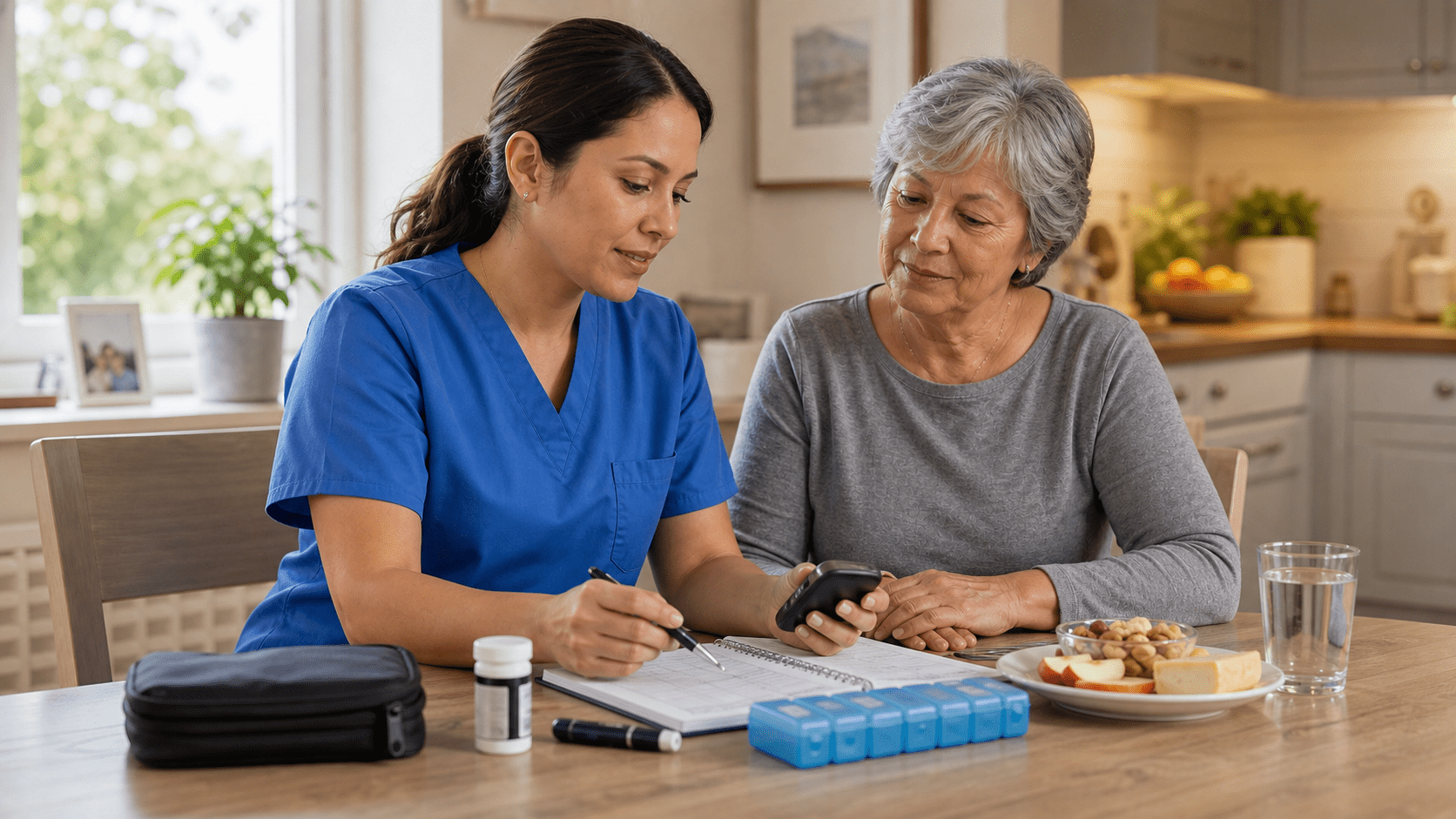
Diabetes home health nurse visits support glucose log review, medication education, skin and foot checks, warning signs, and physician coordination.
EXCELLENT 


Is This Service Right for You?
A Diabetes Home Health Nurse may be appropriate when diabetes care has become difficult to manage safely at home. Some patients need help after a hospitalization. Others need teaching after a medication change, support reviewing glucose logs, or skin and foot checks because they cannot inspect their feet well. The service is especially useful when diabetes is affecting daily routines, wound risk, nutrition decisions, or caregiver confidence.
HarvardCare Home Health provides skilled nursing visits for patients in Los Angeles County who need diabetes-related support under a physician-directed plan. The nurse helps patients understand instructions, watch for warning signs, and communicate changes. The goal is not to replace the diabetes clinician, but to help the plan work in the home.
Common Signs a Patient May Need Help
- Repeated high or low blood sugar readings.
- Confusion about insulin, oral medications, or timing with meals.
- Recent emergency room visit, hospitalization, infection, or wound concern.
- Difficulty checking feet, seeing skin changes, or managing supplies.
- Caregivers who are unsure when to call the physician.
Not every patient needs the same kind of support. One person may need glucose log review and medication education. Another may need close skin checks because neuropathy makes foot injuries hard to feel. A nurse can help identify which home routines are creating risk and which instructions need clarification.
What the Care Team Can Assist With
| Home concern | Skilled nursing support |
|---|---|
| Glucose readings | Review logs, symptoms, and patterns to report to the physician. |
| Medication routine | Teach timing, safety instructions, and questions to ask the prescriber. |
| Feet and skin | Check for redness, blisters, wounds, dryness, pressure areas, or infection signs. |
| Caregiver uncertainty | Create a clearer call-the-doctor plan and reinforce daily checks. |
The nurse may also review nutrition instructions from the care team, hydration, sick-day warning signs, safe sharps handling if injections are part of the plan, and how other conditions affect diabetes control.
What Family Caregivers Should Know
Family caregivers often notice behavior changes before the patient does. Sweating, shakiness, confusion, unusual sleepiness, increased thirst, more frequent urination, nausea, or worsening wound symptoms should be taken seriously. Caregivers should know where supplies are kept, which readings should be reported, and which symptoms are urgent.
Caregiver checklist
- Keep medication lists and glucose logs in one place.
- Know the physician instructions for low and high readings.
- Check feet and skin regularly if the patient cannot do so safely.
- Call for guidance when readings or symptoms do not match the plan.
How to Start Care
Diabetes home health nursing generally requires a physician order and a skilled need. HarvardCare Home Health can explain what referral details may be needed, including diagnosis, recent changes, medications, homebound status, and the reason skilled nursing is being requested. If the patient already has discharge paperwork, a medication list, or glucose logs, those documents can help the intake review.
Medicare or other insurance may cover home health when eligibility requirements are met, including physician order, homebound status, and intermittent skilled nursing need. Coverage is not automatic and depends on the patient condition and payer rules.
Related Services
Related services may include skilled nursing care at home, a home health nurse visit, in-home medication management services, diabetic foot ulcer care at home, and in-home wound care services when skin breakdown or wounds are present.
Talk With HarvardCare Home Health
Use our Contact page or Secure Intake to ask about diabetes nursing at home. Our team can review the situation and explain whether a home health referral may be appropriate.
Questions That Help Decide Whether Nursing Is Needed
A family may not know whether diabetes support at home is a convenience request or a skilled need. The decision usually depends on safety, recent changes, and whether the patient needs nursing assessment or teaching that cannot be handled by routine reminders alone. A patient who is stable, independent, and confident may not need home health. A patient with repeated abnormal readings, new medications, wounds, weakness, or confusion may need a closer review.
Helpful questions include: Has the patient had a recent hospitalization or emergency visit? Are medications new or difficult to follow? Is the patient able to check blood sugar safely? Can the patient see and reach both feet? Are meals being skipped? Has there been dizziness, sweating, shakiness, infection, or a wound that is slow to improve? These details help the care team decide whether a physician-directed home health plan is appropriate.
Home diabetes risk snapshot
| Risk area | What families may notice | Why it matters |
|---|---|---|
| Glucose control | Readings are frequently outside the ordered range. | Patterns may need physician review. |
| Medication routine | Doses are missed, duplicated, or taken without meals. | Medication timing can affect safety. |
| Skin and feet | Redness, blisters, cracks, swelling, drainage, or pain. | Neuropathy may hide injuries until they worsen. |
| Caregiver support | Family members are guessing when to call for help. | A clear escalation plan can reduce delays. |
Foot and Skin Checks Deserve Special Attention
Diabetes can reduce sensation and slow healing for some patients. A small blister, pressure mark, or crack in dry skin may become serious if it is missed. The nurse can inspect feet and skin, ask about shoe fit, watch for pressure areas, and reinforce the need to report open areas, drainage, odor, warmth, swelling, or spreading redness. If a wound is present, the patient may need wound-specific services in addition to diabetes nursing.
Families should not trim problem nails, cut calluses, or treat wounds with home remedies unless the physician has advised it. The safer approach is early reporting, clean and dry skin care as instructed, and prompt evaluation when changes appear. Diabetes nursing can help the family understand which findings are routine and which need a call.
Making the Daily Plan Easier to Follow
Diabetes instructions often involve several moving parts: medications, meals, hydration, glucose checks, foot inspection, activity, and appointments. The nurse may help the patient organize supplies, keep logs visible, and simplify the timing questions that lead to mistakes. The nurse can also identify when the written plan does not match the real home routine and help the family ask the physician better questions.
This support is especially important when diabetes overlaps with heart disease, kidney disease, COPD, poor vision, memory problems, or wounds. The nurse’s role is to connect the dots, reinforce the ordered plan, and make sure concerning patterns are not ignored.
The questions below focus on diabetes-specific home nursing support, including glucose logs, medication teaching, foot checks, warning signs, and eligibility review.
Check Eligibility and Next Steps
To ask whether diabetes home health nurse may fit the patient’s home health plan, contact HarvardCare Home Health or submit secure intake details. Our team can review the referral need, physician order requirements, homebound status when applicable, and next steps without making coverage guarantees.
Contact HarvardCare Home Health or use Secure Intake to request a review.
FAQs
Do you have questions?
Got questions about Diabetes Home Health Nurse? Here are answers to what patients and families ask most.
Medication changes must come from the prescribing clinician. The nurse can reinforce instructions and report patterns that may need review.
The nurse can check feet and skin, teach daily inspection, and report wounds or infection signs early, but prevention also depends on the physician plan and patient routines.
Follow the physician instructions. Repeated high or low readings, symptoms of hypoglycemia, confusion, vomiting, infection, or wounds should be reported promptly.
It may be covered when home health eligibility requirements are met, including physician order, homebound status, and intermittent skilled nursing need.
Yes. Teaching can include symptoms, glucose log organization, foot checks, medication questions, and when to call the physician.
The nurse can reinforce physician or dietitian instructions, but detailed meal planning may require a registered dietitian or diabetes educator.
Have medications, glucose meter, logs, discharge paperwork, physician contact information, and current instructions available.
Yes. Post-hospital diabetes nursing can help review new instructions, monitor symptoms, and coordinate concerns with the physician.
Contact HarvardCare Home Health or submit secure intake information so the team can explain the referral and eligibility review process.
TESTIMONIALS
What Our Patients & Families Say
EXCELLENT
AREAS WE SERVE
Diabetes Home Health Nurse Near You
Our licensed healthcare professionals provide expert care in the comfort of your home. We proudly serve patients and families throughout Los Angeles County.
Serving 97 cities across LA County
- A
- Agoura Hills
- Alhambra
- Altadena
- Arcadia
- B
- Bel Air
- Bellflower
- Beverly Hills
- Boyle Heights
- Brentwood
- Burbank
- C
- Calabasas
- Carson
- Century City
- Cerritos
- Claremont
- Compton
- Covina
- Culver City
- D
- Diamond Bar
- Downey
- E
- Eagle Rock
- East Los Angeles
- Echo Park
- Encino
- G
- Gardena
- Glendale
- Glendora
- Granada Hills
- H
- Hacienda Heights
- Hancock Park
- Harbor City
- Hawthorne
- Highland Park
- Hollywood
- Hollywood Hills
- I
- Inglewood
- K
- Koreatown
- L
- La Crescenta-Montrose
- La Mirada
- Lakewood
- Lincoln Heights
- Long Beach
- Los Angeles
- Los Feliz
- M
- Malibu
- Manhattan Beach
- Mar Vista
- Marina del Rey
- Mid-City
- Mid-Wilshire
- Miracle Mile
- Monrovia
- Montebello
- Monterey Park
- N
- North Hollywood
- Northridge
- Norwalk
- P
- Pacific Palisades
- Palms
- Palos Verdes Estates
- Palos Verdes Peninsula
- Panorama City
- Pasadena
- Pico Rivera
- Playa Vista
- Pomona
- Porter Ranch
- R
- Rancho Palos Verdes
- Redondo Beach
- Reseda
- Rolling Hills Estates
- Rowland Heights
- S
- San Dimas
- San Gabriel
- San Marino
- San Pedro
- Santa Clarita
- Santa Monica
- Sawtelle
- Sherman Oaks
- Silver Lake
- South Gate
- South Pasadena
- Studio City
- T
- Tarzana
- Torrance
- V
- Van Nuys
- Venice
- W
- West Covina
- West Hollywood
- West Los Angeles
- Westchester
- Westlake Village
- Westwood
- Whittier
- Wilmington
- Woodland Hills
More Services

In-Home Wound Care Services
- Board-certified wound care nurses
- Personalized treatment plans
- All wound types treated
Diabetic Wound Care at Home
- Diabetes wound specialists
- Blood sugar optimization support
- Advanced offloading techniques
Skilled Nursing Care at Home
- Registered nurses available 7 days a week
- Comprehensive care coordination
- IV therapy and infusion services