
 Wound Care
It is coordinated home health support for safety, routines, caregiver education, and skilled needs related to dementia when services are ordered and clinically appropriate.
SPECIALTY CARE PROGRAMS
Dementia Care at Home
Dementia care at home may help families manage safety, routines, communication, fall risk, personal care, and caregiver stress.
EXCELLENT 


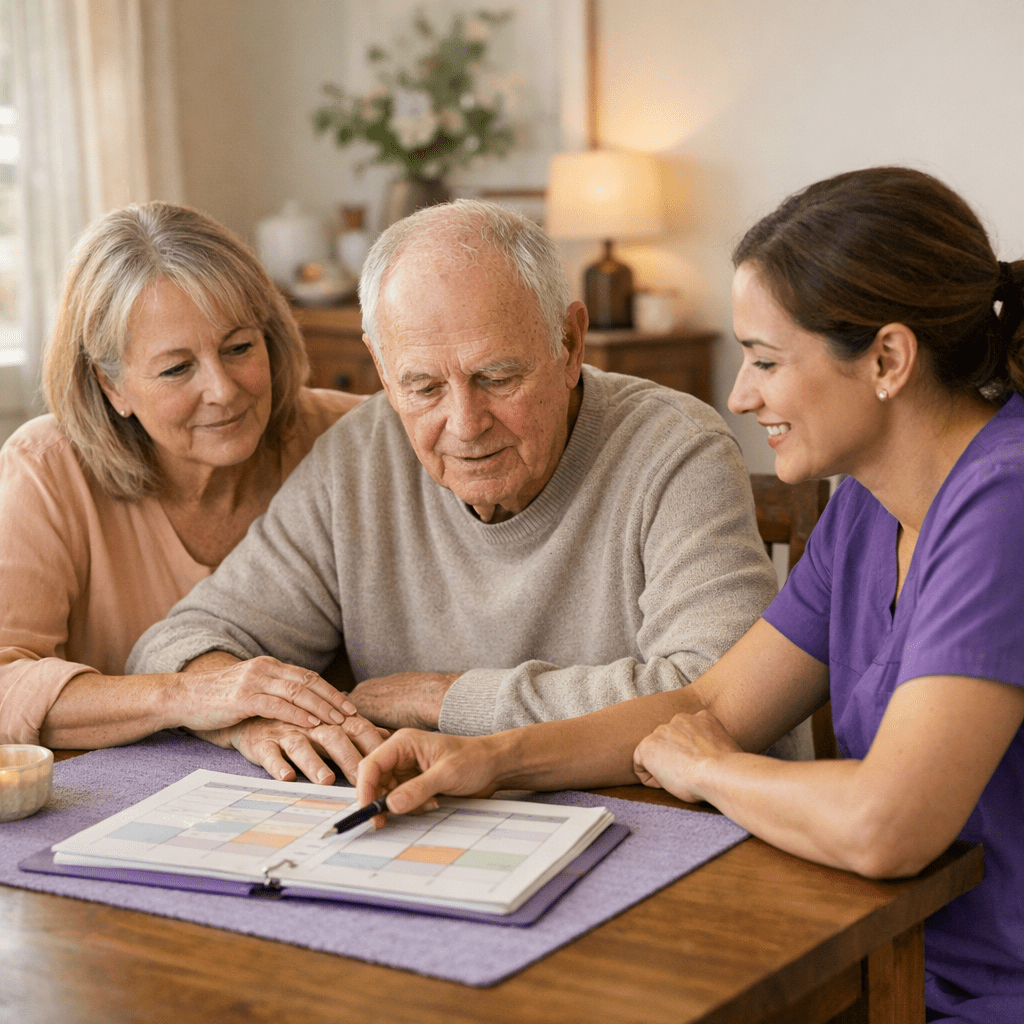
Dementia can make ordinary home routines feel unpredictable. A person may seem independent one moment and then become confused by a familiar bathroom, forget how to use a walker, resist medications, or become anxious when a caregiver tries to help. Families often need more than general advice; they need support that fits the patient, the home, and the care plan.
HarvardCare Home Health provides dementia care at home as part of eligible home health services when clinically appropriate and ordered under a plan of care. This is not unlimited private-duty caregiver care, and it does not promise to stop or reverse dementia. Instead, the focus is on skilled support, caregiver education, safer routines, and coordination among nursing, therapy, aides, social work, the provider, and the family.
Dementia care may be especially important after hospitalization, a fall, a new diagnosis, medication changes, worsening weakness, difficulty with personal care, or caregiver burnout. If a patient has emergency symptoms such as trouble breathing, chest pain, stroke-like signs, serious injury, or immediate danger to self or others, families should call 911. Sudden or major changes in confusion, behavior, alertness, appetite, or function should also be reported to the physician.
How Dementia Changes Daily Care at Home
Dementia affects memory, but it also affects attention, judgment, sequencing, language, vision interpretation, and emotional regulation. A patient may not understand why a task is needed, may misinterpret help as a threat, or may become overwhelmed by too many instructions. The family may know the patient well but still feel unsure how to keep the day safe without arguing or taking away independence too quickly.
Home health support starts with the real routines: getting out of bed, taking medications, eating breakfast, walking to the bathroom, bathing, dressing, resting, and preparing for sleep. The care team may look at when problems happen, what makes them worse, and what support already works. The home environment can then be adjusted to reduce confusion and risk.
What Home Health Support May Include
The services involved depend on the provider order, skilled need, and plan of care. A nurse may monitor health changes, teach medication safety, review symptom concerns, and coordinate with the provider. Physical therapy may address walking, balance, endurance, transfers, and fall prevention. Occupational therapy may focus on bathing, dressing, toileting, adaptive equipment, and home safety routines. Speech therapy may help with cognitive-communication, swallowing concerns, or caregiver communication strategies.
When approved in the care plan, a home health aide may help with personal care such as bathing, grooming, dressing, or hygiene support. Medical social work may help families understand resources, caregiver stress, care coordination needs, and planning concerns. These services work best when the family shares specific examples of what is becoming unsafe or difficult.
- Reviewing medication routine concerns and teaching what should be shared with the provider.
- Building safer walking paths and reducing clutter, poor lighting, or tripping hazards.
- Helping caregivers use calm cueing during bathing, dressing, meals, and toileting.
- Supporting fall prevention through therapy when mobility or balance has declined.
- Connecting the family with social work support when stress, resources, or planning are major concerns.
Fall Prevention, ADL Support, and Home Safety
Dementia-related falls often happen because several risks overlap. The patient may forget an assistive device, rush to the bathroom, misjudge a threshold, become tired after poor sleep, or try to stand without help. A therapist can assess walking paths, chair height, bed transfers, shower setup, toilet transfers, footwear, lighting, and caregiver technique.
Activities of daily living also need careful attention. Bathing, dressing, toileting, and grooming can become distressing if the patient feels rushed or confused. Occupational therapy and aide support may help create a routine that protects privacy and reduces confrontation. The care team may suggest placing supplies in the order they are used, reducing background noise, offering simple choices, and allowing extra time for the patient to respond.
Practical Caregiver Preparation
Before home health starts, caregivers can write down the times of day when care becomes hardest, recent falls or near falls, medication concerns, changes in eating or drinking, sleep disruptions, unsafe wandering, and what phrases seem to calm or upset the patient. This information helps the team tailor recommendations instead of giving generic dementia advice.
- Keep a current medication list and provider instructions available.
- Identify the most urgent safety concern, such as falls, bathing, medication routines, or wandering risk.
- Share any hospital discharge paperwork or recent therapy recommendations.
- Tell the team if caregiver fatigue is affecting safety or follow-through.
Why Choose HarvardCare Home Health
HarvardCare Home Health approaches dementia care as a coordinated home health service, not a one-size-fits-all caregiver promise. The team can evaluate how the diagnosis affects the actual home routine and then support the plan of care with nursing, therapy, aide services, medical social work, and care coordination when appropriate. Families receive practical guidance that can be used between visits, where most of the care actually happens.
Medicare and Home Health Eligibility
Dementia care at home may be included in Medicare home health when requirements are met. A provider order, skilled need, homebound status, plan of care, and eligibility review are generally part of the process. Medicare coverage is not guaranteed, and home health does not provide unlimited private-duty custodial care. HarvardCare Home Health can review the request and explain what services may be appropriate under the patient’s plan.
Reducing Confusion Without Removing Dignity
Dementia care works best when safety measures still respect the person. The care team may help families simplify routines without treating the patient like a task list. That can mean offering one choice instead of five, preparing the bathroom before bathing begins, using familiar clothing, keeping the same chair for meals, or giving the patient time to respond before repeating instructions. These adjustments can reduce frustration while still protecting safety.
Caregivers may also need help recognizing patterns. Agitation may be worse when the patient is tired, hungry, overstimulated, in pain, or confused by a change in environment. A home health clinician can help the family observe those patterns and share concerns with the appropriate provider. The goal is not to control every behavior, but to make the day safer, calmer, and more predictable within the home health plan.
What Families Can Track Between Visits
Short notes can make dementia care safer. Families may track falls, near falls, missed medications, poor intake, sleep disruption, bathroom accidents, unsafe wandering, and changes in mood or alertness. These notes help the home health team and physician understand whether the care plan is working or whether the patient needs additional medical review.
Related Services and Next Steps
Dementia care may connect with Fall Prevention Therapy at Home, Occupational Therapy at Home, Speech Therapy at Home, Home Health Aide Services, Medical Social Worker at Home, and Care Coordination at Home. Complete the form on this page or call HarvardCare Home Health. The agency can review current needs, eligibility considerations, and next steps without promising coverage or approval.
FAQs
Do you have questions?
Got questions about Dementia Care at Home? Here are answers to what patients and families ask most.
No. Home health does not reverse dementia. It may help families manage safety, routines, function, communication, and care-plan needs.
Depending on the plan of care, skilled nursing, physical therapy, occupational therapy, speech therapy, home health aide support, medical social work, and care coordination may be involved.
Occupational therapy and aide services may help when bathing is part of the plan of care, including safer setup, cueing, pacing, privacy, and caregiver technique.
Therapy may help assess walking, transfers, balance, equipment use, and home hazards. Dementia-related fall risk often requires caregiver cueing and environmental changes.
No. Medicare home health is not unlimited 24-hour supervision or private-duty caregiving. Services are provided under an eligible plan of care.
A home health aide may help with approved personal care tasks under the plan, such as bathing, dressing, grooming, or hygiene support.
HarvardCare Home Health can review the request, current needs, provider order, homebound status, skilled need, and plan-of-care fit.
Report sudden confusion, major behavior changes, falls, medication problems, poor intake, swallowing concerns, new weakness, or any symptoms the physician has told you to monitor.
Call 911 for immediate danger, serious injury, chest pain, trouble breathing, stroke-like symptoms, or other emergencies. Contact the physician for urgent non-emergency medical changes.
TESTIMONIALS
What Our Patients & Families Say
AREAS WE SERVE
Dementia Care at Home Near You
Our licensed healthcare professionals provide expert care in the comfort of your home. We proudly serve patients and families throughout Los Angeles County.
Serving 279 cities across LA County
- A
- Acton
- Adams-Normandie
- Agoura Hills
- Agua Dulce
- Alhambra
- Alondra Park
- Altadena
- Angelino Heights
- Arcadia
- Arleta
- Arlington Heights
- Artesia
- Arts District
- Atwater Village
- Avocado Heights
- Azusa
- B
- Baldwin Hills
- Baldwin Park
- Bassett
- Beachwood Canyon
- Bel Air
- Bell
- Bell Gardens
- Bellflower
- Beverly Crest
- Beverly Grove
- Beverly Hills
- Beverlywood
- Boyle Heights
- Bradbury
- Brentwood
- Broadway-Manchester
- Burbank
- C
- Calabasas
- Canoga Park
- Canyon Country
- Carson
- Carthay
- Castaic
- Castle Heights
- Central-Alameda
- Century City
- Cerritos
- Charter Oak
- Chatsworth
- Chesterfield Square
- Cheviot Hills
- Chinatown
- Citrus
- City Terrace
- Claremont
- Commerce
- Compton
- Country Club Park
- Covina
- Crenshaw
- Cudahy
- Culver City
- Cypress Park
- D
- Del Aire
- Del Rey
- Desert View Highlands
- Diamond Bar
- Downey
- Downtown Los Angeles
- Duarte
- E
- Eagle Rock
- East Hollywood
- East Los Angeles
- East Pasadena
- East Rancho Dominguez
- East San Gabriel
- East Whittier
- Echo Park
- El Camino Village
- El Monte
- El Segundo
- El Sereno
- Elysian Valley
- Encino
- Exposition Park
- F
- Fairfax
- Florence
- Florence-Firestone
- G
- Gardena
- Garvanza
- Glassell Park
- Glendale
- Glendora
- Gramercy Park
- Granada Hills
- Green Meadows
- H
- Hacienda Heights
- Hancock Park
- Harbor City
- Harbor Gateway
- Harvard Heights
- Harvard Park
- Hasley Canyon
- Hawaiian Gardens
- Hawthorne
- Hermon
- Hermosa Beach
- Hidden Hills
- Highland Park
- Historic Filipinotown
- Hollywood
- Hollywood Hills
- Holmby Hills
- Huntington Park
- Hyde Park
- I
- Inglewood
- J
- Jefferson Park
- K
- Kinneloa Mesa
- Koreatown
- L
- La Cañada Flintridge
- La Crescenta-Montrose
- La Habra Heights
- La Mirada
- La Puente
- La Verne
- Ladera Heights
- Lake Balboa
- Lake Hughes
- Lake Los Angeles
- Lake View Terrace
- Lakewood
- Lancaster
- Larchmont
- Lawndale
- Leimert Park
- Lennox
- Leona Valley
- Lincoln Heights
- Little Armenia
- Little Tokyo
- Littlerock
- Lomita
- Long Beach
- Los Angeles
- Los Feliz
- Lynwood
- M
- Malibu
- Manchester Square
- Manhattan Beach
- Mar Vista
- Marina del Rey
- Mayflower Village
- Maywood
- Mid-City
- Mid-Wilshire
- Miracle Mile
- Mission Hills
- Monrovia
- Montebello
- Montecito Heights
- Monterey Park
- Mt Washington
- N
- Newhall
- NoHo Arts District
- North El Monte
- North Hills
- North Hollywood
- North Long Beach
- Northridge
- Norwalk
- P
- Pacific Palisades
- Pacoima
- Palmdale
- Palms
- Palos Verdes Estates
- Palos Verdes Peninsula
- Panorama City
- Paramount
- Park La Brea
- Pasadena
- Pearblossom
- Pico Rivera
- Pico-Robertson
- Pico-Union
- Playa del Rey
- Playa Vista
- Pomona
- Porter Ranch
- Q
- Quartz Hill
- R
- Rancho Dominguez
- Rancho Palos Verdes
- Rancho Park
- Redondo Beach
- Reseda
- Rolling Hills
- Rolling Hills Estates
- Rosemead
- Rowland Heights
- S
- San Dimas
- San Fernando
- San Gabriel
- San Marino
- San Pasqual
- San Pedro
- Santa Clarita
- Santa Fe Springs
- Santa Monica
- Saugus
- Sawtelle
- Sepulveda
- Shadow Hills
- Sherman Oaks
- Sherman Village
- Sherwood Forest
- Sierra Madre
- Signal Hill
- Silver Lake
- South Central
- South El Monte
- South Gate
- South Park
- South Pasadena
- South San Gabriel
- South San Jose Hills
- South Whittier
- Stevenson Ranch
- Stonehurst
- Studio City
- Sun Valley
- Sun Village
- Sunland
- Sunset Park
- Sylmar
- T
- Tarzana
- Temple City
- Thai Town
- Toluca Lake
- Topanga
- Torrance
- Tujunga
- U
- University Hills
- University Park
- V
- Val Verde
- Valencia
- Valinda
- Valley Glen
- Valley Village
- Van Nuys
- Venice
- Vermont Knolls
- Vermont Square
- Vermont Vista
- Vermont-Slauson
- Victor Heights
- View Park-Windsor Hills
- Vincent
- W
- Walnut
- Walnut Park
- Watts
- West Adams
- West Athens
- West Carson
- West Covina
- West Hills
- West Hollywood
- West Los Angeles
- West Puente Valley
- West Rancho Dominguez
- West Whittier-Los Nietos
- Westchester
- Westlake
- Westlake Village
- Westmont
- Westwood
- Westwood Village
- Whitley Heights
- Whittier
- Willowbrook
- Wilmington
- Wilshire Center
- Windsor Square
- Winnetka
- Woodland Hills
More Services

In-Home Wound Care Services
- Board-certified wound care nurses
- Personalized treatment plans
- All wound types treated
Diabetic Wound Care at Home
- Diabetes wound specialists
- Blood sugar optimization support
- Advanced offloading techniques
Skilled Nursing Care at Home
- Registered nurses available 7 days a week
- Comprehensive care coordination
- IV therapy and infusion services