
 Wound Care
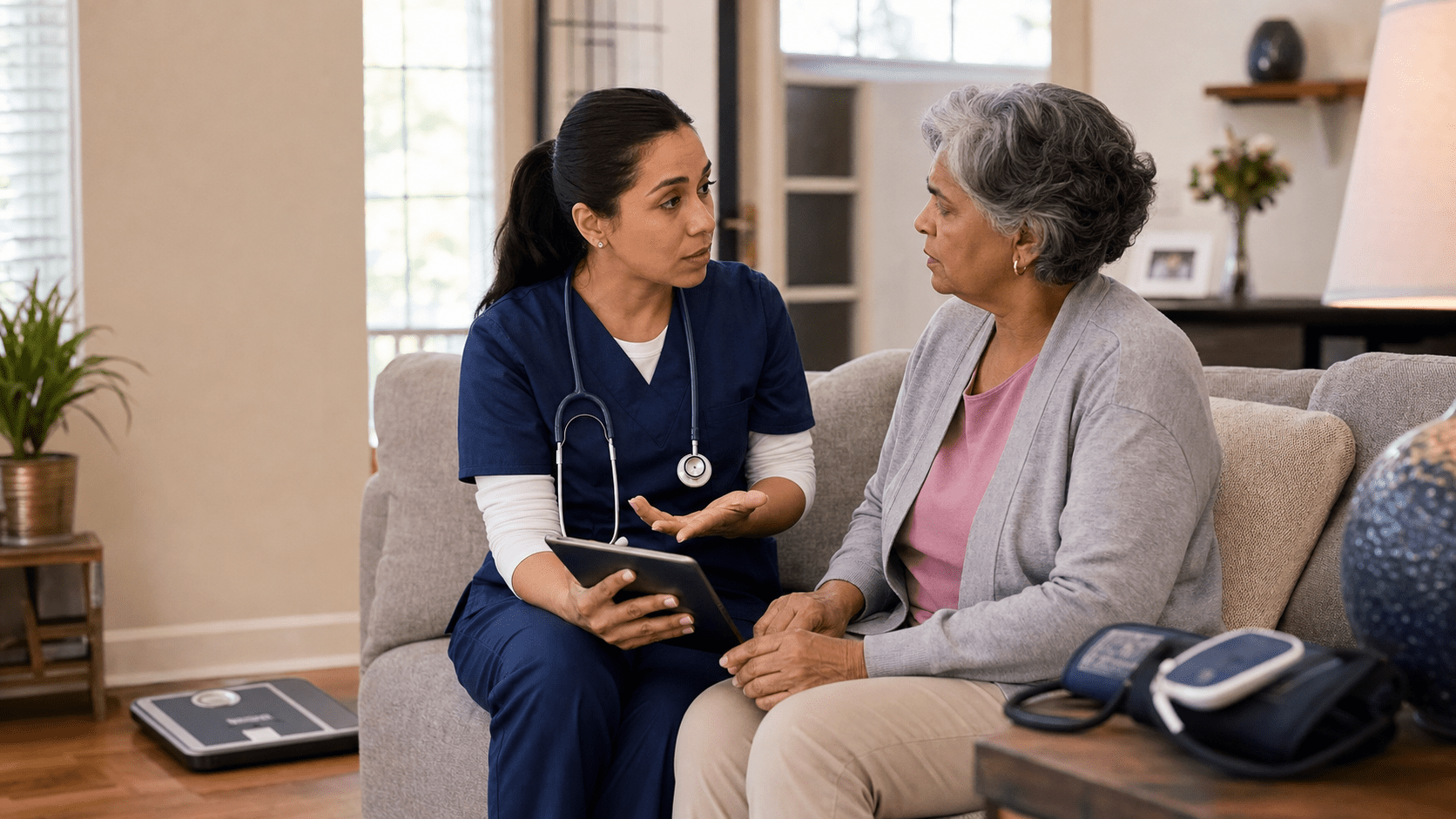
A CHF home health nurse monitors symptoms, vital signs, weight trends, swelling, medication concerns, and reports concerning changes to the physician.
SKILLED NURSING
CHF Home Health Nurse
CHF home health nurse visits support heart failure patients with symptom checks, daily weight guidance, medication teaching, swelling monitoring, and physician updates.
EXCELLENT 


The Problem Patients Face at Home
Congestive heart failure, often shortened to CHF, can be difficult to manage at home because symptoms may build slowly. A patient may gain weight, feel more tired, notice ankle swelling, sleep propped up, or become short of breath with less activity than usual. These changes can seem minor at first, but they may signal fluid buildup or worsening heart failure that needs physician attention.
A CHF Home Health Nurse helps patients and families monitor the physician-directed plan at home. The nurse may check vital signs, review daily weights, watch for swelling and breathing changes, reinforce medication instructions, and help the family understand which symptoms should be reported. HarvardCare Home Health provides skilled nursing visits in Los Angeles County when the patient has an appropriate home health referral and skilled need.
Risks of Waiting Too Long
CHF symptoms can move from mild to serious if warning signs are ignored. Waiting too long to report weight gain, swelling, shortness of breath, dizziness, confusion, or medication problems can lead to emergency visits or hospitalization. Home health nursing cannot prevent every complication, but it can help families respond earlier and describe changes clearly to the physician.
- Sudden weight gain or steady weight increase over several days.
- New or worsening swelling in the feet, ankles, legs, or abdomen.
- Shortness of breath when lying flat or during usual activities.
- New dizziness, weakness, confusion, or chest symptoms.
- Missed medications, side effects, or unclear fluid/salt instructions.
How Professional Home Health Helps
The nurse brings structure to the home routine. Instead of guessing whether a symptom matters, the patient and caregiver can learn what to track, how to track it, and what information the physician may need. The nurse may review the medication list, ask about diet and fluid instructions, check edema, assess breathing, review weight records, and document changes.
| CHF concern | Home health nursing support |
|---|---|
| Fluid changes | Review daily weights, swelling, breathing symptoms, and physician call parameters. |
| Medication confusion | Teach medication purpose, timing, precautions, and questions for the prescriber. |
| Activity limits | Discuss pacing, fatigue, and symptoms that should stop activity. |
| Caregiver worry | Build a clearer plan for reporting changes and organizing records. |
What Is Included
Depending on the physician order, CHF nursing support may include vital signs, weight review, edema checks, breathing assessment, medication education, diet and fluid instruction reinforcement, safety teaching, and care coordination. The nurse may also ask about sleep position, cough, appetite, urine changes, dizziness, falls, and whether symptoms are limiting daily activities.
The nurse does not independently change heart failure medications or fluid instructions. If the patient has symptoms, abnormal readings, missed doses, or side effects, the nurse can help communicate the issue to the physician. This is important because diuretics, blood pressure medications, and other heart medicines may need careful medical review.
Practical Tips for Families
Families can support CHF care by keeping a scale in the same place, writing down weights at the same time each day if instructed, tracking swelling, and saving medication questions for the nurse or physician. A simple notebook may be enough. The important part is consistency and symptom context.
Home CHF checklist
- Record daily weight if instructed by the physician.
- Watch for swelling, breathing changes, cough, fatigue, or dizziness.
- Keep medications and instructions in one location.
- Do not change diuretic or heart medication doses without the prescriber.
- Know which symptoms require urgent medical attention.
When to Seek Urgent Help
Severe shortness of breath, chest pain, fainting, blue lips, severe confusion, or sudden severe weakness should be handled as urgent medical symptoms. Families should not wait for the next home health visit when symptoms feel emergent. The nurse can help clarify the non-emergency call plan, but emergencies require immediate action.
Medicare and Home Health Eligibility
CHF nursing may be part of home health when a physician orders skilled nursing, the patient meets homebound requirements under Medicare rules when applicable, and there is an intermittent skilled need such as assessment, teaching, or monitoring. Coverage depends on the patient’s condition, payer rules, and ordered services. HarvardCare Home Health can review the referral process and explain what information is needed.
Related Services and CTA
CHF care may overlap with skilled nursing care at home, a home health nurse visit, post-hospital discharge nursing, medication management support, and edema treatment at home. To ask about CHF nursing, use Contact or Secure Intake.
Solving the Daily Weight Problem
Daily weights are often recommended for CHF patients, but many families are not told how to make the habit reliable. The nurse may help the patient choose a consistent time, use the same scale, record symptoms beside the number, and understand the physician’s reporting parameters. Weight changes are more meaningful when they are tracked consistently and paired with swelling, breathing, appetite, and medication details.
The nurse can also identify barriers. The scale may be hard to read, the patient may be unsafe standing alone, or the family may not know where to keep the log. These small problems can make a heart failure plan fail at home. Skilled nursing helps adapt the routine so it is safer and easier to maintain.
Medication and Diet Questions That Need Clarification
Patients with CHF may have diuretics, blood pressure medications, potassium instructions, fluid guidance, or sodium restrictions. The nurse can reinforce instructions that are already in the care plan and help the family collect questions for the prescriber. The nurse should not guess about changing a medication dose or fluid limit. When instructions are unclear, the safe answer is to contact the physician or pharmacy.
- What should we do if a diuretic dose is missed?
- Which symptoms should be reported the same day?
- Are there fluid or sodium instructions we should follow?
- Which side effects should be watched after medication changes?
Why CHF Teaching Should Include the Whole Household
CHF monitoring often depends on the people around the patient. A caregiver may notice that shoes are tighter, that the patient is sleeping in a chair, or that walking to the bathroom now causes shortness of breath. Including caregivers in teaching helps the household recognize patterns sooner and report them with better detail.
The FAQ section below covers CHF monitoring, daily weights, swelling, medication teaching, caregiver support, warning signs, and home health eligibility.
Check Eligibility and Next Steps
To ask whether chf home health nurse may fit the patient’s home health plan, contact HarvardCare Home Health or submit secure intake details. Our team can review the referral need, physician order requirements, homebound status when applicable, and next steps without making coverage guarantees.
Contact HarvardCare Home Health or use Secure Intake to request a review.
FAQs
Do you have questions?
Got questions about CHF Home Health Nurse? Here are answers to what patients and families ask most.
Yes. The nurse can teach consistent weight tracking and explain physician instructions for reporting weight changes.
No. Medication changes must come from the prescribing clinician. The nurse can report symptoms or concerns for review.
Report sudden weight gain, worsening swelling, increased shortness of breath, dizziness, chest symptoms, confusion, or medication side effects.
CHF is commonly used to describe congestive heart failure, a type or presentation of heart failure involving fluid congestion.
Yes. Caregiver teaching can include daily weights, swelling checks, breathing symptoms, medication questions, and when to call.
Yes. Nursing visits can support discharge instructions, symptom monitoring, medication review, and physician communication.
It may be covered when home health eligibility requirements are met and skilled nursing is ordered. Coverage depends on the case.
Visit frequency depends on the physician order, symptom stability, teaching needs, and payer requirements.
Contact HarvardCare Home Health or submit secure intake details so the team can review the referral and eligibility process.
TESTIMONIALS
What Our Patients & Families Say
AREAS WE SERVE
CHF Home Health Nurse Near You
Our licensed healthcare professionals provide expert care in the comfort of your home. We proudly serve patients and families throughout Los Angeles County.
Serving 279 cities across LA County
- A
- Acton
- Adams-Normandie
- Agoura Hills
- Agua Dulce
- Alhambra
- Alondra Park
- Altadena
- Angelino Heights
- Arcadia
- Arleta
- Arlington Heights
- Artesia
- Arts District
- Atwater Village
- Avocado Heights
- Azusa
- B
- Baldwin Hills
- Baldwin Park
- Bassett
- Beachwood Canyon
- Bel Air
- Bell
- Bell Gardens
- Bellflower
- Beverly Crest
- Beverly Grove
- Beverly Hills
- Beverlywood
- Boyle Heights
- Bradbury
- Brentwood
- Broadway-Manchester
- Burbank
- C
- Calabasas
- Canoga Park
- Canyon Country
- Carson
- Carthay
- Castaic
- Castle Heights
- Central-Alameda
- Century City
- Cerritos
- Charter Oak
- Chatsworth
- Chesterfield Square
- Cheviot Hills
- Chinatown
- Citrus
- City Terrace
- Claremont
- Commerce
- Compton
- Country Club Park
- Covina
- Crenshaw
- Cudahy
- Culver City
- Cypress Park
- D
- Del Aire
- Del Rey
- Desert View Highlands
- Diamond Bar
- Downey
- Downtown Los Angeles
- Duarte
- E
- Eagle Rock
- East Hollywood
- East Los Angeles
- East Pasadena
- East Rancho Dominguez
- East San Gabriel
- East Whittier
- Echo Park
- El Camino Village
- El Monte
- El Segundo
- El Sereno
- Elysian Valley
- Encino
- Exposition Park
- F
- Fairfax
- Florence
- Florence-Firestone
- G
- Gardena
- Garvanza
- Glassell Park
- Glendale
- Glendora
- Gramercy Park
- Granada Hills
- Green Meadows
- H
- Hacienda Heights
- Hancock Park
- Harbor City
- Harbor Gateway
- Harvard Heights
- Harvard Park
- Hasley Canyon
- Hawaiian Gardens
- Hawthorne
- Hermon
- Hermosa Beach
- Hidden Hills
- Highland Park
- Historic Filipinotown
- Hollywood
- Hollywood Hills
- Holmby Hills
- Huntington Park
- Hyde Park
- I
- Inglewood
- J
- Jefferson Park
- K
- Kinneloa Mesa
- Koreatown
- L
- La Cañada Flintridge
- La Crescenta-Montrose
- La Habra Heights
- La Mirada
- La Puente
- La Verne
- Ladera Heights
- Lake Balboa
- Lake Hughes
- Lake Los Angeles
- Lake View Terrace
- Lakewood
- Lancaster
- Larchmont
- Lawndale
- Leimert Park
- Lennox
- Leona Valley
- Lincoln Heights
- Little Armenia
- Little Tokyo
- Littlerock
- Lomita
- Long Beach
- Los Angeles
- Los Feliz
- Lynwood
- M
- Malibu
- Manchester Square
- Manhattan Beach
- Mar Vista
- Marina del Rey
- Mayflower Village
- Maywood
- Mid-City
- Mid-Wilshire
- Miracle Mile
- Mission Hills
- Monrovia
- Montebello
- Montecito Heights
- Monterey Park
- Mt Washington
- N
- Newhall
- NoHo Arts District
- North El Monte
- North Hills
- North Hollywood
- North Long Beach
- Northridge
- Norwalk
- P
- Pacific Palisades
- Pacoima
- Palmdale
- Palms
- Palos Verdes Estates
- Palos Verdes Peninsula
- Panorama City
- Paramount
- Park La Brea
- Pasadena
- Pearblossom
- Pico Rivera
- Pico-Robertson
- Pico-Union
- Playa del Rey
- Playa Vista
- Pomona
- Porter Ranch
- Q
- Quartz Hill
- R
- Rancho Dominguez
- Rancho Palos Verdes
- Rancho Park
- Redondo Beach
- Reseda
- Rolling Hills
- Rolling Hills Estates
- Rosemead
- Rowland Heights
- S
- San Dimas
- San Fernando
- San Gabriel
- San Marino
- San Pasqual
- San Pedro
- Santa Clarita
- Santa Fe Springs
- Santa Monica
- Saugus
- Sawtelle
- Sepulveda
- Shadow Hills
- Sherman Oaks
- Sherman Village
- Sherwood Forest
- Sierra Madre
- Signal Hill
- Silver Lake
- South Central
- South El Monte
- South Gate
- South Park
- South Pasadena
- South San Gabriel
- South San Jose Hills
- South Whittier
- Stevenson Ranch
- Stonehurst
- Studio City
- Sun Valley
- Sun Village
- Sunland
- Sunset Park
- Sylmar
- T
- Tarzana
- Temple City
- Thai Town
- Toluca Lake
- Topanga
- Torrance
- Tujunga
- U
- University Hills
- University Park
- V
- Val Verde
- Valencia
- Valinda
- Valley Glen
- Valley Village
- Van Nuys
- Venice
- Vermont Knolls
- Vermont Square
- Vermont Vista
- Vermont-Slauson
- Victor Heights
- View Park-Windsor Hills
- Vincent
- W
- Walnut
- Walnut Park
- Watts
- West Adams
- West Athens
- West Carson
- West Covina
- West Hills
- West Hollywood
- West Los Angeles
- West Puente Valley
- West Rancho Dominguez
- West Whittier-Los Nietos
- Westchester
- Westlake
- Westlake Village
- Westmont
- Westwood
- Westwood Village
- Whitley Heights
- Whittier
- Willowbrook
- Wilmington
- Wilshire Center
- Windsor Square
- Winnetka
- Woodland Hills
More Services

In-Home Wound Care Services
- Board-certified wound care nurses
- Personalized treatment plans
- All wound types treated
Diabetic Wound Care at Home
- Diabetes wound specialists
- Blood sugar optimization support
- Advanced offloading techniques
Skilled Nursing Care at Home
- Registered nurses available 7 days a week
- Comprehensive care coordination
- IV therapy and infusion services