 HarvardCare at Home
  HarvardCare at Home
  Wound Care
 Skilled Nursing Care
 Physical Therapy
 Occupational Therapy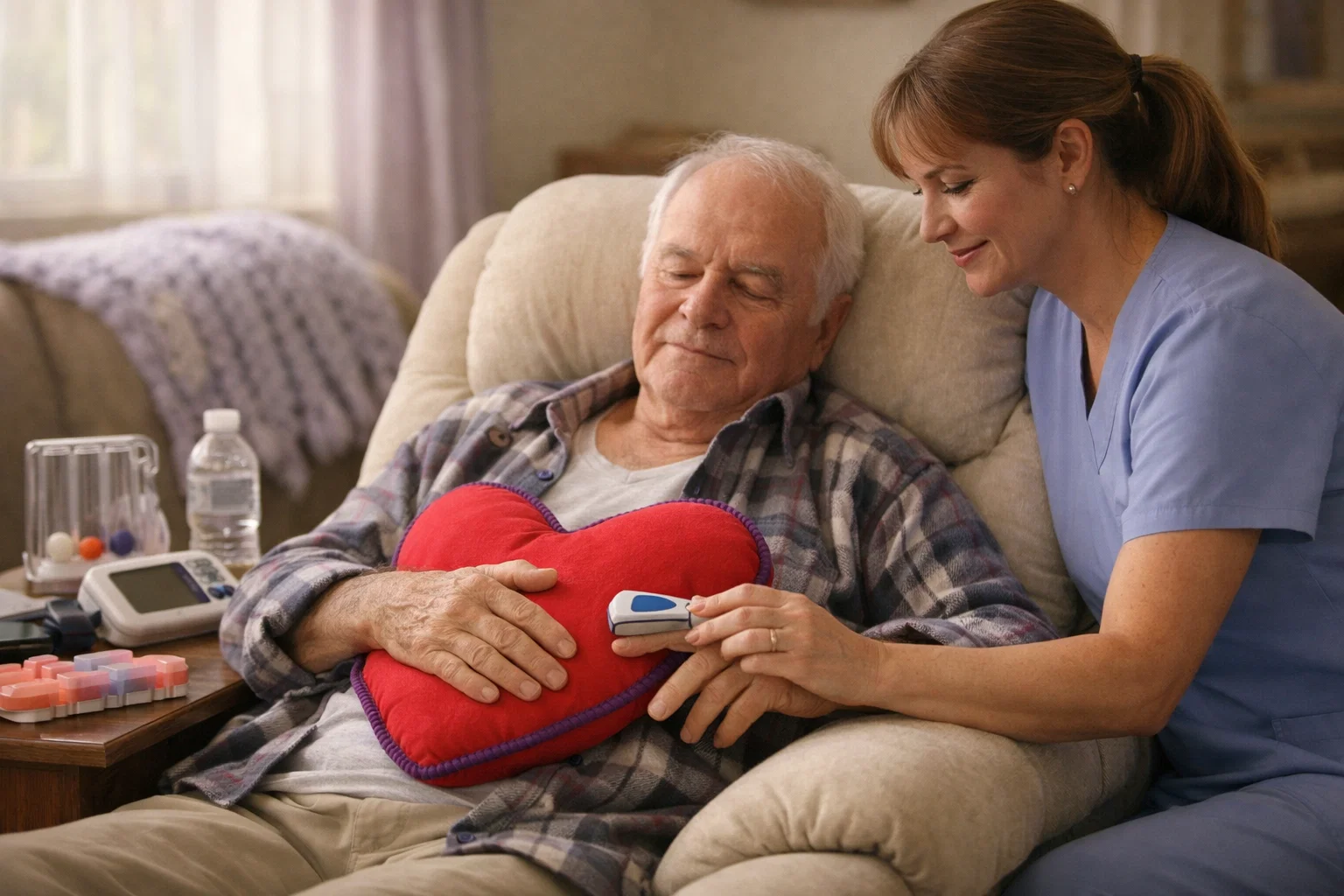

Open heart surgery is one of the most physically demanding procedures a person can undergo. Recovery takes weeks — sometimes months. The period immediately after discharge is both the most critical and the most vulnerable. Fortunately, Medicare covers skilled home health care after open heart surgery at $0 cost for qualifying patients. However, many families don’t know this benefit exists until it’s too late to use it optimally.
This guide explains what Medicare covers after open heart surgery, why home recovery is often safer than a skilled nursing facility, and how HarvardCare at Home supports cardiac surgery patients throughout Los Angeles County. Visit our home health care page for a complete overview.
What Is Open Heart Surgery?
Open heart surgery involves opening the chest and operating directly on the heart. The most common types are coronary artery bypass grafting (CABG), heart valve repair or replacement, and aortic aneurysm repair. Additionally, some congenital heart defect corrections are performed as open procedures. Each involves a sternotomy — cutting through the breastbone. As a result, recovery creates specific nursing and therapy needs that home health care directly addresses.
Approximately 400,000 open heart surgeries are performed annually in the United States. In other words, post-cardiac surgical home health is one of the most frequently needed — and most impactful — home health services available.
Why Home Health Care Is Critical After Open Heart Surgery
The 30 days after open heart surgery carry the highest risk for complications and readmission. Specifically, hospital readmission rates within 30 days of cardiac surgery range from 15–25% nationally. Furthermore, many of these readmissions are preventable with proper home monitoring. Wound complications, medication errors, fluid management failures, and cardiac arrhythmias are the most common drivers. Skilled home nursing directly addresses all of these risks.
In contrast to a skilled nursing facility, home recovery offers a lower-infection environment and familiar surroundings that reduce stress. Additionally, patients at home get better sleep, eat preferred foods, and have family nearby — all factors that support healing. Our post-hospital discharge nurse at home team specializes in high-acuity cardiac transitions. Read our guide on hospital discharge: what nobody tells you about recovery at home.
What Medicare Covers After Open Heart Surgery
Skilled Nursing Care
Skilled nursing is the cornerstone of home health after open heart surgery. Our nurses provide sternotomy wound assessment and dressing changes at every visit. Additionally, they monitor vital signs, daily weight for fluid retention, and medication compliance. Importantly, weight monitoring is a critical indicator — a gain of more than 2 pounds in 24 hours can signal heart failure decompensation before symptoms become severe. Our nurses also manage leg wound care for patients who had saphenous vein harvesting for CABG, and wrist wound care for radial artery harvest sites.
Furthermore, our nurses perform cardiac symptom monitoring, early arrhythmia recognition, and pain assessment at every visit. They communicate directly with your cardiologist and cardiac surgeon when concerns arise. Our skilled nursing care at home and in-home medication management teams work together for complex cardiac surgery patients.
Surgical Wound Care
Open heart surgery creates multiple wounds simultaneously. The sternotomy incision — running the length of the breastbone — is the primary wound. CABG patients also have harvest site wounds on the leg or wrist. Each wound requires individual assessment and care. Sternal wound infections, though rare at 1–4%, are life-threatening complications. As a result, our wound care nurses monitor all surgical sites at every visit using evidence-based dressing protocols appropriate for each wound’s stage. For wound care coverage details, visit our Medicare wound care in Los Angeles page.
Physical Therapy
After open heart surgery, physical therapy rebuilds exercise tolerance and functional independence within sternal precautions. Sternal precautions — restrictions on pushing, pulling, and lifting — protect the healing breastbone for the first 6–12 weeks. Our therapists guide patients through a safe, progressive exercise program that respects these precautions while rebuilding cardiovascular fitness. Specifically, in-home PT includes supervised walking programs, breathing exercises, lower extremity strengthening, and functional task training.
Our in-home physical therapy and post-surgery rehab at home services are available to Medicare patients throughout LA County. Read our guide on home health after surgery week by week.
Occupational Therapy
Occupational therapy after open heart surgery teaches safe daily activity within sternal precautions. Getting dressed, bathing, and preparing meals all require arm use — and improper technique can stress the healing sternum. Our OTs provide adaptive strategies and equipment recommendations, energy conservation techniques for patients with reduced cardiac output, and safe technique training for all ADLs. Our in-home occupational therapy and ADL training at home services support cardiac surgery recovery throughout LA County.
Medication Management After Open Heart Surgery
Medication errors are among the most common causes of readmission after cardiac surgery. Patients go home on anticoagulants, antiplatelet agents, beta-blockers, ACE inhibitors, diuretics, statins, and pain medications — each with specific schedules, monitoring requirements, and potential interactions. Furthermore, many of these medications are new — prescribed at or after discharge — meaning patients and families are unfamiliar with them.
Our nurses perform complete medication reconciliation at the first visit. Additionally, they review every medication with the patient and caregiver, monitor for adverse effects, coordinate dose adjustments with the physician, and ensure the patient understands exactly what to take and when. This single intervention prevents a large proportion of avoidable readmissions. Our in-home medication management service covers all of this comprehensively. Read our guide on managing heart failure at home for related guidance.
Warning Signs That Require Urgent Attention
Our nurses are trained to recognize early warning signs after cardiac surgery. These include weight gain of more than 2 pounds in 24 hours or 5 pounds in a week. Additionally, they watch for increasing shortness of breath, new or worsening leg swelling, chest pain or pressure, and irregular heartbeat. Fever above 101°F, increasing wound redness or drainage, and sudden confusion all require immediate escalation to the cardiac surgery team. Specifically, early detection of these signs — and rapid communication with the surgeon — prevents minor issues from becoming emergencies. Read our guide on home health care after a heart attack for related warning sign guidance.
Do You Qualify for Home Health After Open Heart Surgery?
Most patients discharged home after open heart surgery meet all four Medicare eligibility criteria. You are enrolled in Medicare. You are homebound — immediately after cardiac surgery, leaving home requires extraordinary effort. Your surgeon has ordered skilled nursing and therapy. You receive care through a Medicare-certified agency. In fact, open heart surgery is one of the clearest indications for Medicare home health.
Importantly, if your discharge planner doesn’t mention home health, ask specifically. Read our guide on how to get home health care through Medicare and how to talk to your doctor about home health services for guidance on securing a referral.
Home Recovery vs. Skilled Nursing Facility After Cardiac Surgery
Many families assume a skilled nursing facility is the only safe option after open heart surgery. In reality, home recovery is often the better choice for patients with adequate support. SNFs carry higher rates of hospital-acquired infections — including MRSA — a particular concern for patients with fresh sternotomy wounds. Furthermore, the emotional and social benefits of home recovery support healing in ways institutional care cannot replicate. Medicare-covered home health provides the professional skilled care needed for safe cardiac surgery recovery without the institutional risks. Read our full comparison: benefits of home health care vs. nursing home care.
Getting Started With Home Health After Open Heart Surgery in Los Angeles
Before discharge from your cardiac surgery hospitalization, ask your surgeon and discharge planner to arrange home health through HarvardCare at Home. Specifically, request orders for skilled nursing wound care, physical therapy, and occupational therapy. We coordinate directly with hospitals throughout LA County to ensure a seamless transition home. Our first visit occurs within 48 hours of referral.
We serve cardiac surgery patients throughout Los Angeles County — from Los Angeles and Beverly Hills to Pasadena, Glendale, Long Beach, Torrance, Woodland Hills, and beyond. Visit our home health care page, read our frequently asked questions, or contact our team today.
Nutrition After Open Heart Surgery
Nutrition plays a critical role in recovery after open heart surgery. However, it is often overlooked amid the complexity of cardiac medication management and wound care. Adequate protein intake supports sternotomy wound healing and muscle rebuilding. Additionally, potassium and magnesium levels must be monitored closely — diuretics frequently prescribed after cardiac surgery deplete these electrolytes. Sodium restriction is important for patients with heart failure or fluid retention. Furthermore, patients on warfarin must maintain consistent vitamin K intake to keep their anticoagulation levels stable. Our nurses assess nutritional status and provide education at every visit. For context on nutrition and wound healing, read our guide on 10 foods that speed up wound healing.
Sternal Precautions: What Patients Must Know
Sternal precautions are activity restrictions designed to protect the healing sternum after cardiac surgery. They are critically important — violating them can cause sternal instability, a dangerous complication requiring surgical repair. The standard precautions last 6–12 weeks depending on your surgeon’s protocol. Specifically, avoid pushing or pulling with your arms — don’t push yourself up from a chair using your arms, and don’t pull open heavy doors. Additionally, avoid lifting more than 5–10 pounds. Furthermore, coughing and sneezing should be done with a pillow pressed firmly against the chest — a technique called “splinting.” Our occupational therapists and physical therapists teach safe sternal precaution techniques at every visit. As a result, patients learn to perform daily activities safely without risking the healing incision. Read our guide on home health after surgery week by week for a detailed recovery timeline.
Caregiver Role After Open Heart Surgery
Family caregivers play an essential role in post-cardiac surgery recovery. Specifically, they monitor for warning signs between nursing visits, assist with medication compliance, help with daily activities within sternal precautions, and provide emotional support during a vulnerable recovery period. However, caregiving after cardiac surgery can be overwhelming — especially in the first two weeks. Our nurses teach caregivers exactly what to watch for, what to do in an emergency, and how to support recovery without enabling unhealthy dependence. Additionally, caregiver stress is real and affects patient outcomes. Our social work resources can connect family members to caregiver support programs in LA County. Our caregiver training at home service provides structured education for families who need more intensive support. Read our guide on caring for elderly parents at home for broader caregiver guidance.


