 HarvardCare at Home
  HarvardCare at Home
  Wound Care
 Skilled Nursing Care
 Physical Therapy
 Occupational Therapy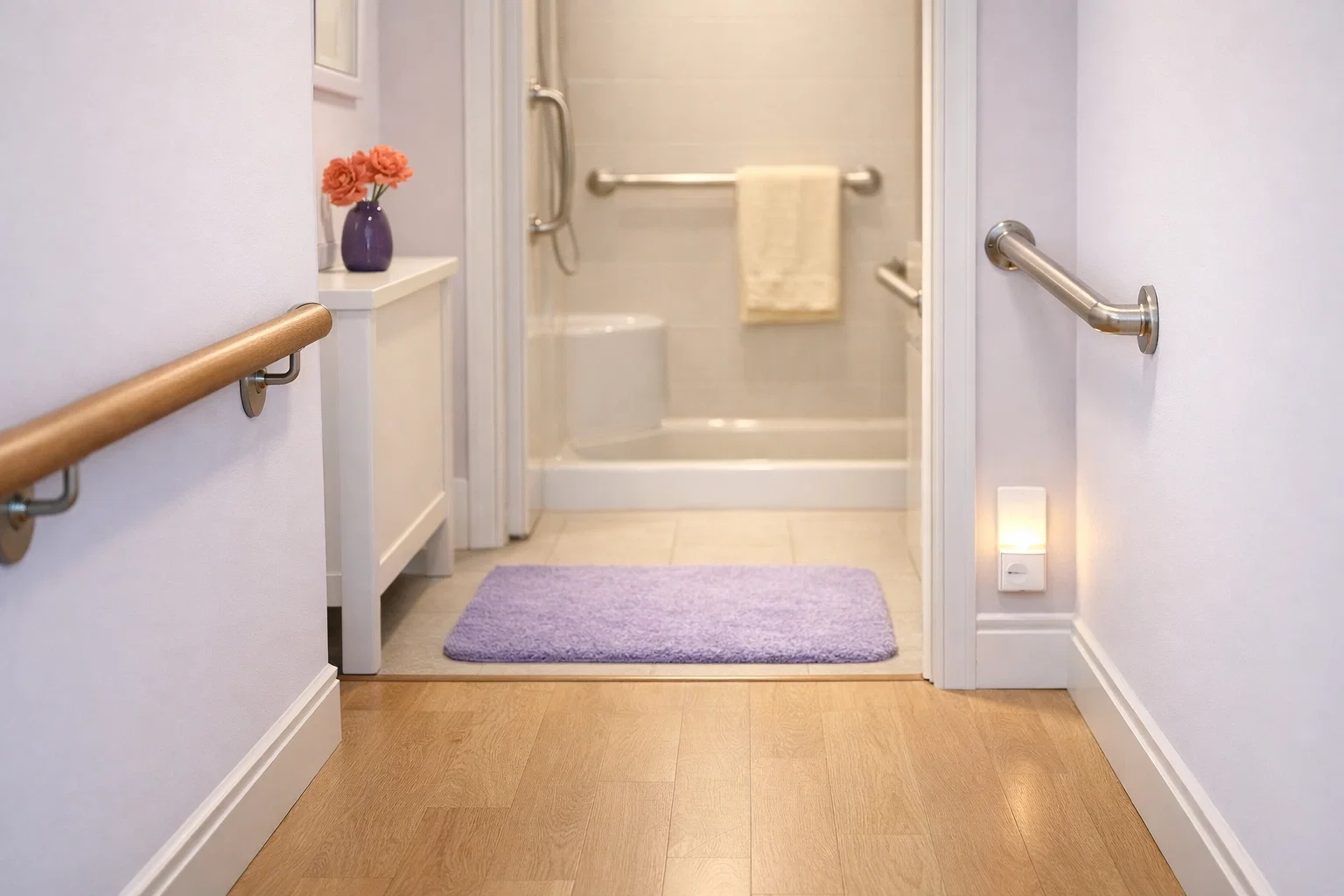

Creating a Safer Home Environment
Falls are the leading cause of injury among adults over 65, and most falls happen at home. The familiar environment that should provide safety often contains hazards that contribute to dangerous falls. Simple modifications to the home can significantly reduce fall risk and help seniors maintain independence safely.
Whether you are preparing your own home for safer aging or helping a parent create a more secure living environment, these five key modifications address the most common household fall hazards. Many can be implemented quickly and affordably, providing immediate protection.
1. Improve Bathroom Safety
Bathrooms present particular fall risks due to wet surfaces, hard fixtures, and the physical demands of bathing and toileting. Making bathrooms safer should be a top priority.
Install Grab Bars
Grab bars provide stable support during the activities that challenge balance most.
- Install grab bars on the wall next to the toilet for assistance sitting and standing
- Place grab bars inside the shower or tub for support while bathing
- Add a grab bar outside the shower for stability when entering and exiting
- Ensure bars are properly anchored into wall studs or use specialized anchors rated for the intended weight
Avoid relying on towel bars or soap dishes for support. These fixtures are not designed to bear weight and can pull away from walls, causing falls.
Add Non-Slip Surfaces
Wet bathroom surfaces become dangerously slippery. Address this risk with non-slip mats in the tub or shower, non-slip bath rugs outside the tub, non-slip adhesive strips on floor surfaces, and textured flooring if renovating.
Consider a Shower Chair
For seniors who have difficulty standing during bathing, a shower chair or bench provides safe seating. Combine with a handheld shower head for easier bathing while seated.
Raised Toilet Seat
Getting up from a standard toilet height challenges many seniors. A raised toilet seat reduces the distance and effort required, making this daily activity safer. Models with armrests provide additional support.
2. Eliminate Tripping Hazards
Obstacles on the floor cause many falls. Systematically identifying and removing tripping hazards throughout the home prevents these avoidable accidents.
Address Rugs and Mats
Throw rugs and mats are among the most common tripping hazards. Options include removing throw rugs entirely, securing rugs with non-slip backing or double-sided tape, using only rugs with low pile and non-curling edges, and avoiding placing rugs in high-traffic areas.
Manage Cords and Clutter
Electrical cords, phone chargers, and general clutter create trip hazards. Keep walkways completely clear by routing cords along walls and securing with cord covers, removing unnecessary furniture from walking paths, keeping floors free of newspapers, magazines, and other items, and ensuring pet toys and supplies are stored when not in use.
Repair Flooring Issues
Damaged flooring creates tripping hazards. Address loose floorboards or tiles, worn or torn carpet, transition strips between flooring types, and any uneven surfaces.
Clear Stairs
Stairs require particular attention. Never store items on stairs, ensure all steps are in good repair, consider adding non-slip treads, and keep stairs well-lit with switches at top and bottom.
3. Improve Lighting Throughout
Poor lighting contributes to falls by making hazards difficult to see and affecting depth perception. Improving lighting throughout the home significantly reduces fall risk.
Increase Overall Light Levels
Many older homes have inadequate lighting for aging eyes. Consider higher wattage bulbs within fixture limits, additional lamps in dim areas, overhead lighting in rooms with only table lamps, and daylight-spectrum bulbs that provide clearer light.
Address Problem Areas
Certain areas commonly have inadequate lighting. Focus on stairways which should be brightly lit with switches at top and bottom, hallways where night lights provide guidance, bathrooms where adequate light prevents missteps, entryways where transition from outdoors requires adjustment, and closets and storage areas where searching in dim light creates risk.
Night Lighting
Falls often occur during nighttime trips to the bathroom. Create safe nighttime navigation with night lights in bedrooms, hallways, and bathrooms, motion-activated lights that turn on automatically, lighted switches that are visible in the dark, and a flashlight within reach of the bed.
Outdoor Lighting
Entrances, walkways, and steps outside the home need adequate lighting for safe navigation after dark. Motion-activated exterior lights improve safety and security.
4. Make Stairs and Steps Safer
Stairs present significant fall risk, with stair falls often causing serious injuries. Whether your home has a full staircase or just a few steps, modifications can improve safety.
Handrails
Sturdy handrails are essential for stair safety.
- Install handrails on both sides of all stairs
- Ensure handrails extend the full length of the stairway
- Check that handrails are securely anchored and do not wobble
- Consider round or oval rails that are easy to grip
- Add handrails to any steps, even single steps, inside or outside
Visibility
Make stairs and steps easy to see. Improve lighting as discussed above, use contrasting color on stair edges to improve visibility, add reflective tape if needed, and keep stairs clear of any objects.
Non-Slip Surfaces
Reduce slipping on stairs with non-slip treads or strips on each step, carpet runners securely attached, and treatment of outdoor steps for wet weather safety.
Consider Alternatives
For seniors who struggle with stairs, consider whether living space can be arranged on one level, stair lifts for those who cannot safely climb stairs, and moving commonly needed items to accessible locations.
5. Organize for Accessibility
How a home is organized affects fall risk. Reaching, bending, and climbing to access items creates opportunities for falls. Reorganizing for accessibility reduces these risks.
Kitchen Organization
The kitchen contains many items accessed daily. Arrange for safety by keeping frequently used items on lower shelves within easy reach, storing heavy items at waist height to avoid lifting overhead, eliminating the need to use step stools to reach items, and using a sturdy step stool with handrails if climbing is necessary.
Bedroom Setup
Create a safe bedroom environment with bed height that allows easy entry and exit, clear path from bed to bathroom, light switch or lamp within reach from bed, phone accessible from bed, and frequently needed items within easy reach.
Throughout the Home
Apply accessibility principles everywhere. Place frequently used items where they can be reached without stretching or bending, remove items stored in hard-to-access locations, use reachers or grabbers for items that cannot be moved, and arrange furniture to allow clear walking paths.
Additional Safety Measures
Beyond these five core modifications, additional measures further reduce fall risk.
Assistive Devices
When appropriate, assistive devices support safe mobility. Physical therapy can assess whether canes, walkers, or other devices would help and ensure proper fitting and use.
Footwear
Proper footwear prevents falls. Avoid walking in socks or smooth-soled slippers. Choose supportive shoes with non-slip soles for wear inside and outside the home.
Personal Emergency Response
Medical alert systems provide a way to summon help if a fall occurs. These devices offer peace of mind for seniors living alone and their families.
Professional Assessment
While many modifications can be done independently, professional assessment ensures comprehensive safety improvement.
Home Health Evaluation
Occupational therapy through home health services includes home safety evaluation. Therapists identify hazards specific to your loved one situation and recommend targeted modifications.
Fall Risk Assessment
Physical therapy assesses balance, strength, and gait to identify fall risk factors. Therapists can recommend exercises to improve stability and assistive devices when appropriate.
Taking Action
Every fall prevented avoids potential injury, hospitalization, and loss of independence. The modifications described here are practical steps that make real differences in safety.
Start with the highest-risk areas, typically bathrooms and stairs, then work through other modifications systematically. Many changes are simple and inexpensive. Others may require professional installation but represent worthwhile investments in safety.
Do not wait for a fall to prompt action. Proactive modification creates a safer environment that supports independence and peace of mind for seniors and their families.


